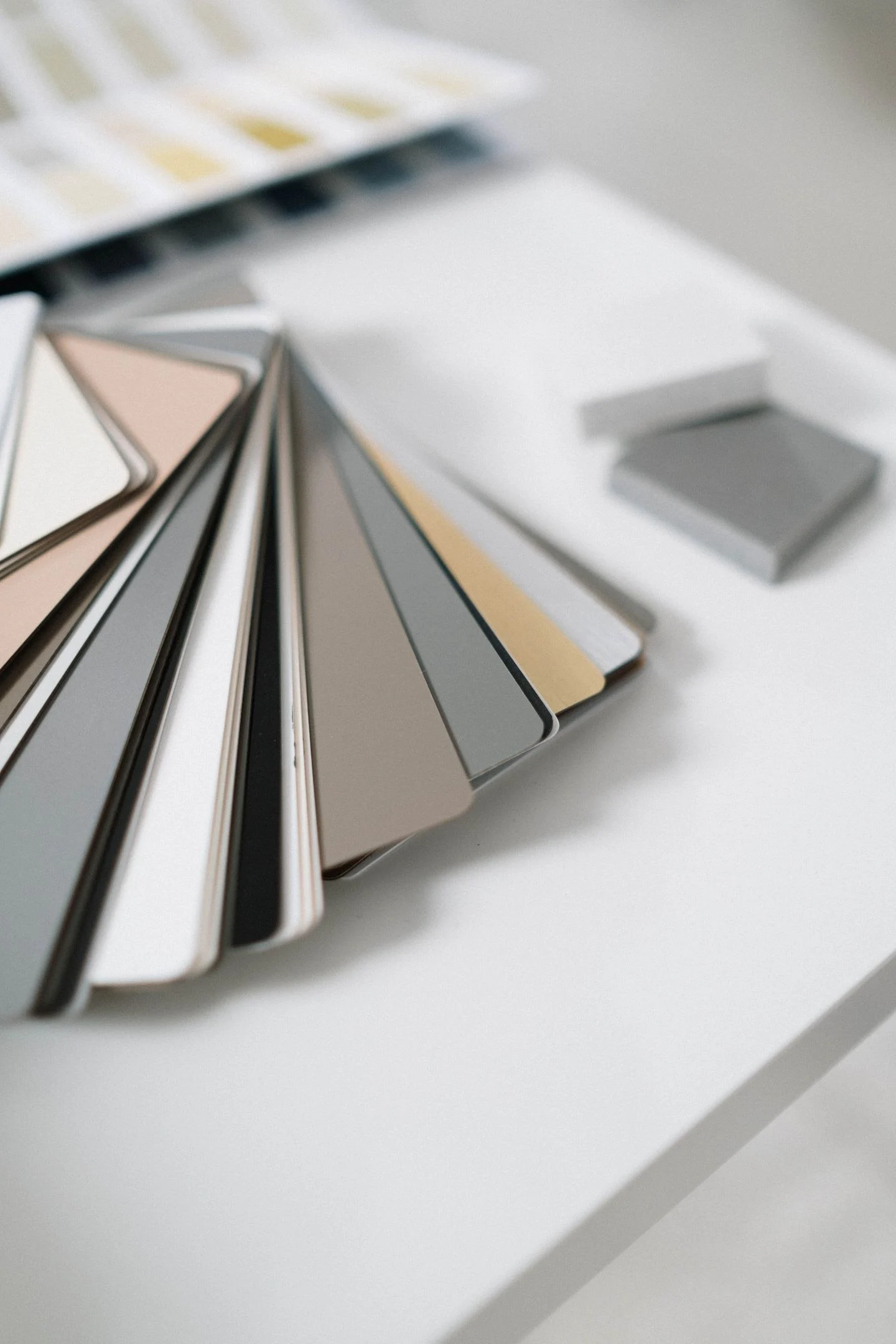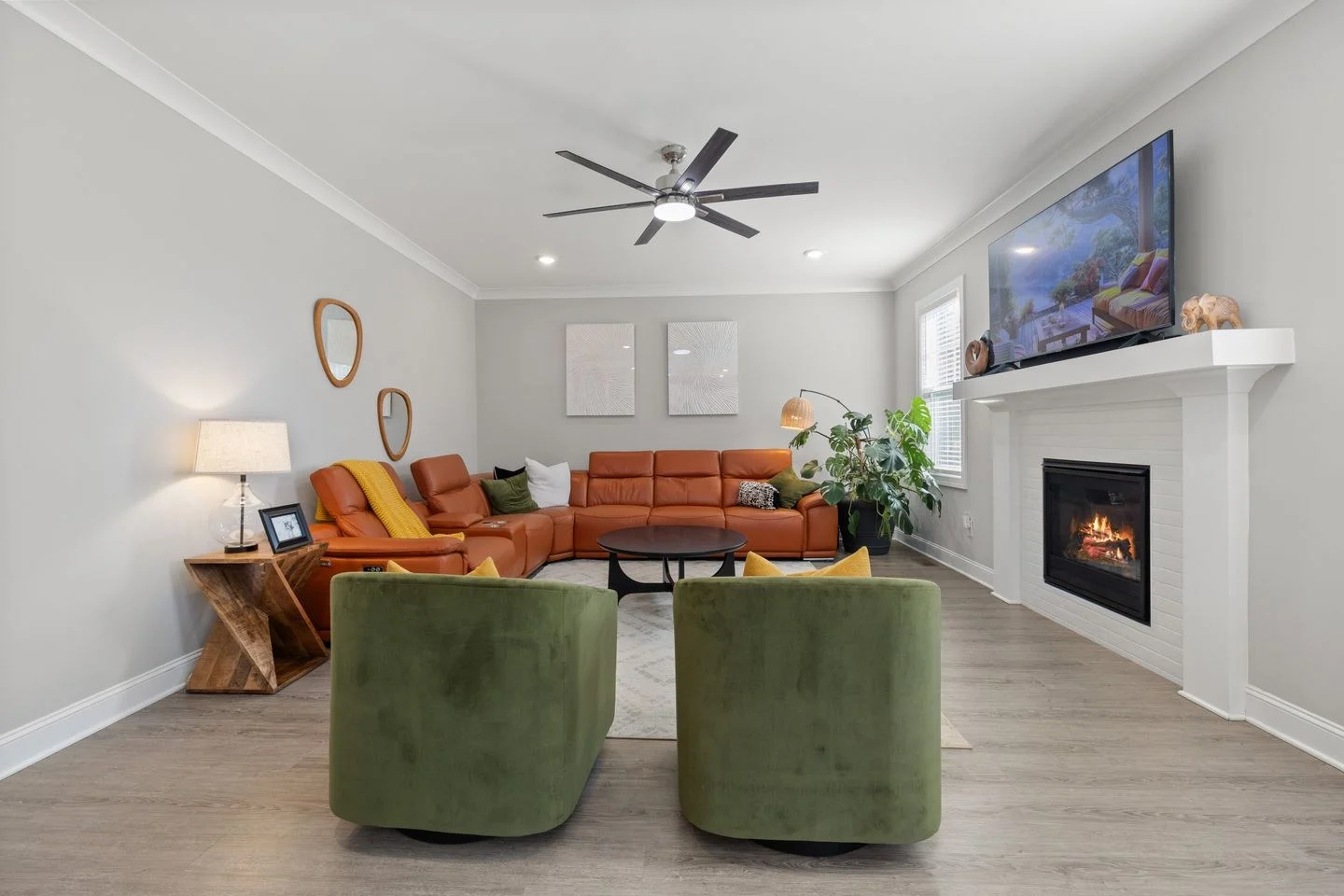
Gray flooring is a large existing surface, but it does not dictate an all-gray room. Warm furniture can create a useful contrast, particularly when the two are connected by something more nuanced than another gray accessory. Start by looking at the floor's actual undertone and pattern.
Some gray floors lean blue; others contain brown or green. A strongly grained floor may also have several colors in its printed or natural pattern. Place a white sheet beside it to make the differences easier to see, then compare the furniture finish in the same light. The aim is to understand the contrast you already have.
Use the rug as a transition
A rug with both warm and cool notes can connect a wood table or leather chair to the floor. It need not contain a literal gray stripe and brown stripe. An ivory field with charcoal, muted rust, or faded blue can make the transition through several quieter steps.
Choose the rug's size for the seating arrangement first. A tiny connecting rug stranded between the furniture will not do the same work as one that visually holds the group together. Keep the placement believable before judging the palette.
Give the wall a separate decision
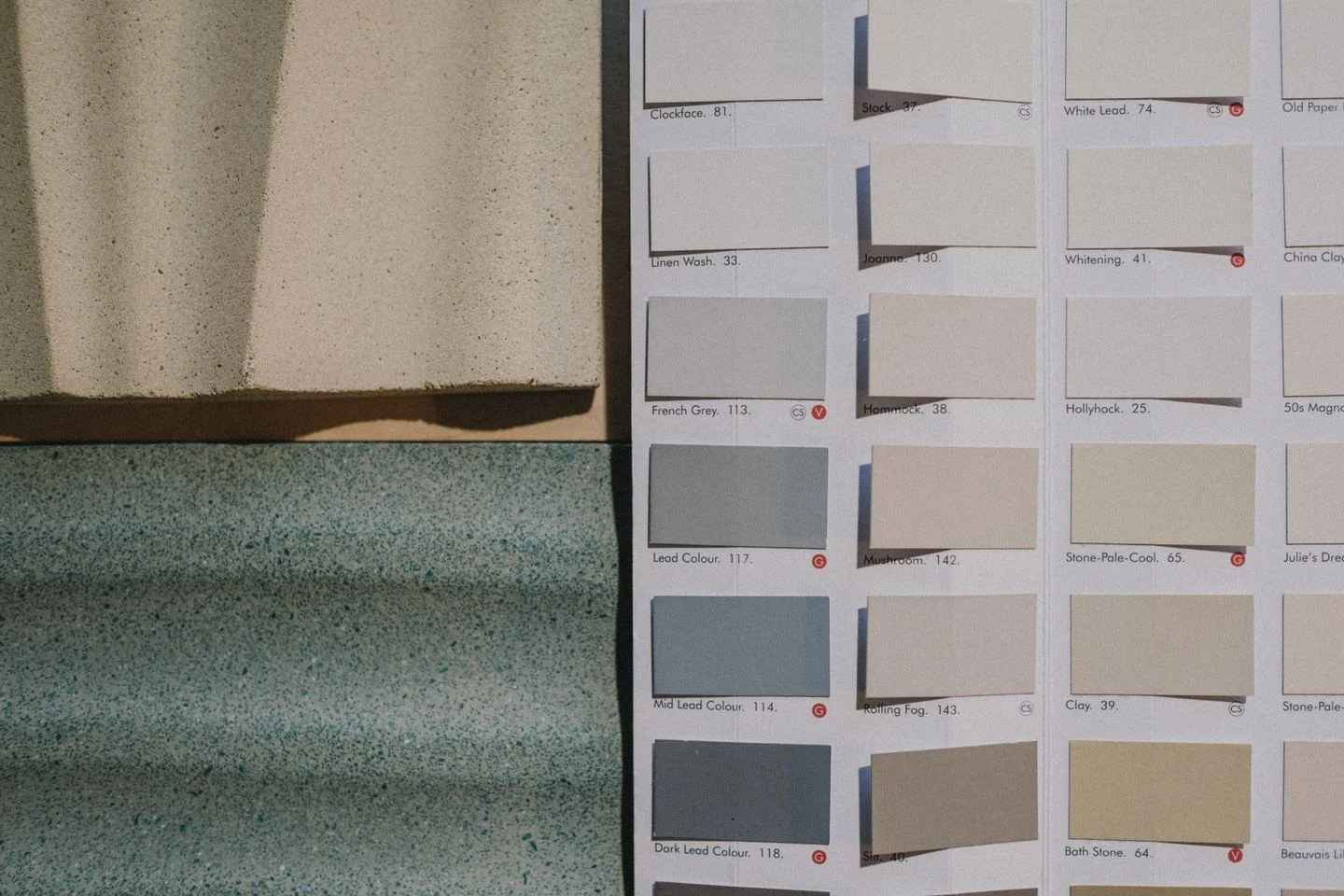
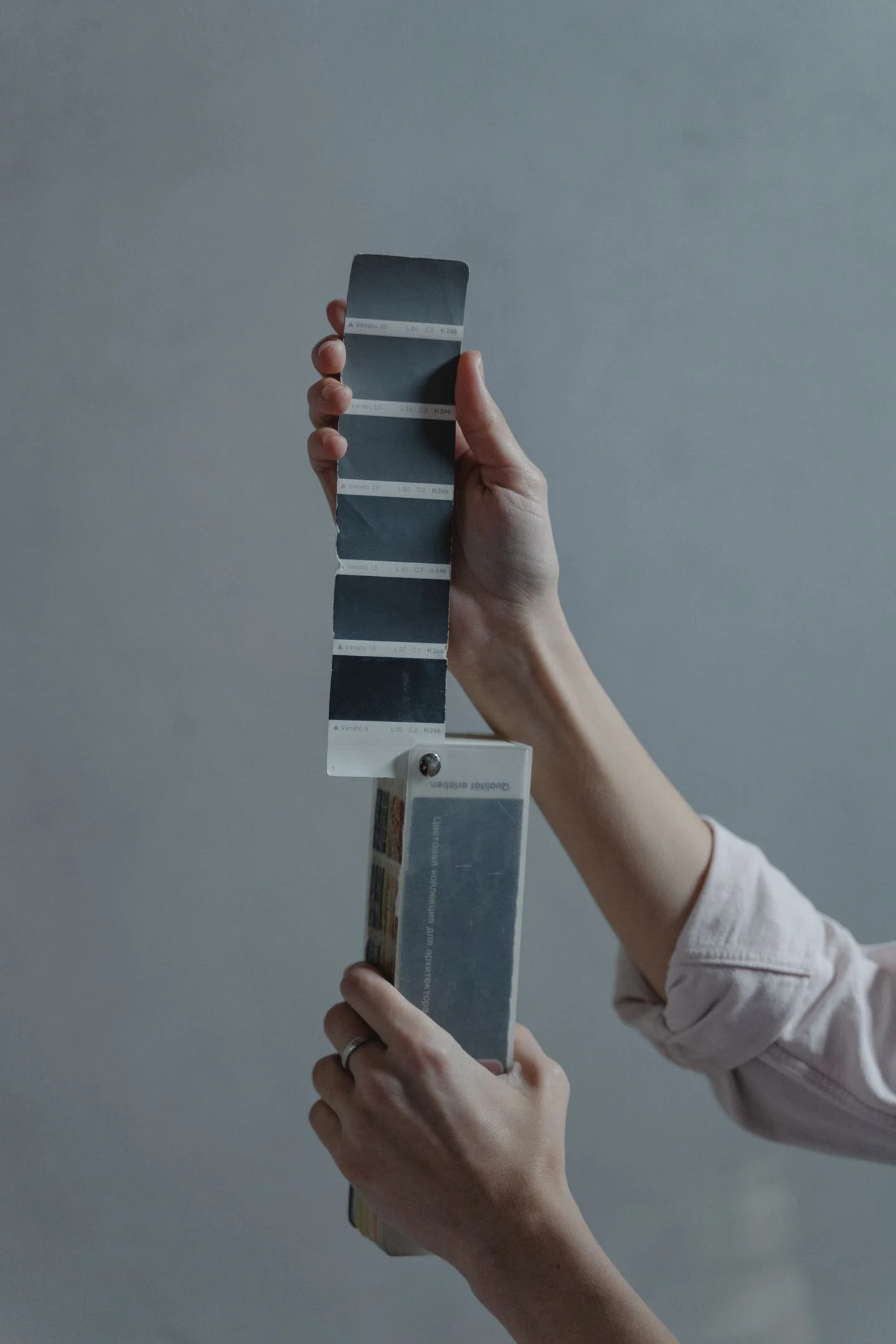
A warm white wall may soften the overall room, but not every warm white will suit every gray floor. Compare samples near the baseboard, where the two surfaces meet. A yellowish white can exaggerate a blue floor; a more balanced off-white may be less insistent. Benjamin Moore recommends examining neutral undertones side by side, a useful practice when permanent flooring is involved.
If the furniture is orange-toned, you can repeat that warmth gently through a textile or artwork rather than adding another large orange-brown piece. Repetition at a smaller scale makes the furniture seem chosen rather than left over from a different room.
Keep metal finishes in the picture. Warm brass may connect to wood, while black can define the boundaries without adding another competing undertone. Use whichever suits the existing pieces; there is no requirement to make every metal match the floor temperature.
Before replacing anything, try the room with a larger light textile and fewer small gray objects. Often the problem is not the warm furniture itself but the accumulation of cool accents around it. A coherent room can contain both temperatures, with the floor acting as a background and the furniture providing the warmer layer where people sit and gather.