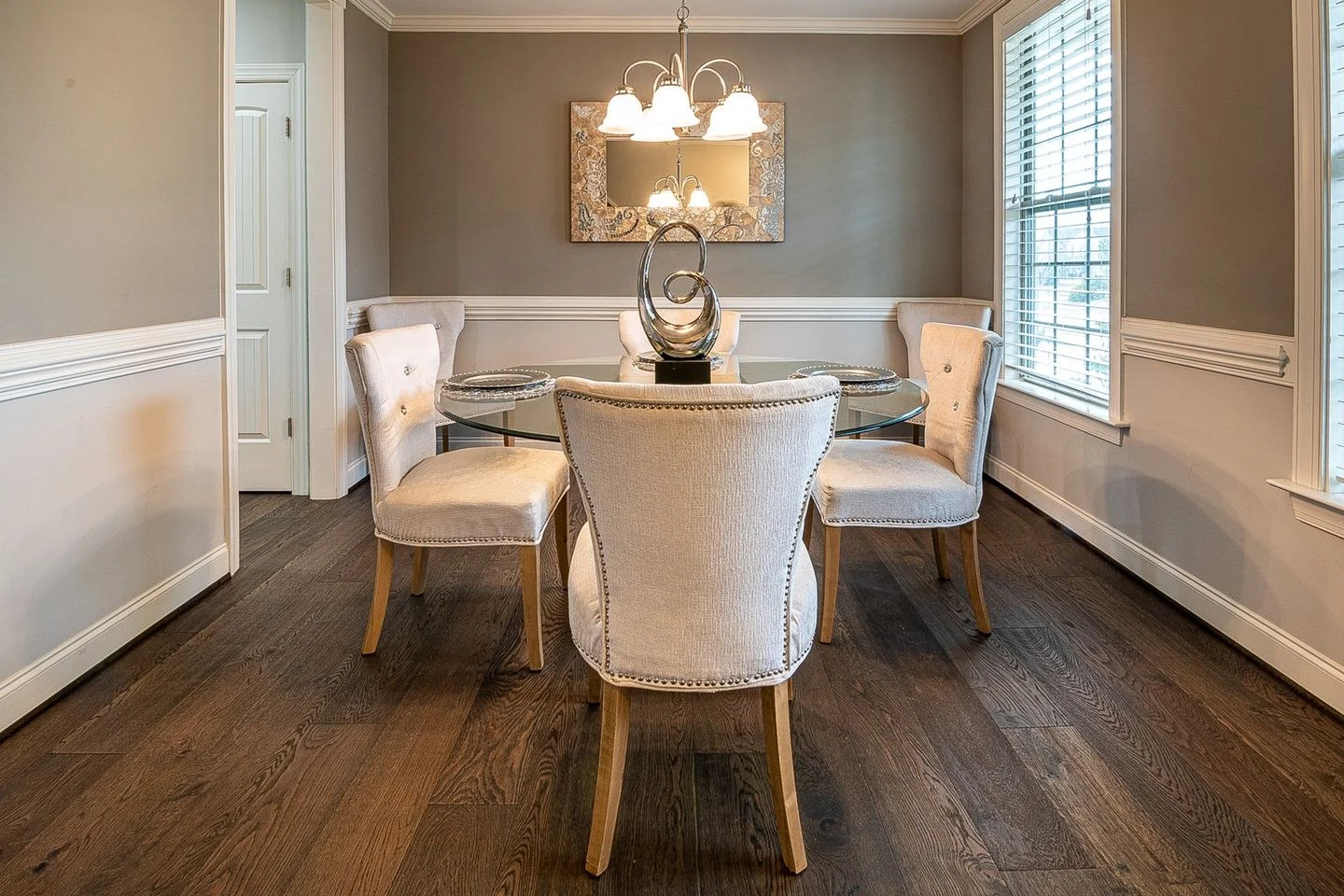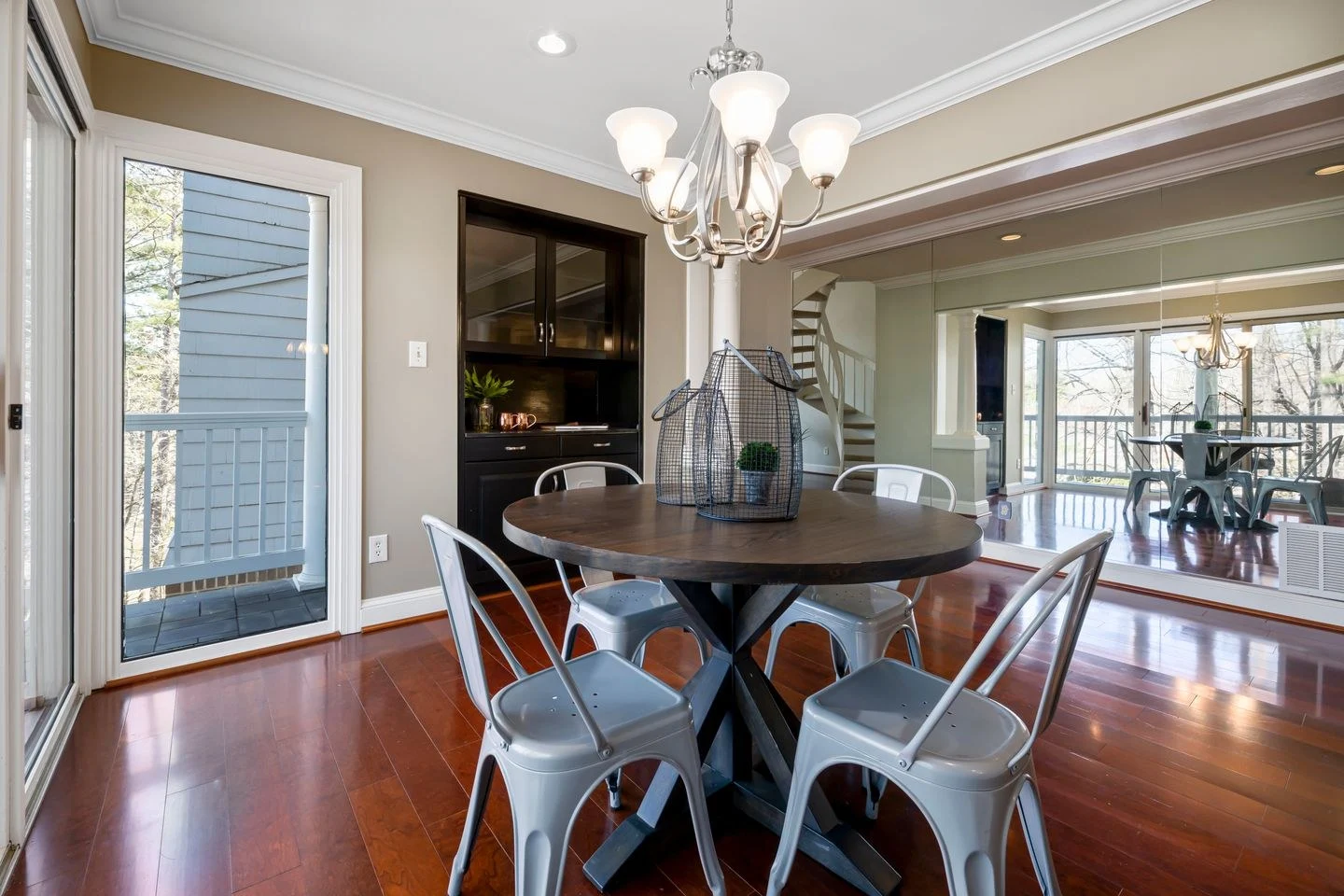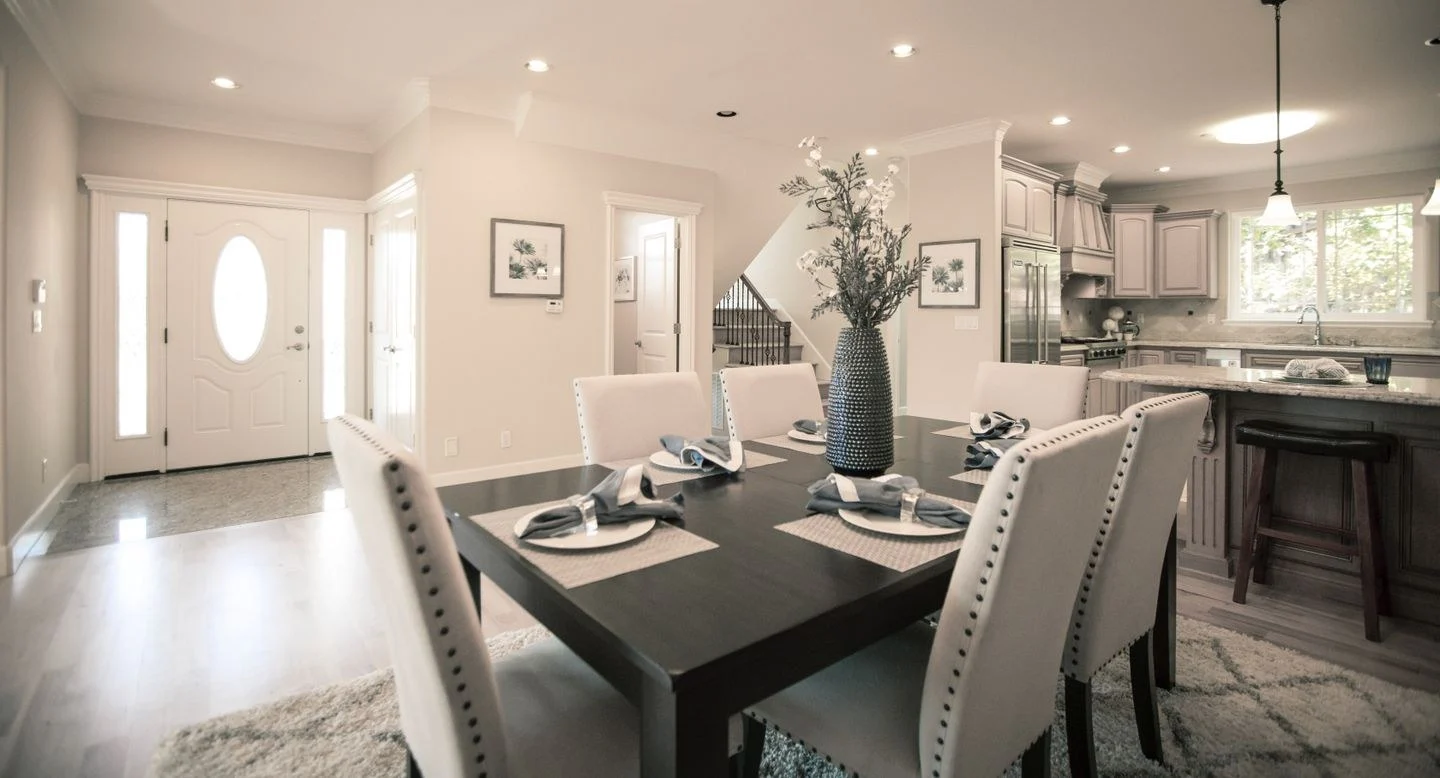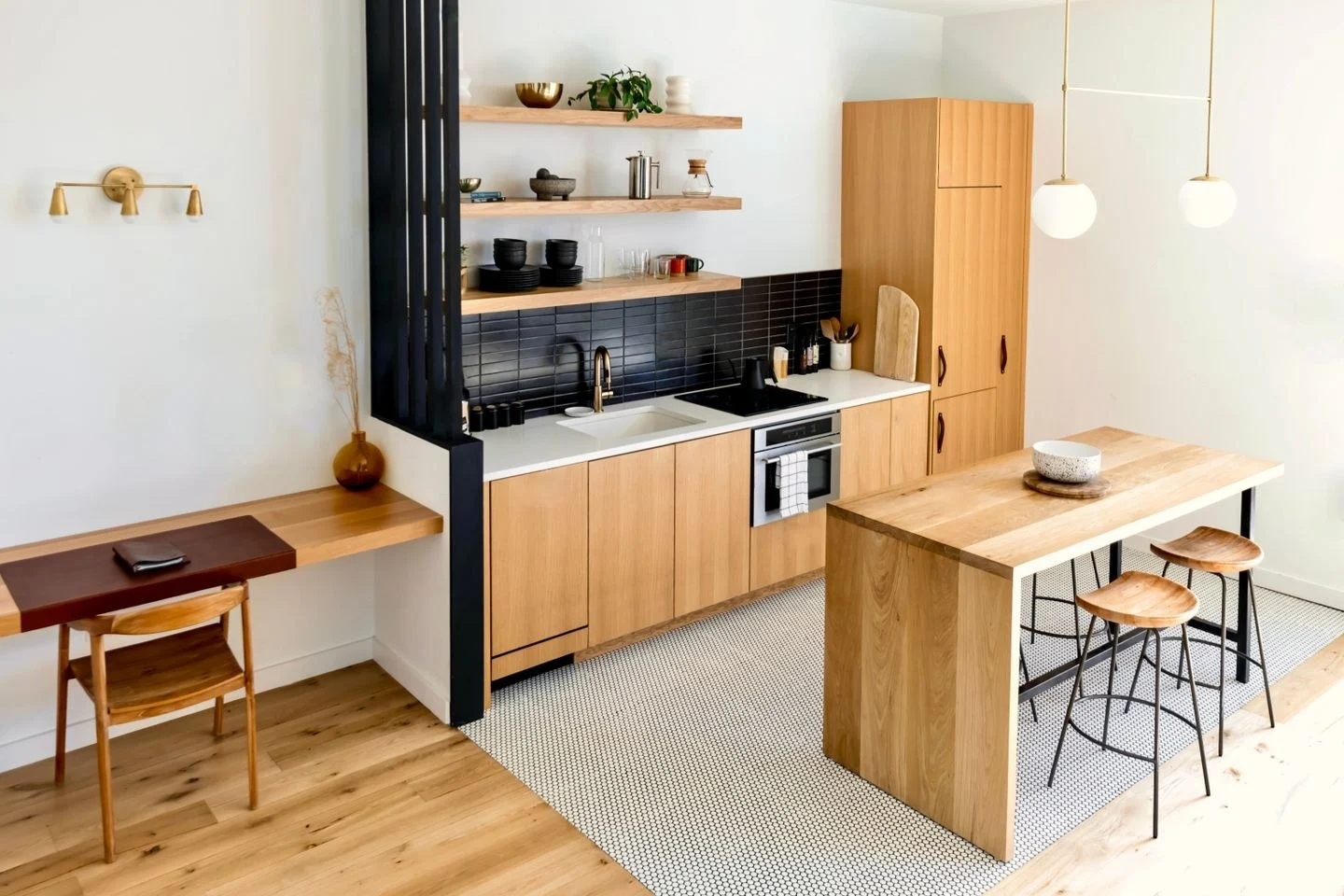
Oak cabinets contribute both color and grain. A kitchen with prominent oak therefore has an existing pattern before a backsplash, curtain, or rug is introduced. Working with that pattern can be more effective than treating the cabinets as a neutral background.
Look closely at the wood in daylight and under the kitchen lights. Its finish may lean golden, reddish, pale, or brown. Compare doors that receive different amounts of light, and note the countertop and floor beside them. The room's warmth comes from the combination, not from the word oak alone.
Decide what deserves contrast
A quieter wall or backsplash can give strongly grained cabinets more room visually. If the countertop is also patterned, adding another busy surface may make the kitchen feel restless. Consider which existing feature you want to lead, then let the surrounding surfaces support it.
A contrasting color can be introduced through a small textile or a painted wall sample. Muted blue, green, cream, or a deeper neutral may each create a different relationship with the wood. Test the actual combination rather than relying on a universal list of colors that supposedly work with oak.
For a kitchen with golden doors and a dark counter, a lighter wall can separate the cabinets from the upper room. In a kitchen with pale oak and a light counter, a stronger accent might provide the definition. These examples suggest directions to test; the existing undertones should determine the choice.
Simplify before replacing
Clear the counter of objects that are not needed there and look at the room again. Removing several bright packages or mismatched containers can change the visual balance without altering any finish. Keep useful appliances in positions that support the cooking routine.
Hardware offers another possible adjustment, but compare its shape and finish against the door profile. A slim pull may suit a different cabinet style from a substantial knob. Check existing hole spacing and the marks beneath old hardware before purchasing replacements.
Lighting can also affect how the wood reads. Evaluate the room under consistent, suitable illumination before deciding the finish itself is the problem. Electrical changes should be handled appropriately; a decorative refresh is not a reason to improvise wiring or fixture placement.
If you are considering refinishing or painting, first understand the cabinet construction, existing finish, condition, and the preparation required. Get suitable advice rather than assuming every oak-looking door is solid wood or can be treated the same way. A reversible refresh can help clarify what you want before committing to that larger project.
Keep the elements that make the kitchen useful and let the wood remain a deliberate part of the palette. The goal can be a clearer, more coherent room without requiring the cabinets to resemble something they are not.