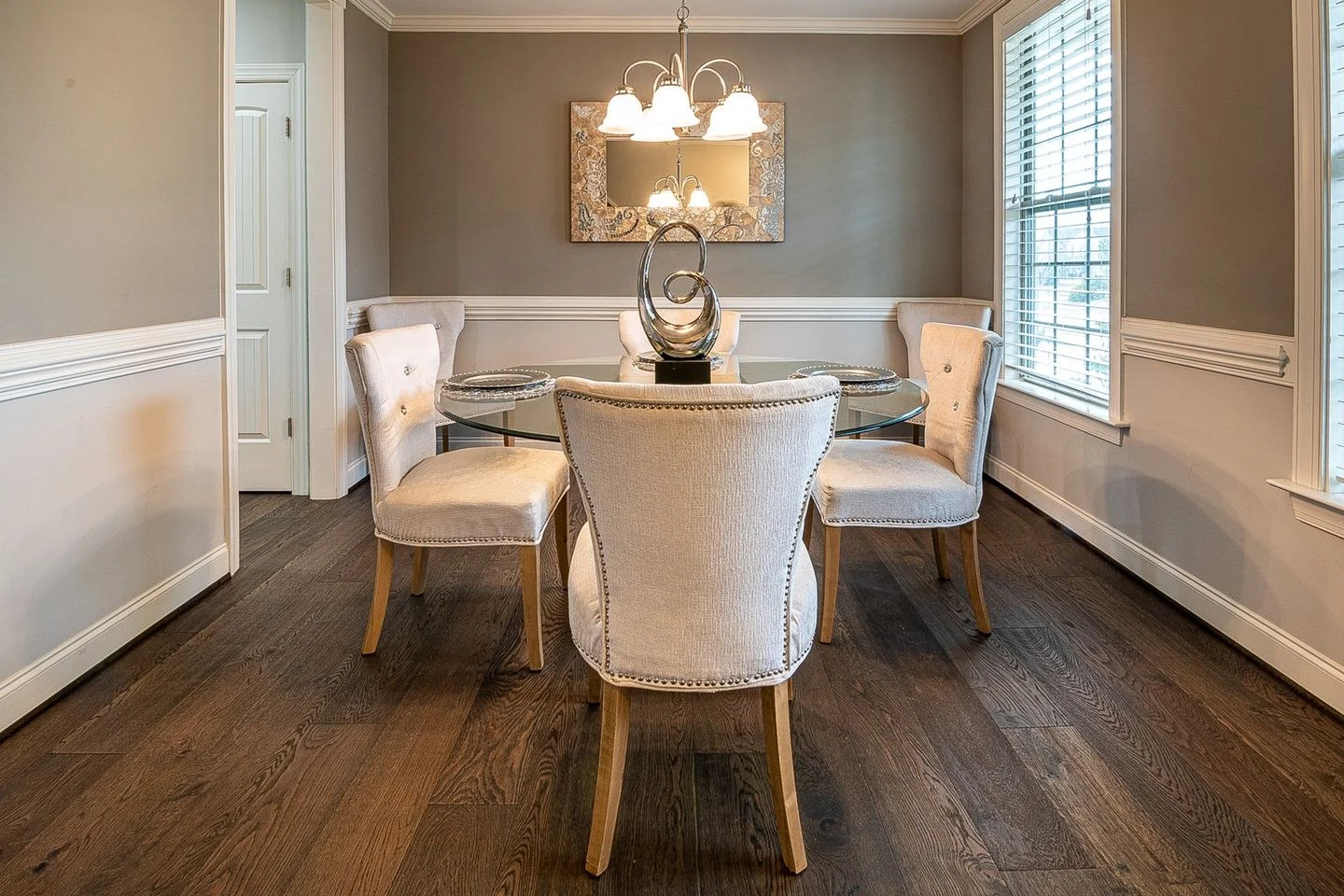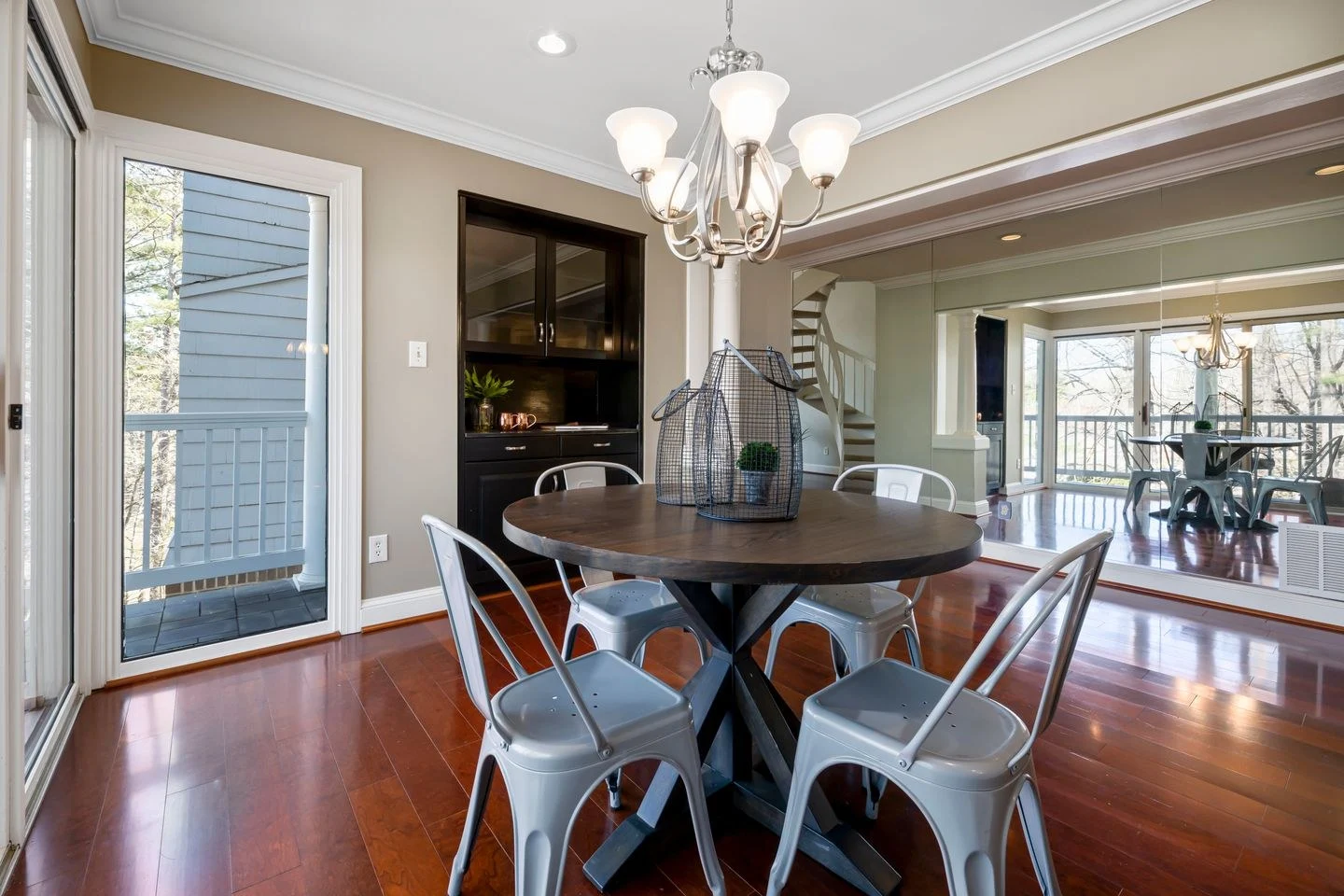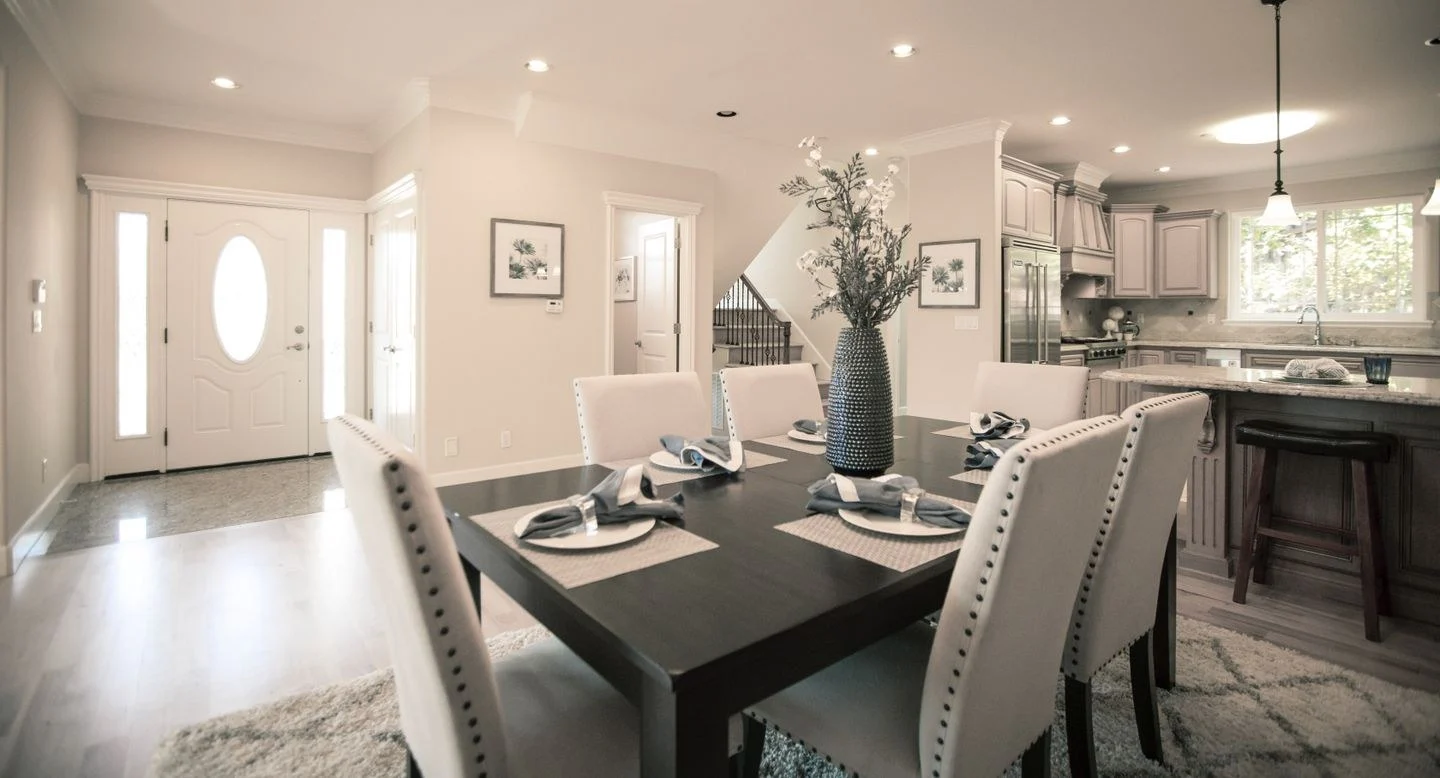
An extendable table offers two room plans, not one. Its smaller form must work for ordinary meals, and its larger form must work when the extra seats are actually occupied. Buying for the maximum seat count alone can leave the daily arrangement oversized or the occasional arrangement impossible to use.
Draw the closed and extended footprints on the same plan. Include all available leaves and any intermediate configuration the manufacturer supports. Some tables expand symmetrically; others change the center of the surface or alter where legs sit. The mechanism affects both the layout and the effort needed to change it.
Test the expanded meal
Place chairs around the extended outline and allow for people sitting in them. Check doorways, storage access, and the route used to bring food to the table. If a sideboard must be moved for a gathering, decide where it will go. A plan that depends on moving a heavy object into an unspecified space is incomplete.
Look at the positions near the table supports. Added seats may fall beside a leg, over a trestle, or close to a join. Check knee and foot room for those places. The extended tabletop's dimensions do not reveal every seating constraint.
Consider the serving space as well as the number of people. A narrow table can seat additional guests along its length while leaving little space for shared dishes. You may prefer a nearby serving surface or a different style of meal. Plan that surface without obstructing the route to the kitchen.
Account for the changeover
Find out how the leaves are handled and stored. An internal leaf has different space requirements from a separate panel kept in a closet. Follow the manufacturer's handling, storage, and support instructions. A large or heavy leaf may require help to move safely, and a protective storage location needs to exist before delivery.
Extra chairs also need a home. If they will be used as desk or bedroom chairs between gatherings, check that they suit those tasks. If they stack or fold, confirm the stored dimensions and the space needed to retrieve them. The table's flexibility is less useful when the chairs are difficult to access.
Try the transition in your plan: where does the centerpiece go, who moves the chairs, and what has to be cleared? Frequent expansion calls for a simpler routine than an arrangement used once a year. The mechanism should match how often you intend to use it, not merely how compactly the table photographs.
Keep lighting and rugs in both plans
A fixed pendant may look centered over the closed table but off-center when it expands. That may be acceptable, depending on the shape and spread of light, but assess it deliberately. Any electrical changes should be planned with a qualified installer.
A rug should be tested with the expanded chair positions if it remains in place for gatherings. If it is sized only for the closed table, chairs may repeatedly cross its edge. Conversely, a rug large enough for the extended arrangement may dominate the smaller daily grouping. Compare both views before deciding whether a rug is useful.
The best extendable table is not necessarily the one with the greatest range. It is the one whose two or three intended arrangements can be used without making the rest of the room stop working.