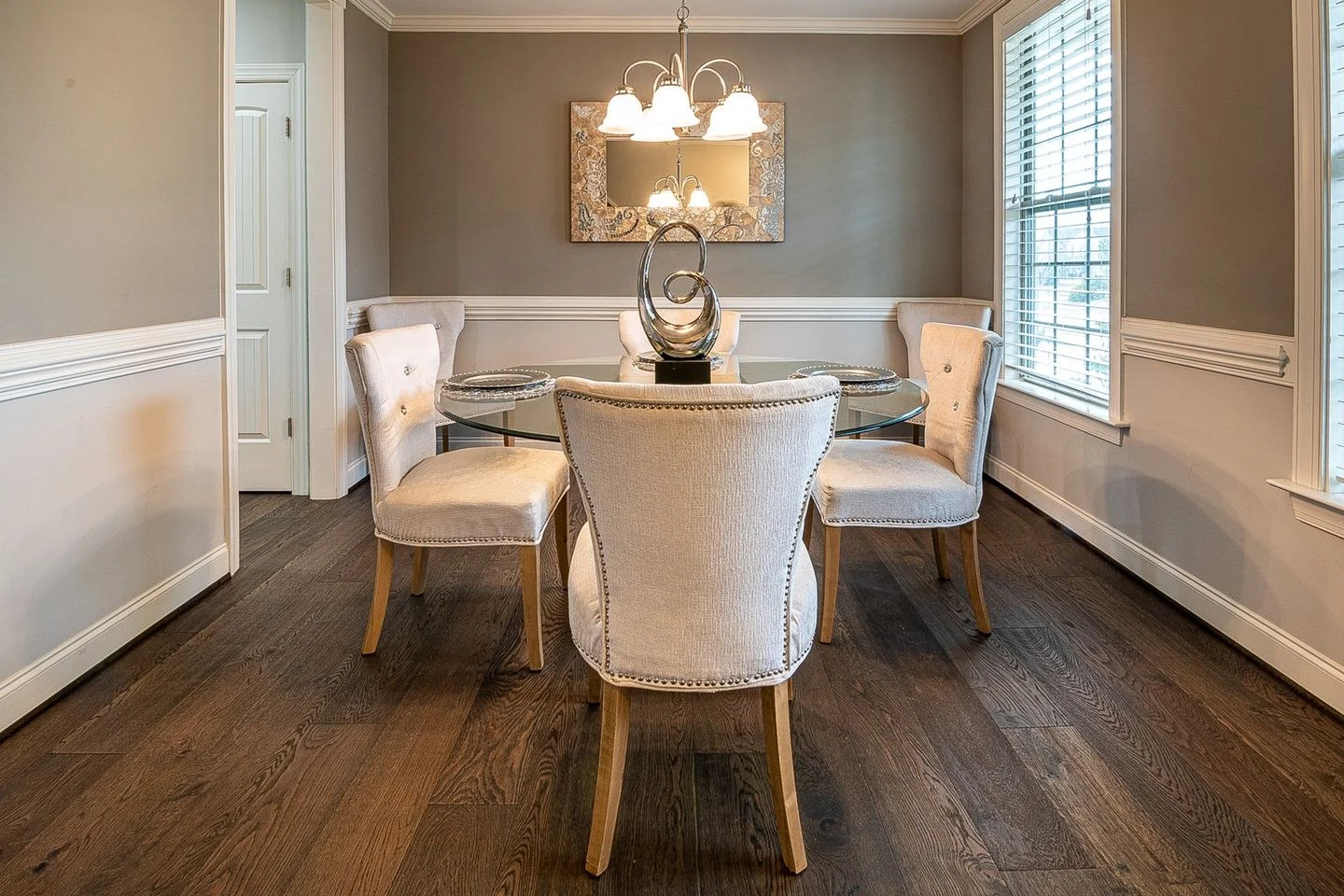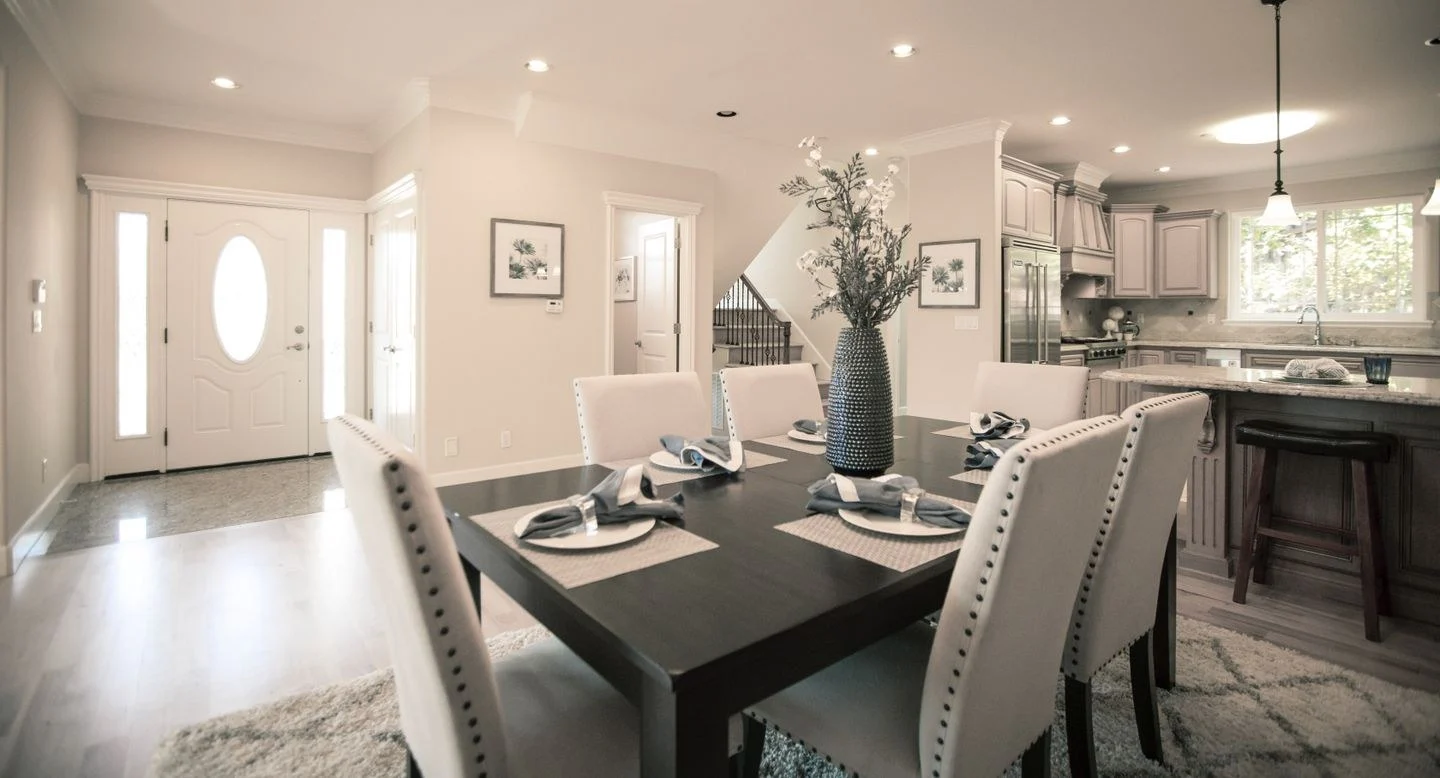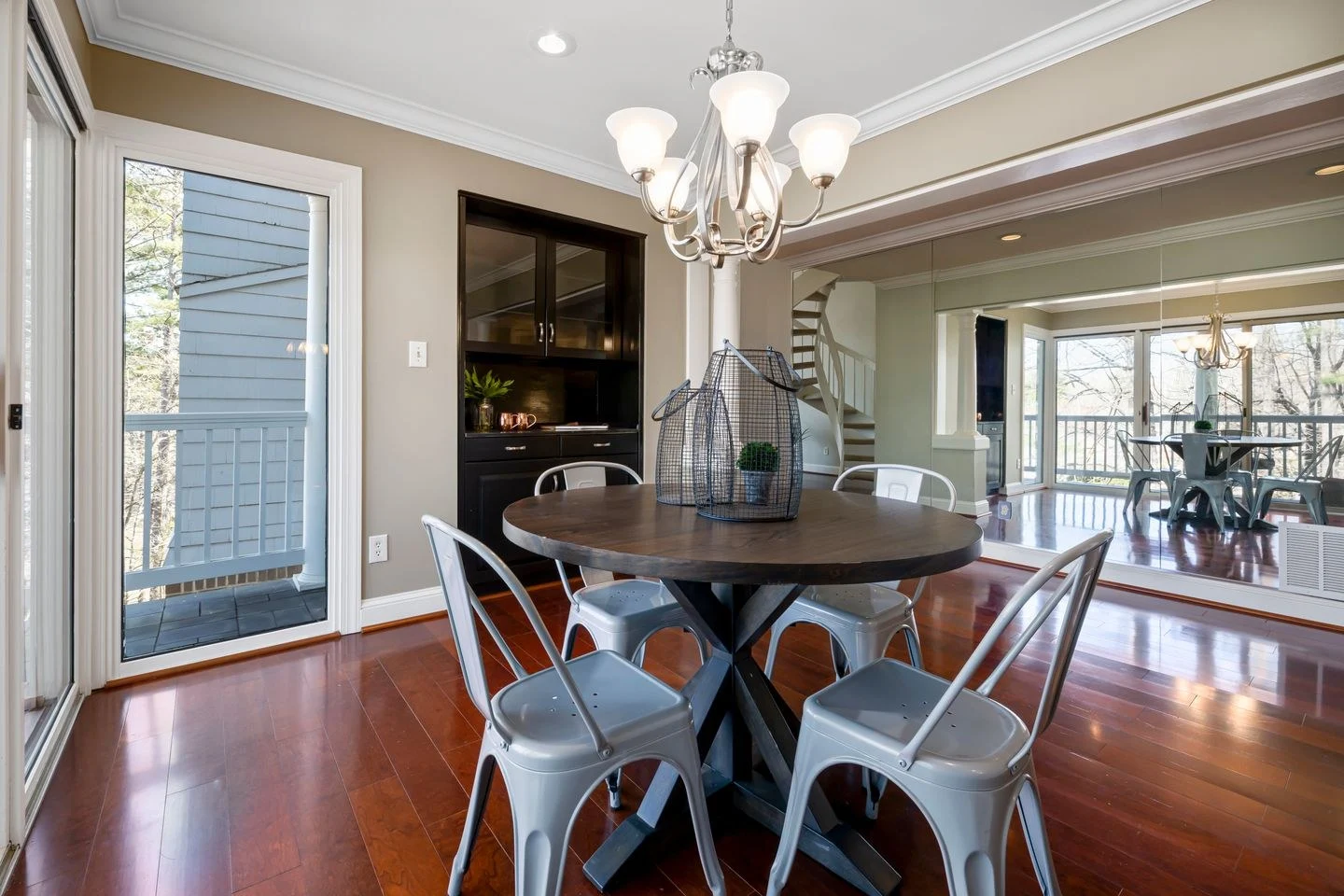
A rectangular room does not automatically call for a rectangular table. A round table can create a distinct conversation area while leaving part of the room for a sideboard, a route between doors, or another activity. The question is whether its circular footprint uses the room's narrower dimension well.
Mark the room's fixed interruptions first: door swings, radiators, windows that need access, and storage doors. Then identify the dining zone within what remains. Centering the table in that usable zone may work better than centering it between every wall, particularly when one long side of the room carries a walkway.
Compare the circle with the chairs included
Use tape or paper to mark the table's diameter. Place existing chairs around it, or add approximate chair footprints, and pull them out into normal seated positions. The table circle alone makes the arrangement look much smaller than it will feel during a meal.
Walk around the occupied positions rather than testing only with chairs pushed in. Notice where someone would pass while another person stands up. A round edge may ease movement around a corner, but a large diameter can still consume too much of a narrow room.
The base deserves attention. A pedestal can allow chairs to be positioned without aligning them between four legs, although its shape may affect foot space. A four-leg round table may have clear positions that make an odd number of chairs awkward. Check the particular construction rather than assuming the shape guarantees flexible seating.
Give the extra length a job
If the room is much longer than it is wide, avoid trying to fill that length with a larger circle. A modest sideboard or a second useful zone may make better sense. Keep enough separation that opening storage does not interrupt seated guests.
A rectangular rug can connect the circular dining group to the room's geometry. A round rug can reinforce the table shape, but it still needs to support chairs as they move. Neither choice should be based solely on matching outlines.
Look upward as well. An existing light fixture may be centered on the room rather than on the proposed dining zone. Assess the entire arrangement before deciding whether the table should move or the lighting needs professional adjustment. Do not compromise everyday circulation merely to align with a fixture that can reasonably be reconsidered.
The room may benefit from the contrast between its long walls and the table's rounded edge. Keep that relationship clear by avoiding extra furniture that crowds the circle. A round table works best when the surrounding space supports the way people sit, pass, and gather.