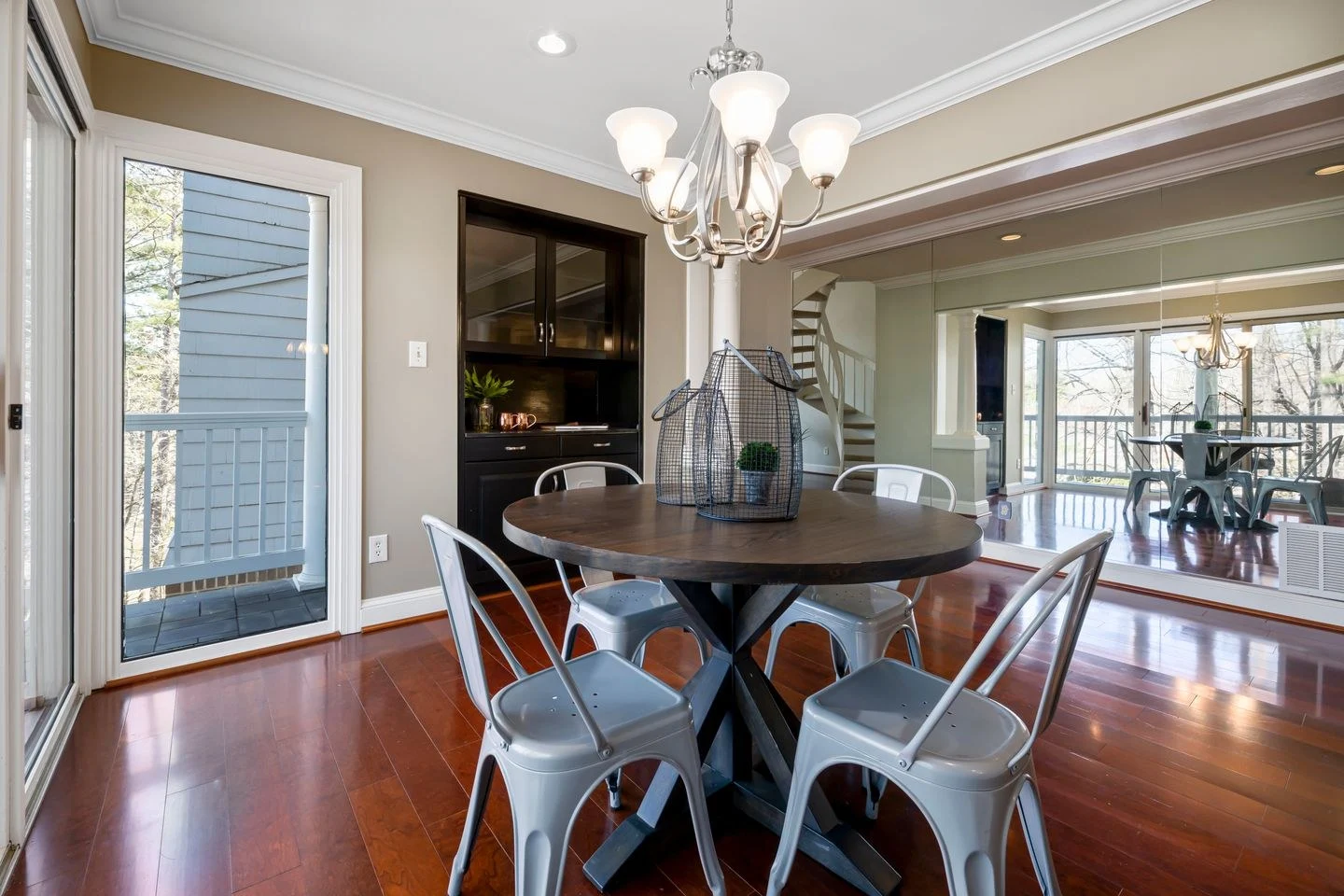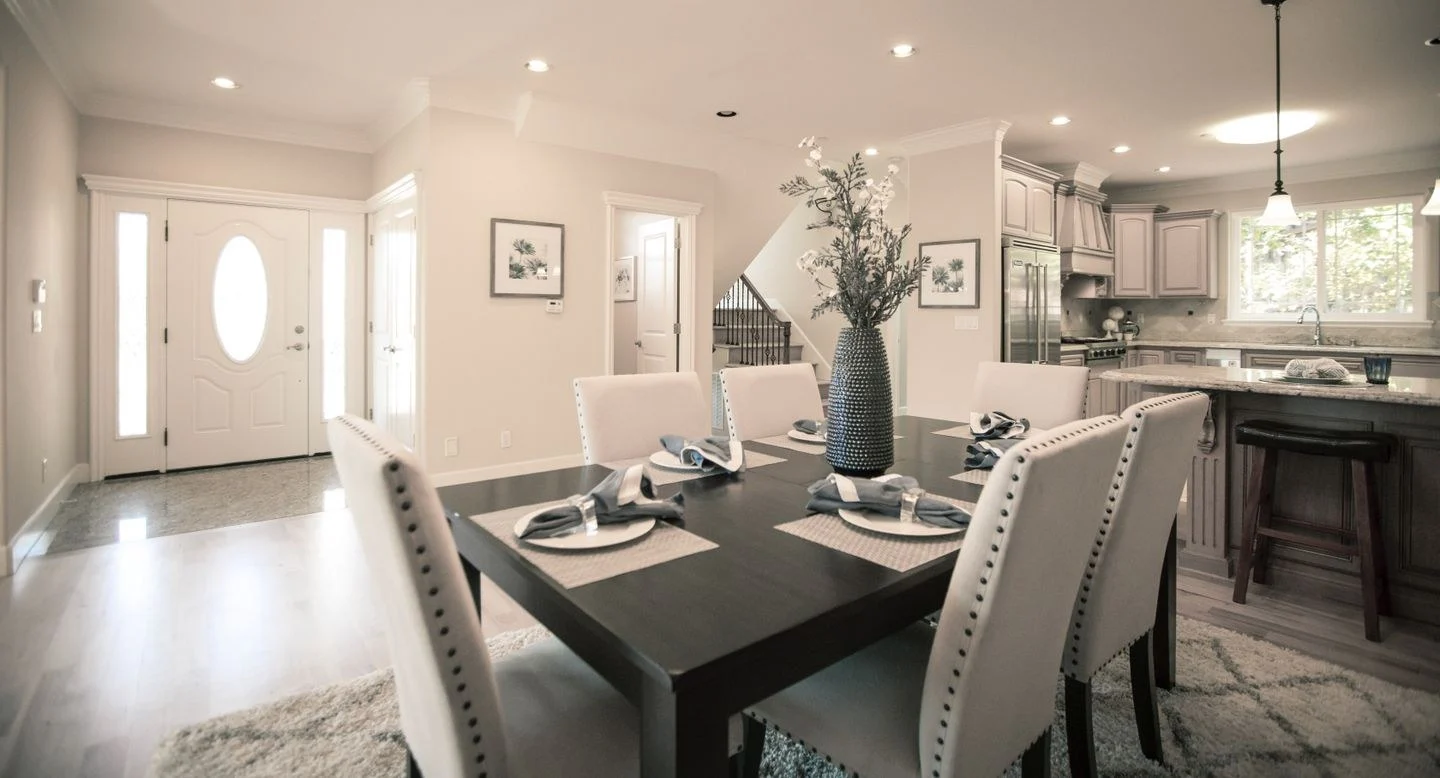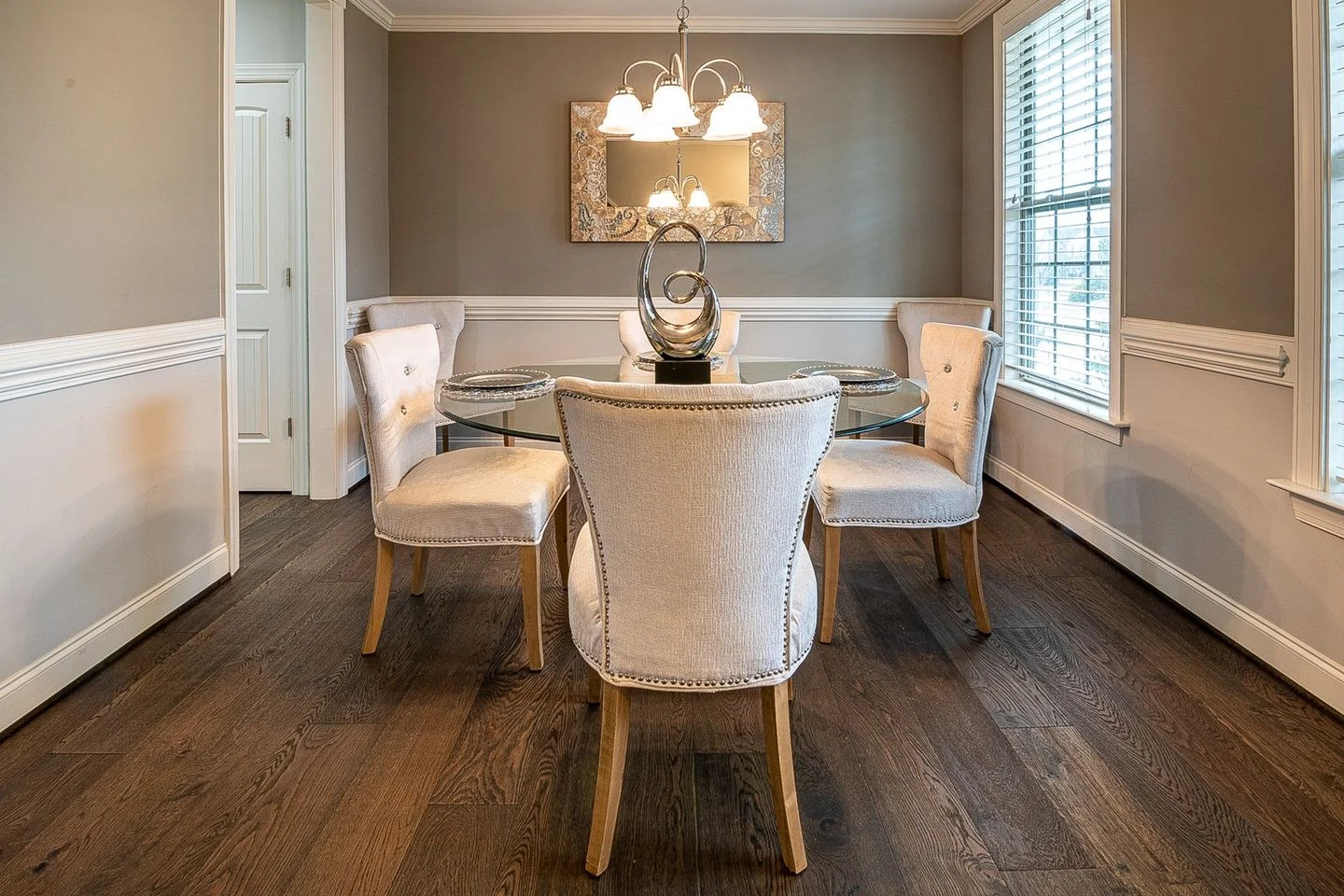
A dining chair can fit beneath the tabletop while failing to fit beneath the table. The apron, legs, brackets, or pedestal may occupy the space that looked empty in a photograph. Compare the chair with the table's underside before focusing on upholstery or wood tone.
Measure from the floor to the lowest obstruction along the edge where the chair will sit. This is especially important with armchairs: the arm must clear the apron if you want the chair to tuck in. Do not use tabletop height as a substitute for this measurement. A thick top or deep apron can make the difference substantial.
Check the seated relationship
Seat height determines how the person relates to the eating surface, but comfort also depends on cushion compression, posture, and the table's construction. If possible, sit in the proposed chair at a table with the same relevant dimensions. Check that there is comfortable room for thighs and that the surface does not require raised shoulders or a low bend.
Consider the chair's depth and back angle as well. A deep relaxed chair may be pleasant on its own yet place someone too far from the table for eating. A sharply upright chair may feel efficient for a short meal but less comfortable for a long conversation. Test the use you actually expect.
The chair's overall width includes arms and any flared legs. Measure the clear space between table legs, then compare it with the combined chair widths and the room needed between them. A manufacturer's seating capacity is a starting description, not proof that a particular set of broad chairs will work.
Look below the surface
A trestle or pedestal may free the corners while introducing an obstruction near the feet. Place the chair where it would normally sit and check the foot position. At the ends of a table, a structural support can make an apparently generous place setting uncomfortable.
If chairs are mixed, test every type. Two armchairs at the ends may require more width or a different position than the side chairs. Similar overall heights do not guarantee similar seat heights. A coordinated appearance should not leave one person noticeably higher or lower at the table.
Finally, pull each chair out as if standing up and then return it to its resting position. Note the footprint of the back and legs when tucked in. Some chairs remain visibly outside the table by design; others can nearly disappear beneath it. Either can work, provided the room has been planned for that real footprint.
Keep the measurements together when shopping. A quick sketch of the table's underside and the preferred chair is often more useful than remembering two approximate heights. It turns a visual pairing into a fit that can be checked.