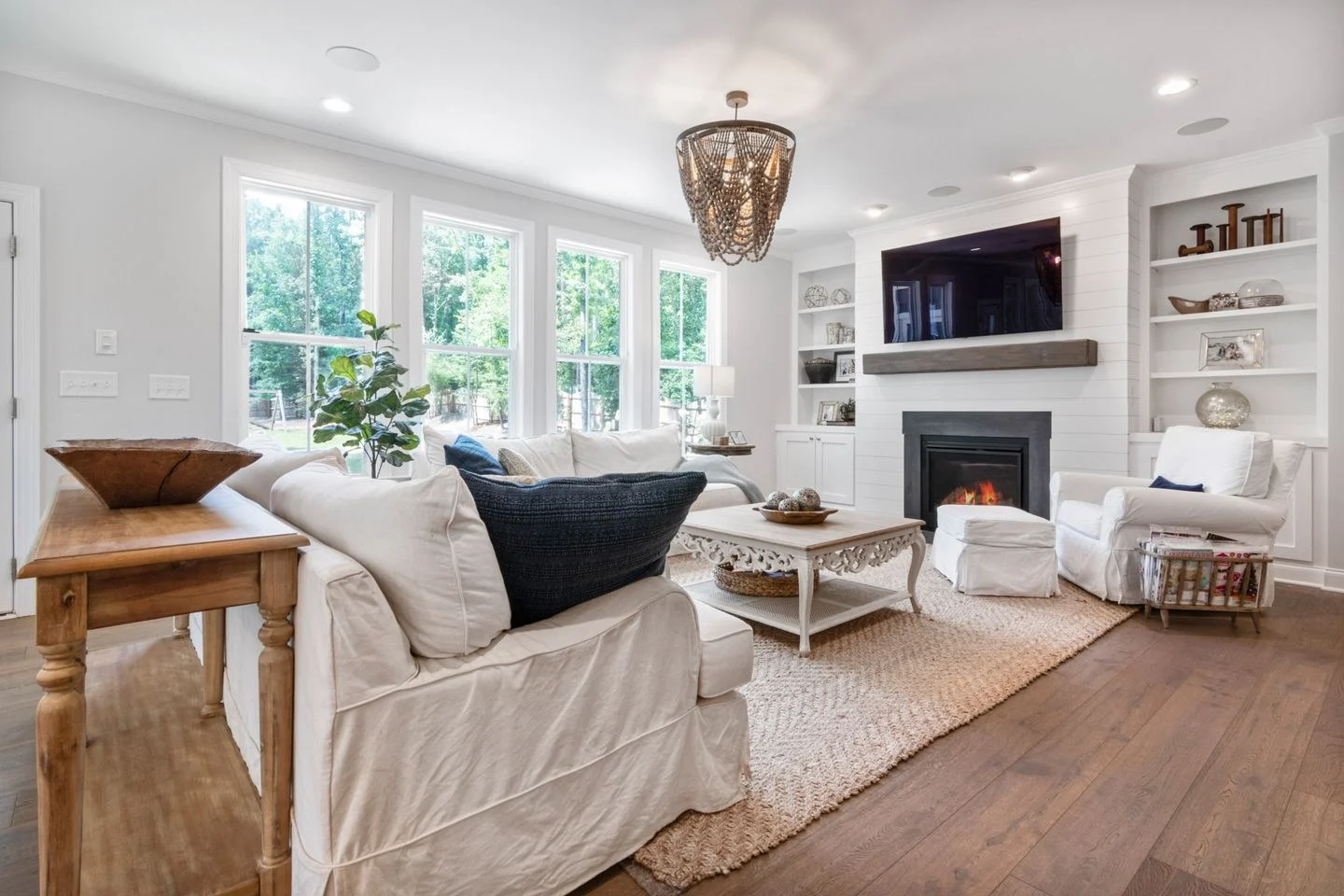
A fireplace and a television ask different things of a living room. One is an architectural feature; the other needs a comfortable viewing position, power, and space for equipment. Putting the screen above the mantel combines them visually, but it does not automatically solve the layout.
Test the view from the seat
Before deciding on a wall, sit where you expect to watch. Mark a proposed screen outline with removable paper and look at it for several minutes. Notice whether you are tipping your head upward or turning sideways. Repeat from the secondary seats, especially if the room is used by more than one person most evenings.
The screen's advertised diagonal measurement is not its actual width. Measure the model, its stand or mounting arrangement, and any soundbar separately. Room & Board's media sizing guide compares screens and cabinets, but the specific television's dimensions and weight are what determine compatibility.
Three alternatives to the mantel
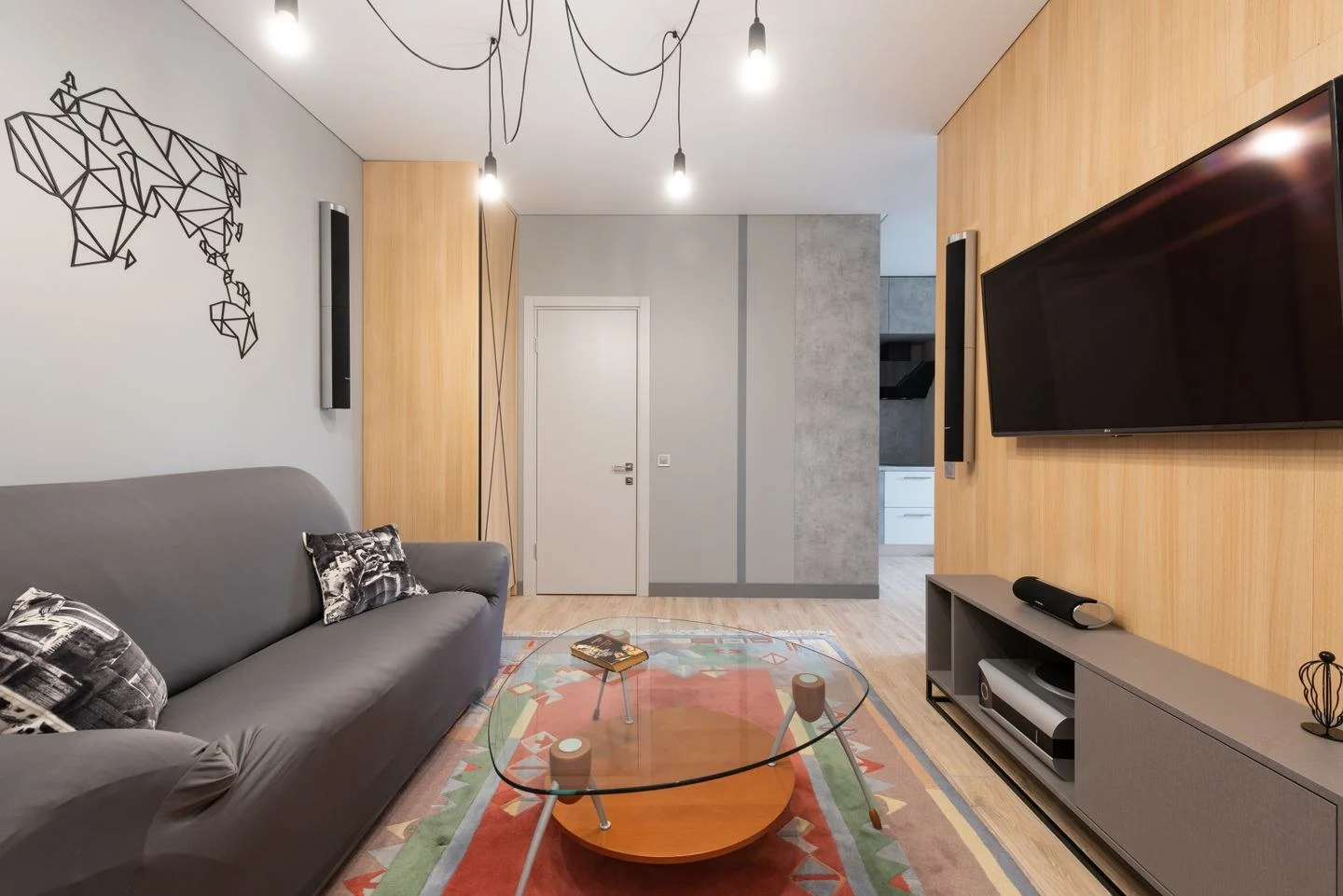
An adjacent wall often permits a lower screen and keeps the fireplace visible from the same seating group. A swivel chair can turn between the two. The sofa does not have to face the fireplace squarely for the room to acknowledge it; the hearth can sit within the wider view.
A cabinet beside the fireplace can work when the side area is wide enough and the screen will not crowd trim or shelving. Balance the opposite side with a substantial artwork or storage piece rather than buying an identical television-shaped object. Asymmetry is easier to accept when both sides have a clear purpose.
In a large room, a separate viewing area may be more comfortable than trying to make every chair serve both features. Keep the two areas close enough to feel related, but do not create a walkway through the viewing line. A smaller screen can also fit a secondary zone more easily.
Treat heat and mounting as separate decisions
Do not infer a safe television location from a photograph of someone else's fireplace. Check the fireplace and television manufacturers' instructions, including heat exposure and clearances. A mantel does not provide universal protection. If mounting above or near a working fireplace is under consideration, have the installation assessed by appropriate professionals.
Use furniture intended to support a television, confirm its load capacity, and secure the screen and furniture according to their instructions. CPSC's Anchor It guidance addresses the tip-over risk of furniture and televisions. Keep cords managed without pinching them behind cabinetry or running them across walking routes.
Once the practical placement is settled, reduce competition between the two features. A quiet wall color and restrained mantel display can let the fireplace retain its character while the screen occupies an ordinary, usable place in the room. There is no need to disguise the television with a complicated mechanism if a straightforward lower position works better.