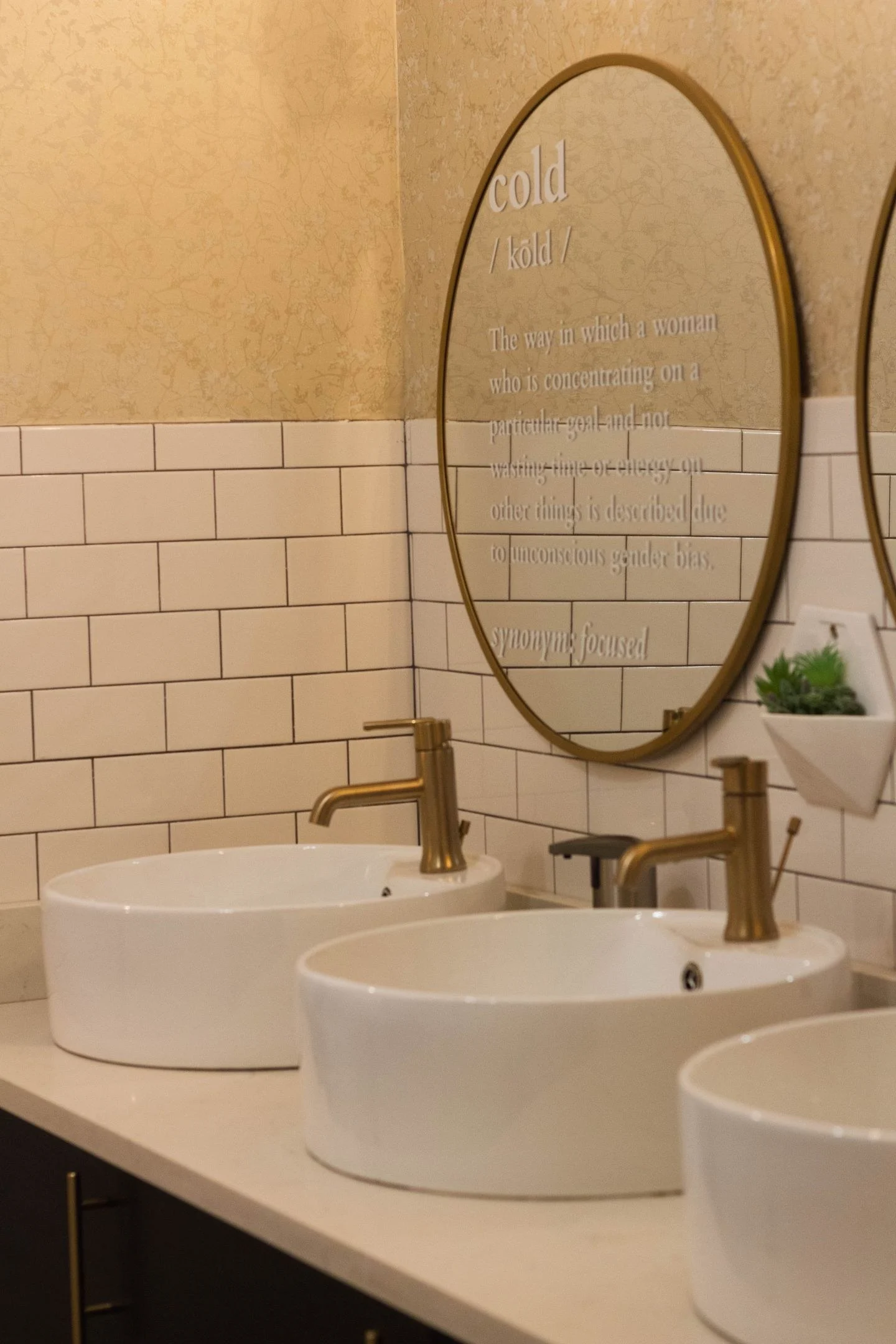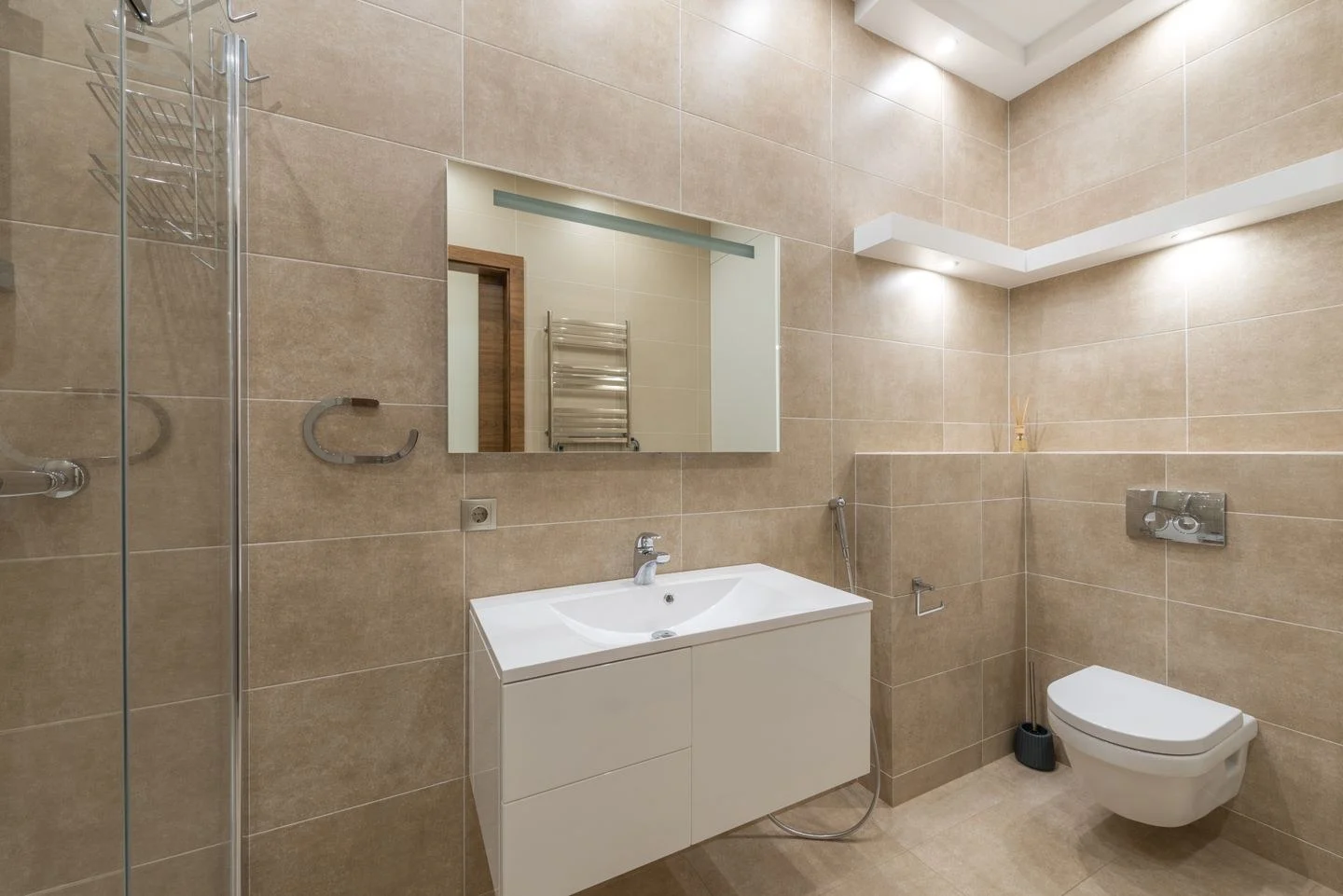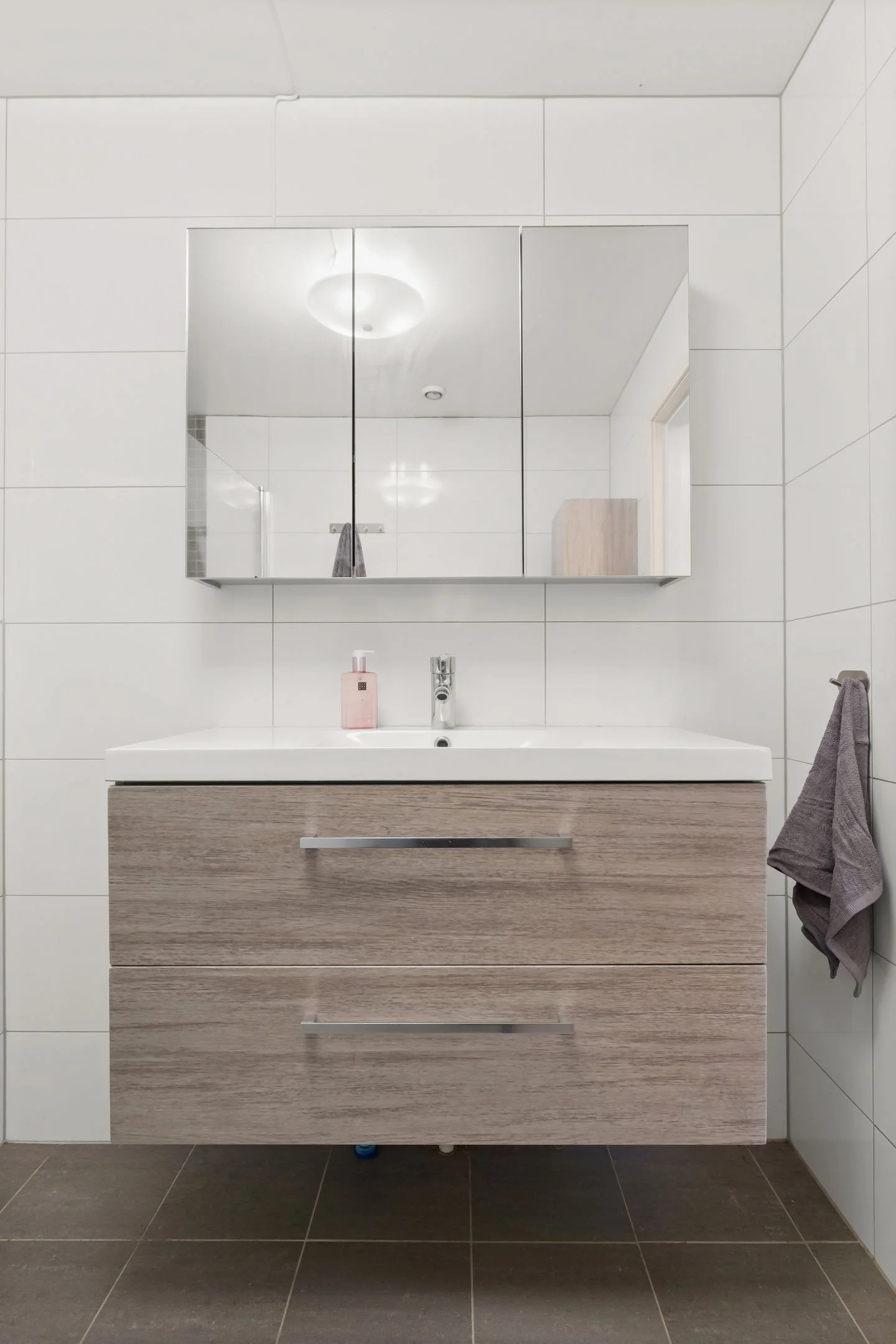
The outside dimensions of a vanity tell you very little about which organizer will work inside it. A basin, drain, door hinge, or drawer runner can remove exactly the space a product needs. Measure the usable compartment as a three-dimensional shape rather than copying the cabinet width from a sales page.
Begin with the cabinet empty and the doors fully open. Check that the base and fittings are in good condition. Note any area that must remain accessible for plumbing service or shutoff valves. The organizer should work around those requirements, not conceal them behind a tightly packed arrangement.
Record the opening and the interior separately
Measure the clear opening between the doors or frame, including the narrowest point created by hinges. Then measure the interior width. The difference explains why a container can fit inside yet be difficult to remove. A pull-out product must pass through the opening along its full travel.
Measure depth from the front obstruction to the back wall, noting any pipes. Do this at the height where the organizer will sit. A pipe that leaves space near the floor may interrupt the upper tier. For a drawer, check the internal height with the drawer closed, because the visible side height may not be the only limit.
Record the position of obstructions using their distance from one fixed corner. A simple sketch with the cabinet front marked is easier to interpret later than a list of unrelated numbers. Photograph the empty interior as a reminder, but use measurements rather than estimating scale from the picture.
Include the things going into it
Measure the tallest bottle with its pump or cap in the normal position. Add the clearance needed to lift it out, not just the height needed to store it. An upper shelf can fit above a bottle while making it impossible to remove without tipping.
For trays, compare the usable internal dimensions with the product's outside dimensions. Thick walls, rounded corners, and handles can consume a surprising amount of space. If several trays are intended to sit together, include small gaps for lifting and cleaning rather than planning a friction-tight arrangement.
A turntable requires room for its full rotation and for bottles that extend beyond its edge. A tiered organizer needs clearance at both levels. A stack of boxes requires a place to put the upper box while reaching the lower one. These are movement measurements, and they deserve a place beside width, depth, and height.
Rehearse before committing
Build a simple cardboard stand-in for the proposed organizer. Use it to test the door opening, plumbing clearance, and removal route. If possible, place the actual contents on or inside the stand-in. This will not establish load capacity or product suitability, but it can expose an obvious size mismatch before purchase.
For an installed pull-out unit, review the manufacturer's mounting pattern, hardware requirements, and rated load. Check whether the cabinet construction permits that installation. Obtain help when fixing positions are uncertain, especially near services. An organizer that requires unsuitable alterations is not a good fit merely because its overall dimensions appear correct.
Keep the sketch and measurements with the product information until the organizer has been installed and used. That record makes it easier to identify whether a problem comes from the footprint, the opening, or the contents. It also helps avoid replacing one poorly fitting container with another that has the same limitation.