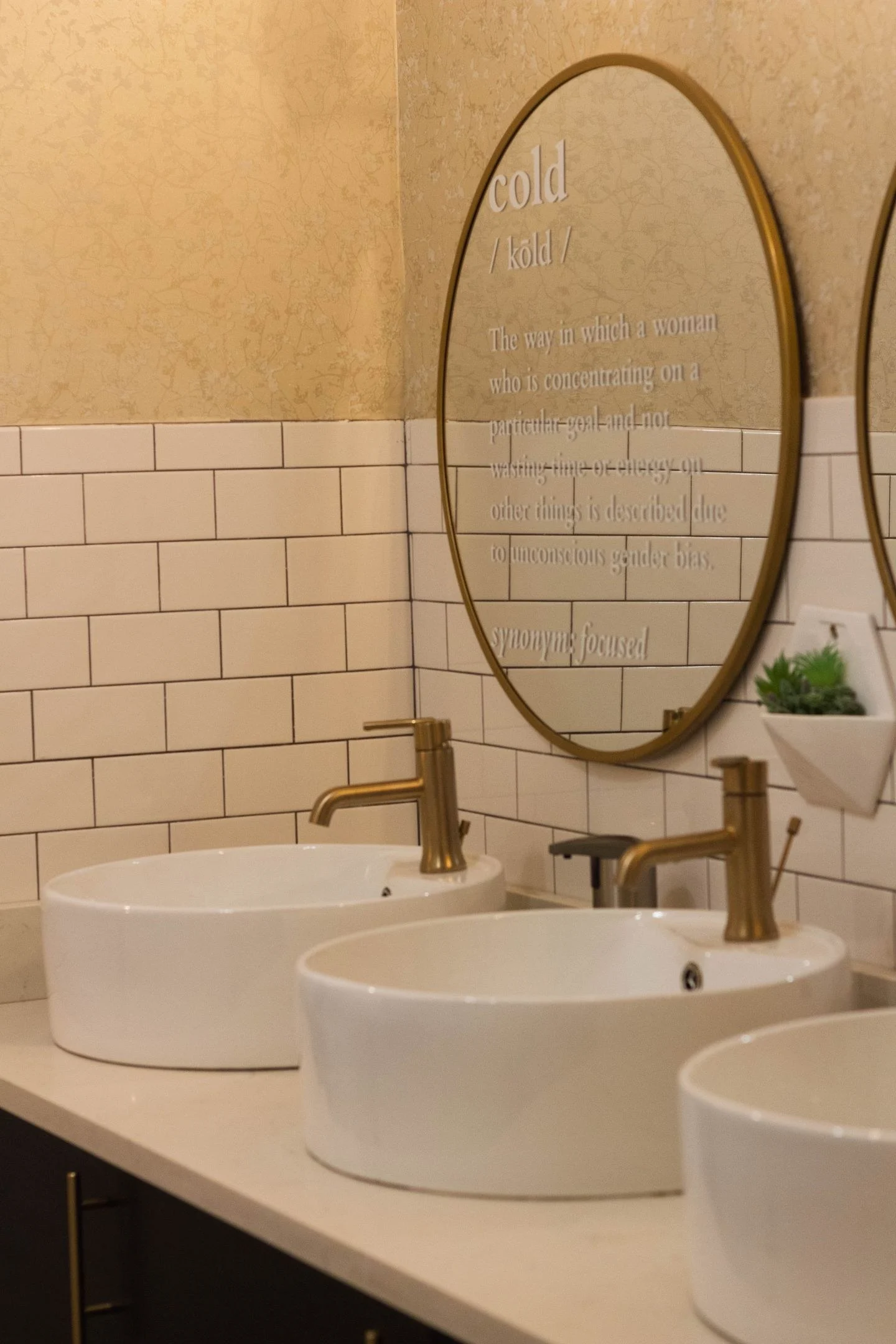
A round mirror can soften a rectangular vanity, but its shape also removes reflection from the corners. An arch adds height at the center while leaving less usable glass near the upper sides. The outline matters both as a decorative gesture and as a working surface.
Start with the people who use the sink. From their normal standing positions, they should be able to see comfortably without bending or stepping around the basin. A mirror selected only by its relationship to the cabinet may sit poorly for a taller or shorter user. Check the intended lower and upper edges on the wall before comparing finishes.
Compare outlines at full size
Cut paper to the outer dimensions of two or three candidates. Include the frame; a substantial frame can make the mirror look generous while leaving a smaller reflective area than expected. Tape the shapes in place and view them from the doorway and from directly in front of the sink.
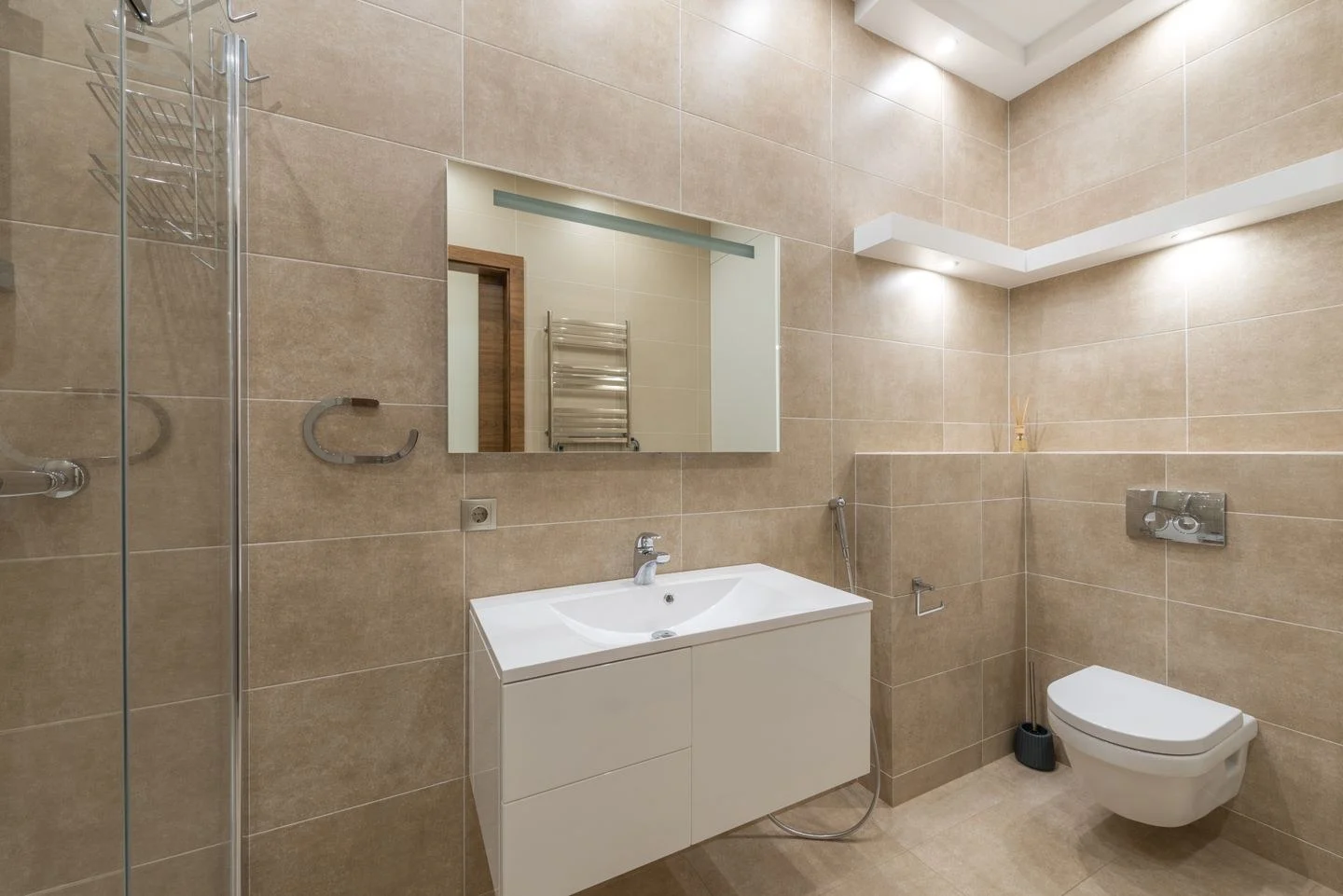
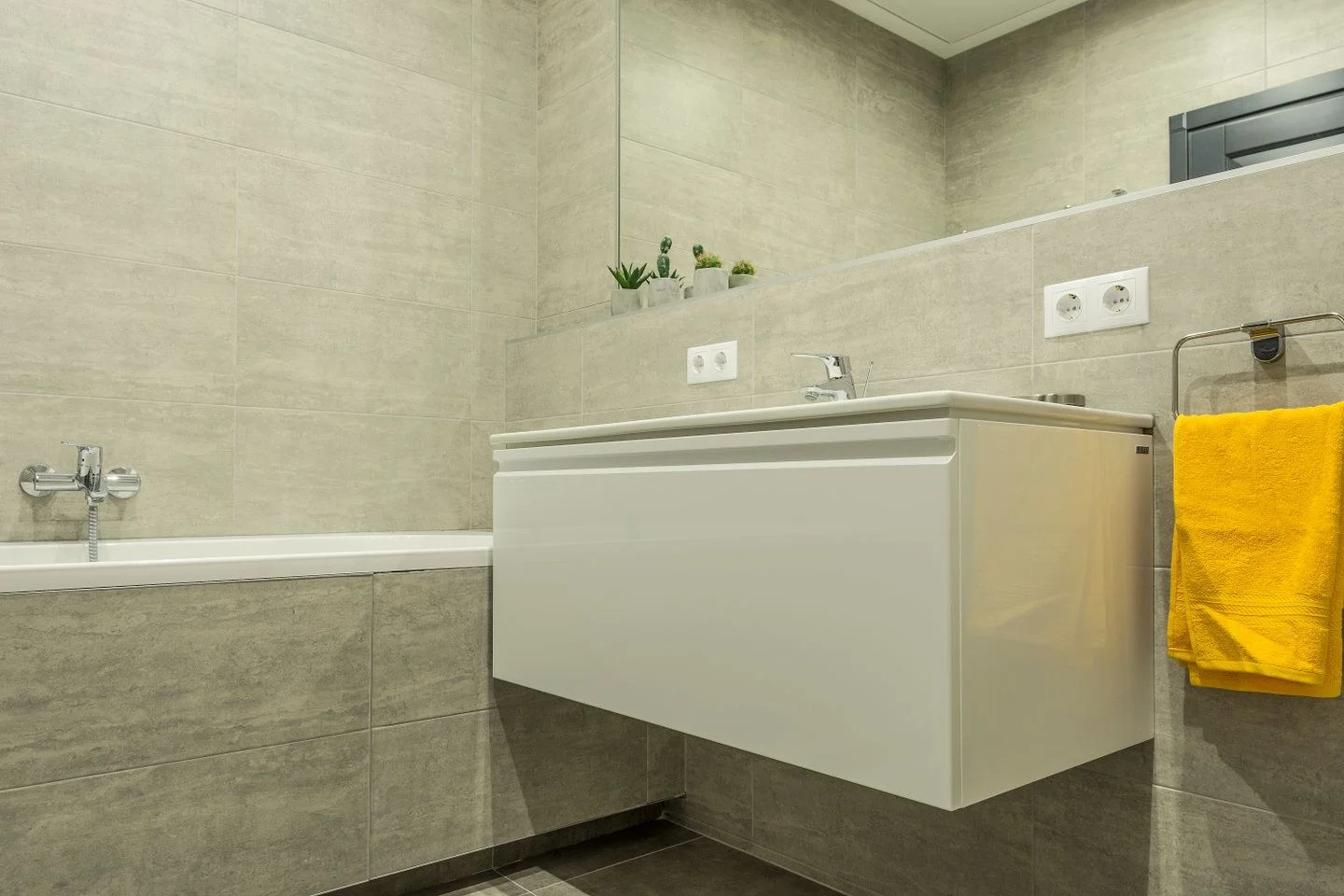
A wide rectangle often suits a broad vanity or a shared sink zone because it provides useful reflection across its width. A vertical oval can fit between closely spaced sconces. A circle creates a distinct central shape but may leave an awkward gap beneath a wide light fixture. None of these relationships is an automatic rule. The paper test lets the actual room decide.
For two sinks, compare a single wide mirror with two separate shapes. One mirror creates an uninterrupted surface and reflects more of the room. Two mirrors can establish individual stations and leave space for wall finishes between them. Look at the faucet centers as well as the cabinet doors; their alignment may be different.
Allow lighting to share the wall
Mark the light fittings on the paper mock-up. A mirror that fits the bare wall may crowd the shades, cover a junction point, or reflect a bulb unpleasantly. If the existing lights are staying, use their positions as a constraint. If they are moving, plan mirror and lighting together with the installer.
Integrated lighting changes the comparison. Its illuminated border occupies visual space, and its electrical and installation requirements need to be checked before purchase. A decorative outline alone tells you little about whether a lighted mirror will provide the task illumination you want.
Finally, compare frame depth and cleaning access. A projecting frame next to a shallow shelf can create a crowded ledge. A very narrow gap between mirror and backsplash may be awkward to wipe. Stand back once more with the selected shape in position, then lean toward the sink as you normally would. The right outline should make sense in both views: as part of the room and as something used at close range.