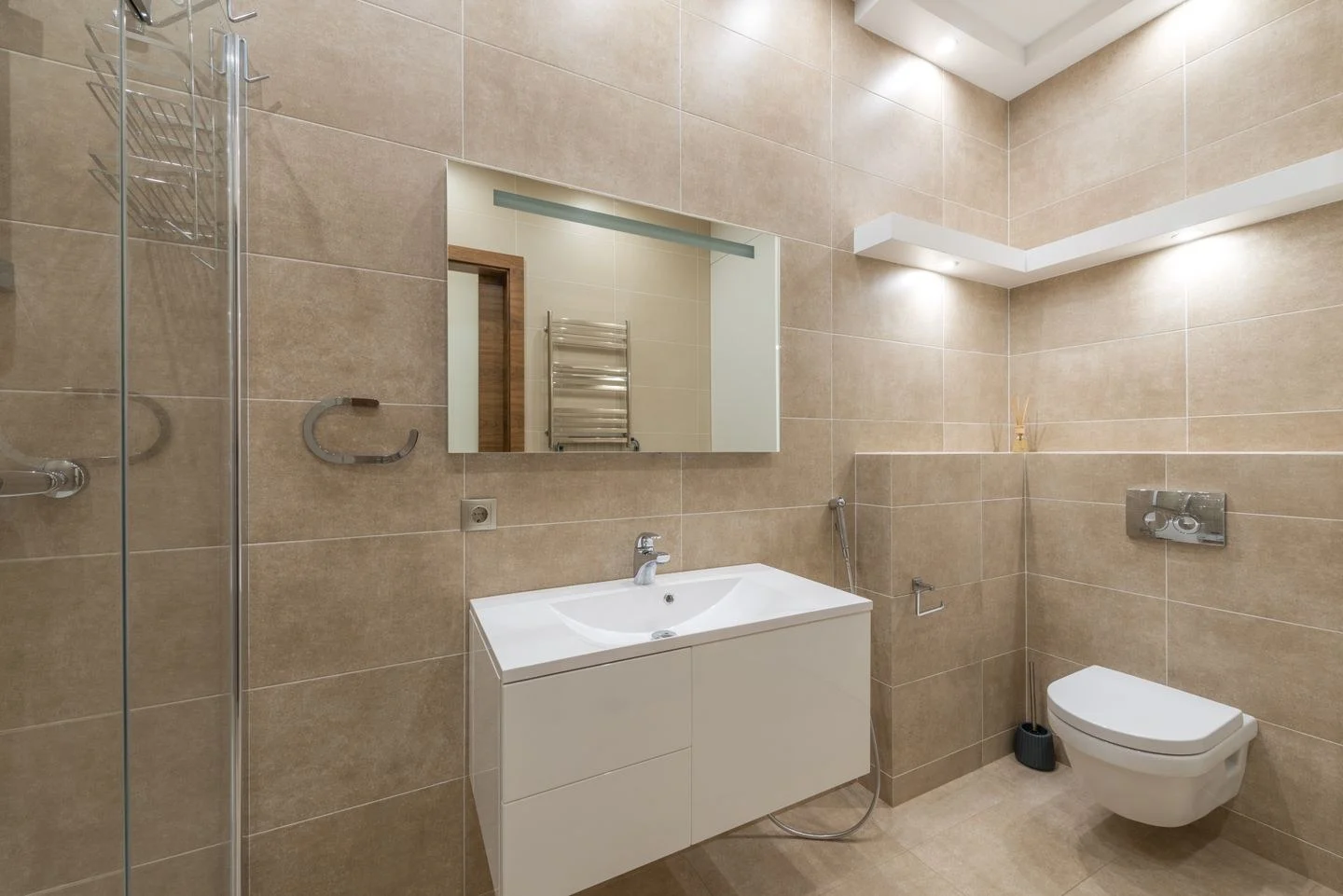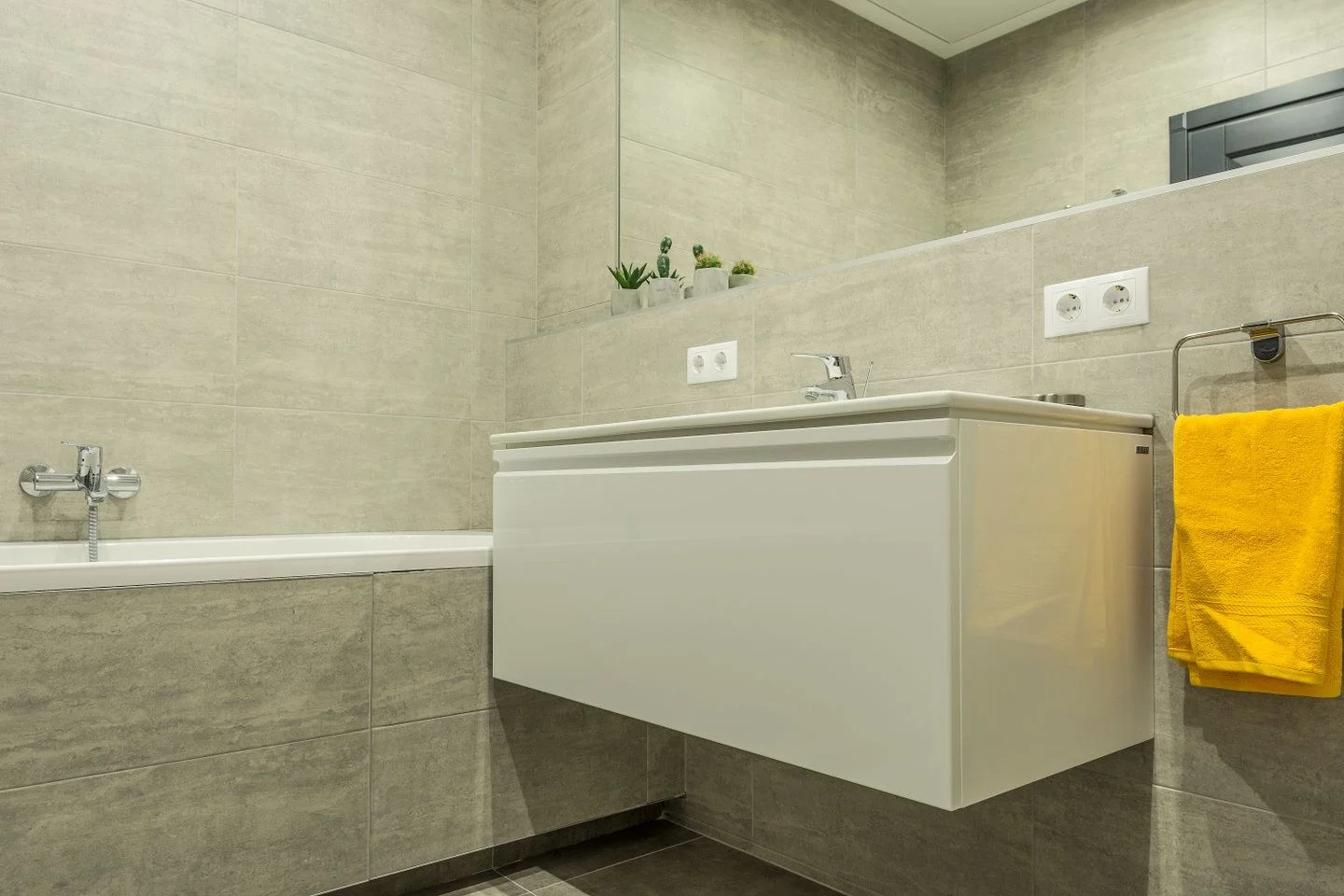
A vanity with two doors and one deep compartment can hold plenty while making almost nothing easy to find. The missing feature is not necessarily more storage volume. It is a way to retrieve a small item without unloading everything in front of it.
Before buying organizers, empty the cabinet and check its condition. A storage system cannot resolve an active leak, a damp base, or a door that will not open properly. Address those problems first. Then place only the items that actually belong in this bathroom beside the empty cabinet.
Draw the space around the plumbing
Measure the usable width inside the door opening, not just the width of the cabinet box. Hinges can prevent a wide bin from coming out even when it fits on the shelf. Record the depth to the back and the height below the basin. Trace where pipes and shutoff valves interrupt that space, leaving them accessible.
Imagine three smaller areas rather than one large rectangle. A narrow tall space beside the drain could hold upright bottles. A low area beneath the basin might accept a shallow tray. The front corner could hold a daily kit. These areas do not need matching containers; they need containers that can move independently.
Make cardboard footprints of the proposed bins and try them with the doors open. Add the height with an empty shipping box. Pull the box toward you as if retrieving a bottle. This simple rehearsal exposes hinges, door rails, and plumbing that a flat measurement overlooks.
Give each movement a purpose
A handled caddy suits items used together: a brush, comb, and hair accessories can travel to the counter as one kit. A shallow tray works for smaller objects that would disappear at the bottom of a deep basket. Tall containers suit upright supplies only if their handles and rims do not obstruct the labels or make removal awkward.
Stacking can recover unused height, but consider what happens every morning. If the upper box must be removed to reach daily toiletries, the lower box is in the wrong position. Reserve that arrangement for spare supplies. A removable shelf insert can work beside plumbing, provided it stands securely and does not interfere with access for maintenance.
Pull-out hardware offers another route, although it demands a more exact fit. Check the manufacturer's mounting requirements, rated load, travel, and clear opening. A narrow opening may require a smaller unit than the apparent cabinet width suggests. Do not drill or alter the cabinet around pipes without understanding what is behind the surface.
Separate replenishment from the morning routine
Keep the current bottle near the front and reserve a clearly defined area for its replacement. Several partly used bottles are a sorting problem; adding containers simply packages that problem. Decide which one is in use and remove products that are no longer suitable according to their labels.
Cleaning products should remain in their original labeled containers and in storage appropriate to the household, especially where children or pets are present. They need not share the same caddy as personal-care items. Medicines may have storage conditions that make the bathroom unsuitable; follow their packaging rather than assuming the vanity is the default location.
Once the arrangement is in place, leave enough space to see the cabinet base and reach the valves. The successful result is not a perfectly filled rectangle. It is a cabinet where the everyday kit comes out in one movement, backups are easy to count, and the plumbing remains accessible.