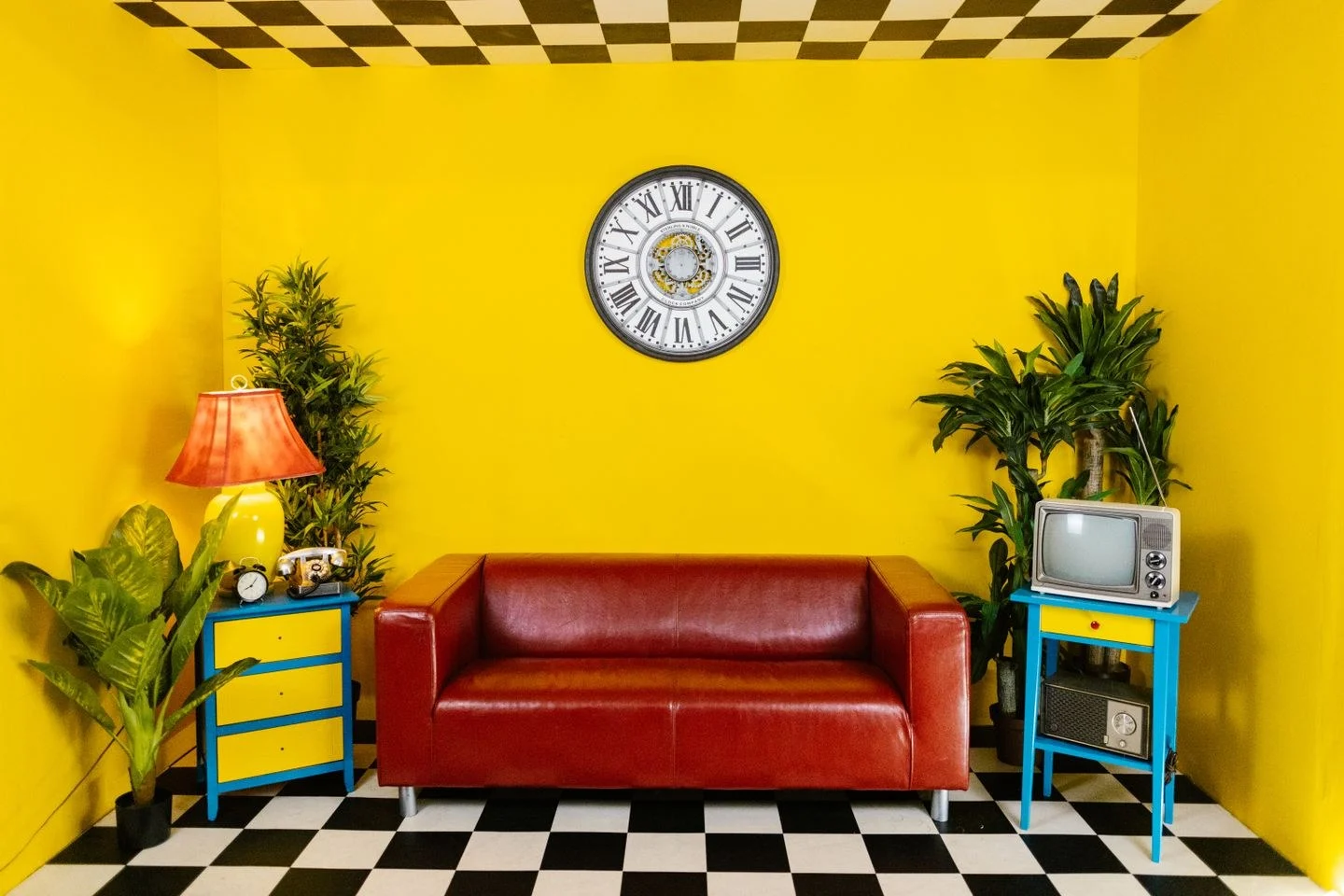
Yellow is often chosen to warm a room with cool daylight. It can do that visually, but a large yellow surface may be stronger than expected, particularly beside a blue-gray floor or brilliant white trim. Begin with the amount of yellow you want, not a promise that it will imitate sunshine.
A cushion, curtain, and wall create very different quantities of color. If you want a modest lift, a yellow textile may be sufficient. If you want yellow to define the room, test paint across several wall positions before selecting the hue.
Compare clear and muted versions
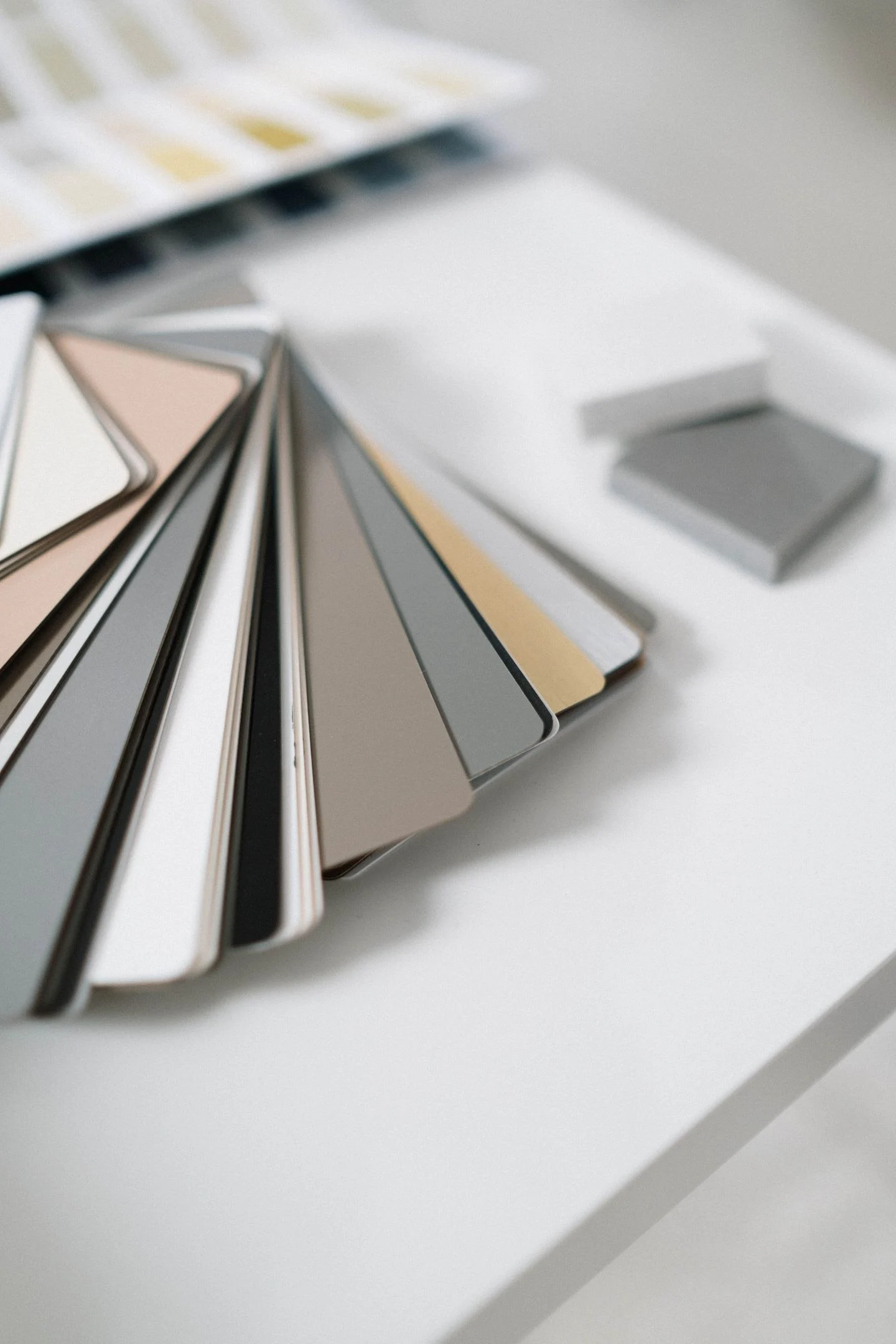
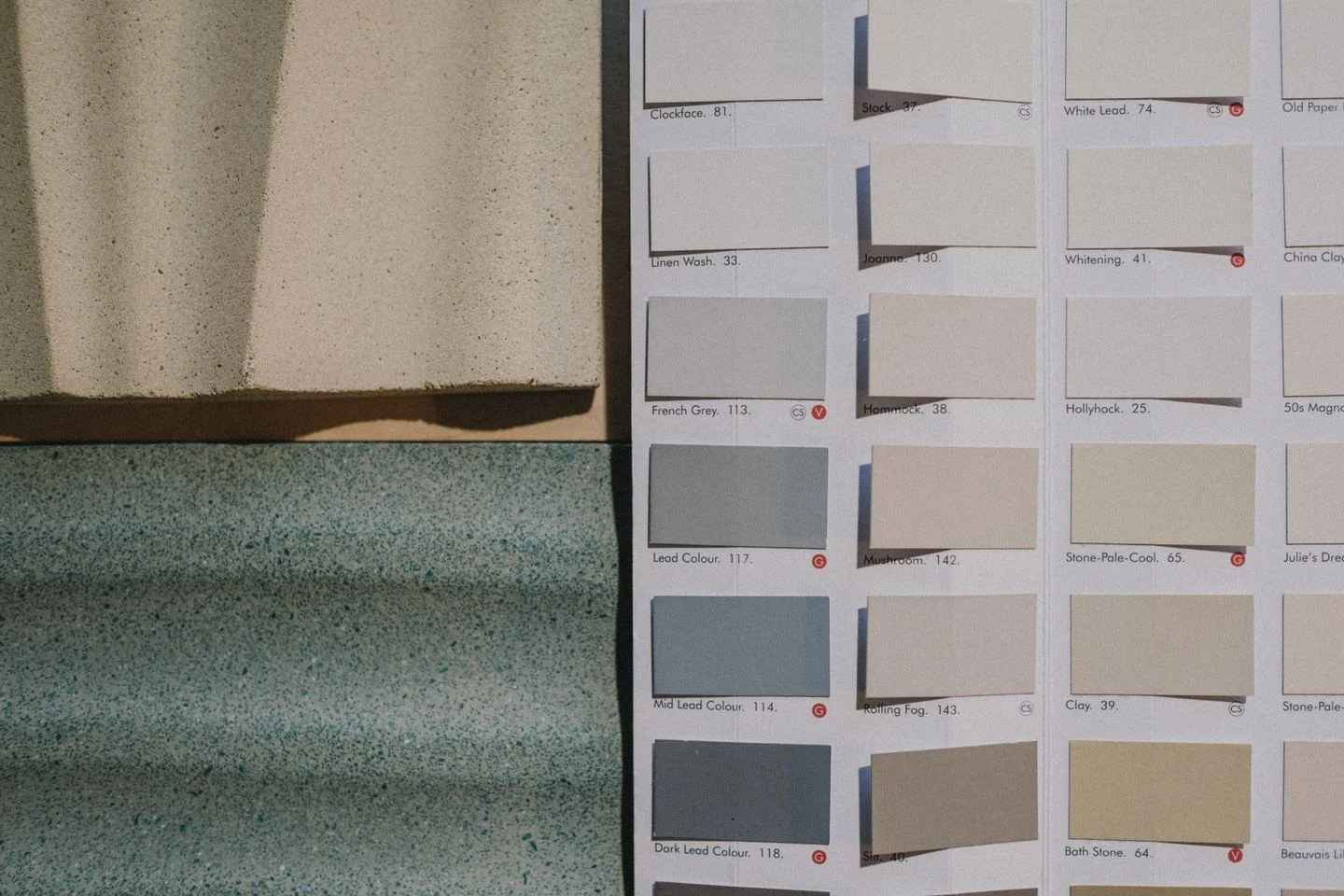
A clear lemon yellow has a sharper character than ochre, straw, or a yellowed cream. Put two or three distinctly different samples in the room and look for the direction that relates to your furniture. A muddy sample is not automatically sophisticated, and a clear one is not automatically too bright. Their success depends on the surrounding values and materials.
Check the shaded wall as well as the wall near the window. The color may look subdued in one place and much stronger in another. Benjamin Moore's warm-and-cool guidance emphasizes the role of both daylight and artificial lighting, so include the lamps you normally use after sunset in the test.
Keep a neutral interval
If the walls are yellow, a quiet upholstery fabric can keep the room from feeling uniformly warm. Brown wood, charcoal details, or a restrained blue textile can create contrast. You do not need all three. Choose the supporting material that already has a reason to be in the room.
Be cautious about adding several slightly different yellow accessories after painting. A mustard pillow beside a buttery wall may look deliberately layered, but it may also reveal a green cast you had not noticed. Compare the physical pieces together.
When the room feels too yellow, remove smaller repeats before abandoning the main color. Often the broad wall is enough, and the extra objects have tipped the balance. A yellow room can still contain generous areas of wood, neutral fabric, and undecorated space. Those intervals let the color be present without requiring it to occupy every view.