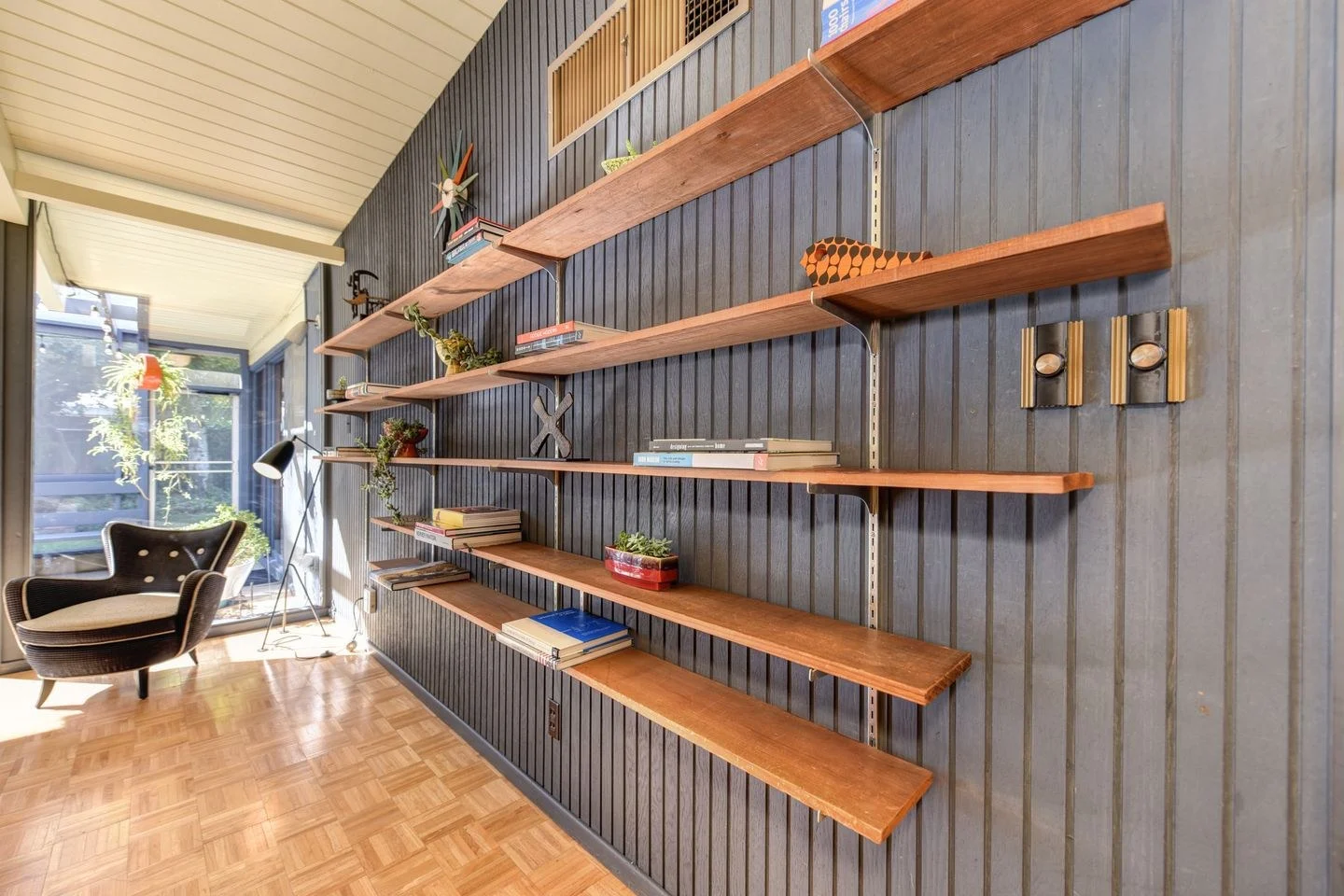
Vertical storage uses wall height, but height alone does not make a room feel less crowded. A tall unit filled with exposed objects can dominate the view more than a low closed cabinet. The useful question is what belongs high, what belongs within reach, and how much visual activity the room can hold.
Start with categories. Daily objects need easy access. Occasional lightweight items can move higher. Heavy or awkward items generally need a lower, manageable position, subject to the furniture's instructions. Do not turn a high shelf into a place that requires unsafe reaching.
Concentrate rather than scatter
One well-sized tall unit may create a clearer room than several narrow towers placed around it. A continuous storage area leaves another wall or corner free. It also makes the room's organization easier to understand.
Mix open and closed sections according to the contents. Books and a few objects may work on open shelves. Paperwork, cables, and varied packaging often benefit from doors or fitted boxes. Containers should fit the shelf depth and remain easy to remove; a tightly wedged basket is not convenient storage.
Check the top and the edges
A unit that nearly reaches the ceiling can look deliberate if its proportions fit the room. A small awkward gap may invite a row of boxes that visually extends it without adding orderly capacity. Decide whether the top is intentionally empty or part of the storage plan.
Keep the unit clear of doors, switches, vents, and window operation. Follow anchoring instructions and use suitable wall fixings. Tall furniture is not made stable merely by placing heavy objects at the bottom; required anchoring still matters.
IKEA's vertical hallway examples place seasonal items away from the most accessible level. That principle is useful throughout a home, but adapt it to the people using the storage. A shelf is not useful if its contents cannot be reached comfortably and safely.
After filling the unit, view it from across the room. If every shelf has the same density, clear a few areas or move busy contents behind doors. Vertical storage should absorb the room's possessions while preserving some visual rest, not simply lift all the clutter to eye level.