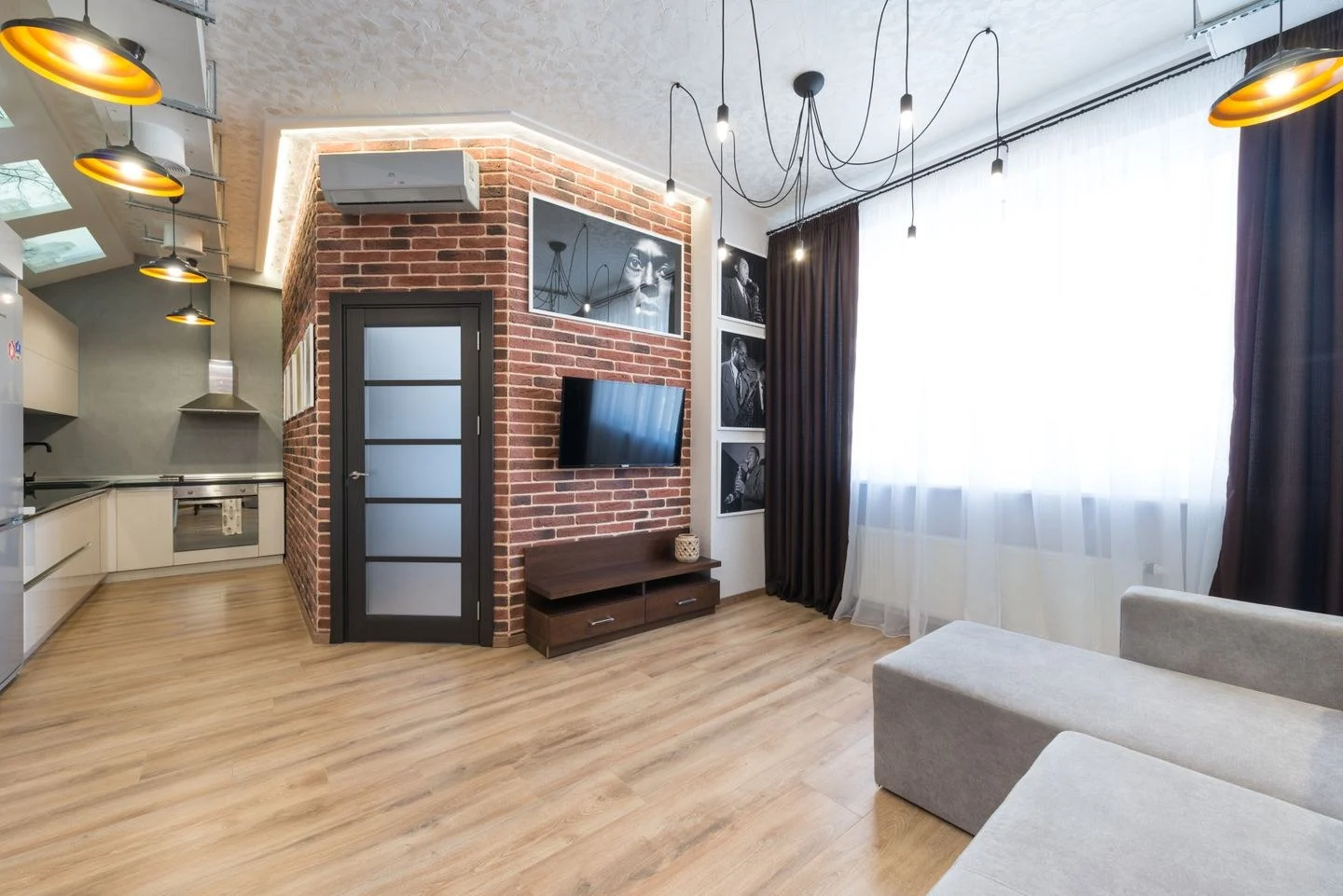
When the front door opens directly into the living room, the entry is a sequence of actions rather than a separate room. You come in carrying something, close the door, remove shoes or a coat, and put down keys. Give those actions a compact place before adding an entryway console for appearance alone.
Observe which side of the door is easiest to reach after entering. A narrow cabinet on the wrong side may require stepping around the door with bags in hand. Mark the full door swing and preserve the route into the room.
A landing place with limits
Choose a surface large enough for the objects that arrive daily. A shallow wall shelf may be enough for keys; a household that regularly carries grocery bags may need a more substantial temporary landing spot. Do not let the surface become permanent storage for unopened mail and unrelated items.
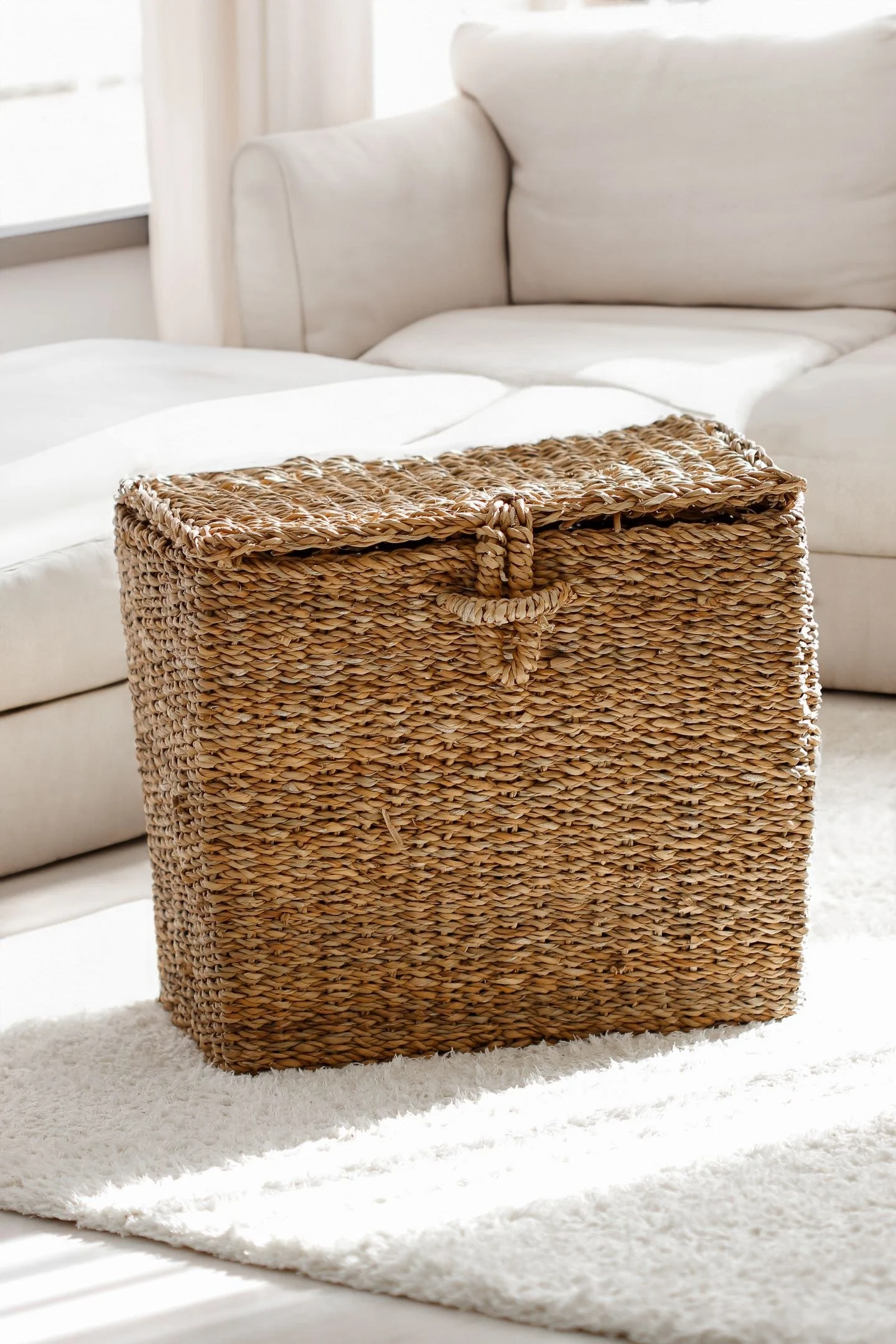
Contain shoes according to the number used in the current season. A low cabinet can keep the living room view calmer than several open baskets. Check the largest pair of shoes against the internal dimensions and account for the space needed to open the cabinet.
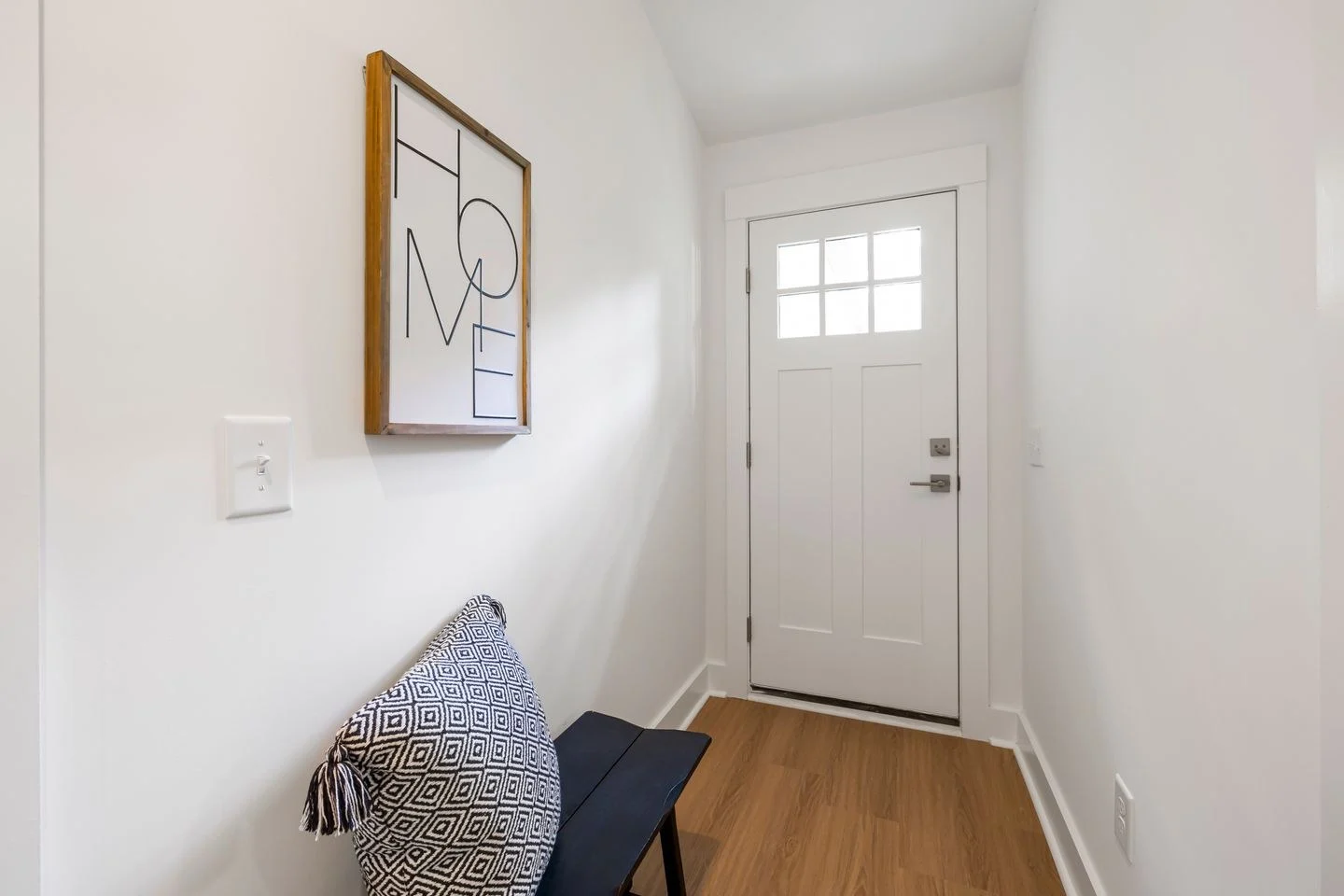
If a seat is useful, a compact bench can mark the boundary between arrival and relaxation. It must still leave room for a person to sit, bend, and stand without blocking the door. A stool may be a better fit when a full bench is unnecessary.
Use the living room furniture as an edge
The side or back of a sofa can help define the entry route, provided it does not narrow it excessively. A rug can distinguish the sitting area from the arrival zone. Keep rug edges clear of the door's movement and choose a suitable nonslip arrangement for the flooring.
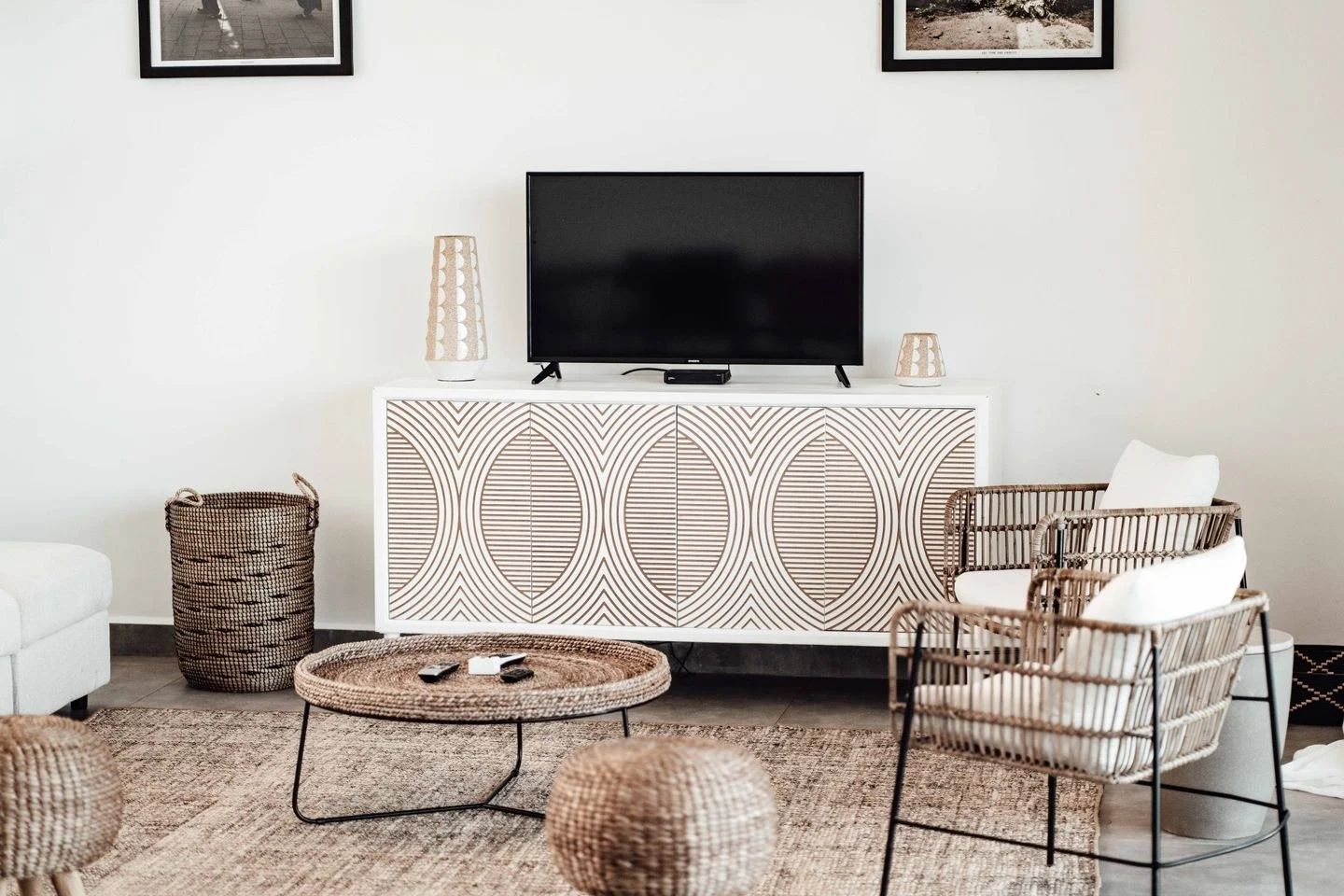
Coordinate the entry storage with the living room's materials rather than treating it as a miniature mudroom. One wood finish or repeated metal detail may be enough. IKEA's hallway examples show how narrow storage and vertical organization can serve small arrival spaces; the useful lesson is to size storage to the objects and the route.
Leave one place intentionally empty for the item that comes home unexpectedly. A landing zone that is filled to capacity at all times cannot perform its main job when the door opens.