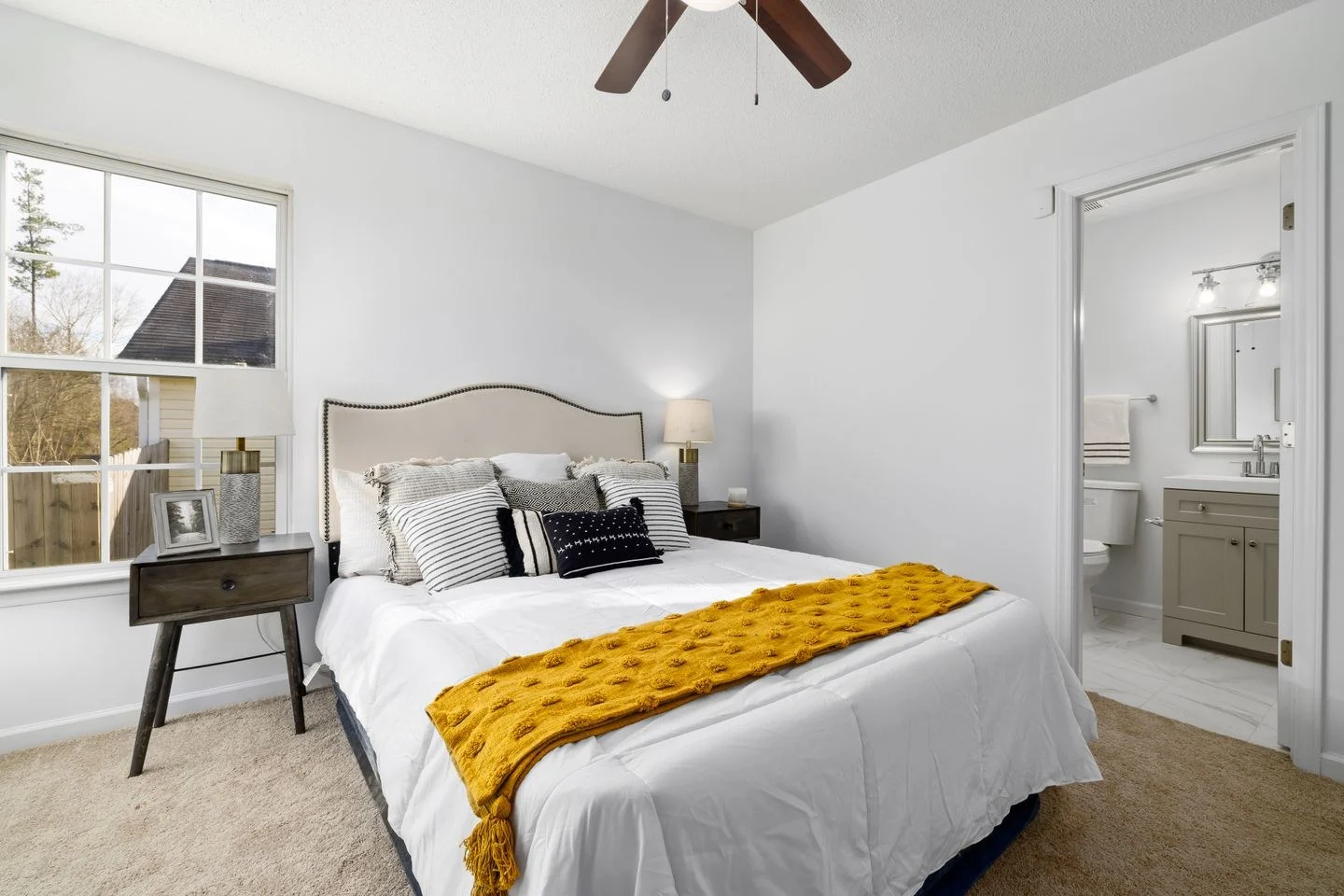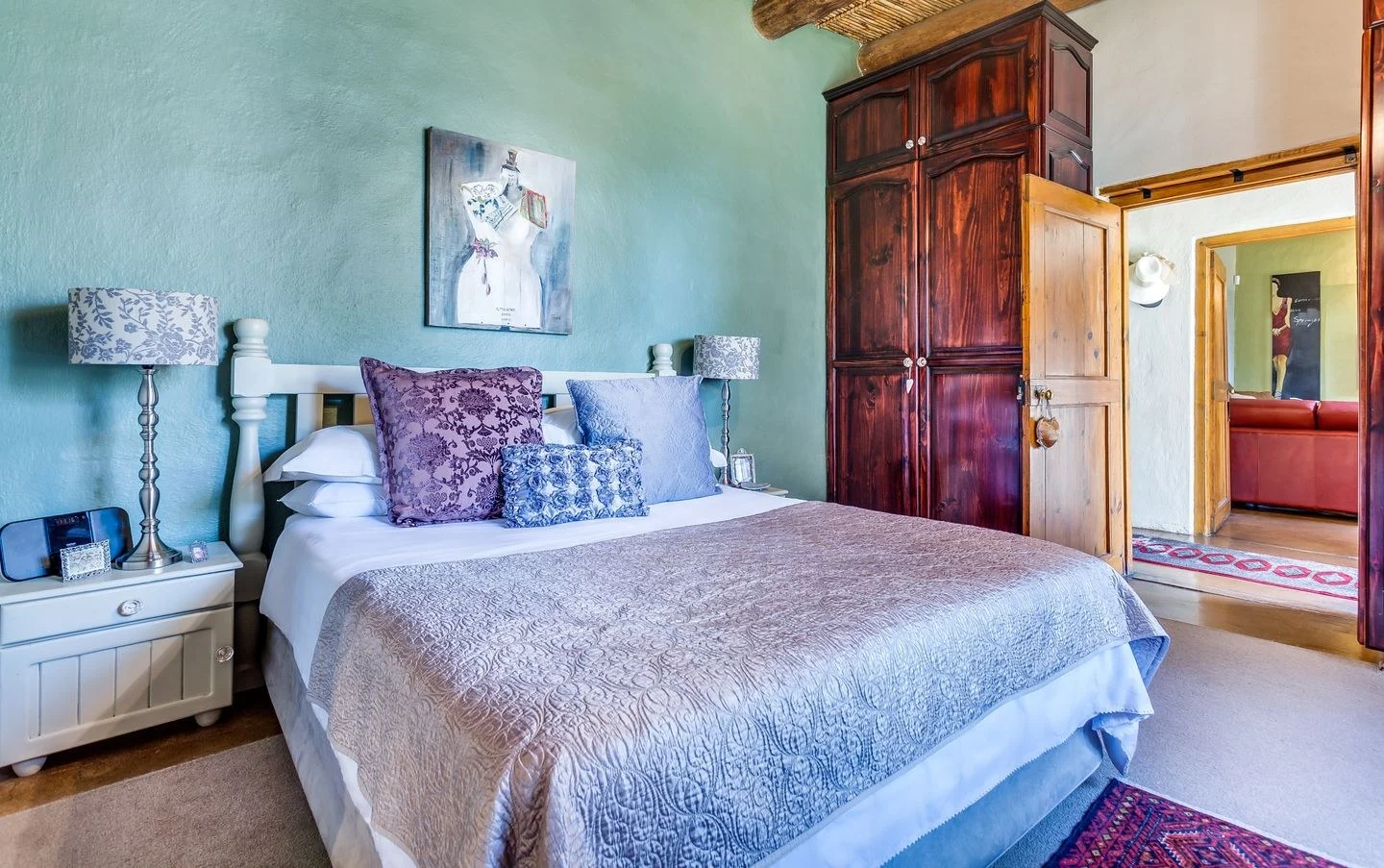
Different nightstands can solve a bedroom more gracefully than a matched pair. One side may be narrow, one person may need drawers, or an existing piece may be worth keeping. The pair needs a relationship, not identical dimensions.
Choose the feature they share
Similar top heights are a useful starting point because they create a common line beside the mattress. The widths can differ if the room requires it. Alternatively, two tables can share a wood tone or a simple shape while differing in height, though you should test the reach from each side of the bed.
Look at their visual weight. A solid chest and a thin-legged table can work together, but the chest will feel more substantial. A broader lamp or a small artwork on the lighter side may balance the composition without forcing another storage piece into the room.
Let the lamps help, not dictate
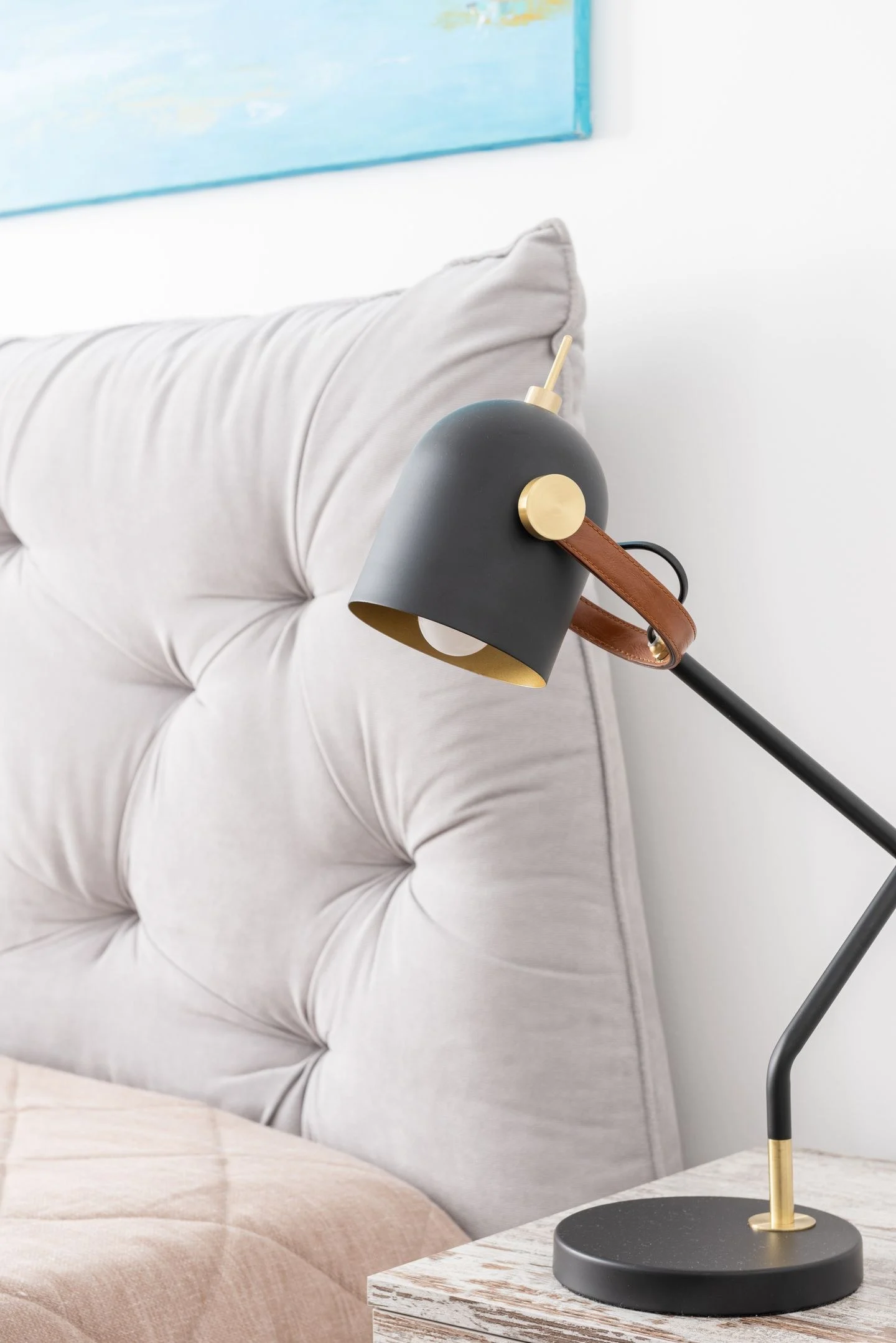
Matching lamps can connect different tables, but they may end up at different heights. Check the total composition of table, lamp base, and shade. Also check the lighting from the bed: a beautiful alignment from the doorway is less useful if one lamp shines directly into a person's eyes.
Different lamps can be equally coherent when they share a finish or shade color. Keep their practical roles comparable if both people read. If only one person needs a reading light, there is no requirement to reproduce it as decoration on the other side.
Respect the two routines
One table may hold a book and water, while the other needs charging space and a drawer for small items. Choose interior storage accordingly. A tiny shelf is not a fair substitute for a usable nightstand if the person on that side has several legitimate essentials.
Measure door swings, bed-frame projections, and drawer openings before placing the pieces. A vintage chest may have deep drawers that collide with bedding, while a modern table may have a broad base that narrows the floor route.
Finish with fewer objects than you might use on a dresser. The difference between the tables is already part of the room's character. Leave enough clear surface to put down glasses or a phone without moving a vase. When each side works independently and one or two visible details connect them, the mismatch feels purposeful.