Black is often described as a finishing touch, but it can do several different jobs. A frame outlines art. A table base gives a pale top a visible structure. A dark lampshade creates a substantial shape. Understanding the job helps you decide how much black the room needs.
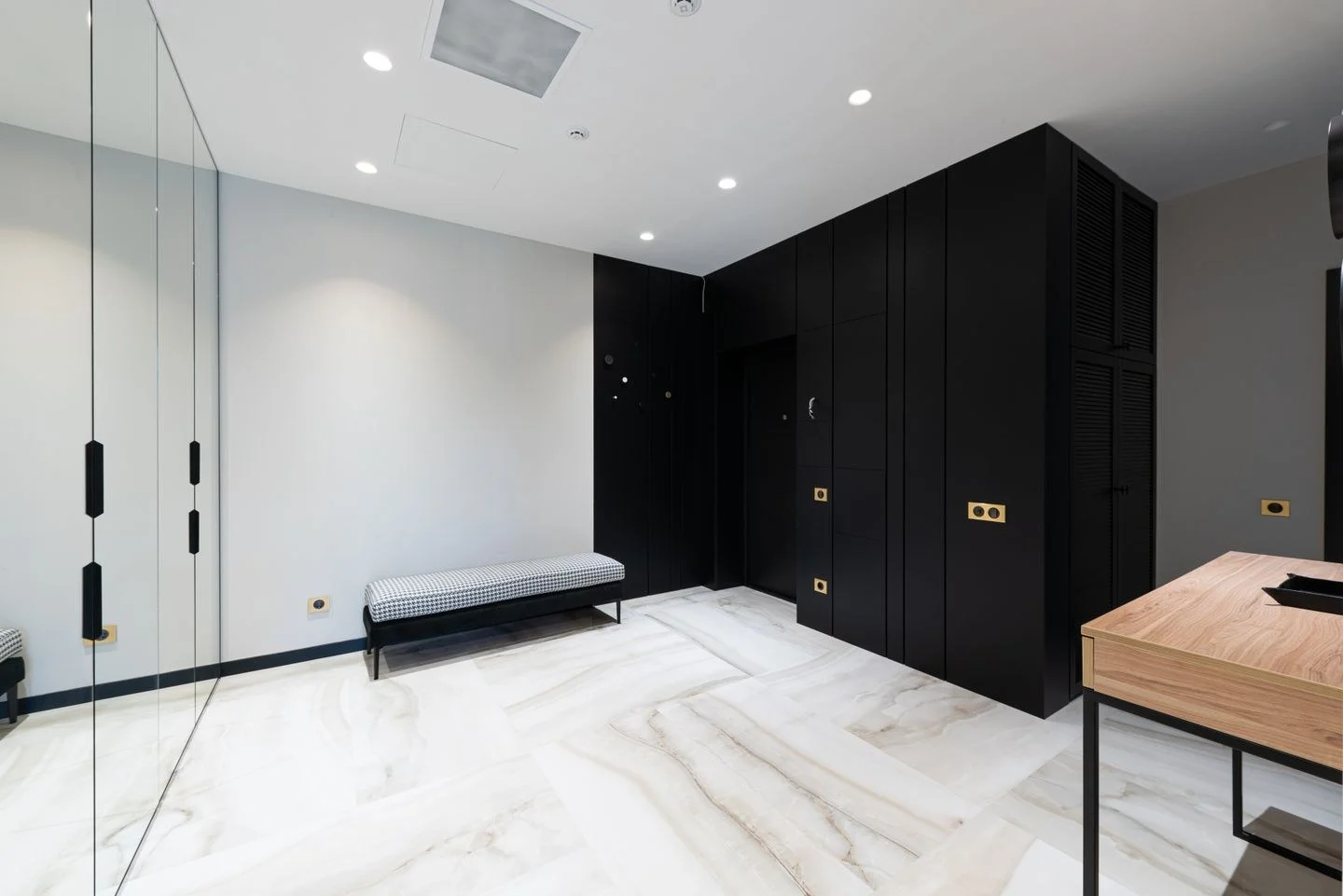
Start by counting what is already there. A television, fireplace opening, speaker, or window frame may be the largest black element in the room. Ignoring these while adding decorative accents can produce more contrast than expected. Work with the existing dark areas before buying another one.
Repeat weight rather than identical objects
A thin black picture frame and a broad black cabinet are not equal visual units. If a television dominates one wall, a small black bowl across the room may be too slight to create balance. A lamp with a stronger silhouette or a dark chair frame may establish a more convincing relationship.
This does not require symmetry. Imagine a black metal floor lamp near a cream sofa and a pair of dark frames on the opposite wall. The shapes differ, but the eye recognizes their shared depth. The room gains definition without looking like it was purchased as an accessory set.
Finish changes the result as well. Matte black tends to read as a solid shape. Glossy black adds reflections and can look lighter in some positions, darker in others. Compare both against the room's main materials, especially if the furniture already includes polished metal or glass.
Leave some edges soft
Outlining every surface in black can make a room feel heavily bordered. Let some objects blend: a pale lamp on a pale cabinet, a wood frame beside a wood shelf, or curtains close to the wall color. The contrast then remains selective and easier to appreciate.
If you are introducing black through a rug, consider how much of the pattern will be exposed after furniture is placed. A broad black border can draw a strong rectangle around the seating area; tiny dark motifs may simply add depth to a lighter field. Look at the rug from standing distance, not only close up.
A useful final edit is to remove one small black accessory from each crowded surface. If the room becomes clearer, the large elements are already doing enough. Keep the repeated detail where it contributes to structure, lighting, or an object you actually use. Black works best as part of the room's organization rather than a rule that every corner must obey.