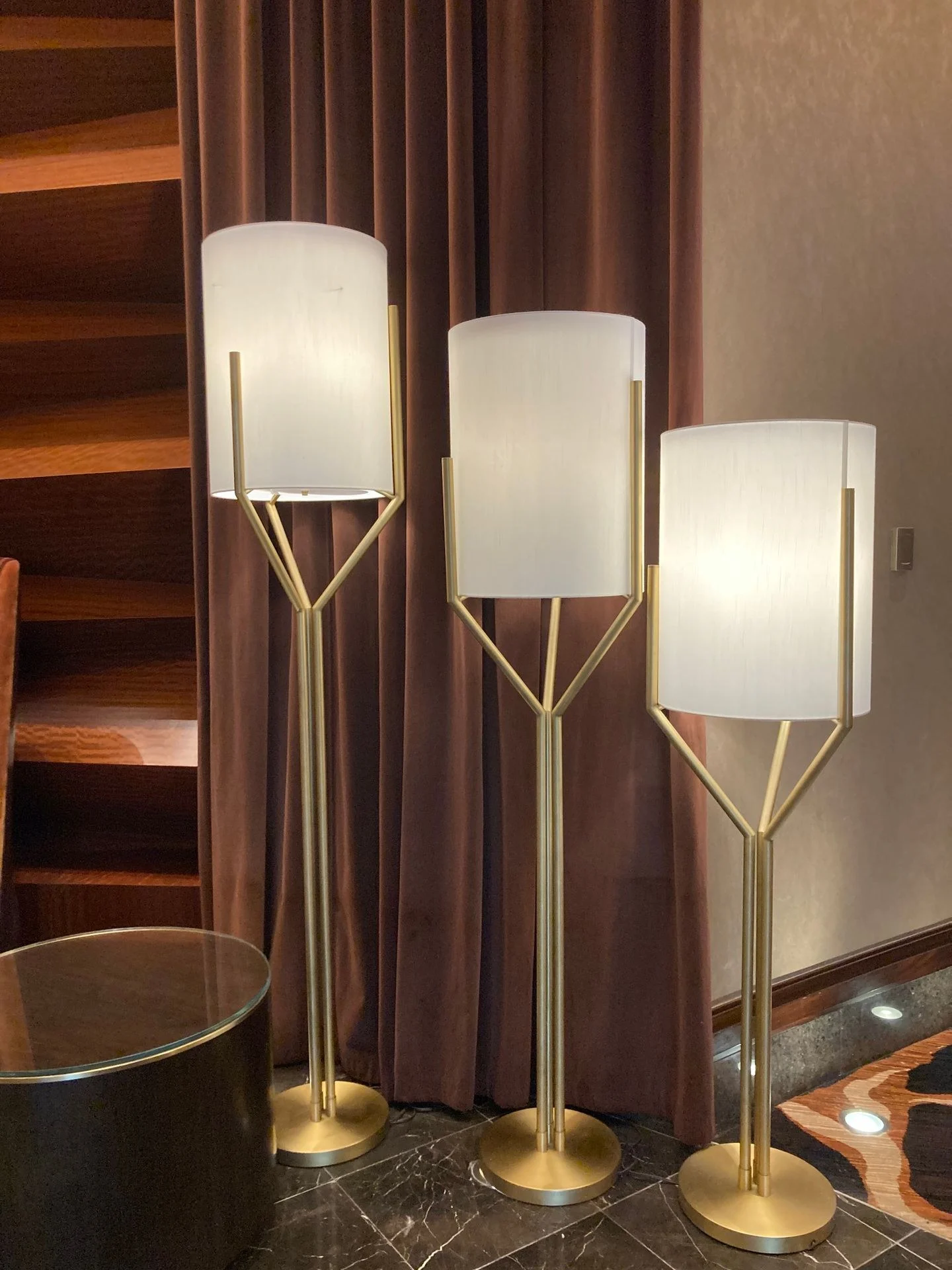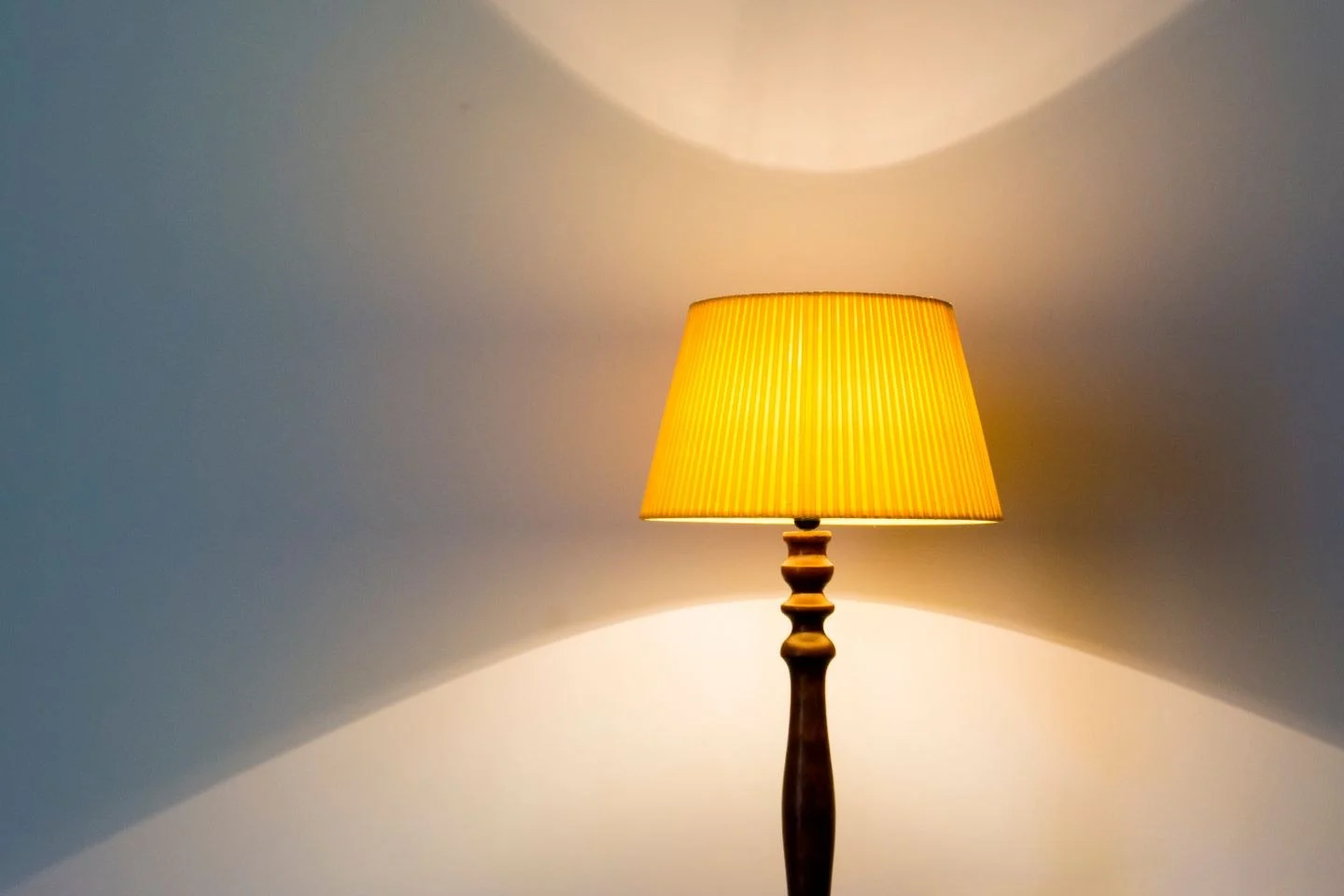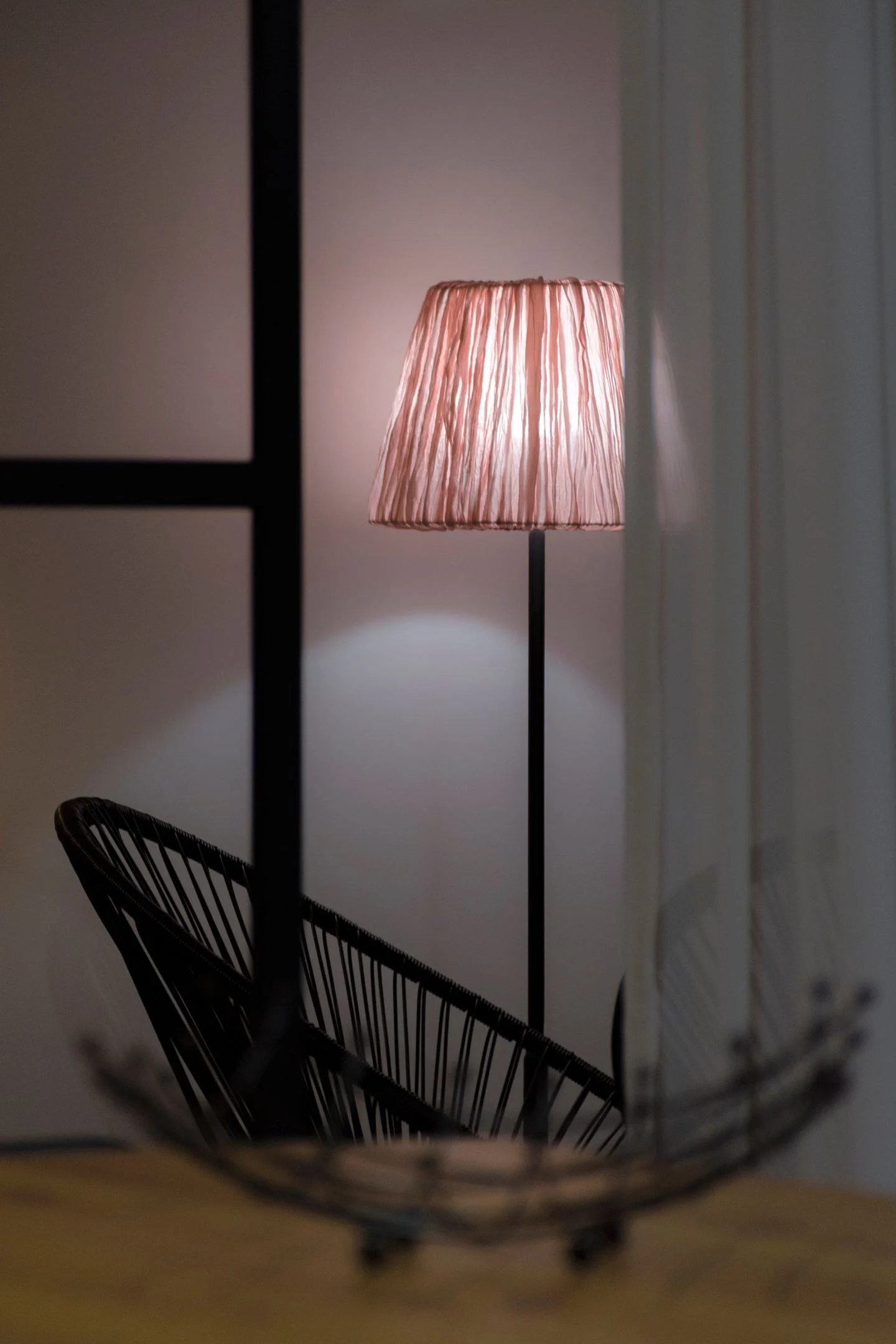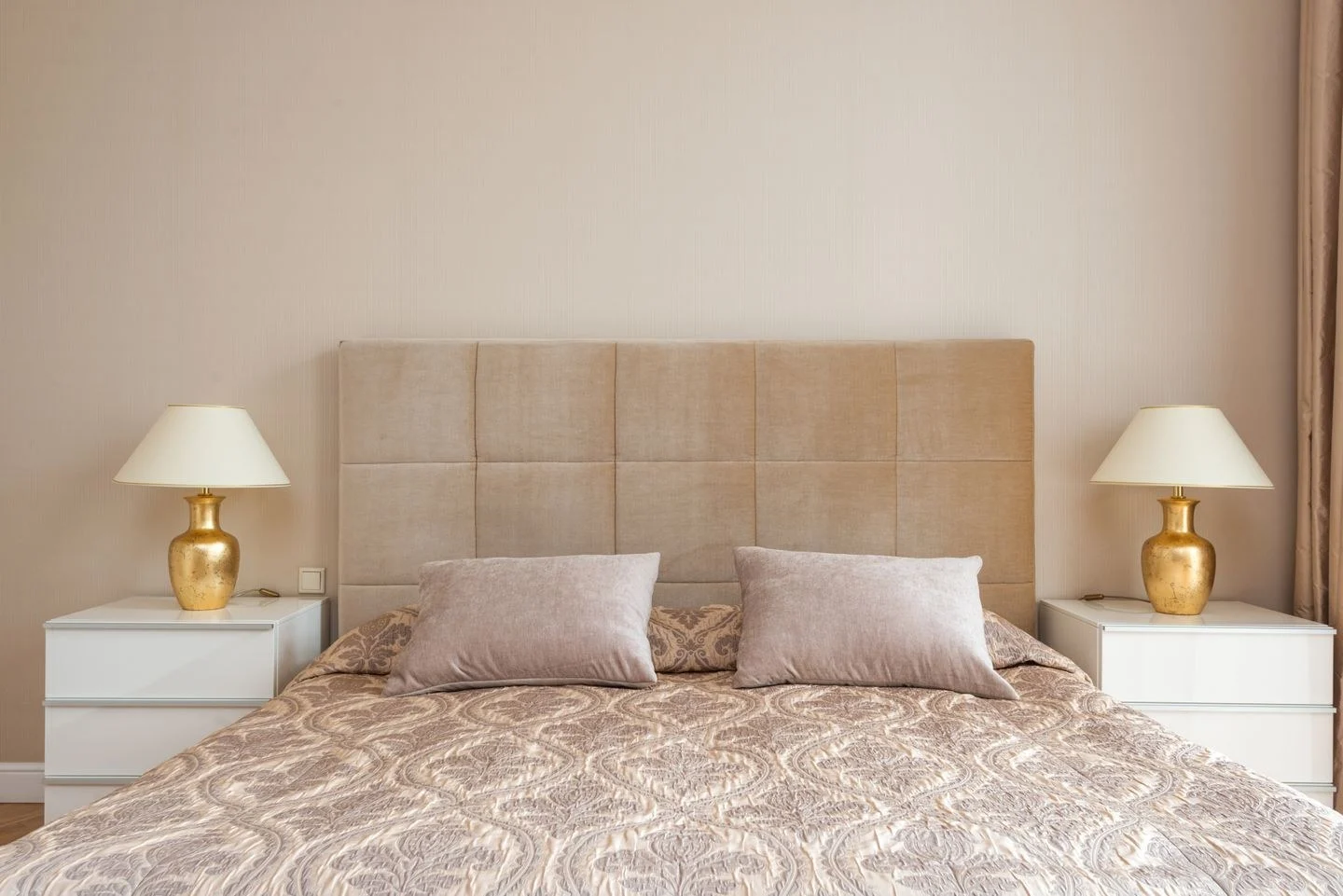
A pair of lamps can create a useful repeated element in a room that has uneven windows, different side tables, or an off-center fireplace. The lamps do not require the entire room to become symmetrical. They need positions that make sense for the activities and furniture around them.
Begin with the surfaces available. Two identical lamps on tables of different heights will place their shades at different levels. That can be intentional, but check it from the sofa or bed rather than judging the lamps alone. A tall table may lift a shade enough to expose the bulb to a seated person.
Repeat the lamp, vary the surroundings
In a bedroom, matching lamps can connect two different nightstands. Keep enough usable surface on each side for the things placed there at night. If one nightstand is much smaller, the same lamp may occupy too much of it; a pair is not a reason to accept an impractical surface.
In a living room, the lamps might sit at opposite ends of a sofa or on separate pieces across the room. The second option can balance light without creating a rigid mirrored arrangement. Consider where people sit and whether both switches are reachable during normal use.
Keep decorative objects around the lamps simpler when the room already has several competing features. One side can hold books while the other remains mostly clear. The shared lamp shape provides a connection without requiring equal accessories on every surface.
Judge the light after sunset
Turn on each lamp separately, then together. One may illuminate a useful seating position while the other mainly lights a wall. That difference is acceptable if both contributions are wanted. If one lamp creates glare or repeats light already supplied elsewhere, move it before assuming the pair must stay in those positions.
Compare the bulbs within the lamps' specifications. Similar shades with noticeably different light color can make a pair feel less connected. Follow the lamp and bulb instructions for compatibility; matching appearance does not override the fixture's requirements.
A room with an awkward corner may need a different kind of light there, even if you own a pair. Use the two lamps where they work and solve the remaining area separately. Repetition is a design tool, not an obligation to place identical objects in positions that cannot support them.