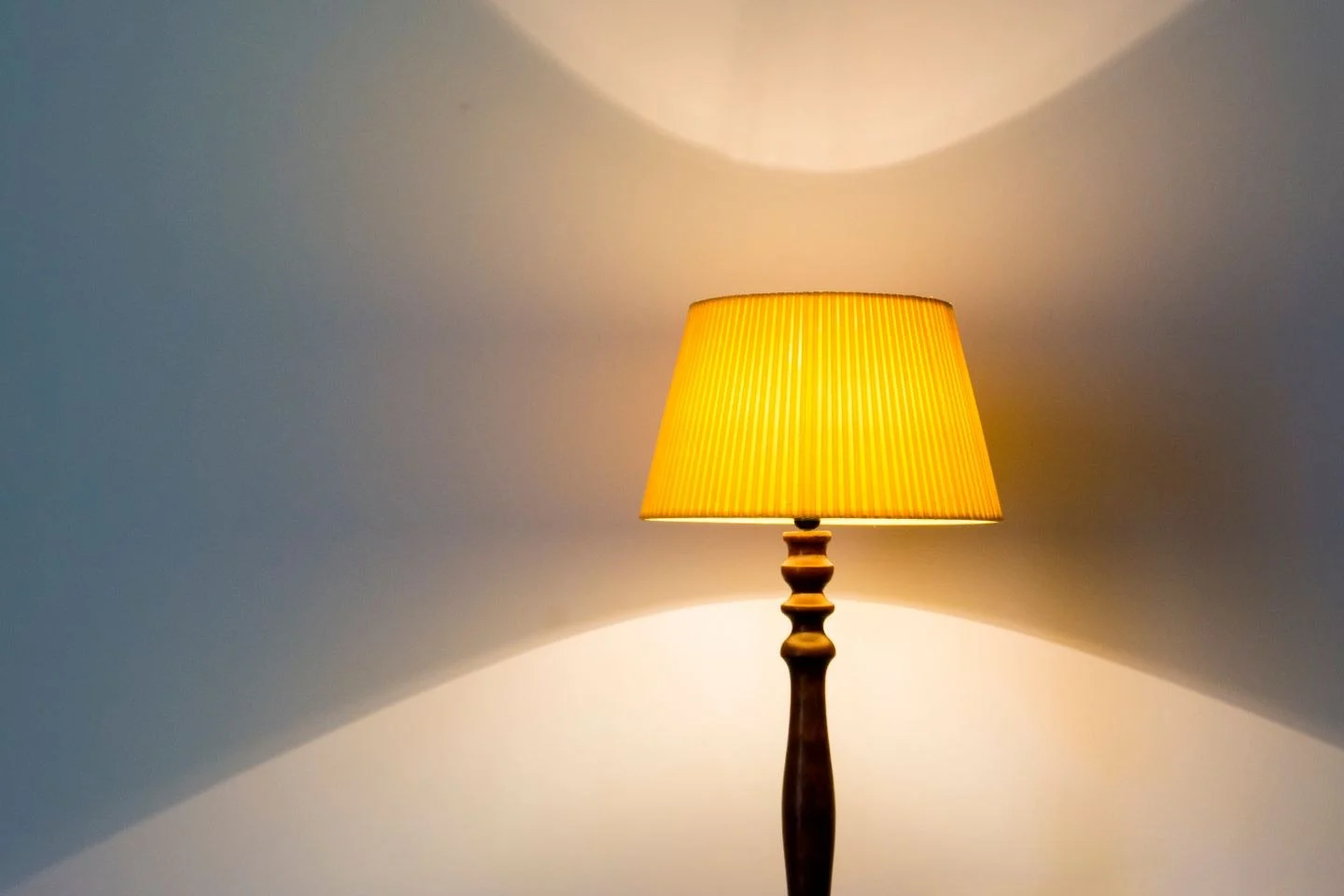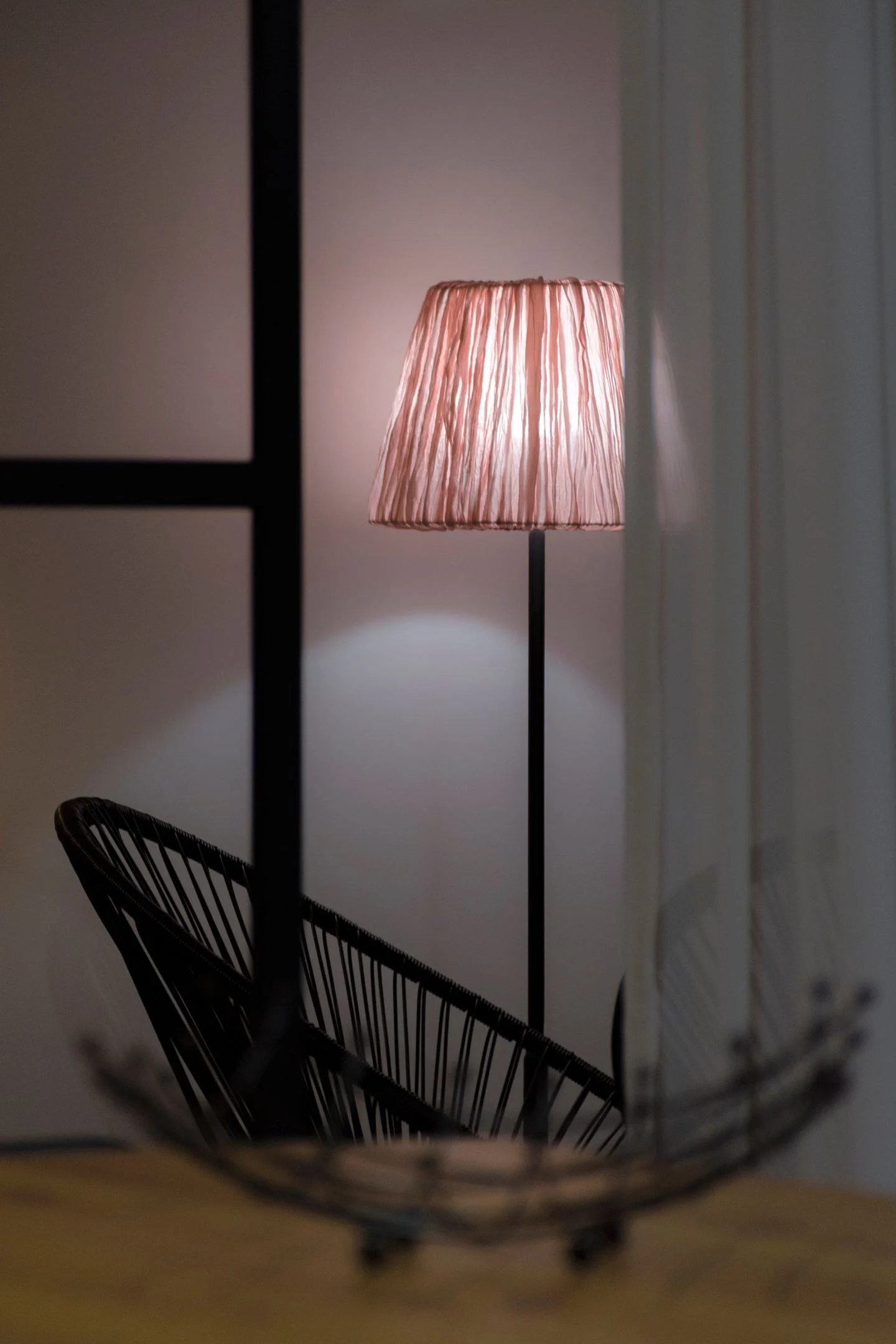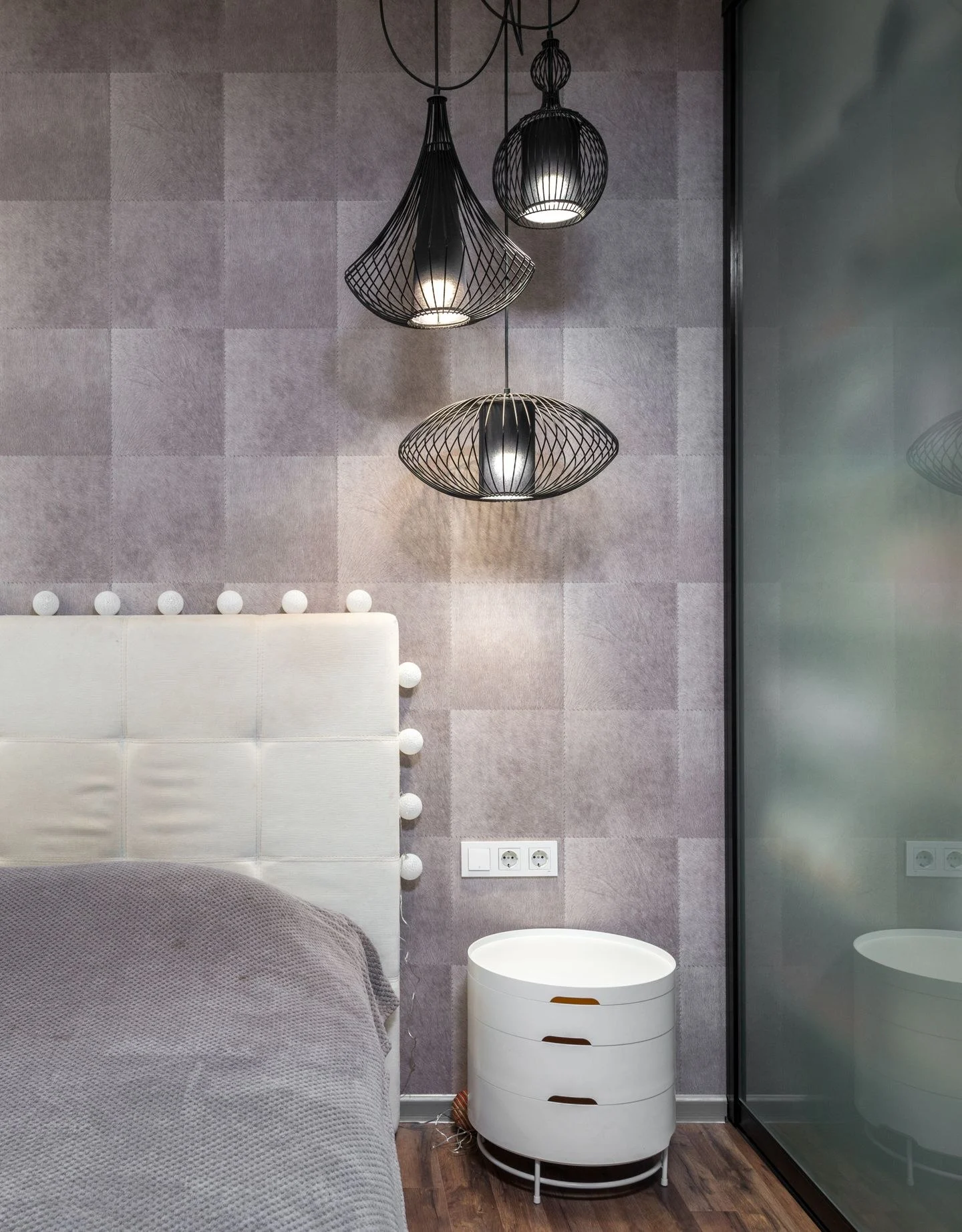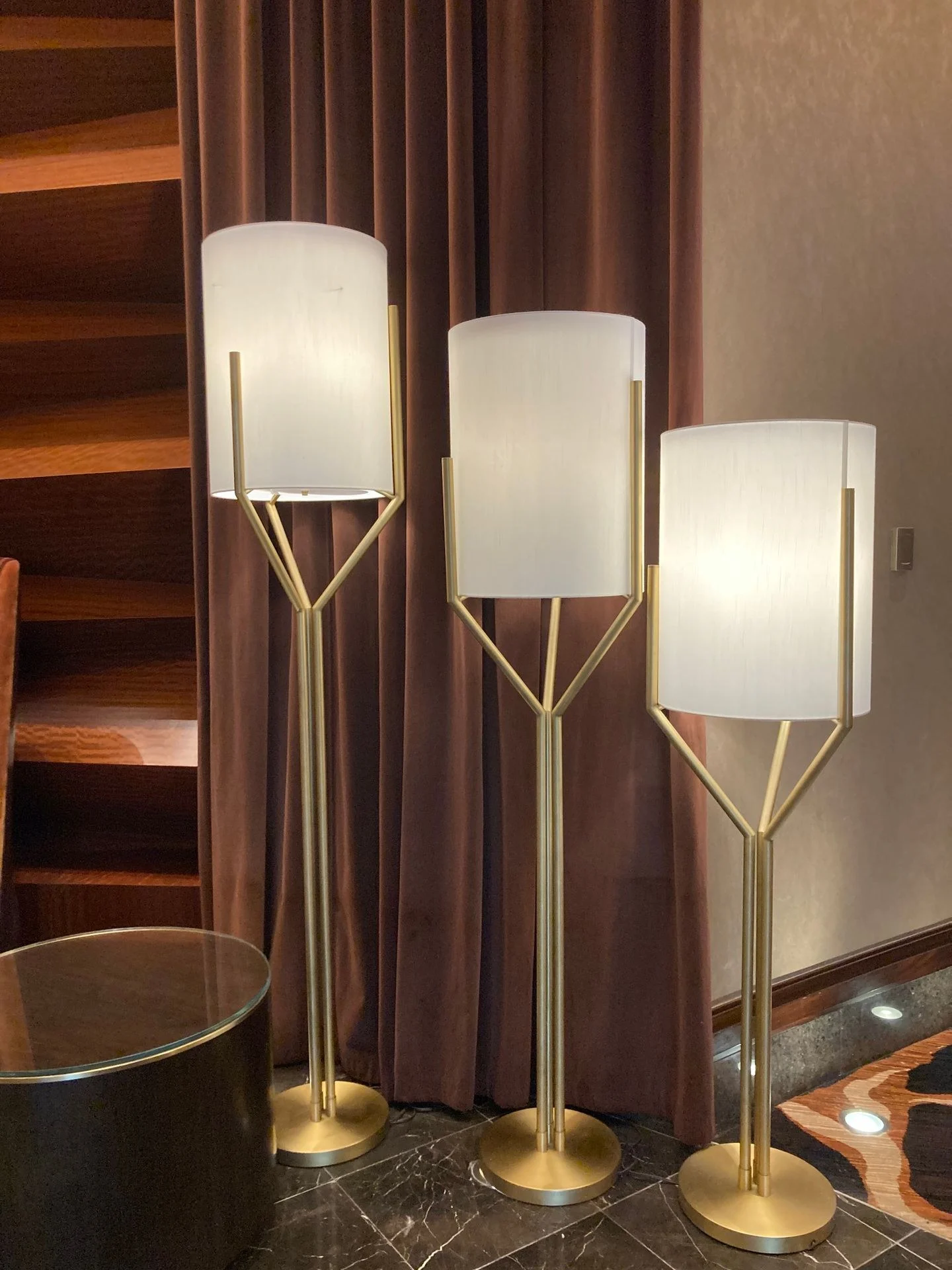
A living room lit by one bright ceiling fixture can have plenty of light and still feel uncomfortable. The light may miss a reading seat, leave a corner dark, or reflect in the television. Layering lamps begins with those specific gaps, not with a requirement to buy a matching pair.
Wait until evening and use the room normally. Note where you need to see a page, where people walk, and which surfaces disappear into shadow. Turn existing lamps on one at a time to see what each actually contributes.
Assign each light a job
General illumination helps people move through the room. Task lighting serves an activity such as reading. Accent lighting gives selected surfaces or corners more presence. Room & Board's lighting guide uses this layered approach; in practice, one lamp may contribute to more than one job, but it rarely solves all of them equally well.
A shaded table lamp beside the sofa can provide a local pool of light and a softer background. An adjustable floor lamp can serve a reading chair. A small lamp on a cabinet may balance a dark far wall. Choose the placement before the decorative shape.
Check the seated view
Sit in every main seat and look toward each proposed lamp. The bulb or bright source should not be an uncomfortable point in the normal line of sight. Shade depth, lamp height, and the angle of an adjustable head all affect this. A lamp that looks attractive while standing may be glaring from a low sofa.
Check the television with the lamps on. A reflection may be solved by moving the lamp slightly rather than reducing all the room's light. Do not judge only from the center seat if several people use the room.
Balance the room without equal brightness
The whole perimeter does not need to glow evenly. A brighter reading area and a quieter conversation area can coexist. What matters is that the differences support the activities and do not leave essential routes difficult to see.
Choose compatible bulbs and controls according to the fixture instructions. If dimming is desired, confirm that both the lamp and light source support it. Similar color temperatures can help lamps feel related even when their shapes differ, but test them through the actual shades.
Keep switches reachable and cords out of walking paths. A beautifully placed lamp that is inconvenient to operate will be used less often. After arranging the layers, try the room with the ceiling light off, then with it added. The lamps should create a useful evening arrangement on their own where possible, while the overhead light remains available for tasks that need more general brightness.