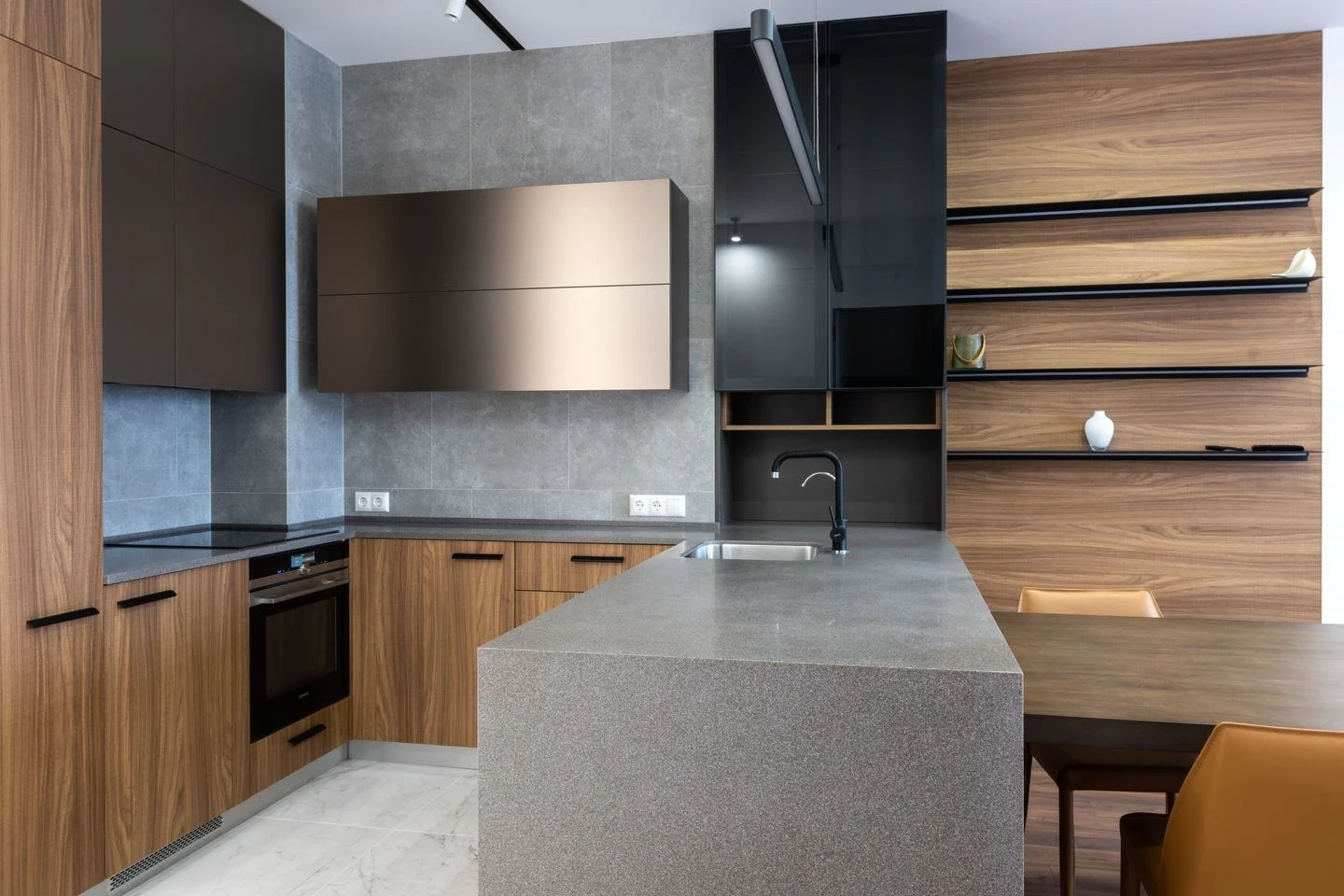
Open shelves reveal the kitchen's contents; closed cabinets reveal the cabinet design. That difference affects the room even before you compare storage capacity. Choose which objects deserve to be visible and which are easier to live with behind a door.
Let daily use guide the display
Everyday mugs or plates can work on open shelves when they are easy to reach and maintained appropriately. A collection used only occasionally may need more frequent cleaning if exposed. Consider the shelf's location relative to cooking, splashes, and dust rather than judging it solely from a photograph.
Closed storage is more forgiving for mismatched packaging, small appliances, and less orderly collections. It still needs internal organization; a calm exterior does not make a crowded cabinet convenient. Measure the items and give them usable positions instead of hiding an unmanageable pile.
Compare the visual rhythm
A continuous run of upper cabinets can feel substantial, especially in a small room. A carefully placed open section may interrupt that mass. But replacing every cabinet with shelves can create a much busier wall if the contents have many colors and shapes.
Try editing what is visible before changing the cabinetry. A glass-front cabinet can offer a middle ground, though it does not hide clutter as fully as an opaque door. A small open shelf beside closed cabinets may supply enough character without making every item part of the room's decoration.
Account for the hardware and loads
Open shelves need appropriate support for their span, load, and wall construction. Heavy dishes are not lightweight decor. Have installation assessed when necessary, and do not remove structural cabinet components as an informal styling change.
Cabinet doors need space to open without striking nearby fixtures or people. The choice between doors and shelves can affect access as well as appearance. A deep open shelf may still be awkward if objects must be moved to reach the back.
Use a small number of repeated materials to connect the two storage types. Plain dishes on a wood shelf can relate to a dining table, while the closed cabinets carry the room's quieter background. You do not need to buy matching containers for everything. A useful kitchen can display a few things you enjoy and conceal the rest without treating either approach as a universal style rule.