Empty space on a bookshelf is useful. It gives your eye a pause and leaves room for a book to return without dismantling a display. You do not have to fill every shelf for the unit to look finished.
Begin with the books that belong in the room. Group them in a way you can remember—subject, author, or frequency of use—rather than choosing a system that only works in a photograph. If color sorting makes a title difficult to find, use it sparingly.
Build groups at different widths
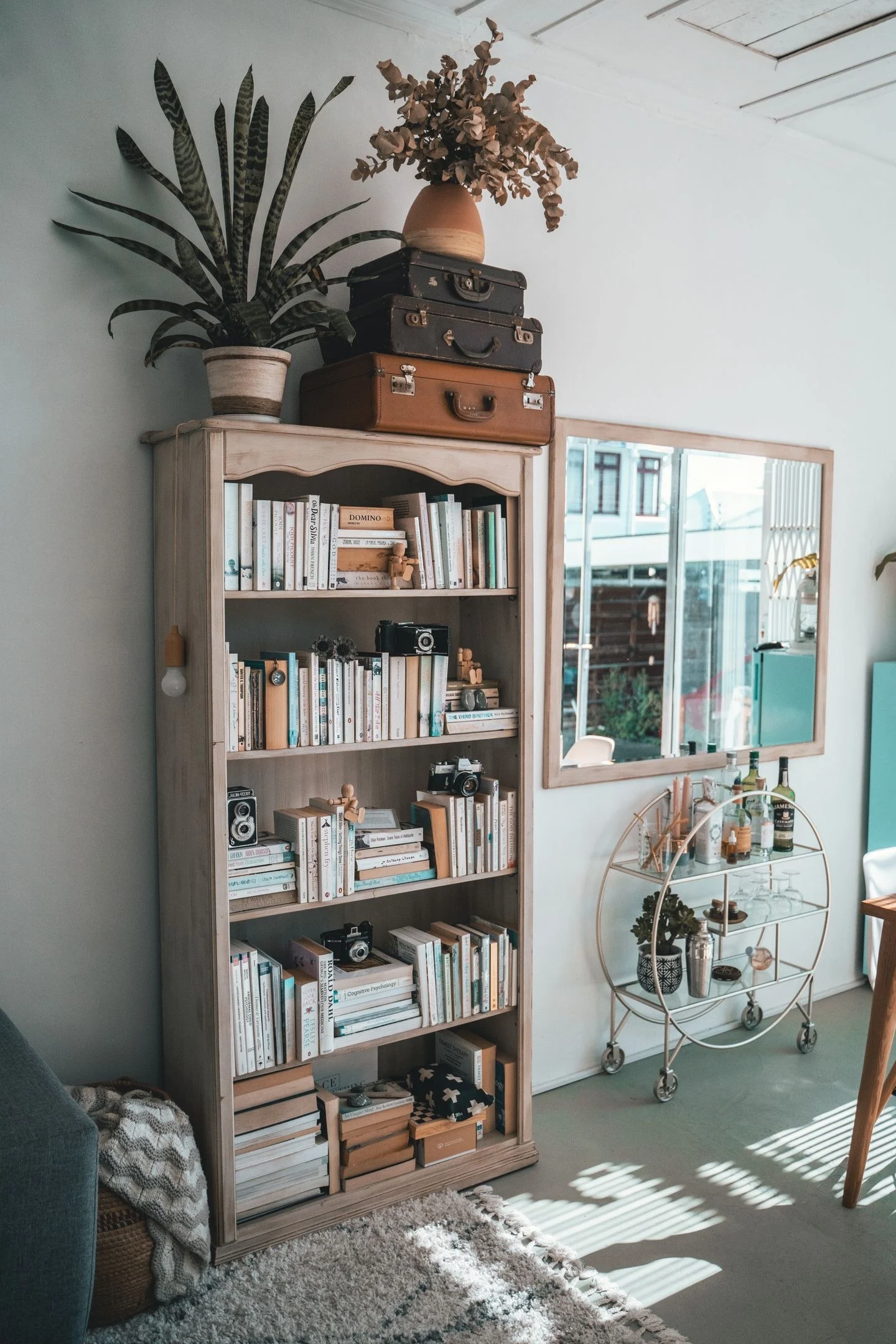
A long row of books on one shelf can balance a shorter group and one substantial object above it. Vary the width of groups before adding more objects. Small ornaments spread evenly across every shelf tend to create visual noise without giving any one thing room to be noticed.
Horizontal stacks can serve a purpose for large books, but do not place a heavy vase on the volume you read most often. Use stable bookends for upright groups and check shelf load limits. A shelf that visibly bends needs less weight or an appropriate replacement, not a styling adjustment.
Use fewer display objects
Choose objects that are large enough to read clearly from across the room. A bowl, framed photograph, or small sculpture can be more effective than several tiny pieces. Leave sufficient space to lift the object without scraping the shelf above.
Keep frequently handled items around a comfortable reach height. Reserve less accessible shelves for light, occasional objects, following the unit's intended use. Secure the bookshelf according to its instructions; CPSC advises anchoring furniture to reduce tip-over risk, especially around children.
The shelf background matters too. A busy wall covering behind an open unit may call for simpler contents, while a plain wall gives patterned book spines more room to work. If the display feels crowded, remove one group rather than immediately buying matching boxes.
Take a photograph from your usual seat, then look at the real shelf again. The photograph can reveal a heavy cluster at one side, but usability decides the final arrangement. A bookshelf is successful when the collection looks at home and the next book can be taken down without disturbing three decorative layers.