Two people can share a bathroom comfortably without owning identical amounts of toiletries. Dividing every shelf precisely in half may look fair while producing an awkward routine. A better arrangement gives each person a dependable place for daily items and makes genuinely shared supplies easy to find.
Begin with a short inventory done together. Separate items into personal use, shared use, and replacements. The distinction matters: toothpaste may be shared, but a grooming tool or a particular skin-care product may not be. Agree on the categories rather than inferring ownership from where something happens to sit.
Follow the sequence of the morning
Describe what each person does from entering the room to leaving it. One may need the mirror for several minutes; the other may only need access to the basin. If both routines require objects from the same drawer at the same moment, moving one kit can reduce the conflict without adding furniture.
A personal caddy can be helpful when one person gets ready at a different surface. It should hold the items used together and return to an obvious home. Avoid making it so large that it monopolizes the counter when opened. Test the kit during a normal routine before deciding its permanent size.
Place shared items where neither person must disturb the other's belongings to reach them. A central shallow drawer or a small tray near the sink may work. The most convenient position should reflect frequency of use rather than become a prize claimed by whoever arranged the cabinet first.
Distinguish storage from drying
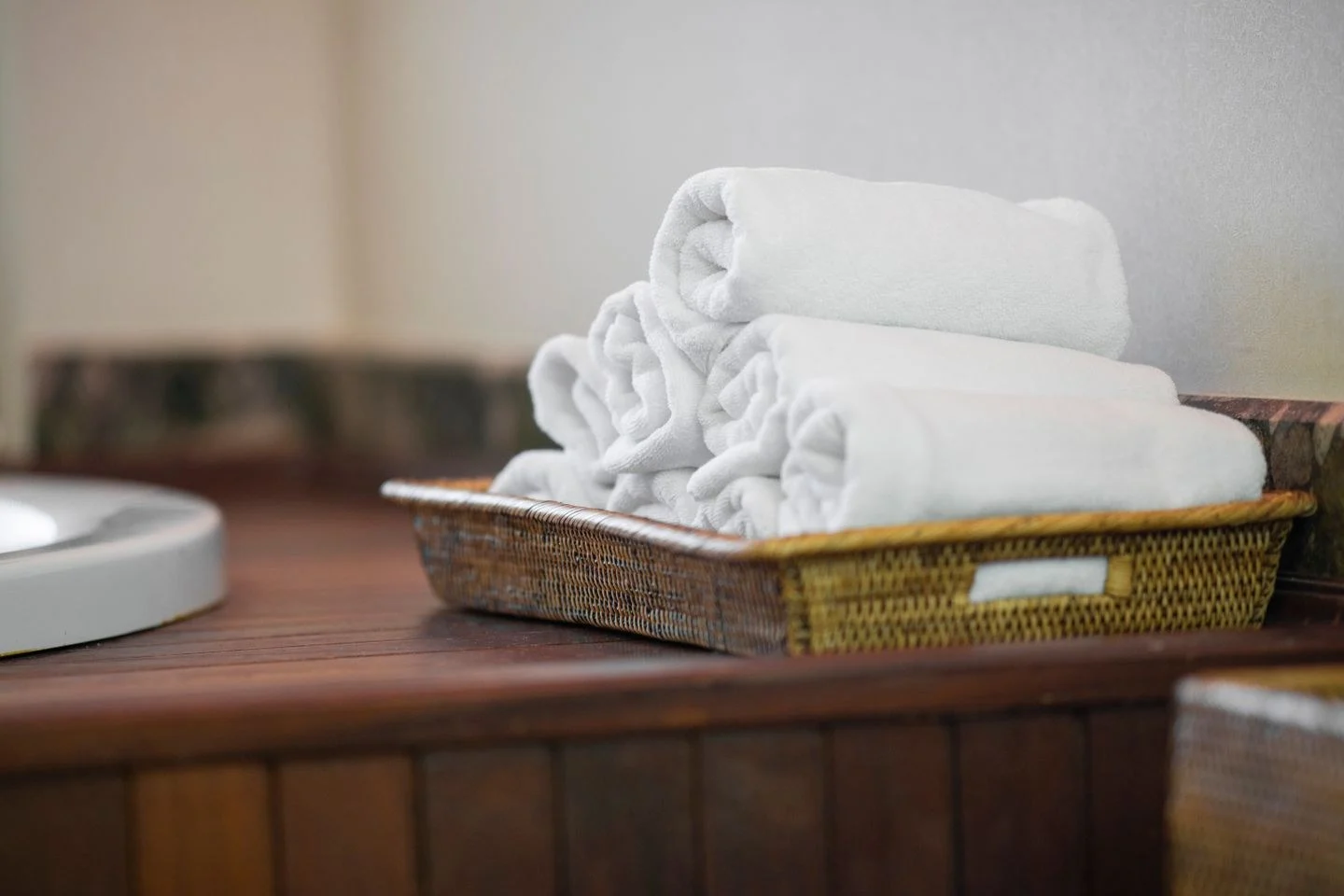
Clean folded towels and towels currently in use need different homes. Allocate hanging positions that allow each towel to spread or hang as intended without constantly covering another. Different colors can make ownership obvious, although labels or separate rail positions can work just as well.
Hair tools need a place that accounts for their actual use and cooling instructions. Do not build a routine around putting a hot appliance into an ordinary basket. Follow the manufacturer's directions, including where and how it may be stored. Keep cords from becoming shared-counter obstacles.
A small bathroom may have insufficient hanging or storage space for both complete routines. In that case, move a task rather than squeezing in another container. Makeup, hair accessories, or spare linen may be easier to organize in a nearby dry room. The bathroom can then concentrate on the activities that require its fixtures.
Give backups a limit
Use one defined area for replacement toiletries and check it before shopping. A shared supply can quietly become two separate stockpiles when each person assumes the other has not replenished it. Keep labels visible and arrange older suitable products toward the front, following any product-specific storage guidance.
Leave a little flexibility in each person's space. Products change size, travel bags come home, and routines vary. A grid of containers fitted to today's exact collection can become impractical as soon as one bottle changes. Adjustable dividers or a modest open area may serve better than a fully packed organizer.
After a week, revisit the few objects left on the counter. They indicate a storage position that is inconvenient, a category that is unclear, or an item used too often to put away after every step. Solve that particular issue together. Shared organization succeeds when both people can maintain it without having to memorize someone else's elaborate system.