A bright reflection on a screen is a placement problem before it is a decorating problem. Increasing screen brightness or closing every curtain may make the display more usable temporarily, but it is worth checking where the reflection comes from.
With the screen dark or showing a dark image, look at it from your normal seated position. Identify reflected windows, lamps, and bright surfaces. Then turn individual lights off or adjust the window covering to confirm which source is responsible. This simple observation prevents moving furniture without a clear purpose.
Change the relationship to the window
Try rotating or shifting the desk and monitor within the room's practical limits. A position that avoids facing directly toward a bright window or reflecting it behind you may be easier to work with. Test the actual screen, since its surface and adjustability affect the result.
Do not solve the reflection by adopting an awkward seated posture. Herman Miller's research on monitor positioning describes how people change their posture to compensate for poorly placed screens. Adjust the equipment and light instead, within the manufacturer's guidance.
Control the source selectively
An adjustable blind or curtain can reduce a bright patch while retaining some daylight. The best setting may change through the day, so choose a control you can reach and use easily. If the window is shared with the living room, consider how the adjustment affects that area too.
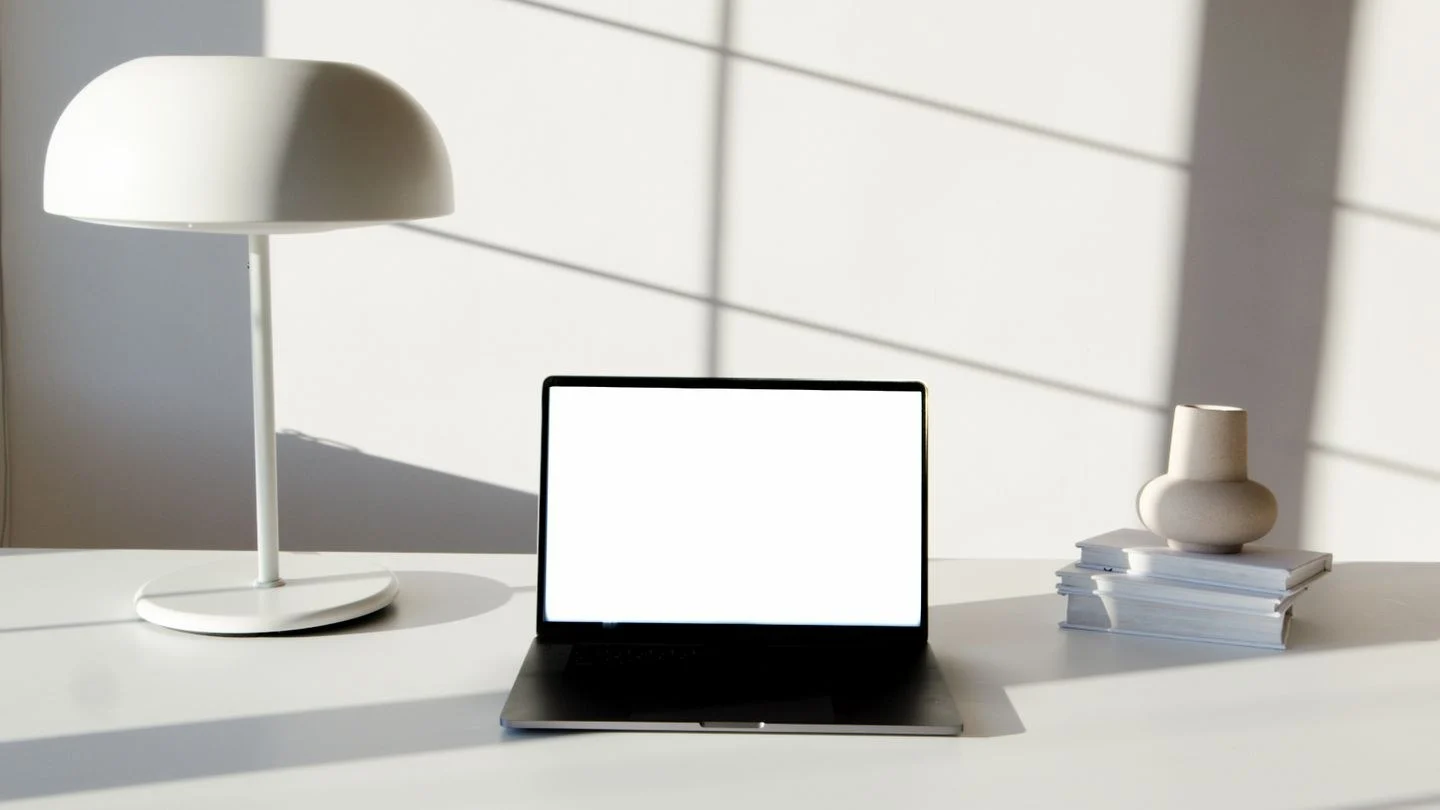
Move a task lamp so it lights papers or the keyboard without appearing in the screen. A shielded or adjustable lamp can make this easier, but its range should be tested from the seated position. Keep other necessary room lighting rather than working with a bright screen in an otherwise black space.
Check glossy desk surfaces and nearby mirrors as secondary sources. A reflection may come from light bouncing off an object rather than directly from the window. Moving a shiny accessory can sometimes help more than changing the lamp.
Repeat the test at the time of day when glare is worst. A desk that works in the morning may behave differently in afternoon sun. Record the useful monitor position and window-covering setting so the adjustment becomes a simple routine. The aim is a workspace that remains easy to use without continually leaning, squinting, or rearranging the entire room.