Small rooms do not automatically need small patterns. A broad, low-contrast design can read more quietly than a dense miniature print. The useful question is how much visual activity the pattern creates from the places where you will actually see it.
Consider a compact bedroom. A large leaf pattern on one curtain may be visible as a few generous shapes. A tiny repeated motif across curtains, bedding, and pillows can create many more edges. Neither is inherently better, but their effects are different enough that size labels alone are misleading.
Look from the doorway
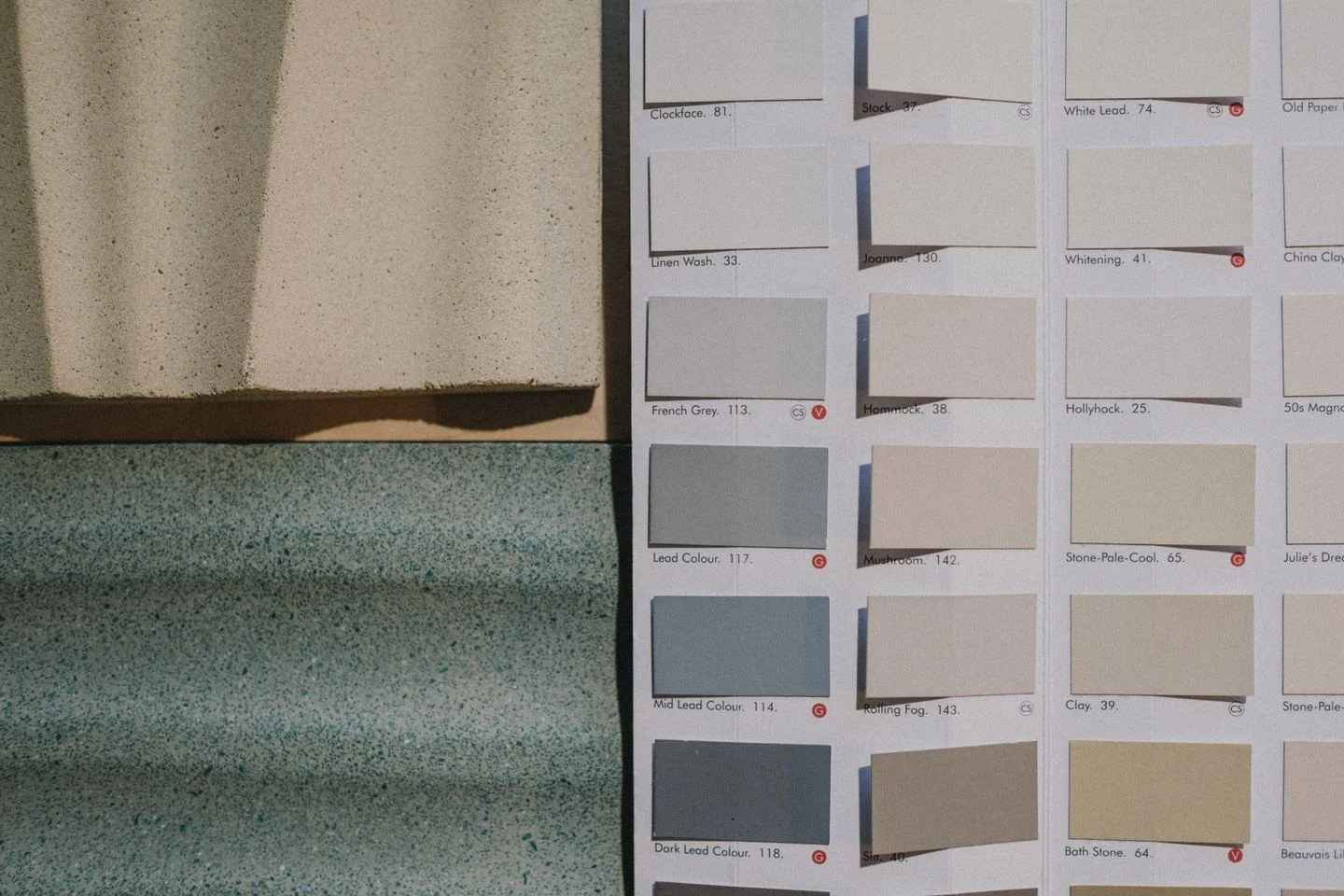
Put the largest available sample in position and step back. Does the pattern remain readable, blend into texture, or flicker into a busy field? A rug should be judged at floor level, while a wallpaper sample belongs vertically on the wall. The angle changes both the light and the amount of pattern visible.
Then examine the view from the main seat or bed. A print that looks balanced from the doorway may feel overpowering at close range. If the room has only a few feet between the seating and a patterned wall, the close view deserves more weight than a distant photograph.
Restrict the number of transitions
In a small space, repeated changes can be more distracting than one strong pattern. A striped chair beside a floral curtain, geometric rug, and patterned storage bins creates several competing boundaries. Removing one or two may help more than replacing everything with smaller motifs.
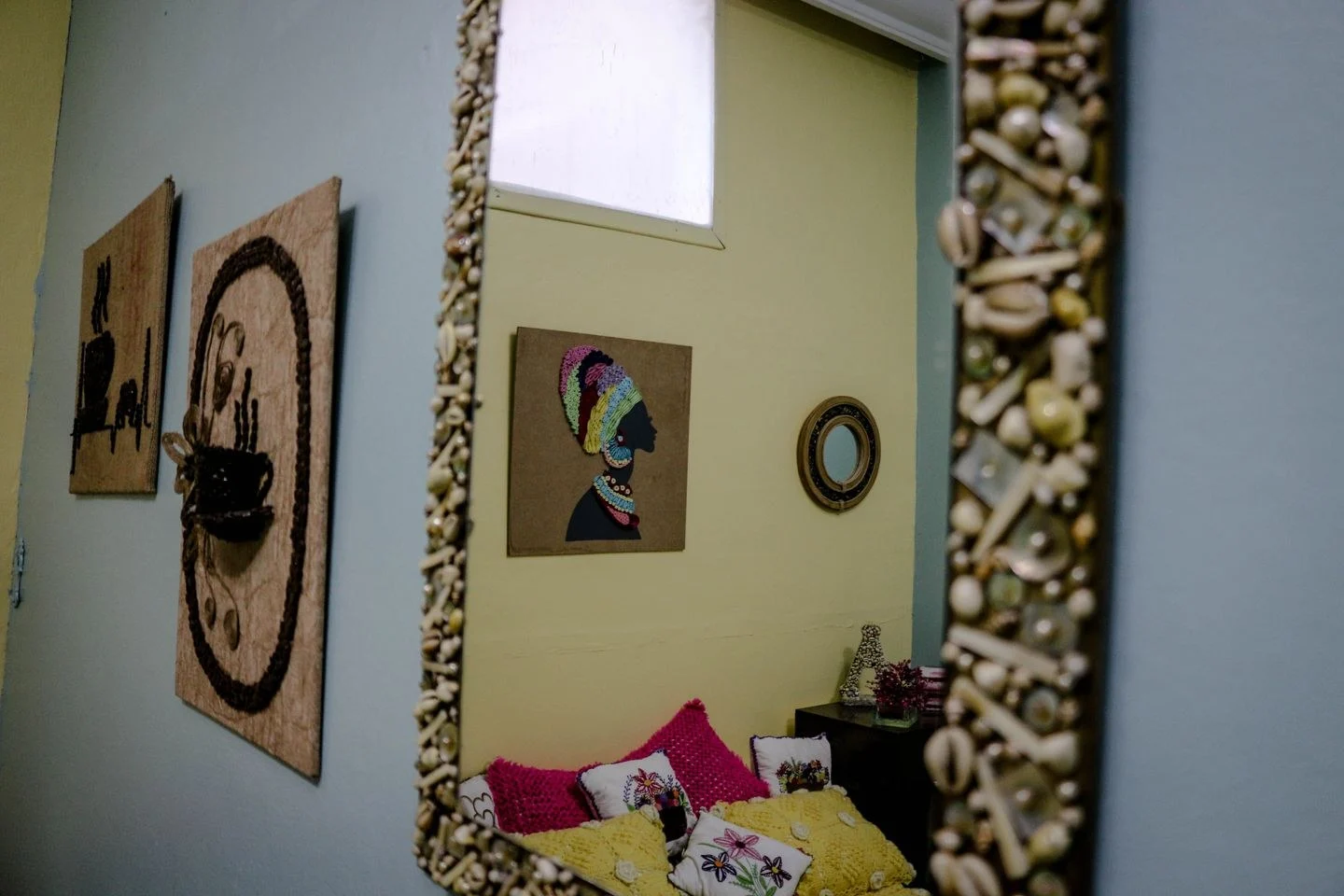
Try using the main pattern on one substantial surface and repeating a color elsewhere in a solid. A patterned headboard with plain bedding, or a rug with quiet curtains, lets the room have a distinct feature without requiring every object to participate.
When mixing prints, vary their scale or contrast so that they do not demand equal attention. Crate & Barrel recommends considering the largest pattern first. That approach also makes shopping simpler: the remaining pieces can respond to a settled decision rather than continually changing the entire scheme.
Remember the furniture will cover part of a rug and curtains will gather into folds. Order only after considering the finished arrangement. A beautiful large motif may disappear under a bed, while a stripe may become much narrower in folded fabric. The correct scale is the one that remains convincing in use, not the one that fills a product photograph most attractively.