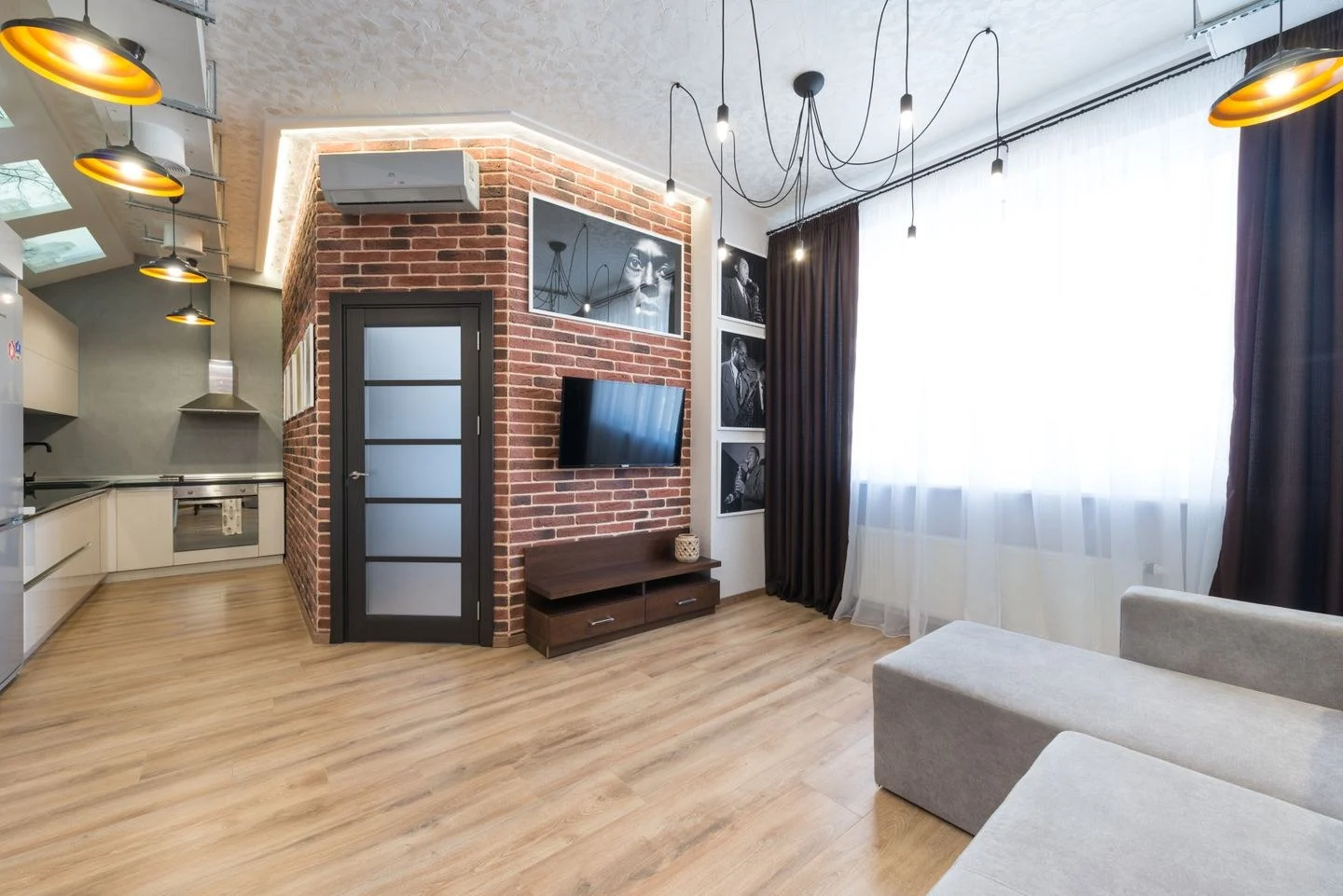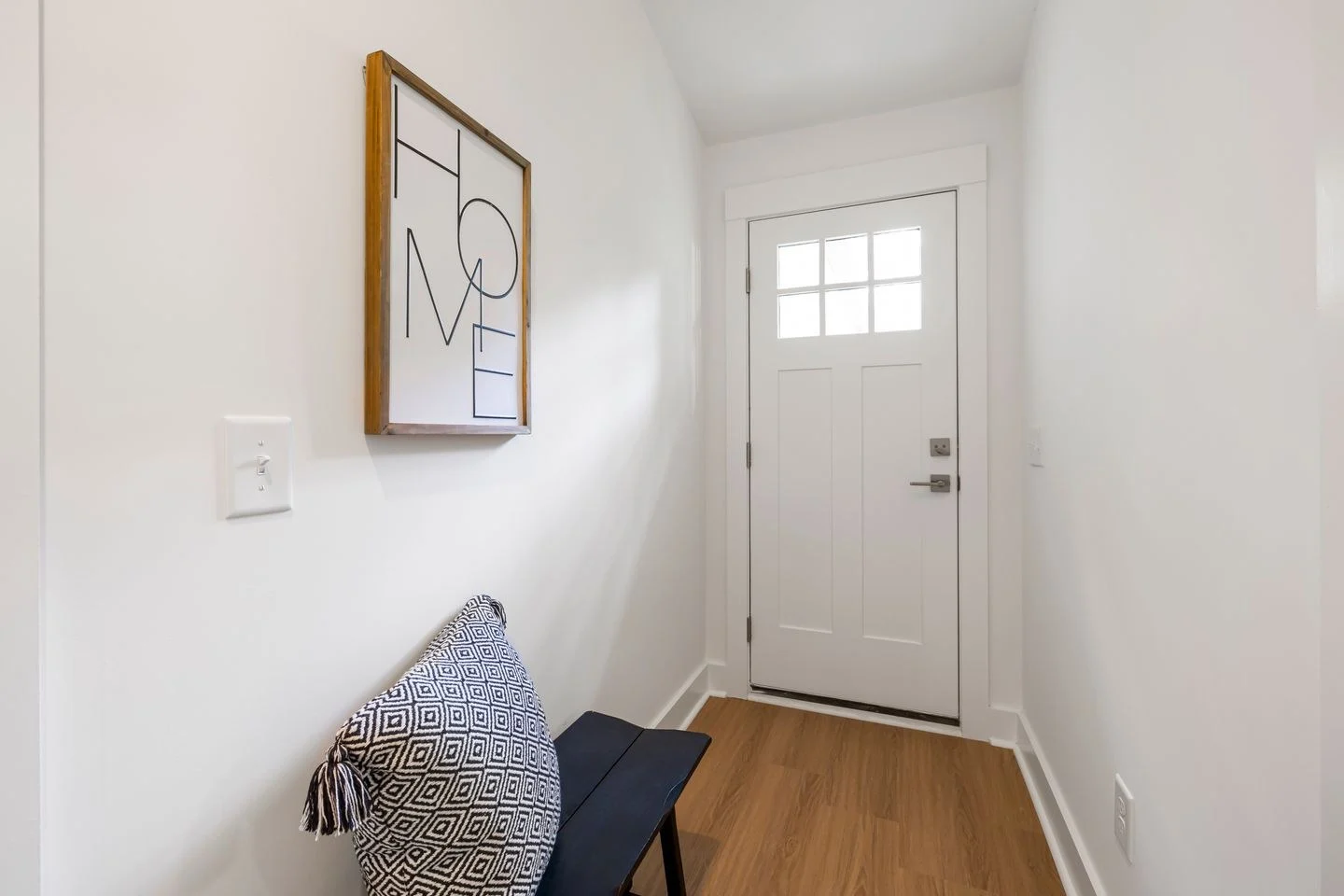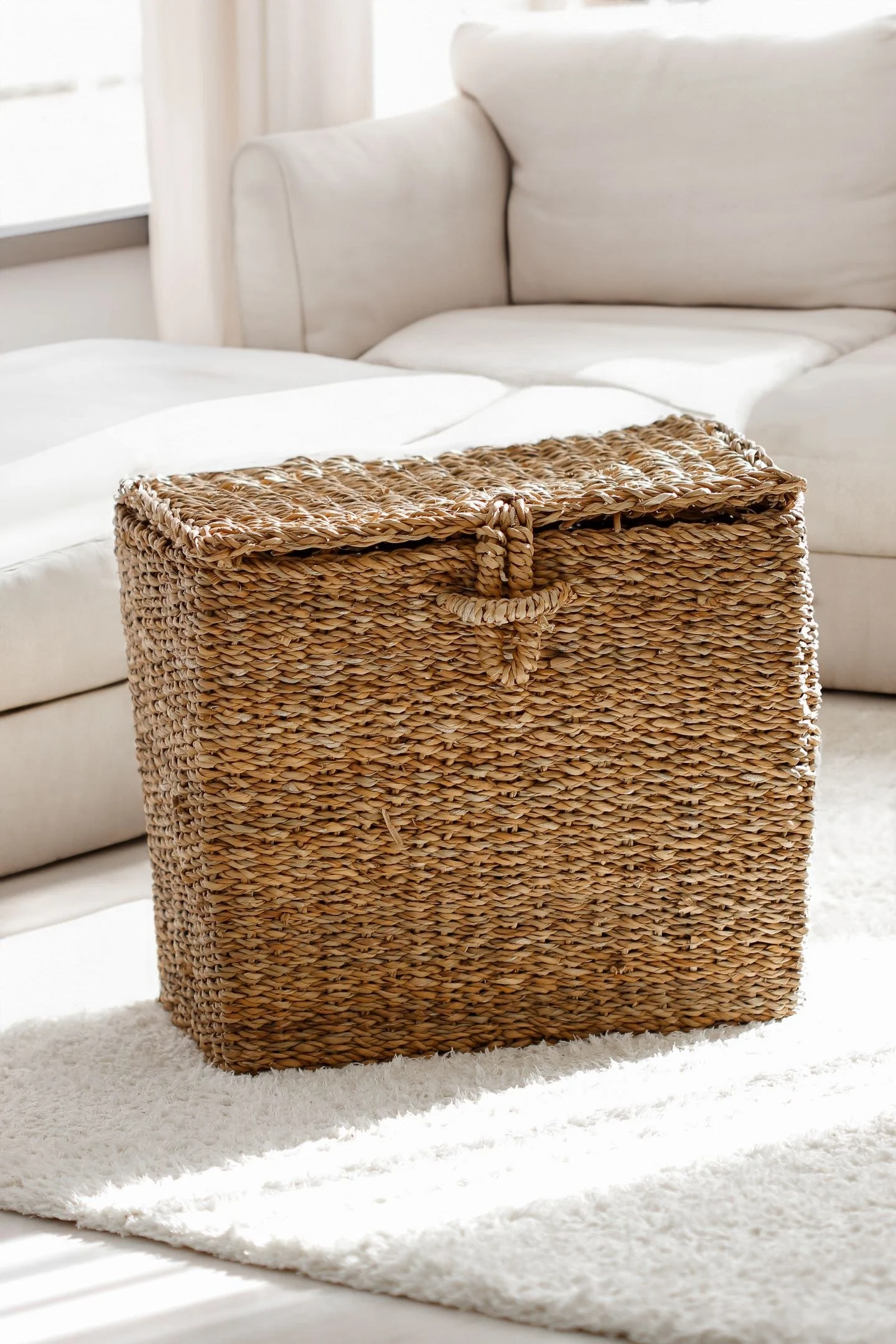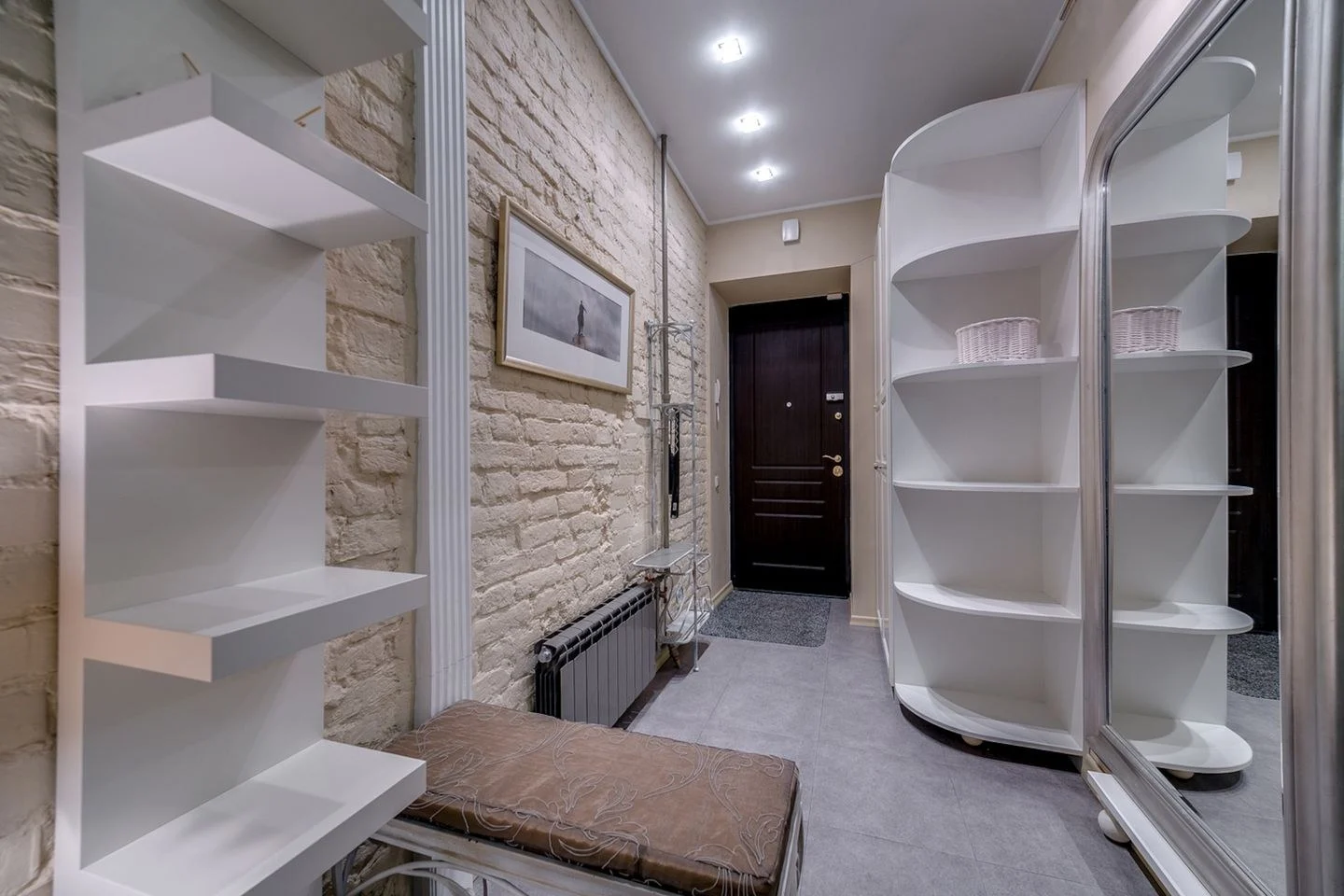
Open storage shows the contents as part of the room. Closed storage hides them but needs space for doors or drawers. Neither is universally better in a small room. The decision depends on the objects, their frequency of use, and the view you want to live with.
Empty the intended storage category into groups before shopping. A collection of books has a different visual pattern from cleaning supplies, chargers, and paperwork. If most of the contents have varied packaging and small loose parts, open shelving will need containers to remain orderly.
Open storage rewards selective contents
Books, frequently used dishes, and a small collection can be pleasant to see and easy to retrieve. Leave enough room to remove an item without moving several others. Deep shelves often encourage a second hidden row, which weakens the convenience of having things open.
Consider dust and cleaning access. A display that requires lifting many small objects may be more work than expected. Use open storage where visibility has a benefit, not merely because the furniture has a lighter frame.
Closed storage reduces visual changes
Doors can make a room feel calmer by replacing many small outlines with a few large ones. Check the usable interior, including hinges and shelf adjustments. A cabinet that looks generous outside may not fit the objects you need to store.
Account for the opening movement. Sliding doors, hinged doors, and drawers need different kinds of space. A drawer can bring contents forward, while a cabinet may require reaching into the back. Test the arrangement with nearby furniture in place.
A mixture often works best: closed storage for visually busy supplies and a smaller open area for objects worth seeing. IKEA's storage examples use both approaches, but the proportion should come from your belongings rather than a standard formula.
Before buying more furniture, try putting the busiest contents into a few fitted boxes on the existing shelves. If the room becomes noticeably calmer, closed storage may be the missing function. If the shelves are already orderly but hard to reach, the issue may be depth or placement instead. Solve the specific problem rather than choosing a storage style by appearance alone.