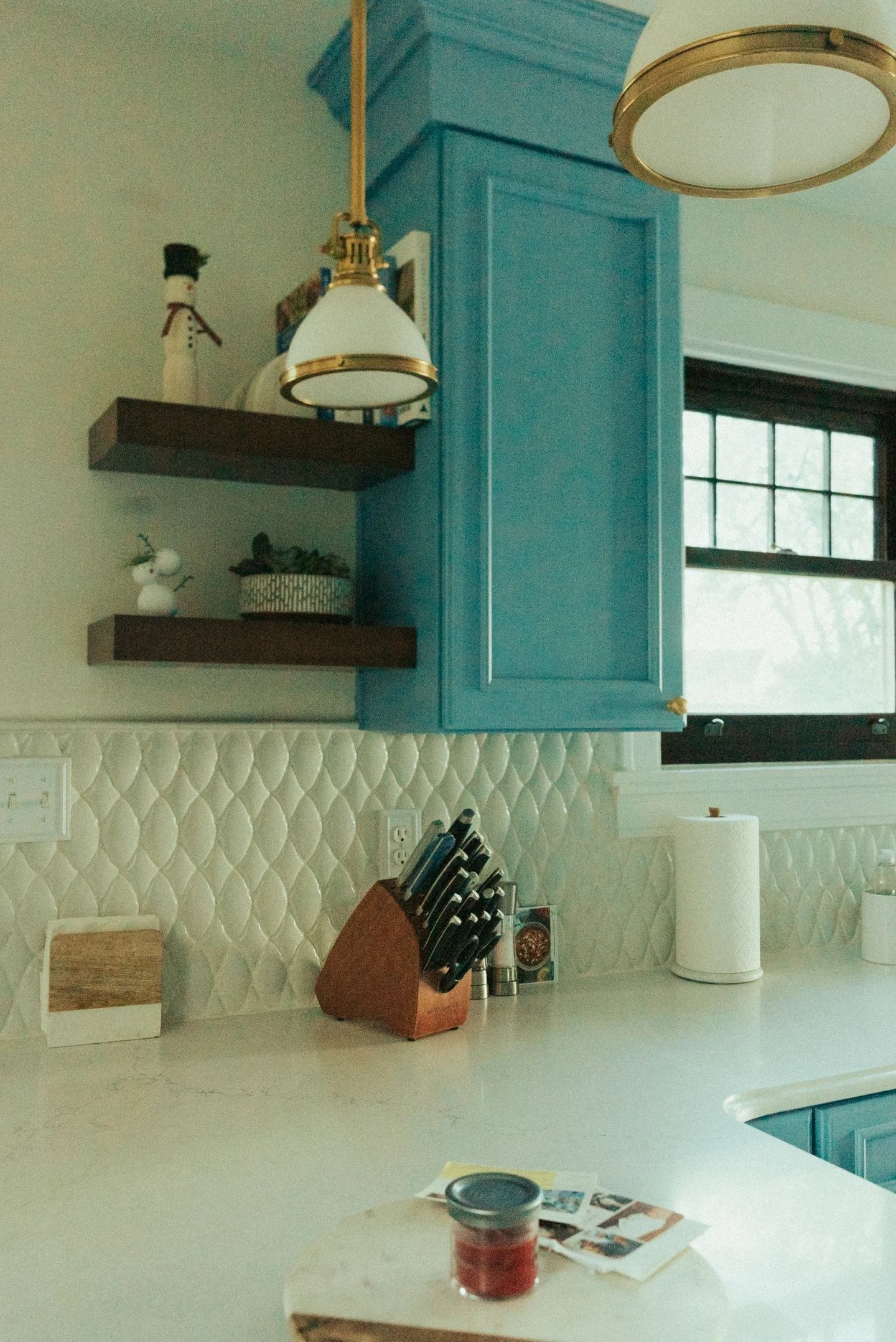
Open shelves make kitchen contents part of the room's appearance. That can be appealing when the objects are used regularly and easy to retrieve. It can also expose a collection that would be simpler to manage behind a door. Select the contents before deciding how many shelves to add.
Start with one category that genuinely benefits from visibility: everyday bowls, frequently used mugs, or a small group of serving pieces. Consider who reaches for them and how high the shelf sits. Heavy items should not require an awkward lift from above the user's comfortable reach.
The shelf, brackets, fixings, and wall all contribute to the permitted load. Follow the specific installation and loading instructions, and get suitable help when the wall construction or hidden services are uncertain. A shelf that looks substantial in a photograph is not evidence of its capacity.
Let daily use create the arrangement
Keep stacks manageable enough to remove one item without balancing a tower. Place frequently used objects toward the accessible front, leaving space between groups for hands. If a serving platter must be removed to reach every mug, the display is interfering with the storage.
You do not need identical dishes for a coherent shelf. Similar heights, a limited palette, or a repeated material can establish order while allowing useful differences. Avoid reorganizing an entire household's tableware solely to imitate a color arrangement that is inconvenient during meals.
Account for the shelf's location. A position near cooking activity may collect grease or splashes; a position beside a sink may get wet. Choose contents and materials accordingly, and retain enough access to clean both the shelf and the objects. Items used only a few times a year may be easier to keep in closed storage.
Be selective about decorative additions
A small object can connect the shelves to the rest of the room, but it should not take the best position from something used daily. Consider whether the useful contents already supply enough color and shape. A stack of bowls, a wooden board, and a few glasses may need no further decoration.
If food is transferred into containers, preserve necessary identification, storage directions, and date information. Matching jars are not useful if the contents become uncertain. Choose containers suitable for the food and follow the relevant care and storage instructions.
Try one shelf arrangement through a normal cycle of cooking, washing, and putting things away. The gaps left by items in use should not make the whole composition feel broken. Open shelving works well when the ordinary movement of the kitchen is part of its appearance, rather than something that must be hidden before the room looks finished.