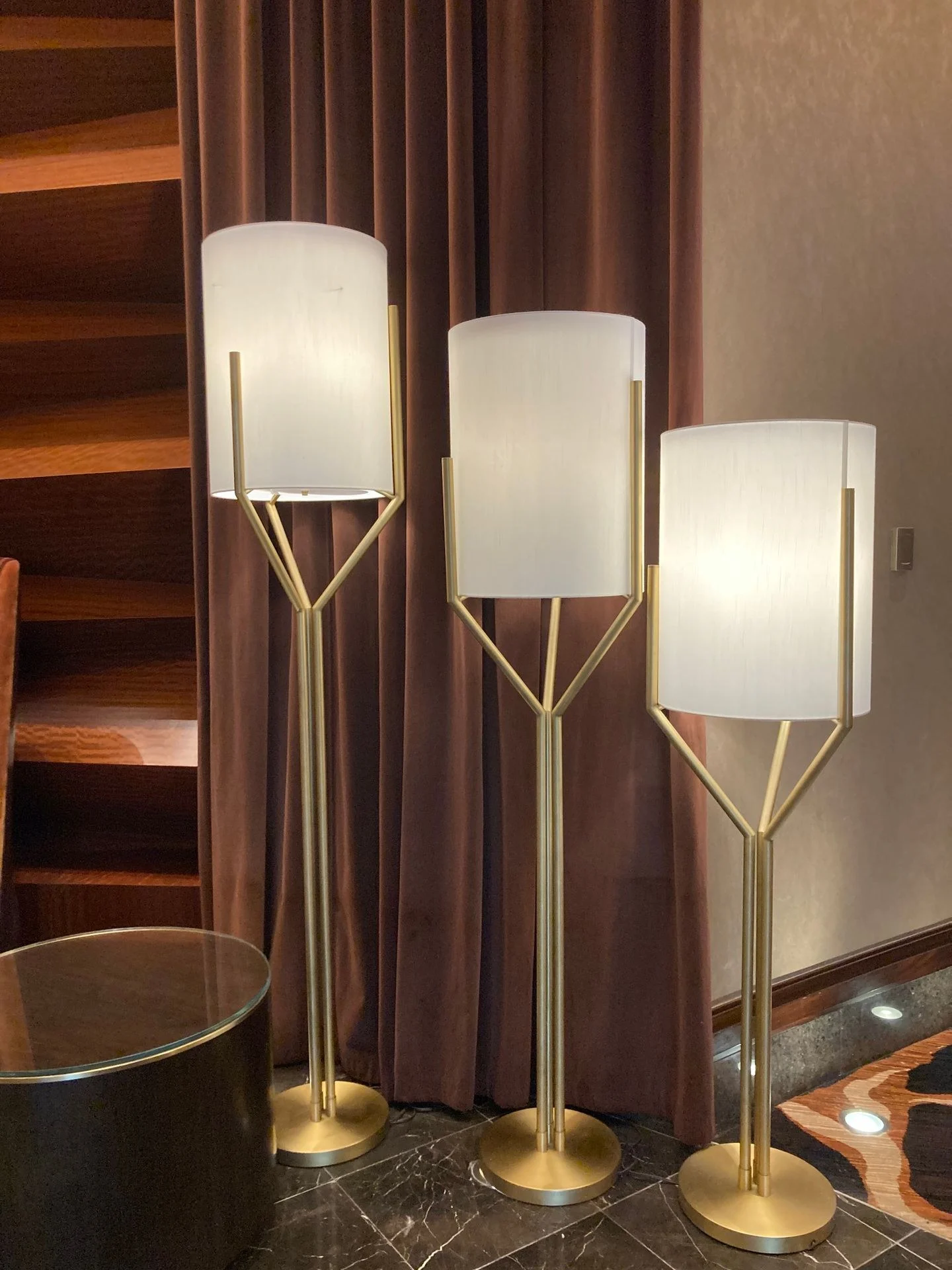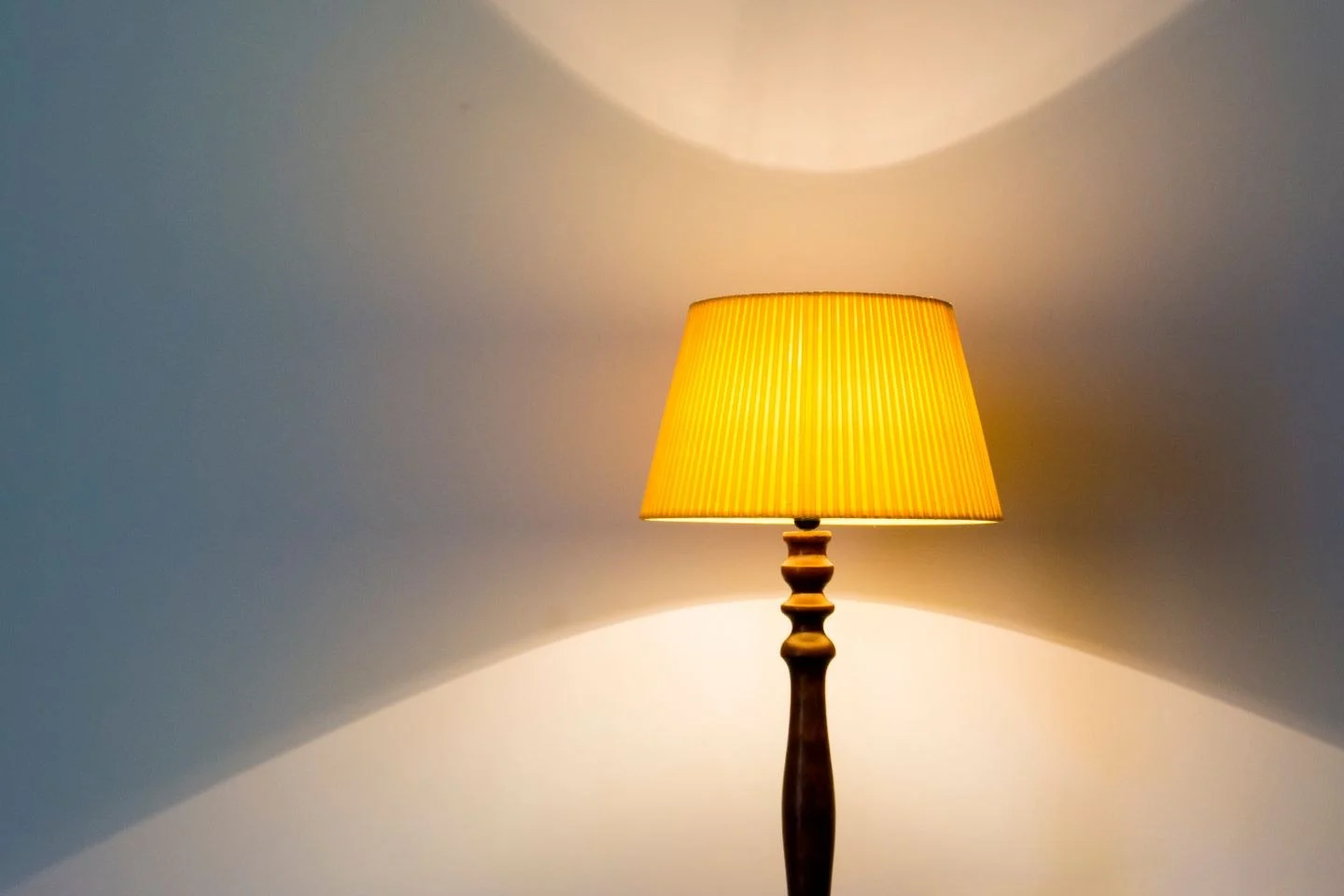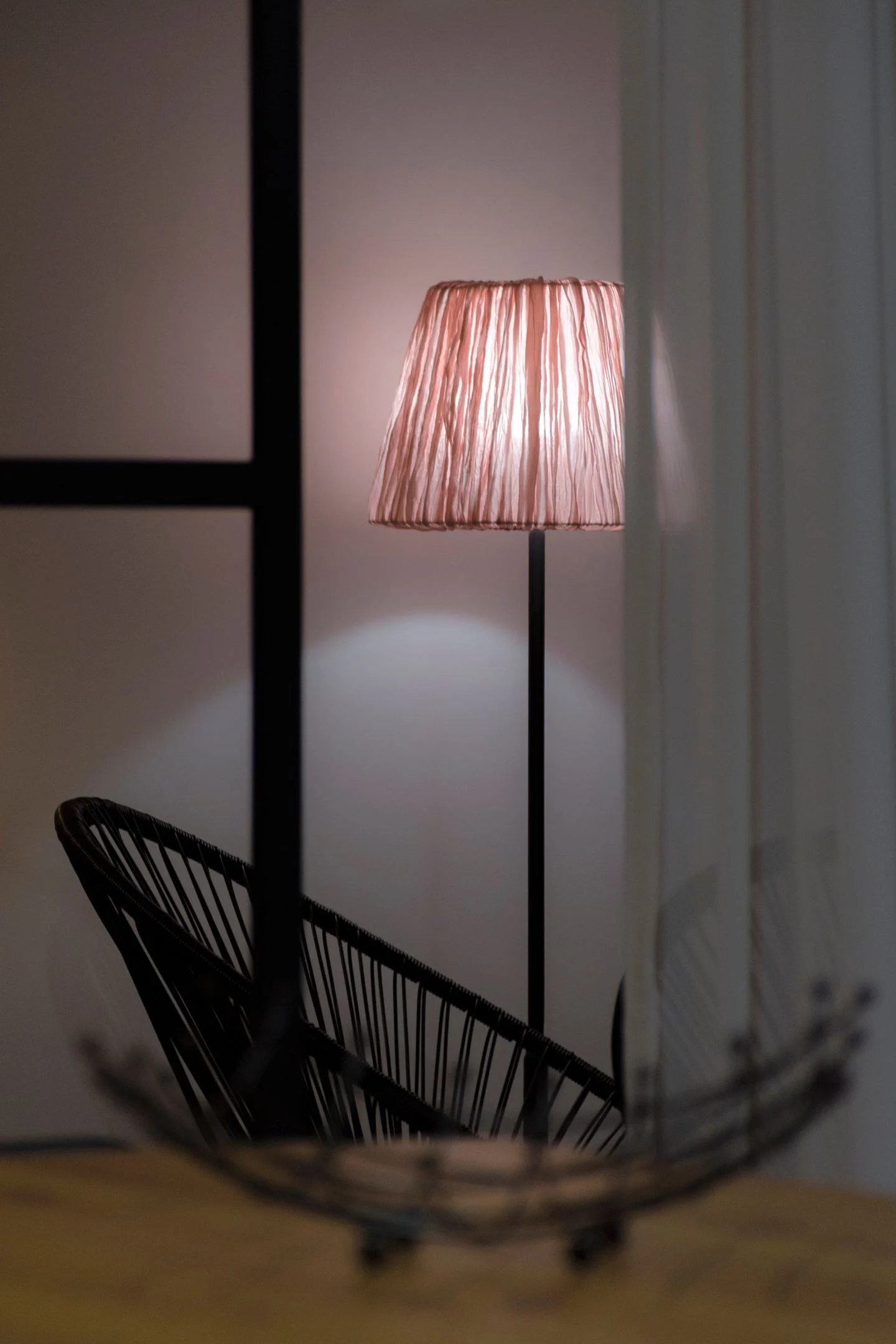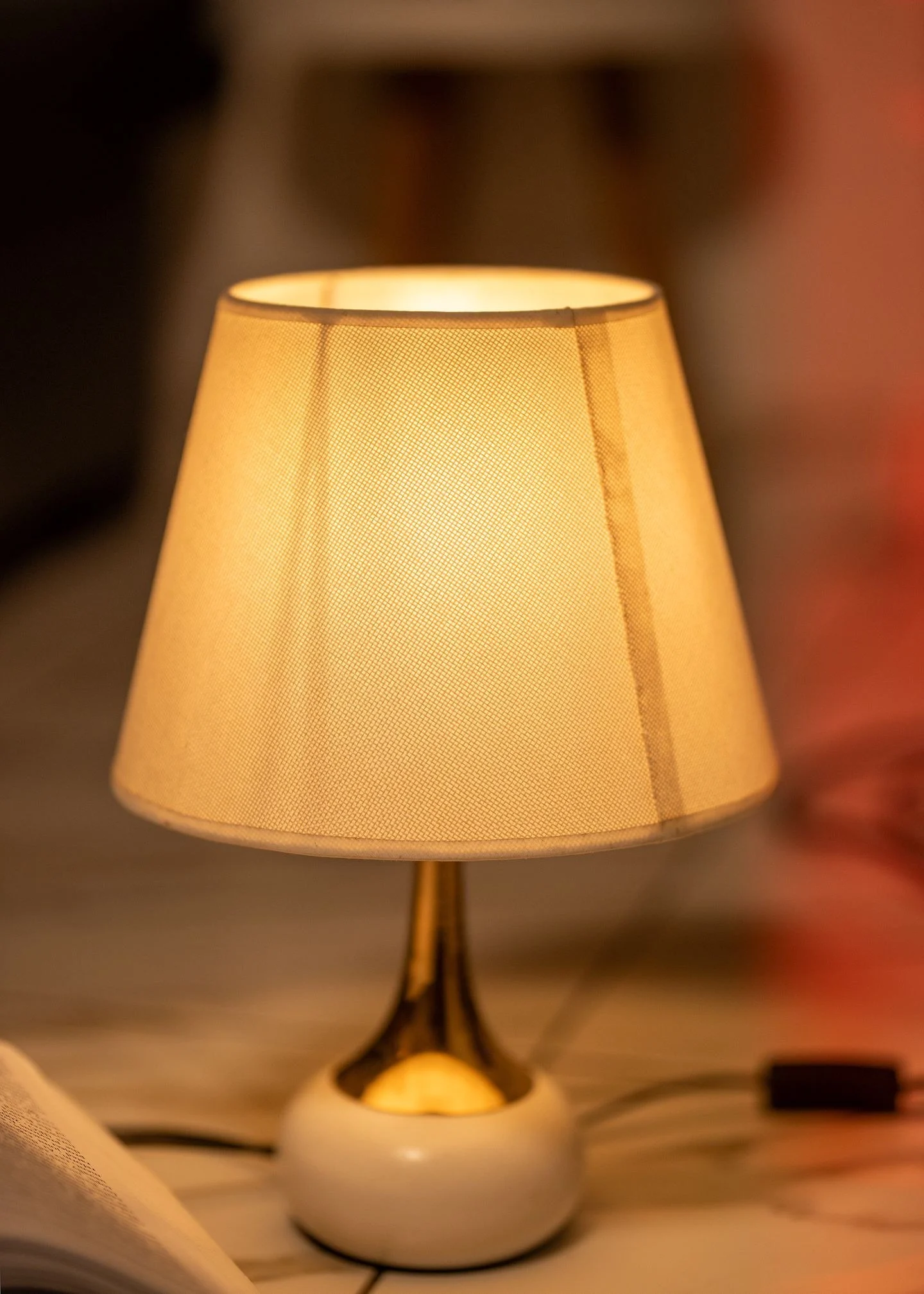
A shared finish can connect lamps with different shapes. A slender floor lamp and a substantial table lamp may both include dark metal, for example, while serving different tasks. The finish creates a relationship without requiring every fixture to belong to one collection.
Choose the lamp positions first. One might support reading, another brighten a cabinet, and another provide light beside a bed. Their functions can justify differences in height, adjustment, or shade. Selecting the whole group by appearance before placing it can leave you with several lamps that all perform the same limited job.
Compare the finish in real light
Names such as antique brass, bronze, or matte black are not exact color standards across manufacturers. Bring samples or smaller pieces together where possible. A close match that looks slightly wrong can be more distracting than an obvious, deliberate contrast.
You can also repeat the finish through another existing element, such as a table base or frame. That helps a lamp belong to the room even when it is the only lamp of its particular style. Avoid buying extra decorative objects solely to explain a finish that otherwise has no relationship to the space.
Scale needs its own comparison. A narrow metal stem may feel visually light, while a broad base in the same finish can appear heavy. Check the lamps from across the room and beside the furniture they serve. Shared color does not automatically balance different visual weights.
Let the shades provide another connection
Similar shade colors can quiet a varied collection of bases. Alternatively, different shades can distinguish a reading light from a background lamp. Test them illuminated, because lining and material affect the light as well as the daytime appearance.
Compare the apparent color of the light in the connected space, using bulbs compatible with each fixture. A noticeably cooler lamp may look unrelated even when the metal finish matches. The specifications and instructions for the lamp take priority over making every bulb identical.
Keep one part of the group consistent enough to read clearly, then allow the rest to respond to function. The room may need a focused adjustable lamp beside a chair and a softer shaded lamp on a console. Their difference can make the arrangement more useful while the shared finish gives the eye a familiar detail to follow.