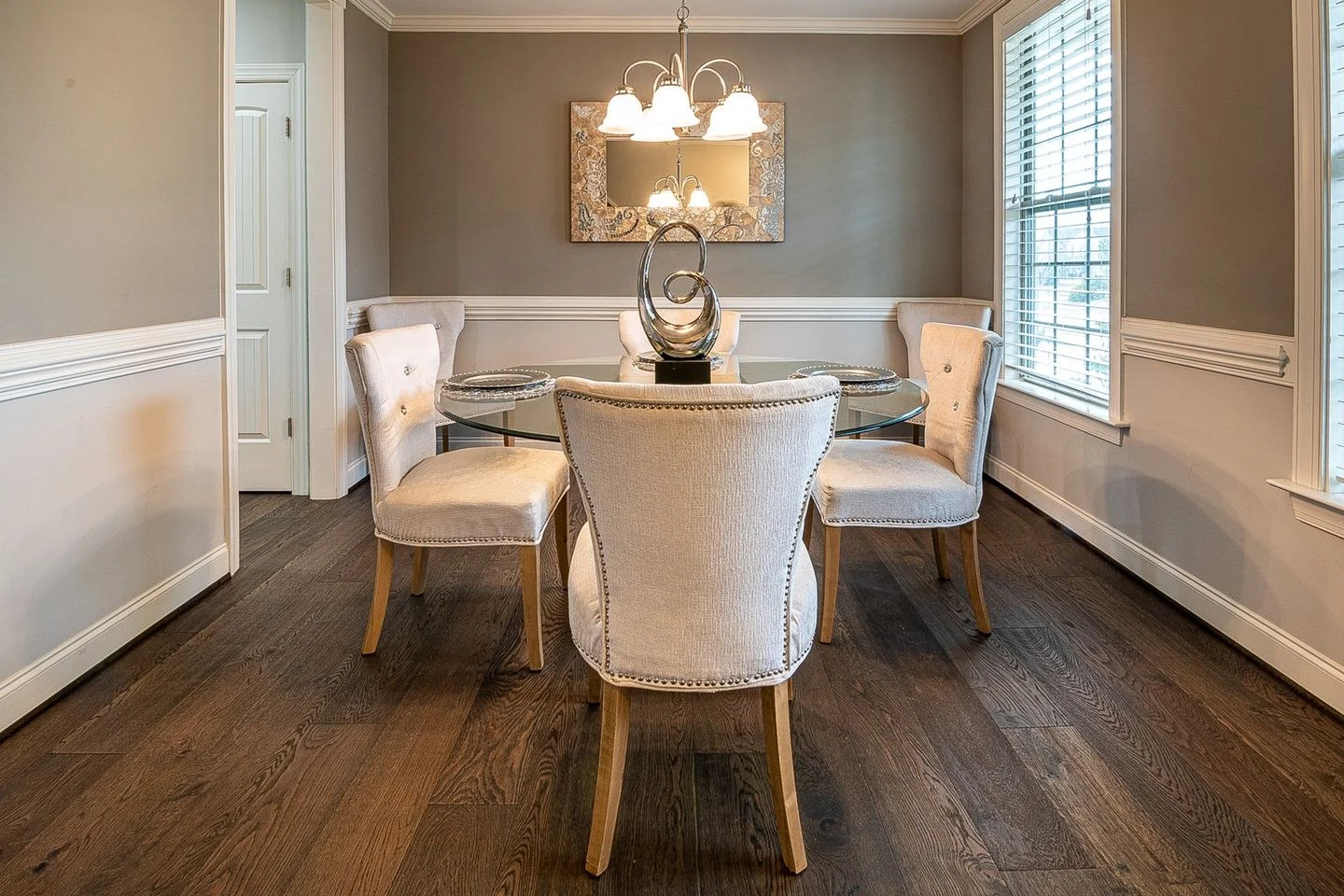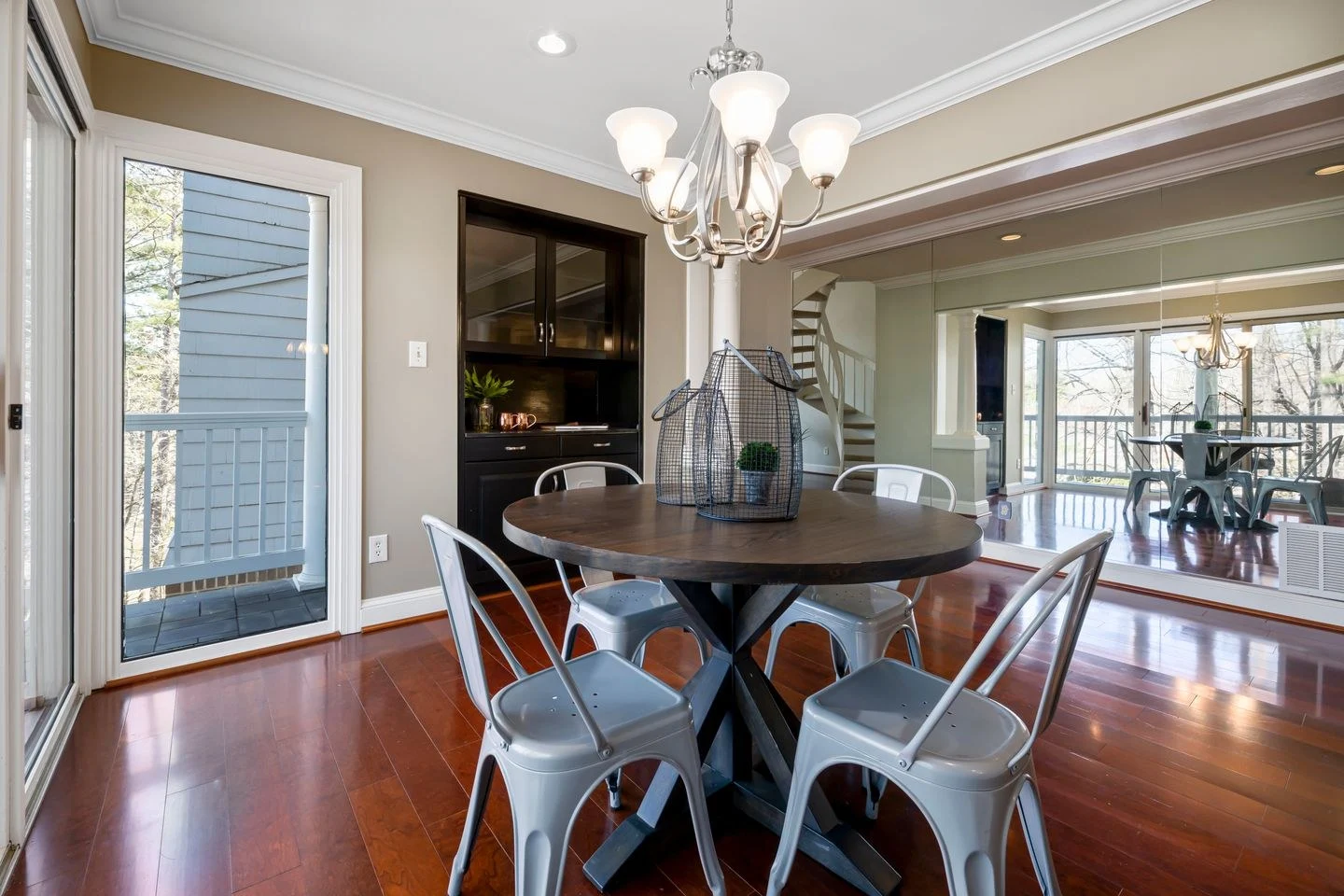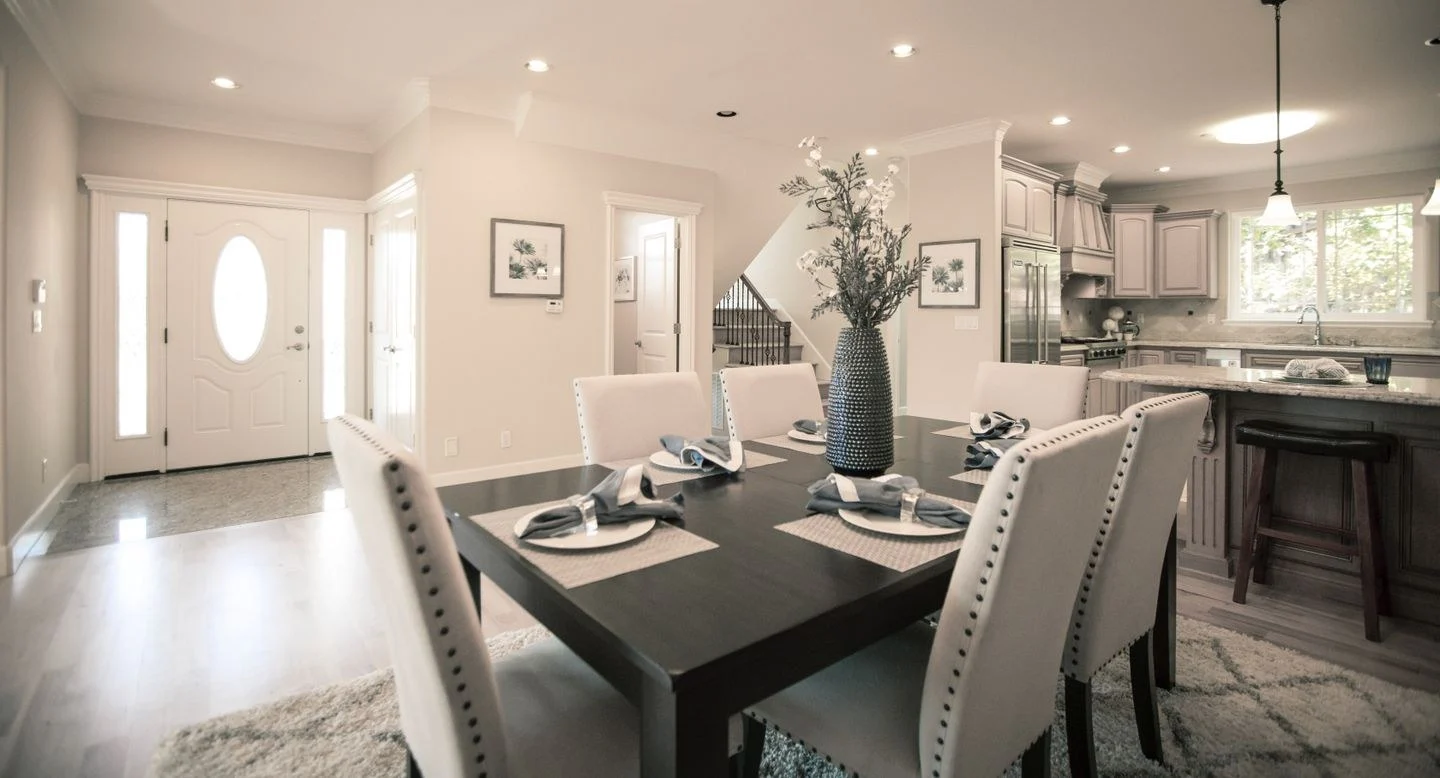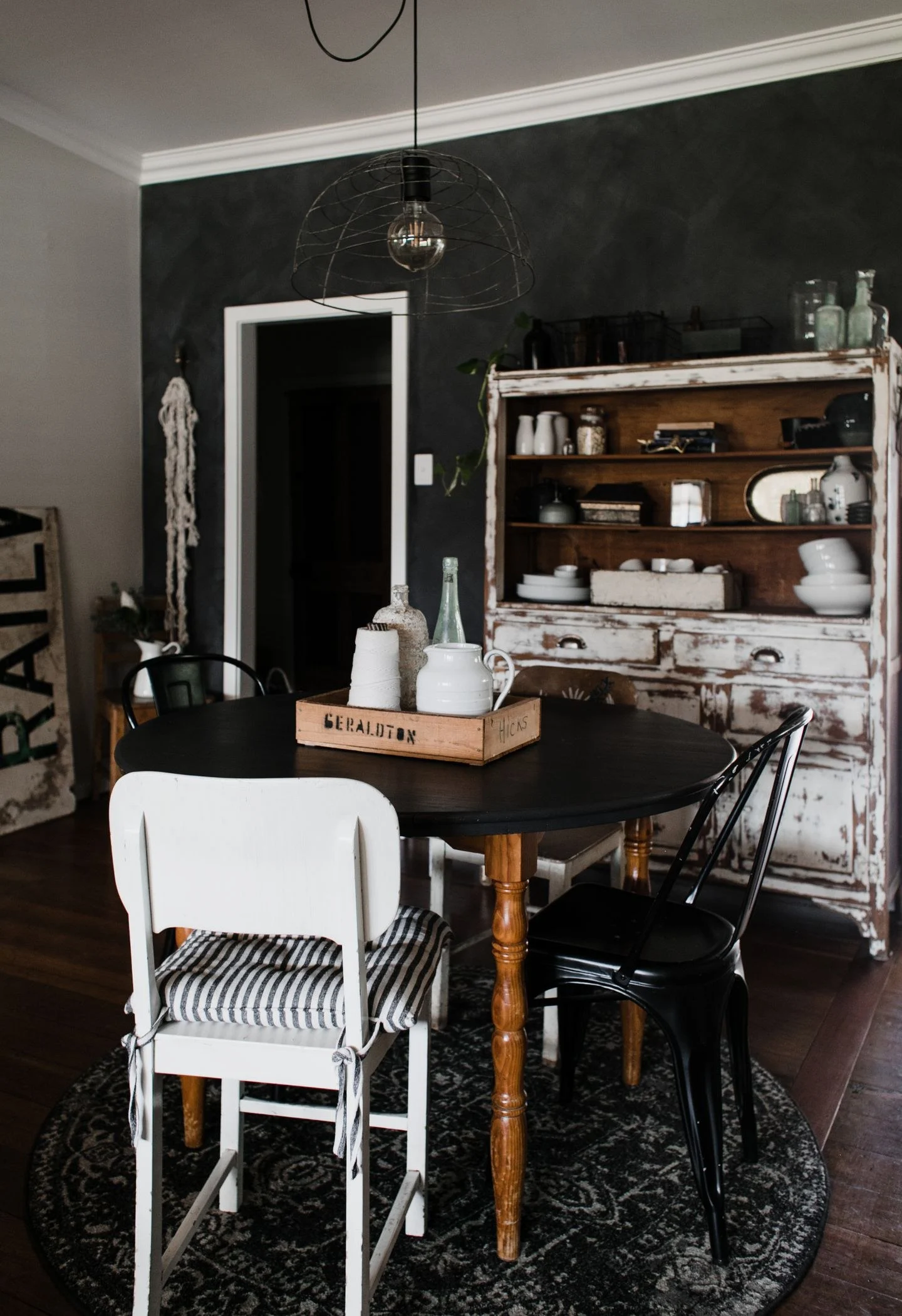
A mixed set of dining chairs can feel collected without looking accidental. The connection does not have to be matching color. It may be a similar back height, a repeated curve, or a deliberate pairing at the table ends. Decide which relationship will hold the group together before adding another chair.
Begin with the chairs you already want to keep. Identify their strongest qualities: dark frames, slim legs, broad upholstered seats, or a distinctive rounded back. Choose one of those qualities to repeat and allow the others to vary. Repeating everything leads back toward a matching set; repeating nothing leaves the table without a clear rhythm.
Use the table positions to create order
The simplest mixed arrangement often places one type along the sides and another at the ends. The positions explain the difference. Another approach repeats pairs around the table, which can suit a round shape or a smaller collection of existing chairs.
Avoid assuming that every chair must be different for the result to feel personal. Two related styles can provide enough variation. A single contrasting chair may also work when it has a clear role, but consider whether it looks intentionally distinct or simply like a spare brought in temporarily.
Compare the group from across the room. Similar back heights create a quieter line; very different heights produce a more animated silhouette. Neither is inherently better, but the effect should suit the scale of the table and the surrounding room. A dramatic tall chair can dominate a small table even if its seat fits.
Check comfort as a group
Seat heights, cushion firmness, and arm positions may differ between designs. Sit at the table in each type. A soft upholstered chair may compress more than a wood seat, changing the user's relationship to the tabletop. The chairs should offer comfortable places to eat, not merely compatible shapes.
Check widths and table-leg positions before committing to the full arrangement. Broad end chairs may fit while broad side chairs crowd one another. If some arms cannot pass beneath the apron, allow for the larger resting footprint rather than expecting the chairs to tuck away identically.
Use material or color to refine the relationship after fit has been established. Two different wood tones can work when their contrast is clear. Near matches may look less deliberate, especially under the room's evening light. Fabric can provide a bridge, but it should meet the household's care needs as well as the palette.
Keep the arrangement for several meals before replacing additional chairs. Notice which seats people prefer and whether any position is awkward. A mixed set is successful when its variety remains pleasant during use, not just when the table is empty.