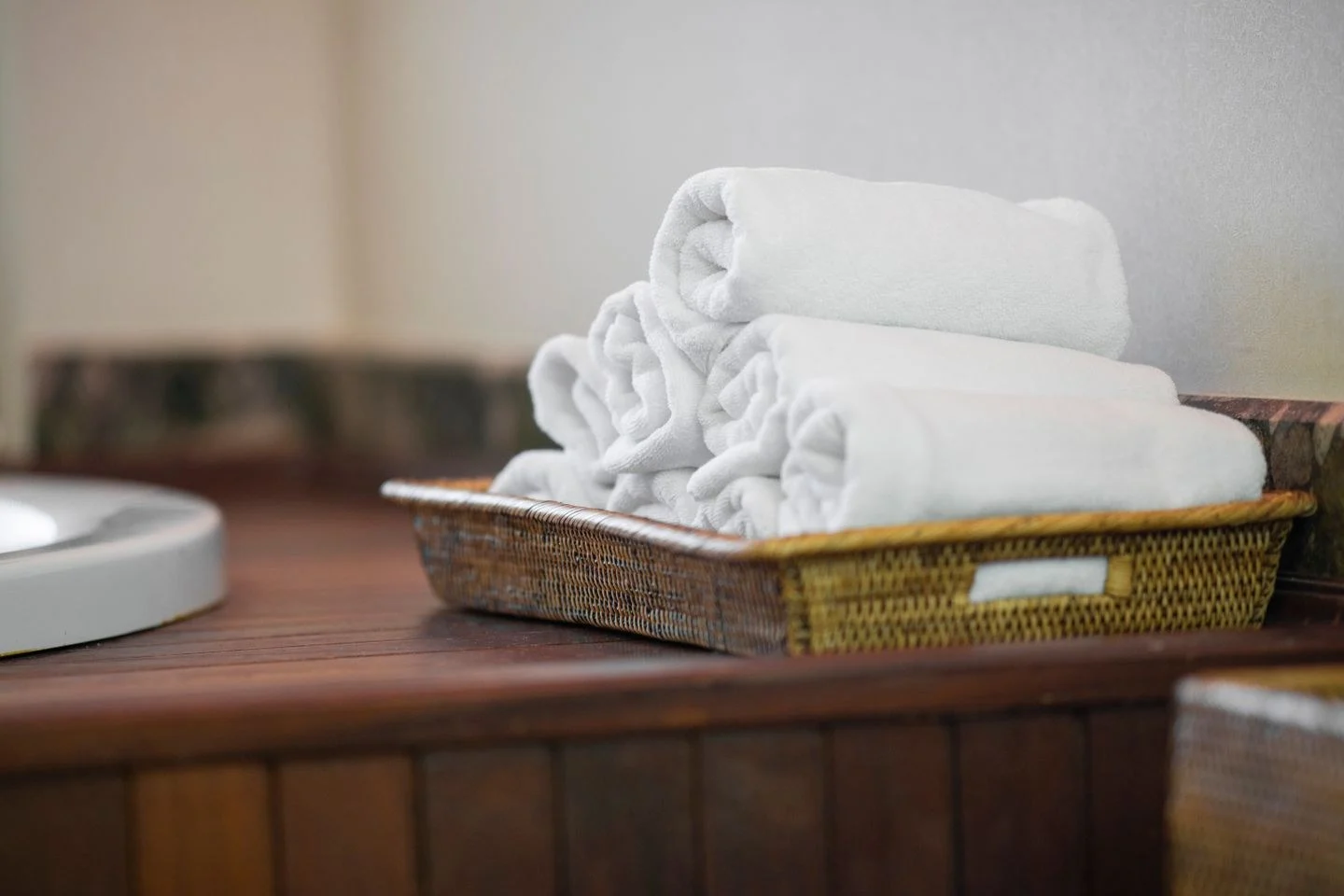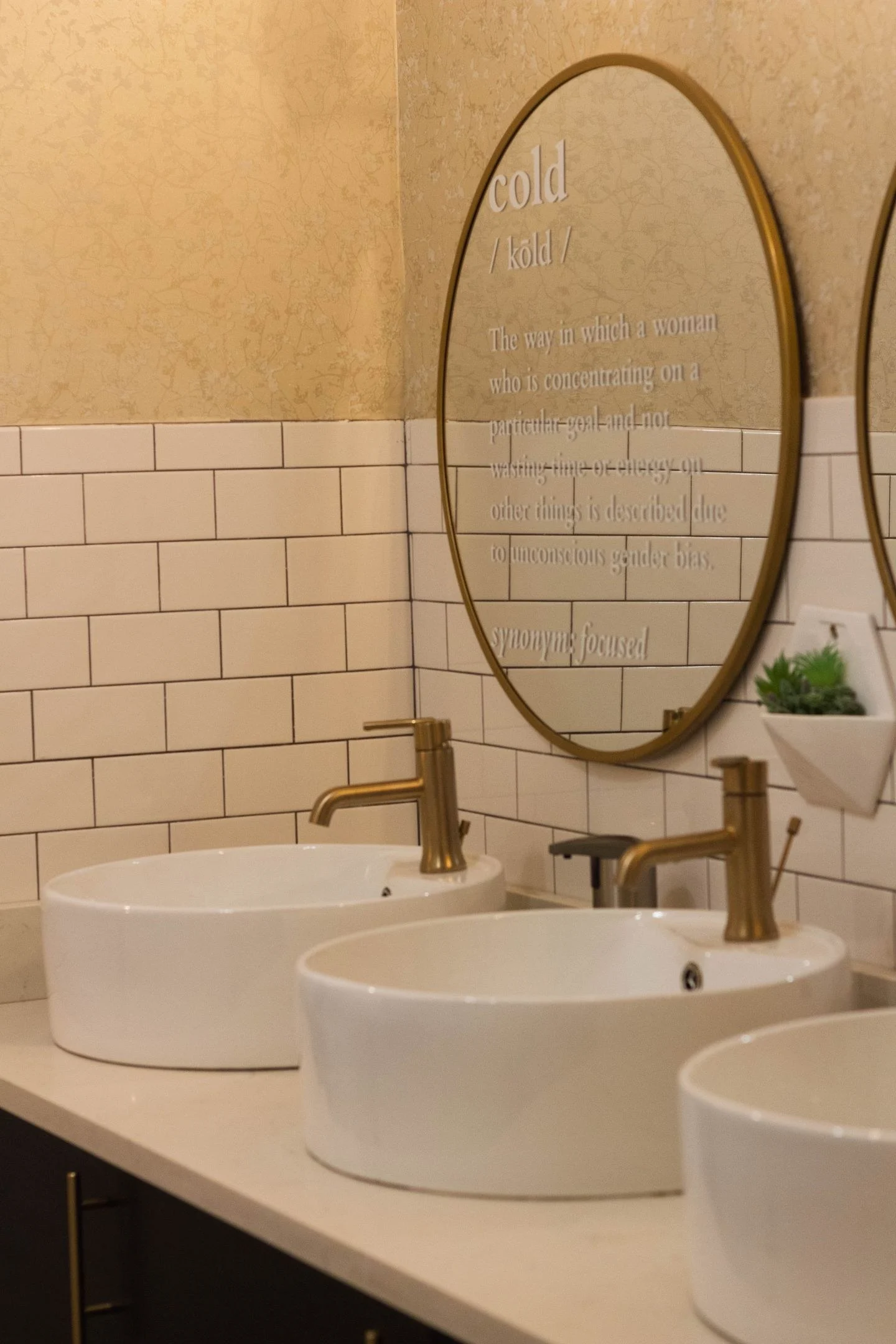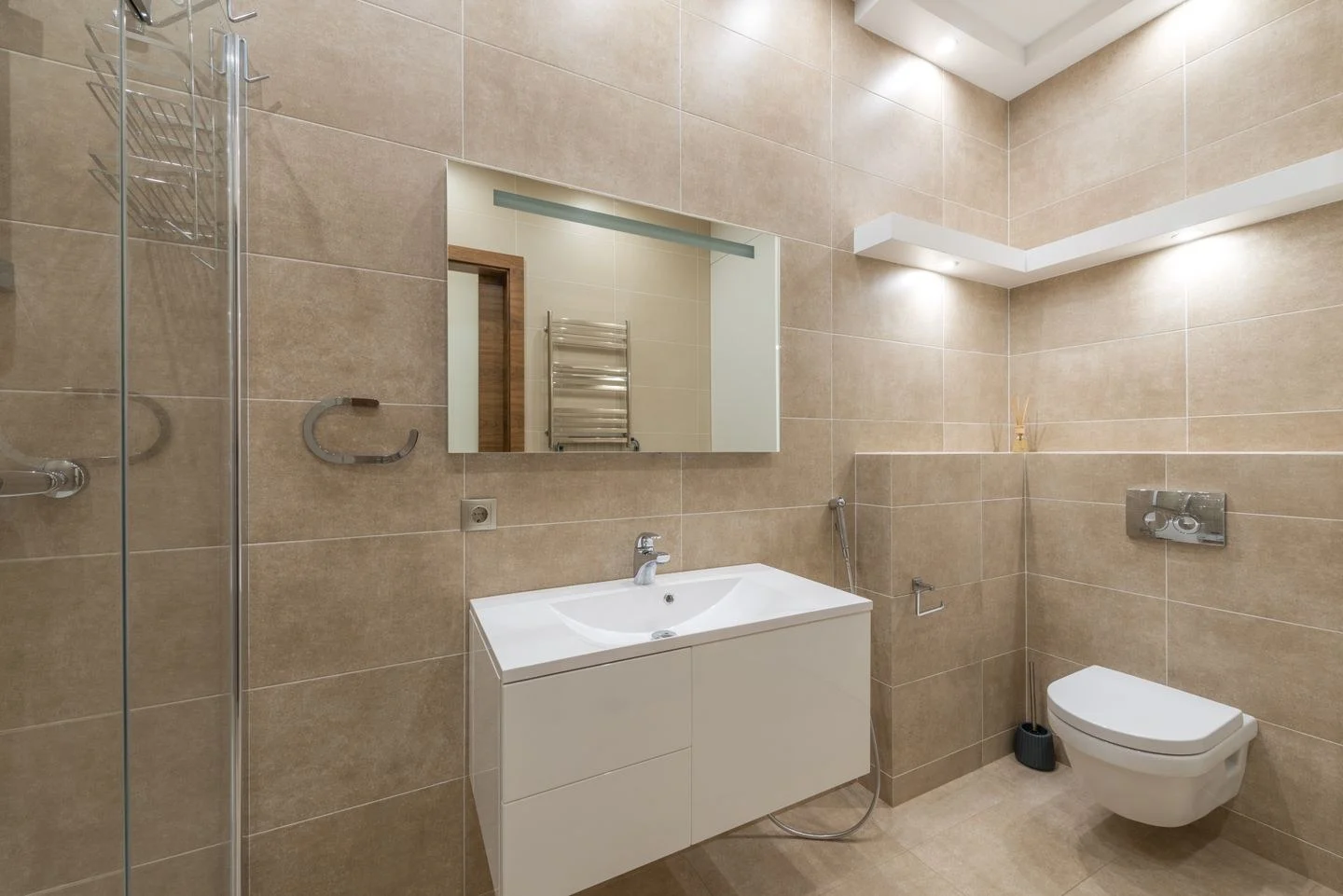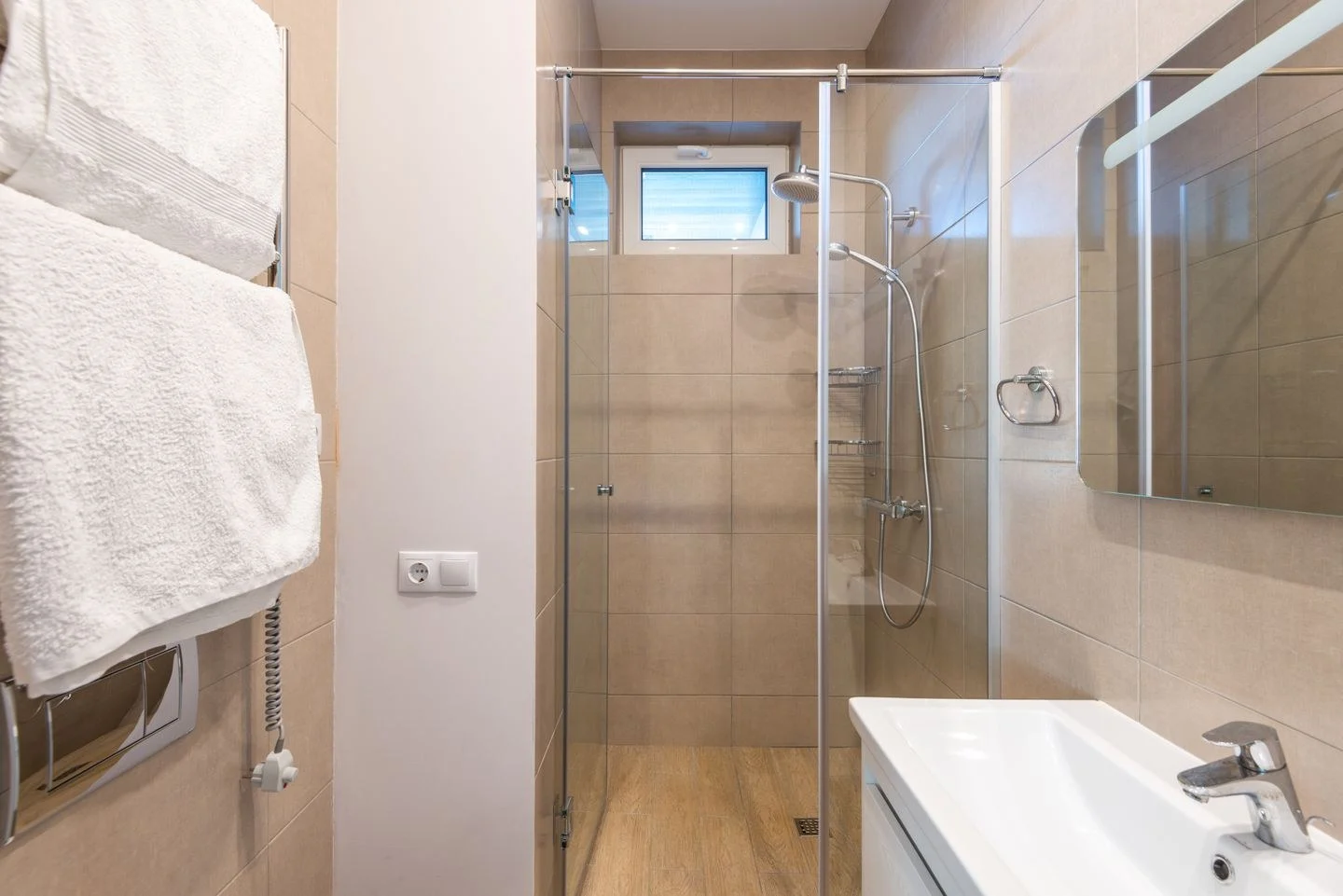
A narrow bathroom often contains many visual interruptions in a small field: grout lines, a mirror edge, a shower enclosure, towel rails, bottles, and a door. Making the room feel calmer begins by deciding which of those lines should remain prominent.
Stand at the entrance with the door in its usual position. Identify the first three things that catch your eye. They may be useful features, such as an attractive vanity, or incidental clutter, such as brightly labeled bottles reflected twice in the mirror. Work on the incidental elements before changing the permanent finishes.
Reduce small changes along the longest wall
Several short shelves, tiny artworks, and contrasting storage boxes can divide a long wall into many unrelated pieces. Removing some of them may create a more continuous view. One appropriately sized mirror or a single useful storage unit can establish a clearer shape, provided it fits the room's actual circulation.
A limited palette can help connect surfaces. Towels close to the wall color create less interruption than several saturated colors distributed along the room. If you prefer a strong accent, concentrate it at one visible position rather than repeating it on every hook and container.
This does not mean painting everything white. A deeper wall color can feel composed when the accessories are restrained and the lighting is adequate. The important relationship is how many competing contrasts are visible at once, not simply how pale the room becomes.
Notice what the mirror doubles
A mirror can expand the apparent view while repeating whatever sits opposite it. A crowded open shelf may become twice as noticeable. Before buying a larger mirror, simplify the reflected area and check the view from the sink as well as the entrance.
If the mirror reflects a door, consider whether several hanging items on that door are dominating the image. Moving some storage into a cabinet may improve the room more than adding another decorative surface. Keep frequently used items accessible; visual calm should not require hiding every object in an inconvenient place.
Use a shower curtain or textiles to soften the room's hard lines if they suit the enclosure. A quiet larger pattern can read more clearly than several tiny prints. Look at the curtain gathered as well as closed, because its compressed folds may form a strong vertical band.
Preserve clear floor space wherever possible. A slim cabinet still occupies real depth, even if its legs make it look light. Test doors and normal movement before adding it. The room feels more settled when its visible order agrees with the way people move through it, rather than disguising a route that remains awkward.