A corner desk can use a room's geometry well, but it can also turn the deepest part of the corner into unreachable storage. The best arrangement depends on where the user sits and which part of the surface holds the main task.
Draw the desk's full shape, including any return, shelves, or pedestal. Then mark the chair's occupied position. A desk that fits neatly against two walls may still leave the seated person in the room's main walkway.
Locate the working center
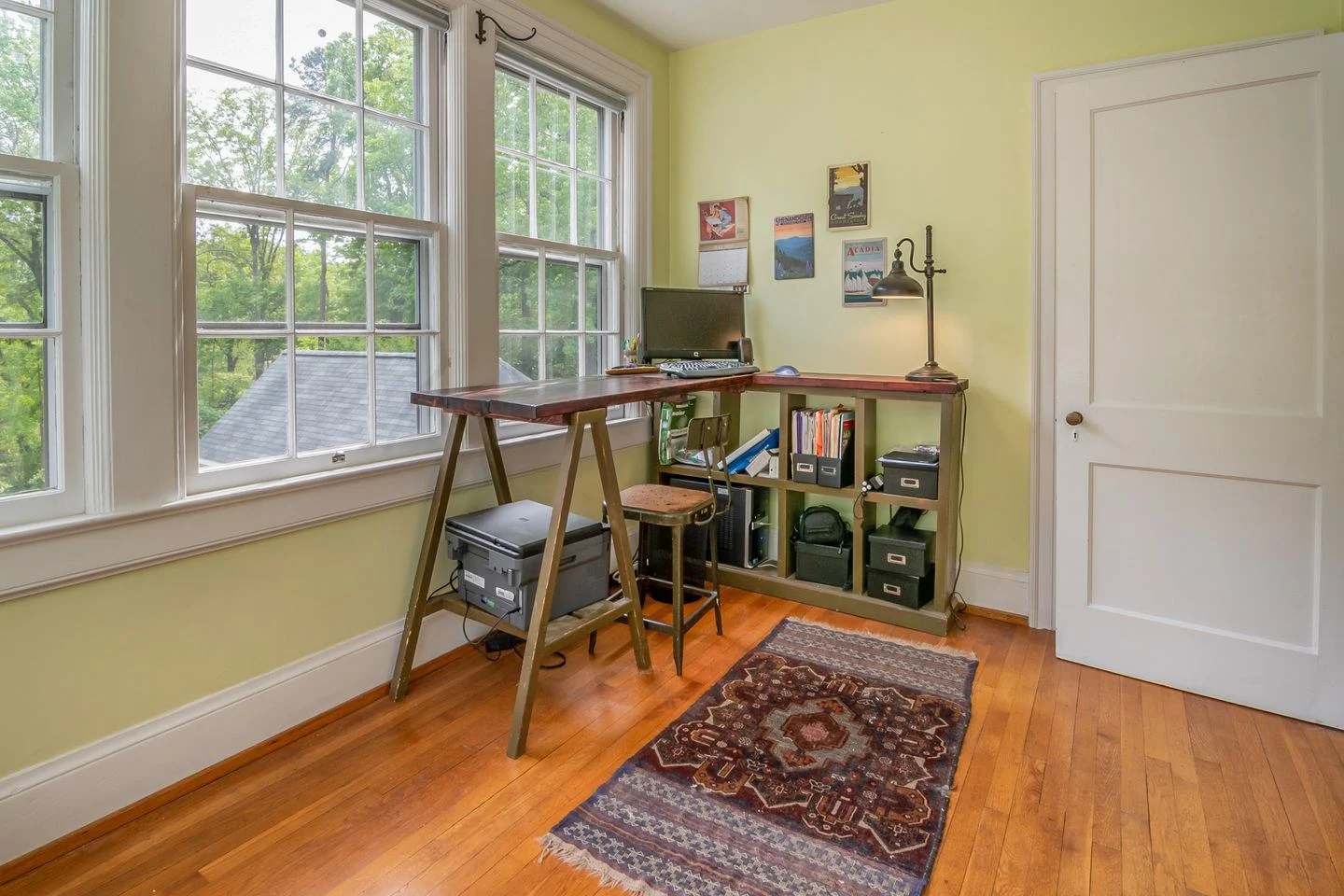
Decide whether you will face into the corner or along one side. Facing the corner may provide a deep surface, but equipment at the back can be difficult to reach. Working along one side allows the return to hold reference material or another task, though the corner itself may remain partly unused.
Measure the equipment rather than assuming that more total desktop area means more useful area. A monitor, keyboard, and writing space need a comfortable relationship. An L-shaped surface can have plenty of square inches while still placing the user awkwardly.
Keep the return purposeful
Assign the second surface a specific role: printer, drawing space, or temporary project layout. If it has no role, it is likely to become a pile of unrelated objects. A smaller straight desk with adjacent storage may serve the room better.
Check drawers and cabinet doors in the desk's actual orientation. Some designs have a fixed left or right return. Others permit reversal, but only in the ways described by the manufacturer. Do not assume a product can be reconfigured simply because its photographs show a symmetrical shape.
Plan the lamp and cables before filling the corner. A lamp should illuminate the task without being hidden behind a monitor, and plugs should remain accessible. Keep equipment ventilation clear and use the desk's intended cable management where available.
IKEA's desk guidance emphasizes choosing a surface for the work or hobby it supports. Apply that priority to the corner: it is a location, not a reason to buy a particular shape. If the seated position, reach, and route all work, the corner desk earns its footprint. If they do not, leaving part of the corner open may be the more useful choice.