Before replacing an entire wall with cabinets, list the things your living room actually has to store. Books need depth and support. Board games need broad, accessible shelves. Blankets want a place that is easy to open from the sofa. Remotes need a small home that does not swallow them. These are different storage problems.
Give each collection a nearby home
Keep reading material beside the seat where it is read, rather than requiring every book to live in one large unit. An end table with a shelf can hold a current stack. A low cabinet near the dining area may be a better place for games if that is where they are played. Distributing storage lets the room retain windows, artwork, and empty wall space.
Check the objects before shopping. Measure your largest game box, not an average paperback. Include handles, lids, and the space needed to lift an item out. A cabinet can have generous external dimensions and surprisingly small interior compartments because of hinges, dividers, or thick sides.
Combine concealed and visible storage
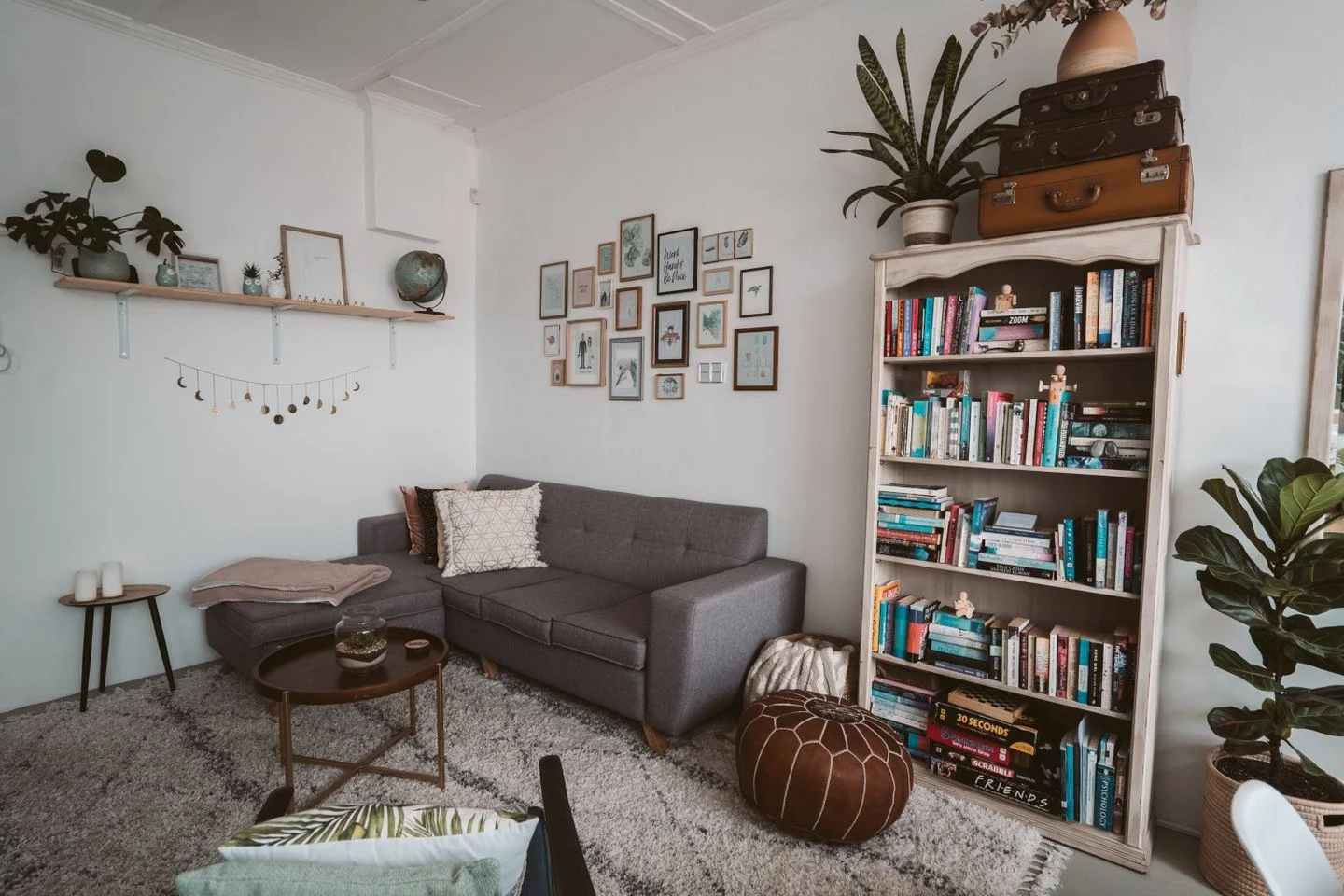
Open shelves work well for objects that remain visually orderly when in use. Books, a few ceramics, or a collection of records can provide the room's character. Closed drawers or doors are more forgiving for charging accessories, small toys, and uneven stacks of paperwork. An open basket still counts as visible storage when its contents project above the rim.
Use one or two substantial storage pieces rather than many tiny containers on every surface. For example, a low credenza could hold games and household paperwork while a narrow bookcase holds reading material. The sofa-side table then only needs to manage the evening's essentials.
Avoid turning the coffee table into a disguised attic. A storage ottoman is useful for blankets, but less convenient for things you need while someone is resting their feet on it. Test whether its lid can open without moving other furniture and whether the mechanism is suitable for the household.
Preserve a clear visual pause
Leave some wall space without furniture. A chair beneath an artwork may be more welcome than another cabinet that only holds duplicates. Storage should support the room's activities rather than determine every inch of its layout.
CPSC recommends anchoring furniture to reduce tip-over hazards, particularly where children live or visit. Follow the furniture's instructions and use appropriate anchoring for the wall construction. Do not treat a low profile as a guarantee of stability.
After arranging storage, return the room to its ordinary condition rather than styling it for a photograph. Put the remote away, take out a game, unfold a blanket, and put everything back. If those actions require removing decorative objects or balancing a heavy lid, revise the arrangement before buying more containers.