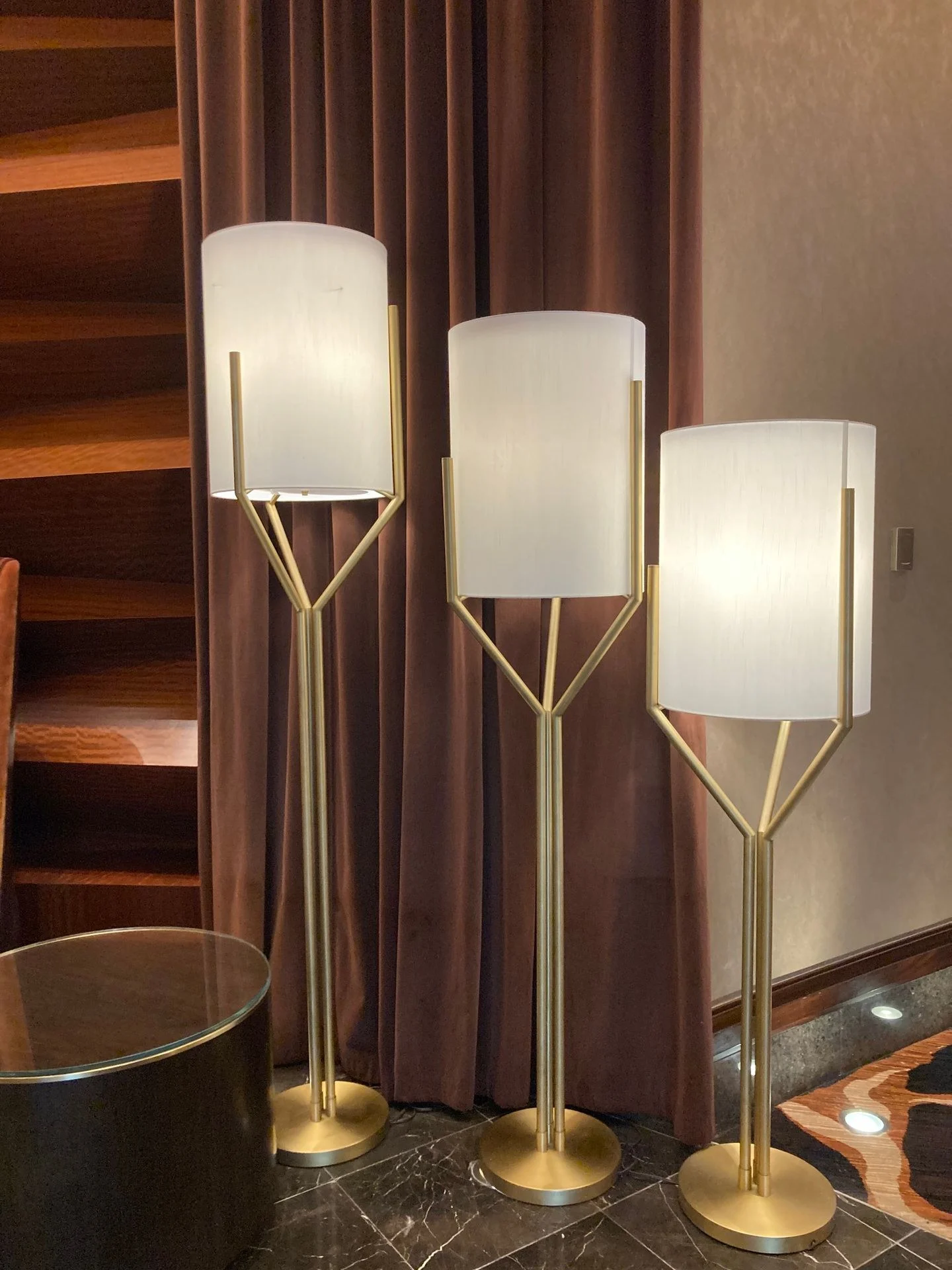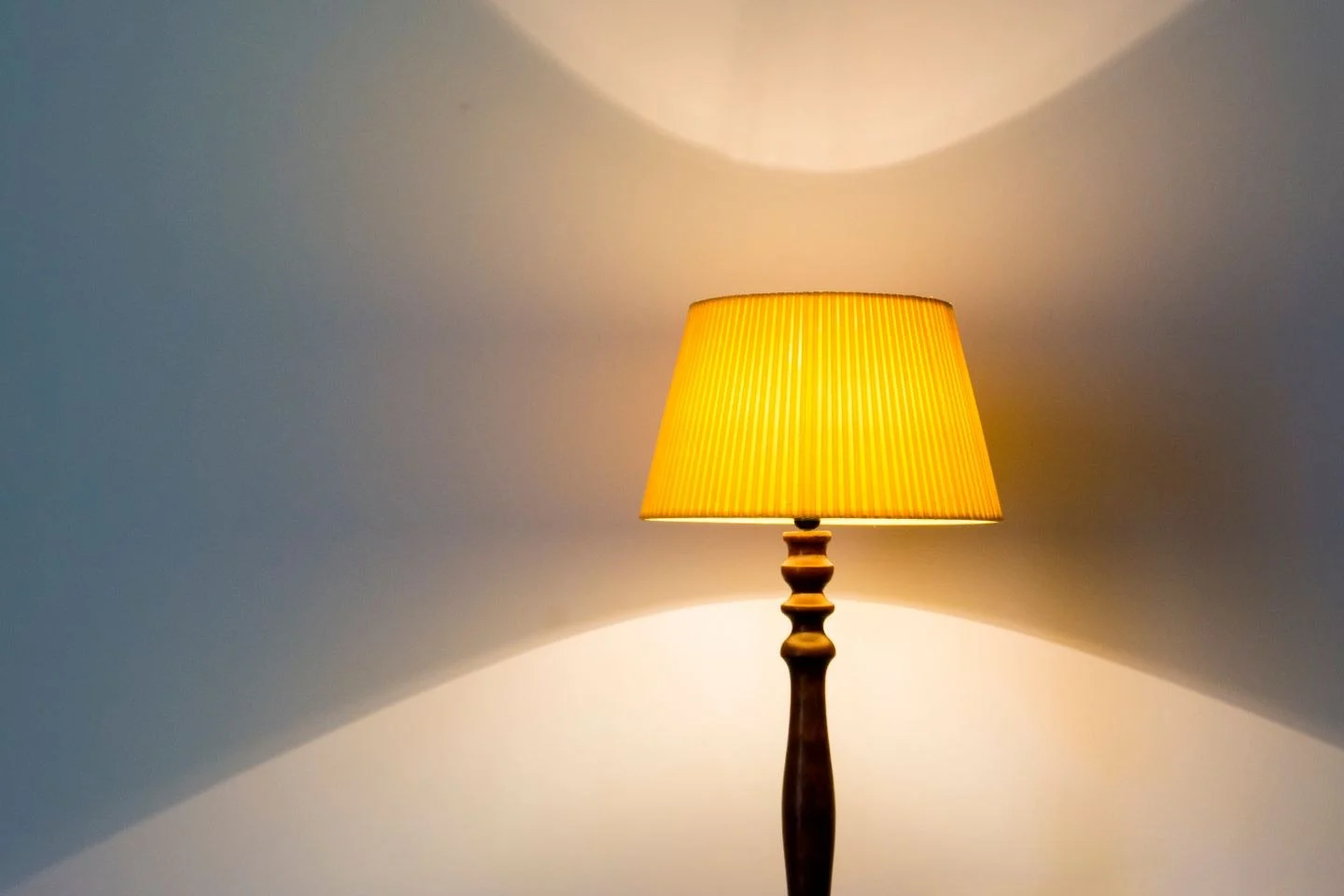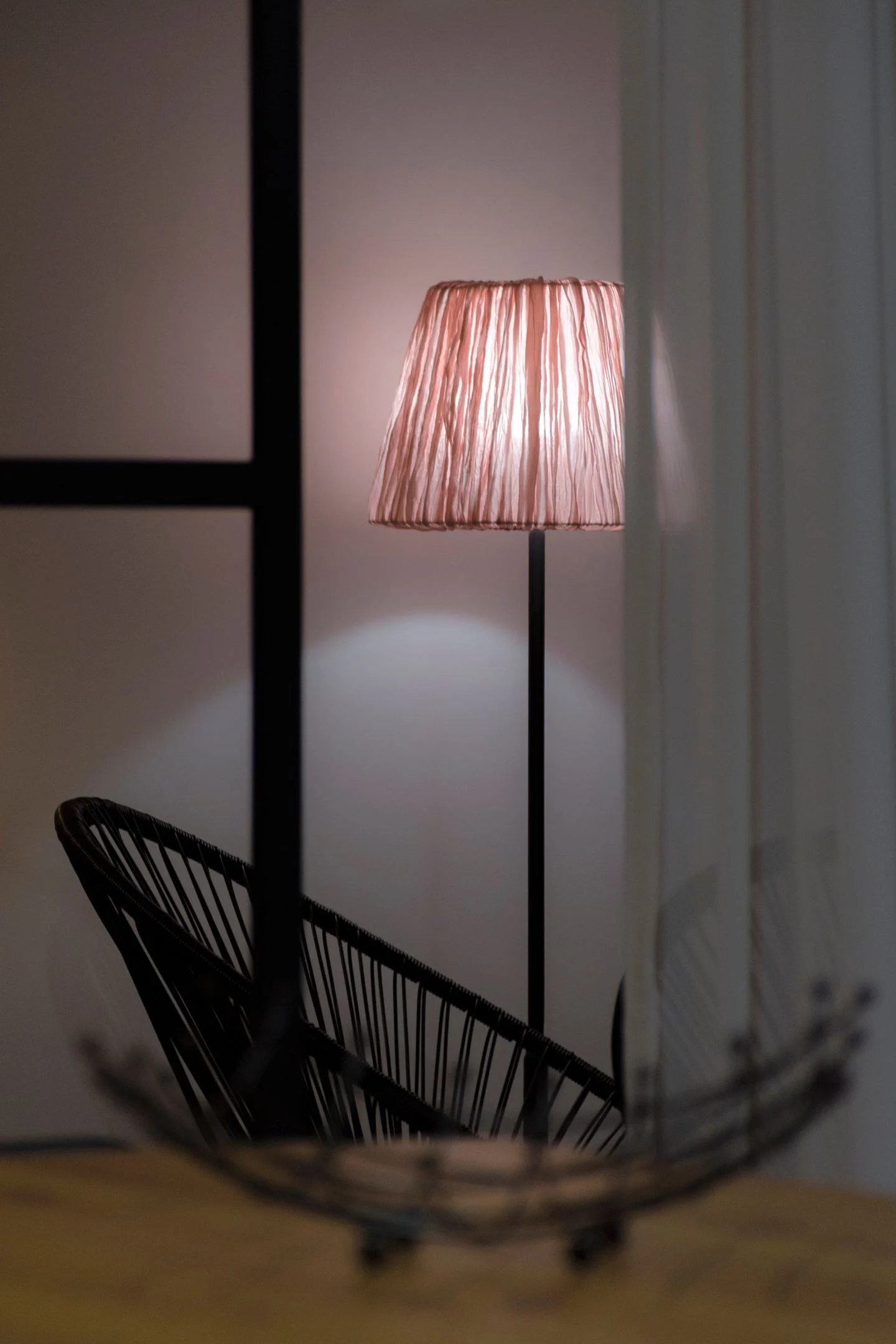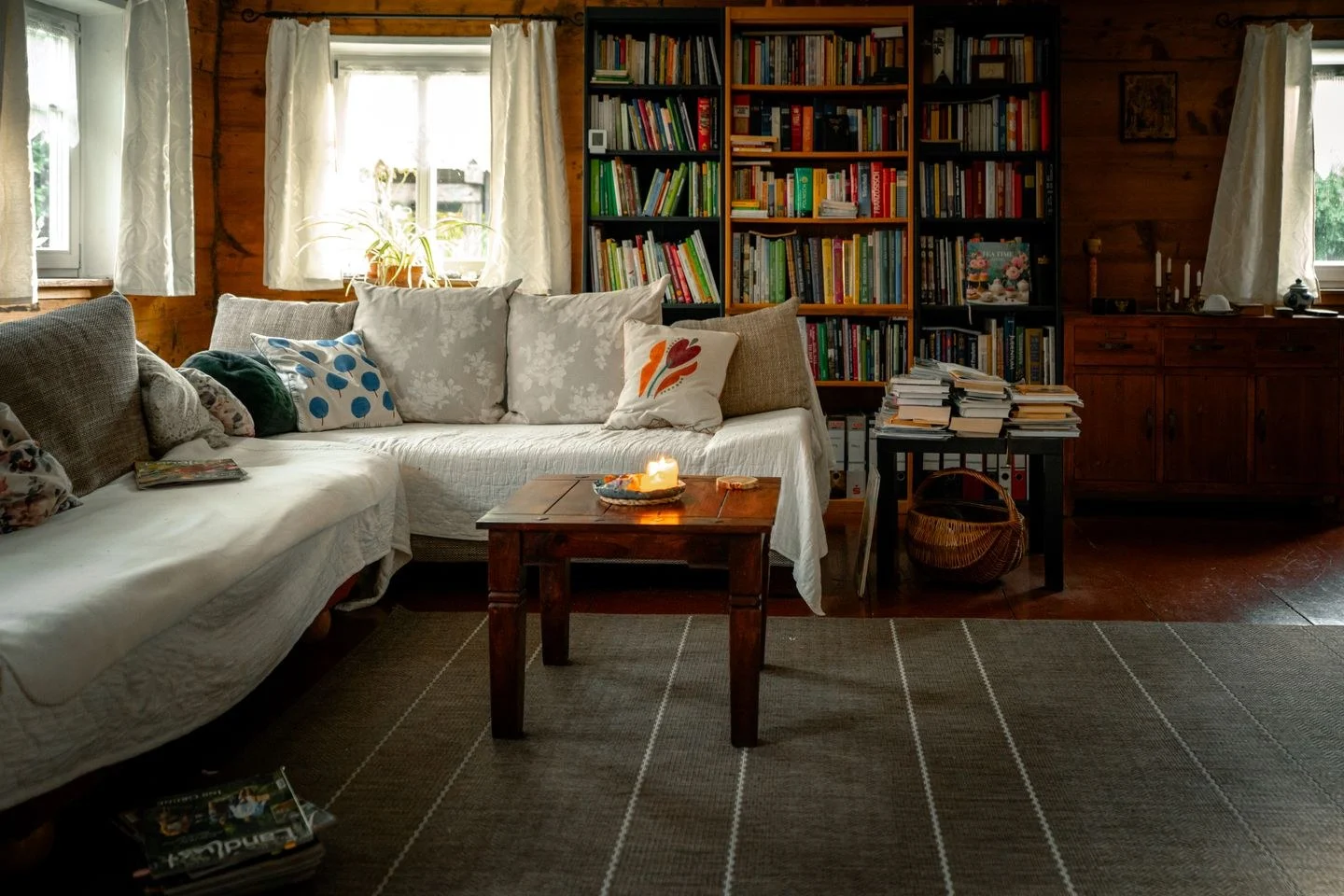
A room without a ceiling fixture can still have a useful lighting plan. Portable lamps need to provide enough general visibility as well as focused light for particular activities. Start with the outlet locations and the room's routes, because a lamp in the ideal visual position is not useful if its cord must cross the floor.
Mark the main seating, work surface, and darker areas. Then identify which lamps can serve them from suitable outlets. Avoid treating extension cords as a permanent decorating solution; use electrical products only as intended and obtain qualified advice if the available arrangement is unsuitable.
Spread useful light across the room
A shaded table lamp can illuminate a seating area, while a floor lamp may brighten a larger section or direct light toward a task. A lamp on a cabinet can help the far side of the room remain visible. Choose the distribution before deciding whether the lamp bases match.
Room & Board's layered-lighting guidance separates general, task, and accent roles. Without an overhead fixture, those roles may be carried by several portable lights rather than one central source. They do not need equal brightness, but together they should support safe movement and the room's activities.
Check controls from the entrance
Make at least one light easy to turn on when entering. A room full of lamps can still be inconvenient if every switch requires walking through darkness. Use only suitable, compatible controls and follow their instructions.
Then test the main seats. Look for exposed bulbs, bright shade openings, and reflections in screens or mirrors. Move the lamp or change to a more suitable shade rather than accepting glare as the cost of sufficient light.
Keep the lamp footprints realistic. An arc lamp may reach far into the room while its base takes up significant space. A narrow floor lamp may fit beside a chair but provide little general illumination. Evaluate the whole fixture, not only its decorative profile.
Try the arrangement after sunset with the activities you normally do. Read, move between seats, and find objects in storage. Add a light only where a clear gap remains. A coherent group of portable lamps can make the room feel complete without imitating the effect of a ceiling fixture it does not have.