A dark corner does not always need another piece of furniture with a lamp on top. It may need light on the wall, useful illumination beside a chair, or a better balance with the brighter side of the room. Identify that need before adding an object to an already small space.
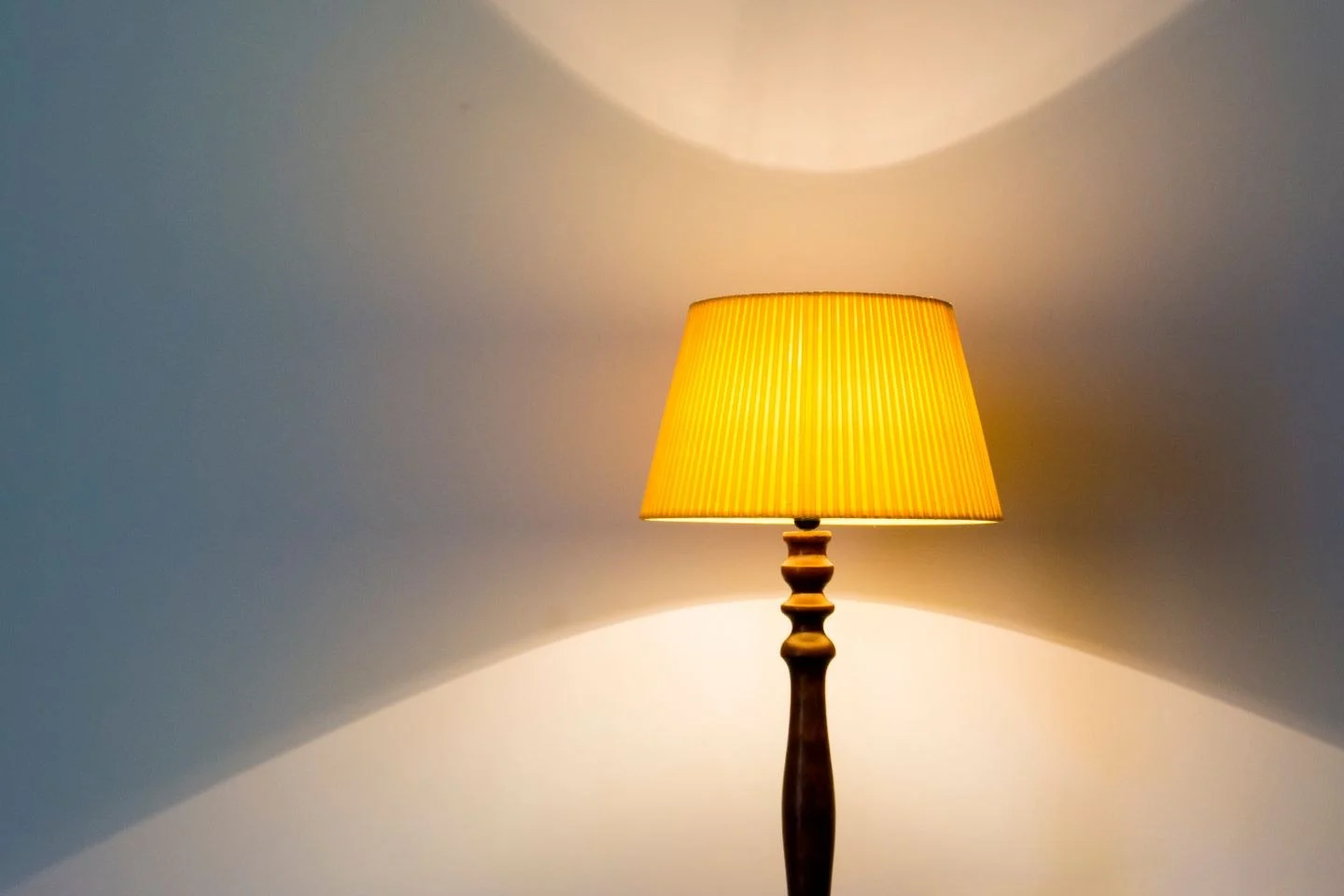
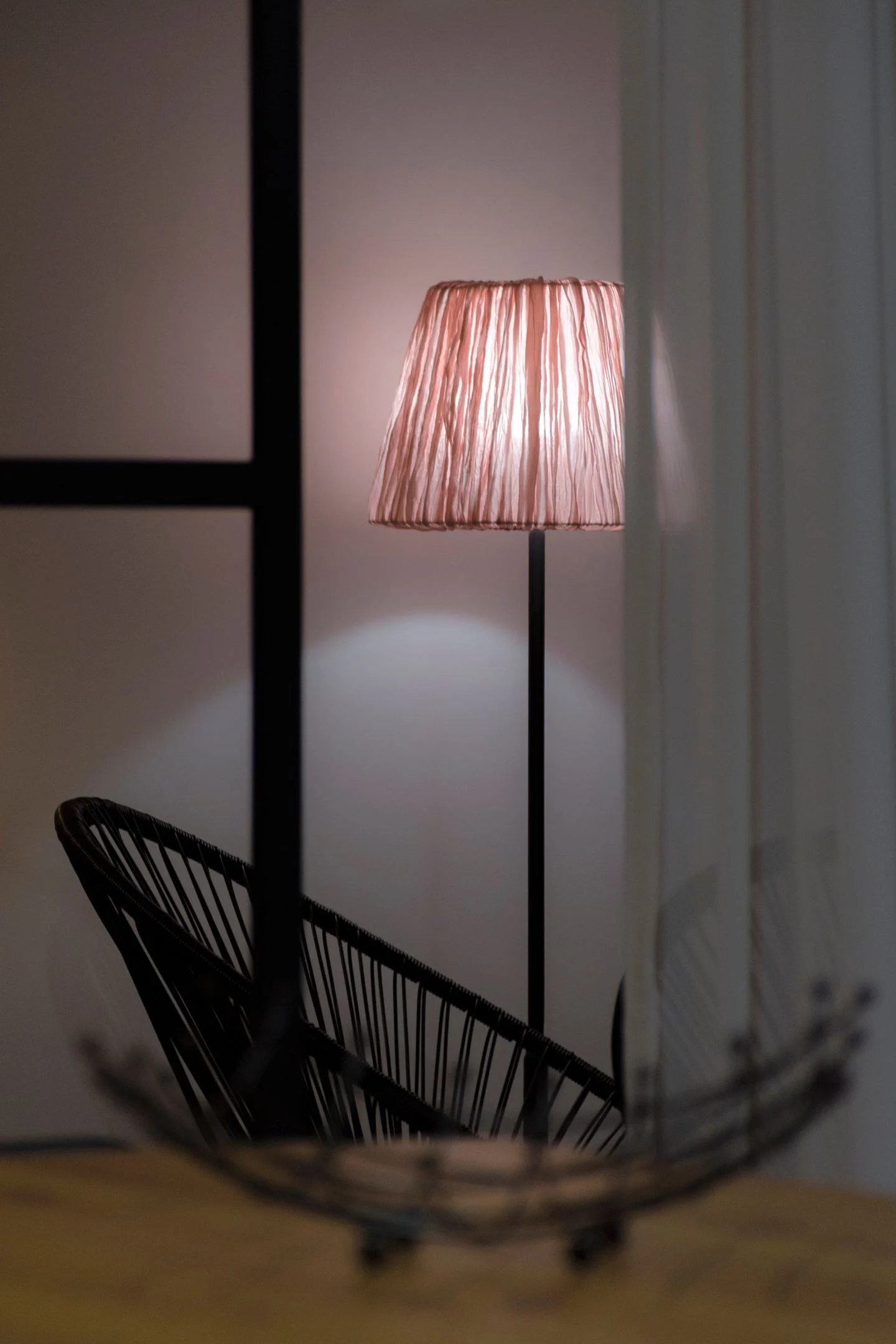
View the corner from the main seating position after sunset. If it contains a reading chair, the task is different from a corner that simply disappears behind a plant. For the chair, consider where light needs to reach the page. For the background, consider whether lighting a vertical surface would make the room feel more complete.
Use an existing surface first
A small lamp may fit on a cabinet or table already near the corner. Check that it leaves the surface usable and does not place the bulb in a direct line of sight. A narrow base alone does not guarantee a small footprint; the shade can extend into a walkway or collide with nearby objects.
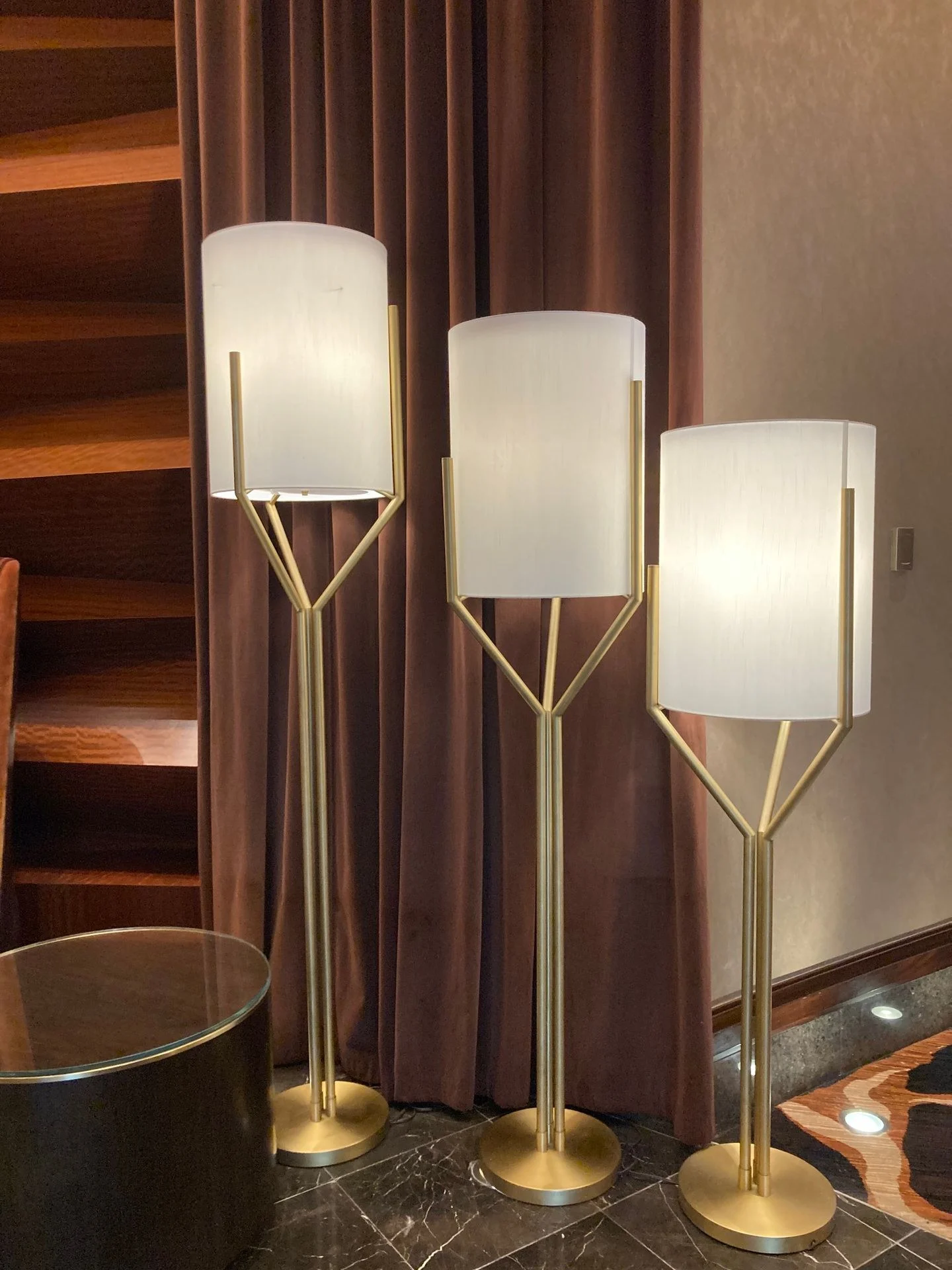
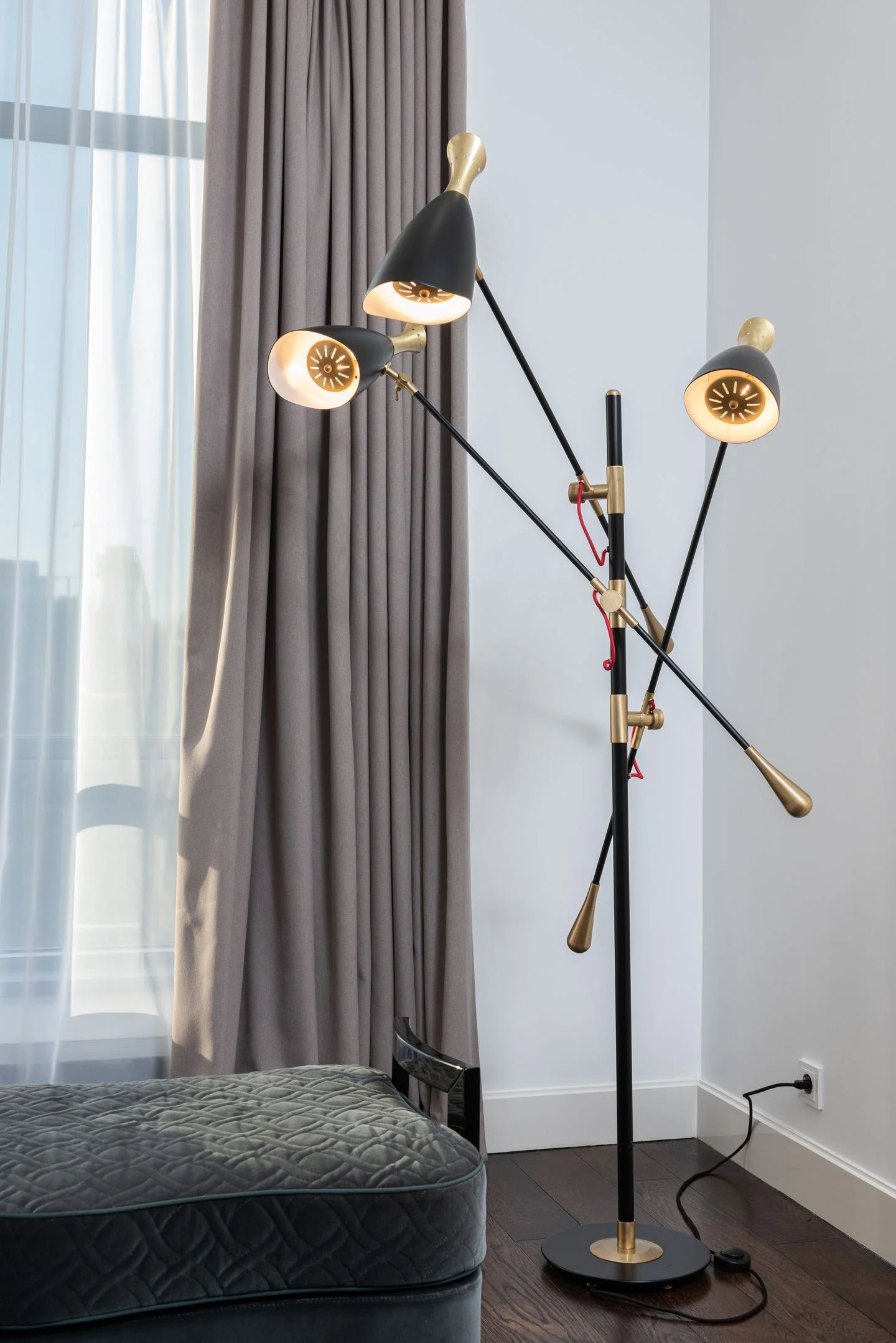
A floor lamp can provide light without requiring a table, although its base and cord still need space. Test the full outline beside the furniture and through its adjustment range. Keep it stable and out of a route where it will be repeatedly bumped.
If neither option fits, a suitably installed wall light may be worth considering. Plan its location and electrical requirements with appropriate help. A fixed light should solve the intended task for the long term, not simply avoid moving a few accessories today.
Remove competition around the new light
Clear decorative objects from the immediate area and observe what the light itself contributes. An illuminated wall, a chair silhouette, or a plant's shape may provide enough interest. Adding a mirror, several vases, and another table can turn the original lighting problem into a clutter problem.
Check the corner with the rest of the room's usual lights on. If the new lamp becomes an excessively bright focal point, reconsider its shade, position, or compatible control options. The aim is a useful relationship with the surrounding room, not the elimination of every shadow.
Finally, reach the switch from the position where you will use it. A lamp hidden behind a cabinet may look neat but be awkward to operate. The most successful addition is one that occupies little unnecessary space, can be used easily, and gives that corner a clear role after dark.