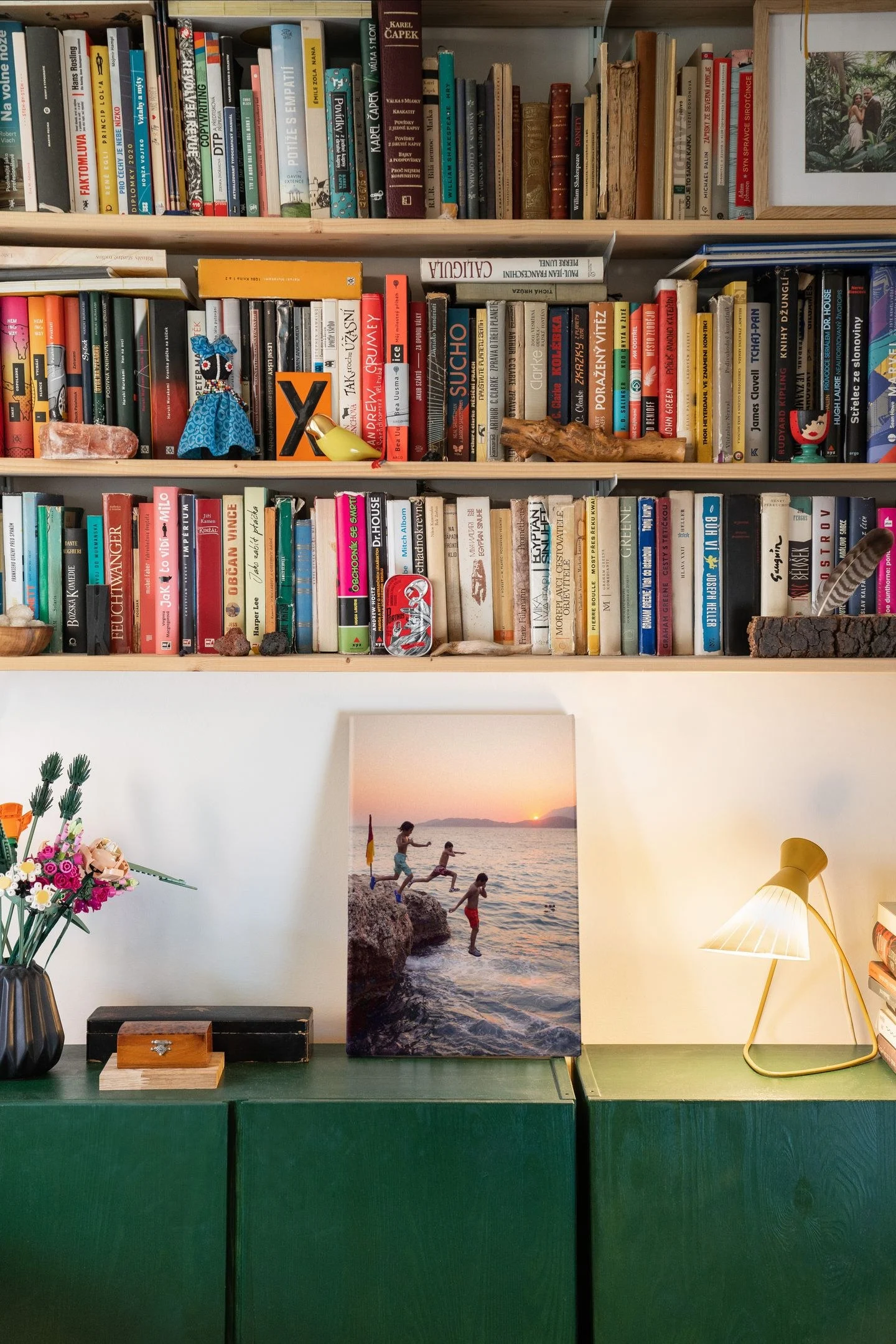
Lighting an open shelf can make its contents easier to read, but it can also exaggerate clutter and cast a strong stripe across the room. Decide what the light is meant to reveal before choosing a fixture. A row of everyday books needs a different effect from one displayed ceramic object.
Look at the shelves under the room's existing light. The problem may be a dark vertical face rather than darkness on every shelf. A nearby lamp or a suitable wall light might address it without adding a light to each compartment. Test the broader room arrangement first.
Consider the viewing angle
A light hidden from a standing position may be visible from a low sofa. Check the shelf from every common seat and from the entrance. Directly visible LEDs or a bright bulb can distract from the objects they are intended to illuminate.
If a shelf system offers integrated lighting, review how its channels, diffusers, and cable routes are designed. Use compatible parts and follow the manufacturer's instructions. Do not conceal an unsuitable lamp in a crowded shelf or treat a decorative strip as interchangeable with a purpose-designed installation.
Think about shadows. A projecting object may block light from reaching the area behind it. A glossy photograph or glass door may reflect a bright point. Move a few objects and compare the effect before increasing the brightness. The arrangement of the contents is part of the lighting design.
Preserve the shelf's working space
Books and containers need to come out without catching a cable or hitting a fitting. Leave the fixture's required clearance, including any ventilation or heat-related guidance. Heavy objects should not rest on wiring, and cords should follow an appropriate route rather than draping across the shelf edge.
Controls should be reachable without unloading the display. If a light is inconvenient to operate, it is unlikely to become part of the room's ordinary routine. Plan the switch or approved control method at the same time as the fixture, with professional help for electrical work where needed.
Finally, view the shelves with the rest of the room lit for the evening. The brightest surface will attract attention. A storage wall does not need to dominate every activity simply because it has its own lighting. Adjust the arrangement so the shelf contributes to the room instead of becoming an isolated display.