Cabinet hardware is one of the few design choices you touch repeatedly throughout the day. A shape that looks elegant in a close-up may be awkward on a heavy drawer or uncomfortable with wet hands. Begin with the movement required to open the cabinet, then consider its appearance.
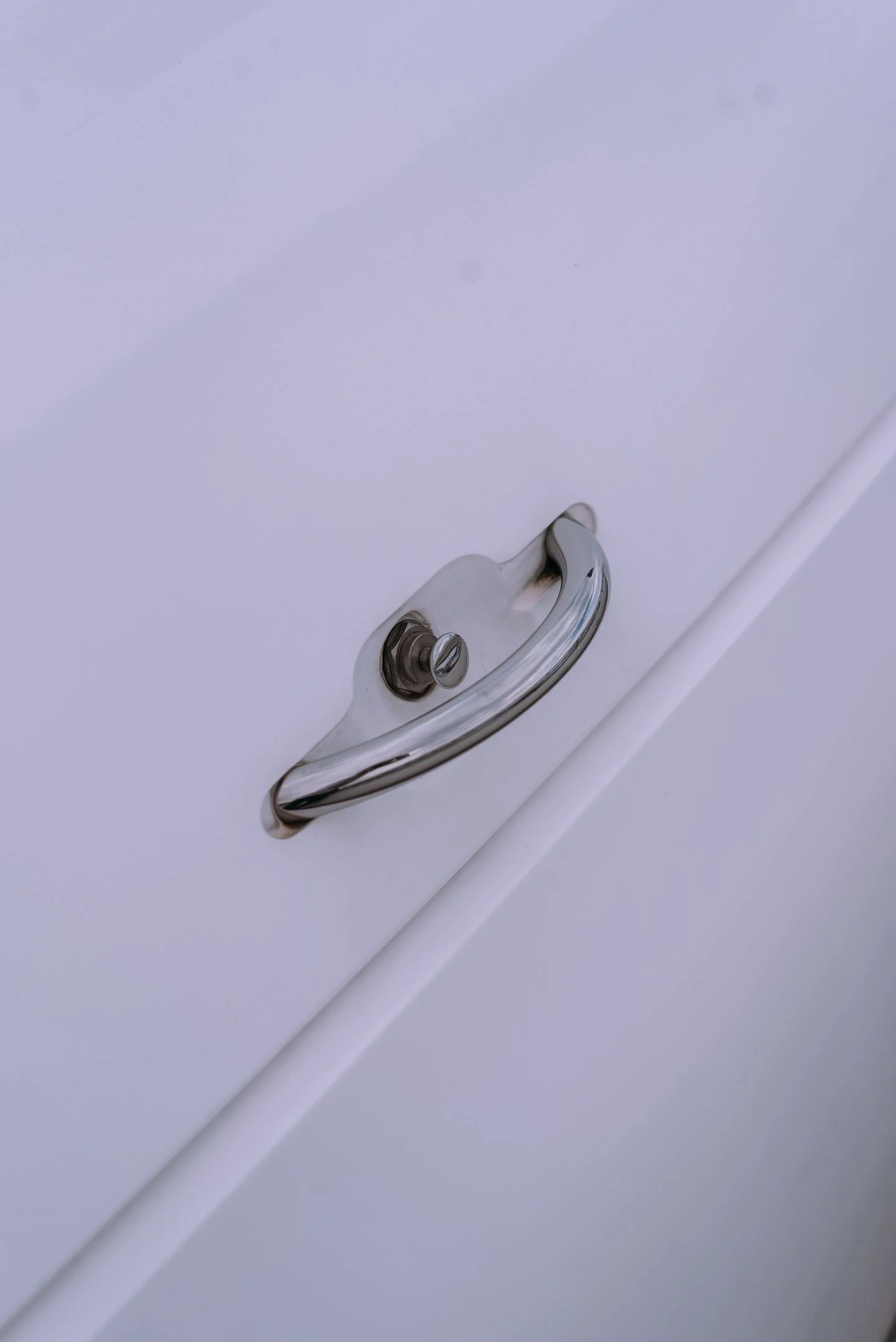
Try a few samples if possible. Grip a knob from the angle you would use on an upper door and a lower drawer. Check the clearance behind a pull and whether your fingers fit comfortably. Decorative projections or sharp transitions may feel different in use from the smooth outline shown in a photograph.
Match the shape to the opening task
A knob occupies little visual space and may suit a small door. A pull offers a longer gripping area, which can be useful on a broad drawer. These are tendencies rather than rules: the actual size, profile, and opening resistance matter more than the category name.
Cup pulls encourage a particular hand position, while bar pulls can be approached from several directions. Long bar ends may catch clothing if they project into a route. Check hardware near corners, where neighboring doors or drawers could bring handles into contact.
For a household with different grip needs, let the people who use the kitchen try the options. A small round knob that one person finds comfortable may be difficult for another. Choosing a usable shape is a more meaningful form of consistency than placing the same tiny fitting on every front.
Check what the existing holes allow
For replacement pulls, measure the center-to-center distance between fixing holes. Also note the overall length and projection; two handles with the same hole spacing can have very different shapes. Check screw requirements against the door or drawer-front thickness and follow the hardware instructions.
Removing a fitting may reveal a mark or a change in finish beneath it. A new fitting with a smaller base might expose that area. Test one inconspicuous position before ordering enough for the entire kitchen. If new holes are needed, plan the repair and installation rather than treating the swap as automatically reversible.
Consider how the finish will be cleaned. A textured or intricate fitting may collect residue differently from a simple smooth form. Follow its care instructions and compare a sample beside the cabinet under normal lighting. Finish names are not always identical between brands.
The kitchen can use more than one hardware shape while keeping a shared finish or visual weight. Knobs on doors and pulls on drawers can express how the fronts operate. Once the function is resolved, stand back and check the pattern across the full run of cabinetry. The repeated details should support the cabinet design without overwhelming it.