A desk in a bedroom has two lives: an active work surface and an object you see when work is over. Plan both. Hiding a laptop in a drawer may help visually, but it does not solve an uncomfortable chair or a desk that blocks the closet.
Give the desk a proper working footprint
Include the chair pulled back, legroom, and access to storage. A narrow console can look discreet but may be too shallow for the equipment you use. Try your keyboard, screen, and other essentials on a comparable surface before choosing furniture. For longer work sessions, prioritize a setup that supports comfortable positioning rather than a decorative chair chosen only to match the bed.
Look at daylight and glare. A desk facing a window can be pleasant, but direct light or a bright background may make a screen harder to use. Test the screen at the relevant time of day and use suitable window coverings. Keep the window accessible and preserve any required escape route.
Turn the work away from the bed when possible
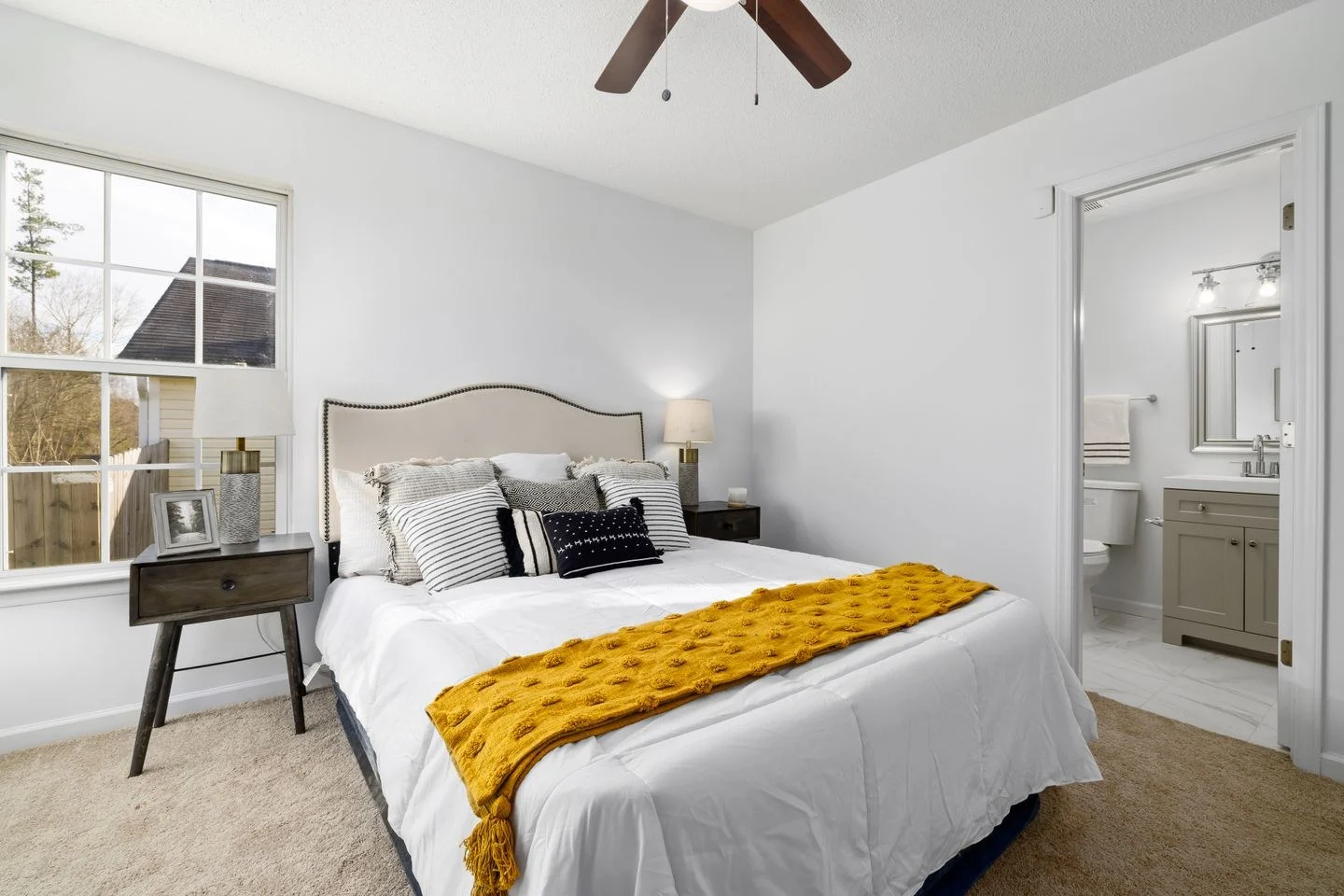
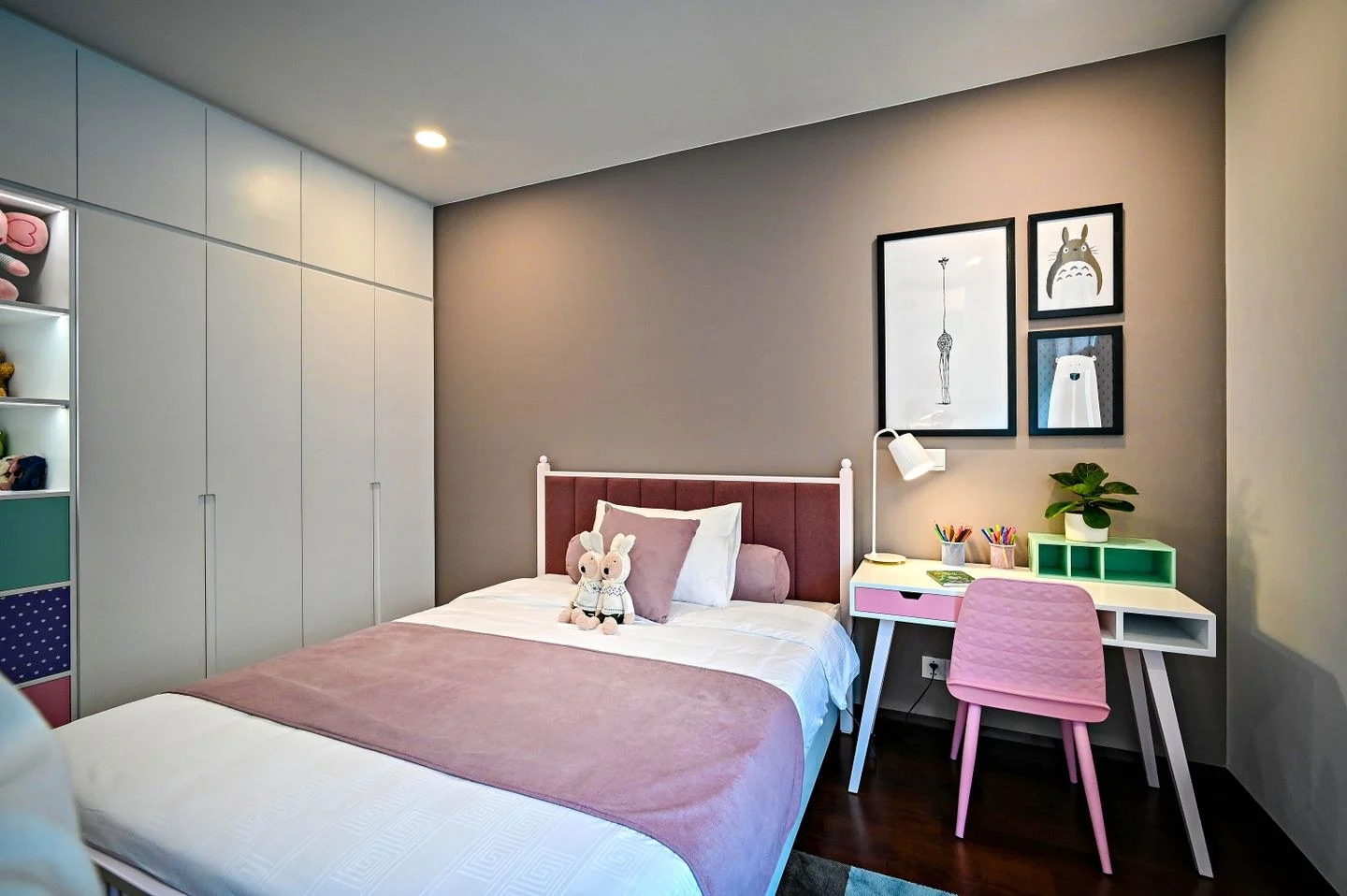
A desk on a side wall can make the screen less dominant from the pillow. A position directly opposite the bed puts the entire work surface in view, so it may need more contained storage. The room's circulation takes priority: do not create an awkward route around the bed just to hide a monitor.
A small cabinet or desk with a closing section can help if it is designed to hold the equipment and provide required ventilation. Do not operate devices in an enclosed space contrary to their instructions. A decorative screen can conceal the area, but it also occupies floor space and may reduce light. Choose it only after checking stability, movement, and access.
Put the work into a defined boundary
Use one drawer, shelf, or portable box for current papers and tools. Keep the system specific enough that the desk can be cleared without a full sorting session. A vague pile shifted onto the chair each night is not a reset routine.
Manage cables so they stay clear of the walking route and cannot be trapped by furniture. Follow equipment and electrical-product instructions. If the only outlet is across the room, reconsider the desk location or seek an appropriate electrical solution rather than running a cord beneath a rug.
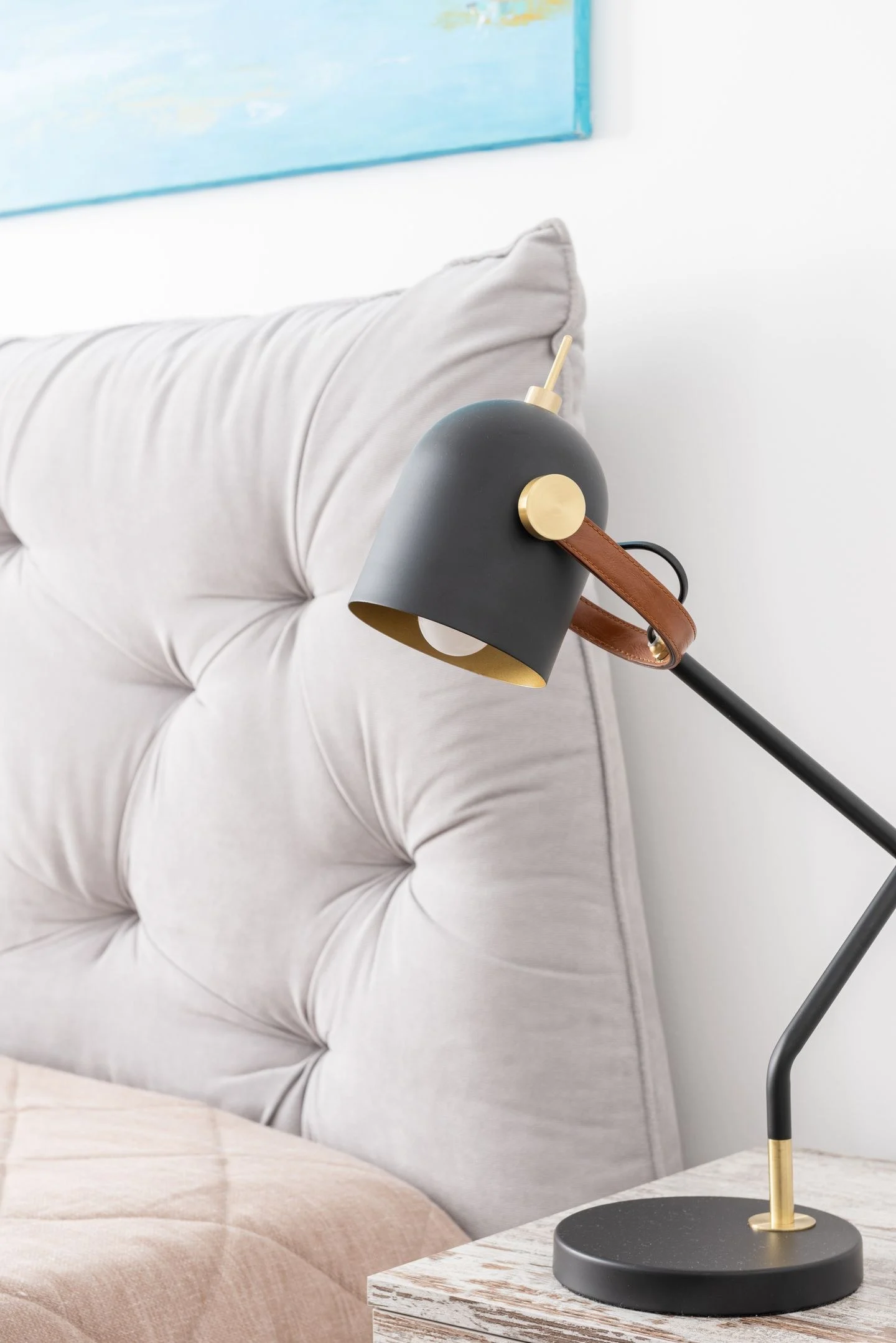
The desk can share a wood finish or color with bedroom furniture without becoming part of a matched set. A quiet finish may reduce its visual prominence, while a distinct task light helps it function as its own area. Keep the light aimed at the work rather than across the bed when another person is resting.
End the day with a small physical change
Close the laptop, store the papers, and turn off the task light when appropriate. A clear desktop is easier to live with than a permanent display of unfinished work. If your job requires equipment to remain in place, use storage around it to keep the surrounding surface calm instead of trying to disguise the device with decorative clutter.
Reassess the arrangement after a week of actual use. If the chair always ends up in the bed's route or the closet cannot open during work, the layout needs revision. Visual separation helps, but the strongest dual-purpose bedroom gives both activities enough space to function without repeatedly dismantling the other.