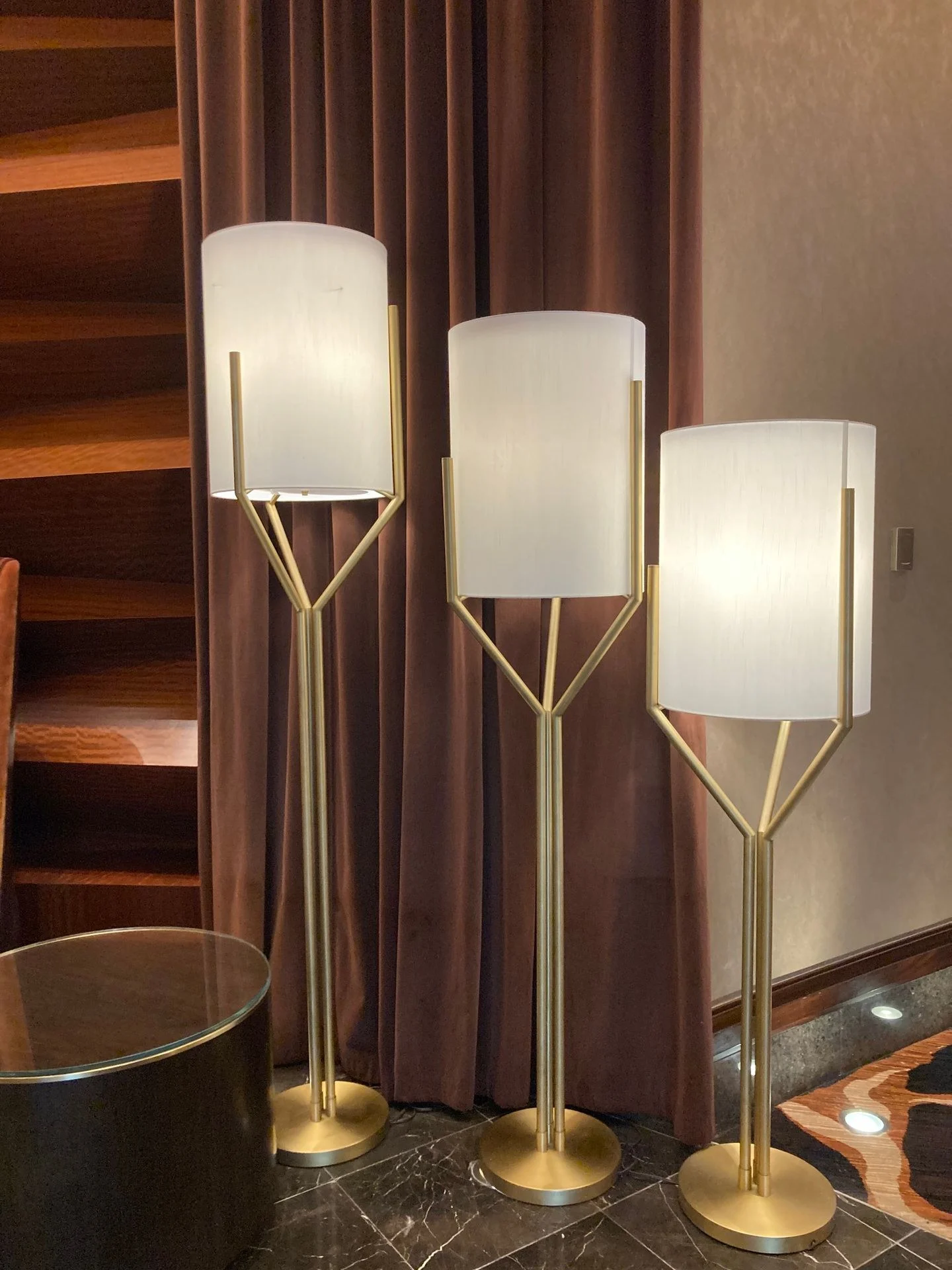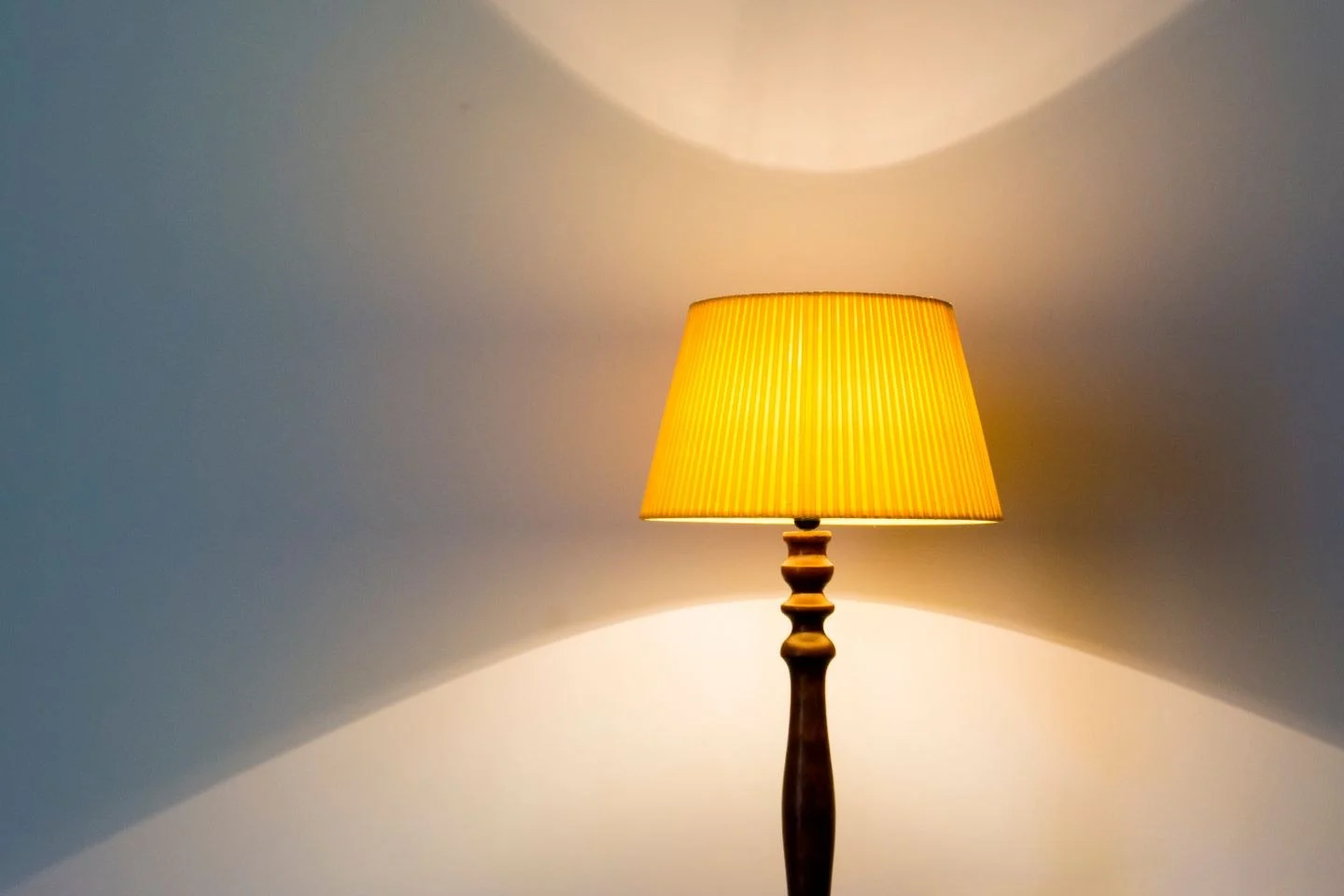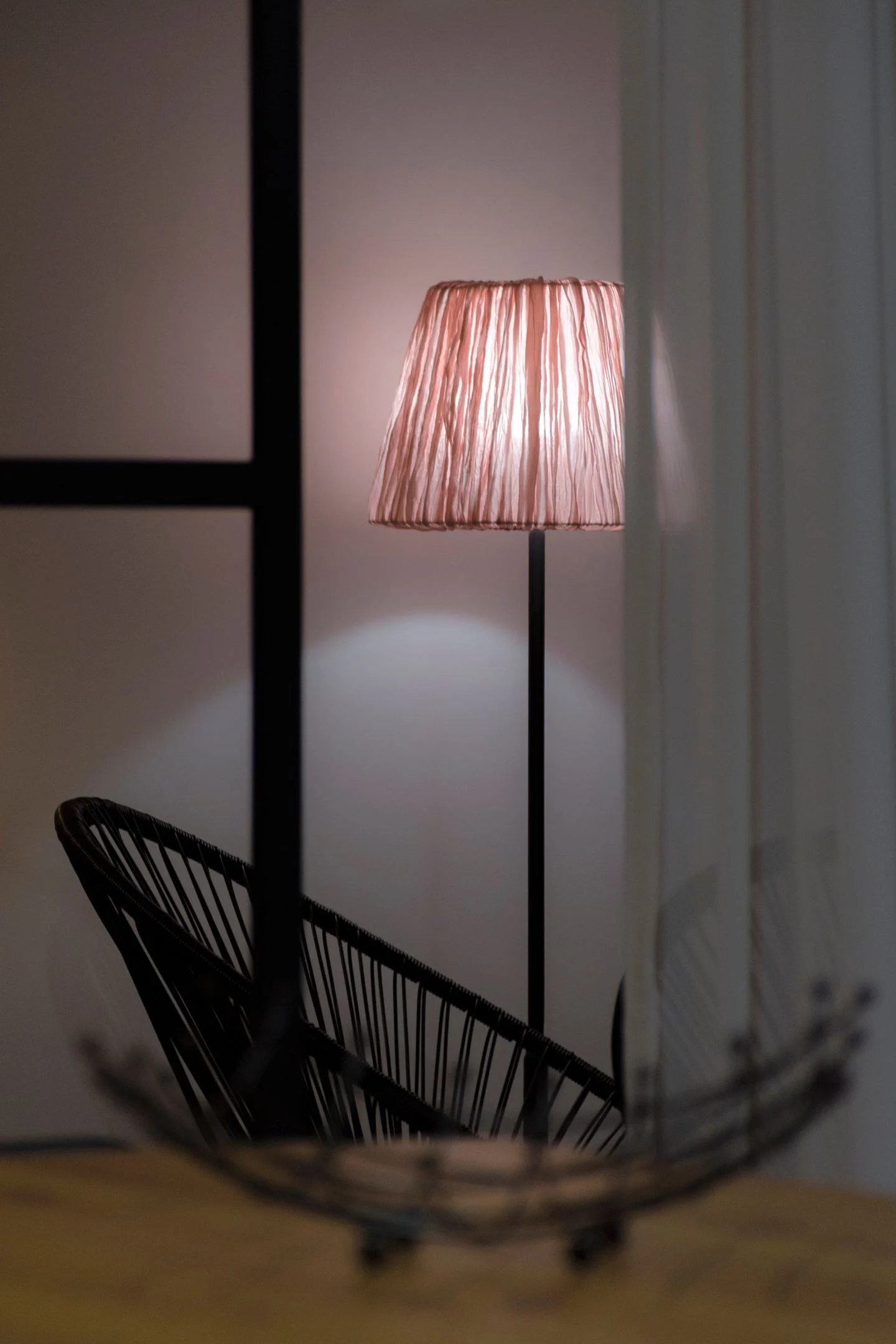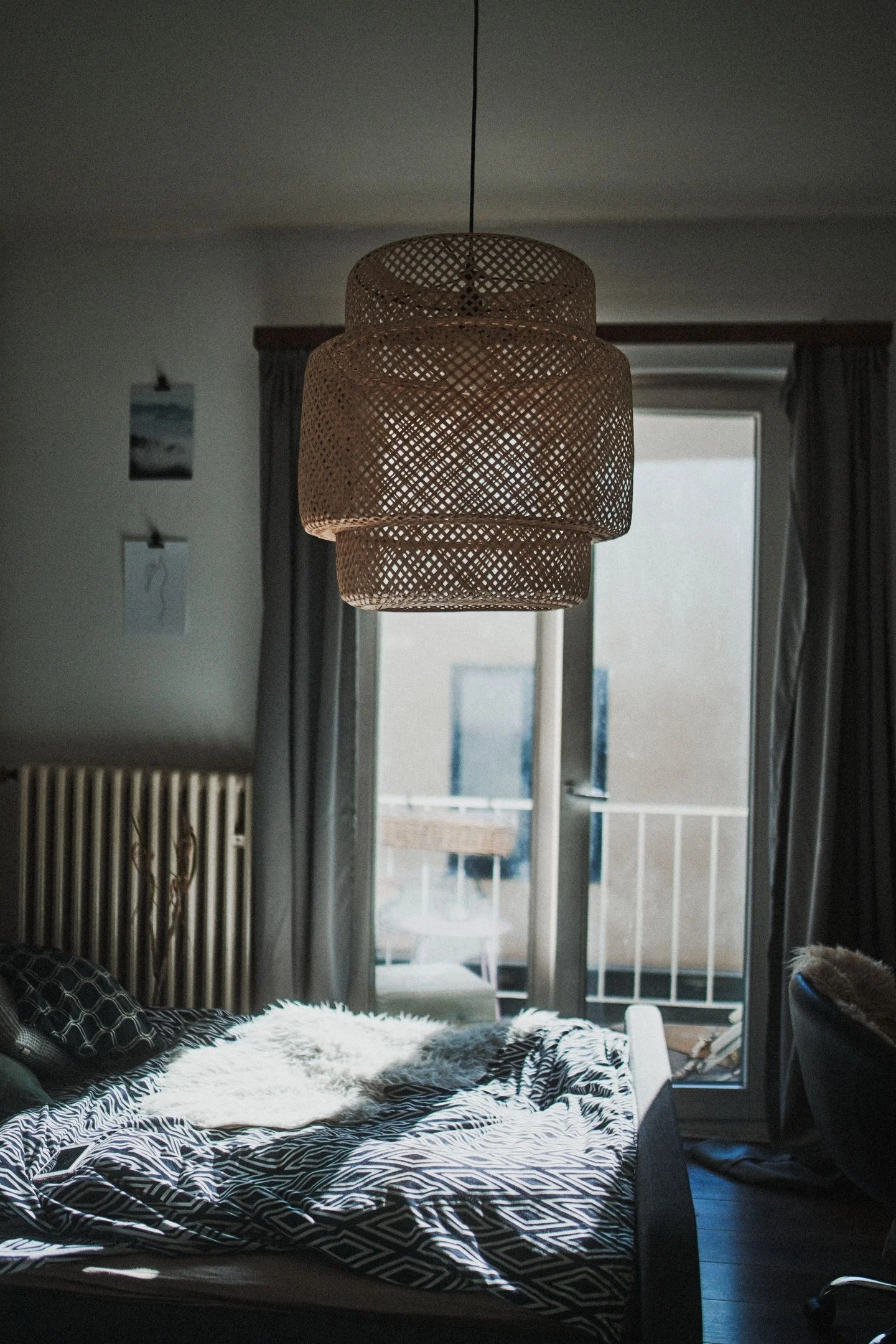
A lampshade is part of the light source, not simply a cover chosen after the lamp. Two shades with the same outline can create noticeably different effects because of their material, lining, and openings. Compare them switched on as well as in daylight.
A pale translucent fabric may allow some light through its sides, making the shade itself a visible glowing shape. An opaque shade can direct more of the visible light through its openings. Woven materials may create a pattern of light and shadow. The exact result depends on the construction and the lamp, so treat these as starting observations rather than guarantees about every material.
Decide what the lamp should do
For reading, check whether useful light reaches the page without the bulb being visible from the chair. For background light, consider how the shade illuminates nearby walls and whether it creates a comfortable presence across the room. A decorative shadow pattern may be attractive in a corner but distracting beside a work surface.
The lining matters as much as the outside. A shade that looks white externally may have a different inner surface that changes the reflected light. Compare the actual product illuminated with an appropriate bulb, and follow the fixture's bulb and clearance requirements.
Color also changes between the off and on states. A dark shade may read as a strong solid shape during the day, while a pale shade may blend with the wall. At night, the shade can become the room's brightest object. Decide whether that attention suits its position.
Check fit and care before changing it
Shade fittings are not universal. Confirm the attachment type and the dimensions required by the lamp, including safe clearances and the manufacturer's instructions. A shade that balances visually can still be unsuitable for the fixture. Do not improvise an attachment to make an incompatible shade fit.
Consider cleaning access. Pleats, open weaves, and smooth surfaces can require different care. A textured shade near a frequently opened window or a cooking area may need more attention than the same shade in a quiet bedroom. Use the maker's guidance rather than assuming every fabric shade can be washed.
If you already like the lamp, changing its shade may alter both the appearance and the light. Test that change in its actual position before buying a second lamp to compensate. The material can be doing more of the work than the lamp base suggests.