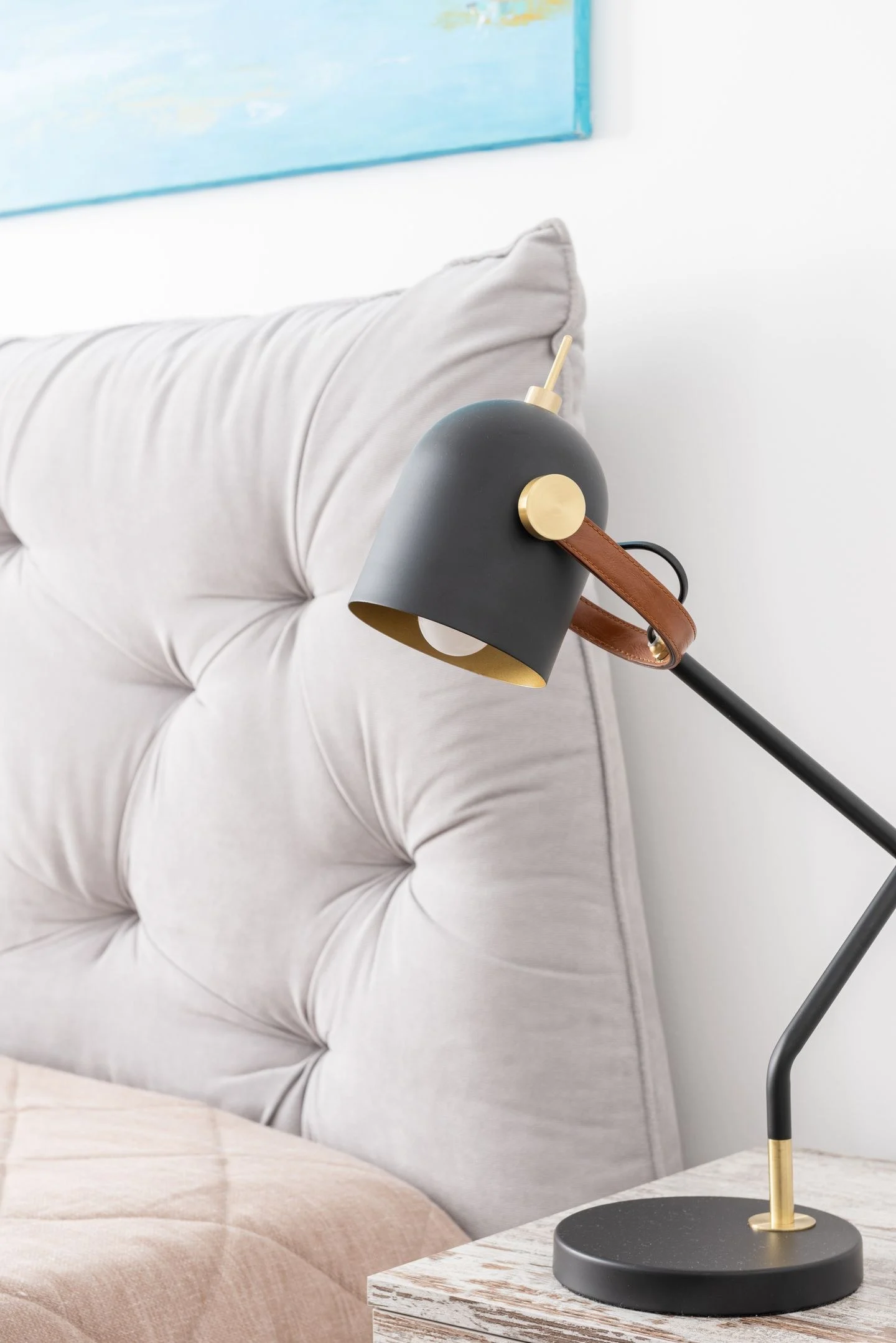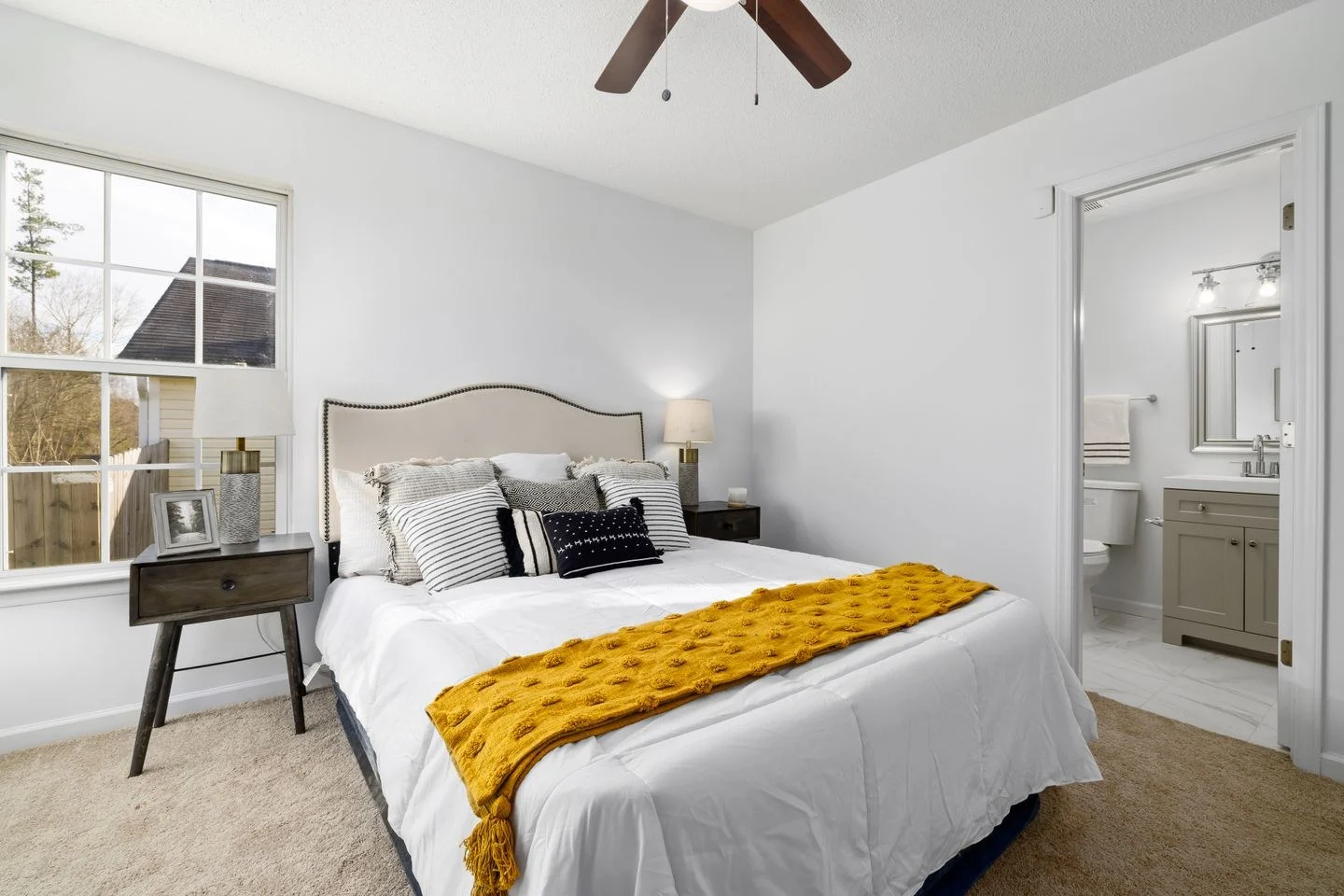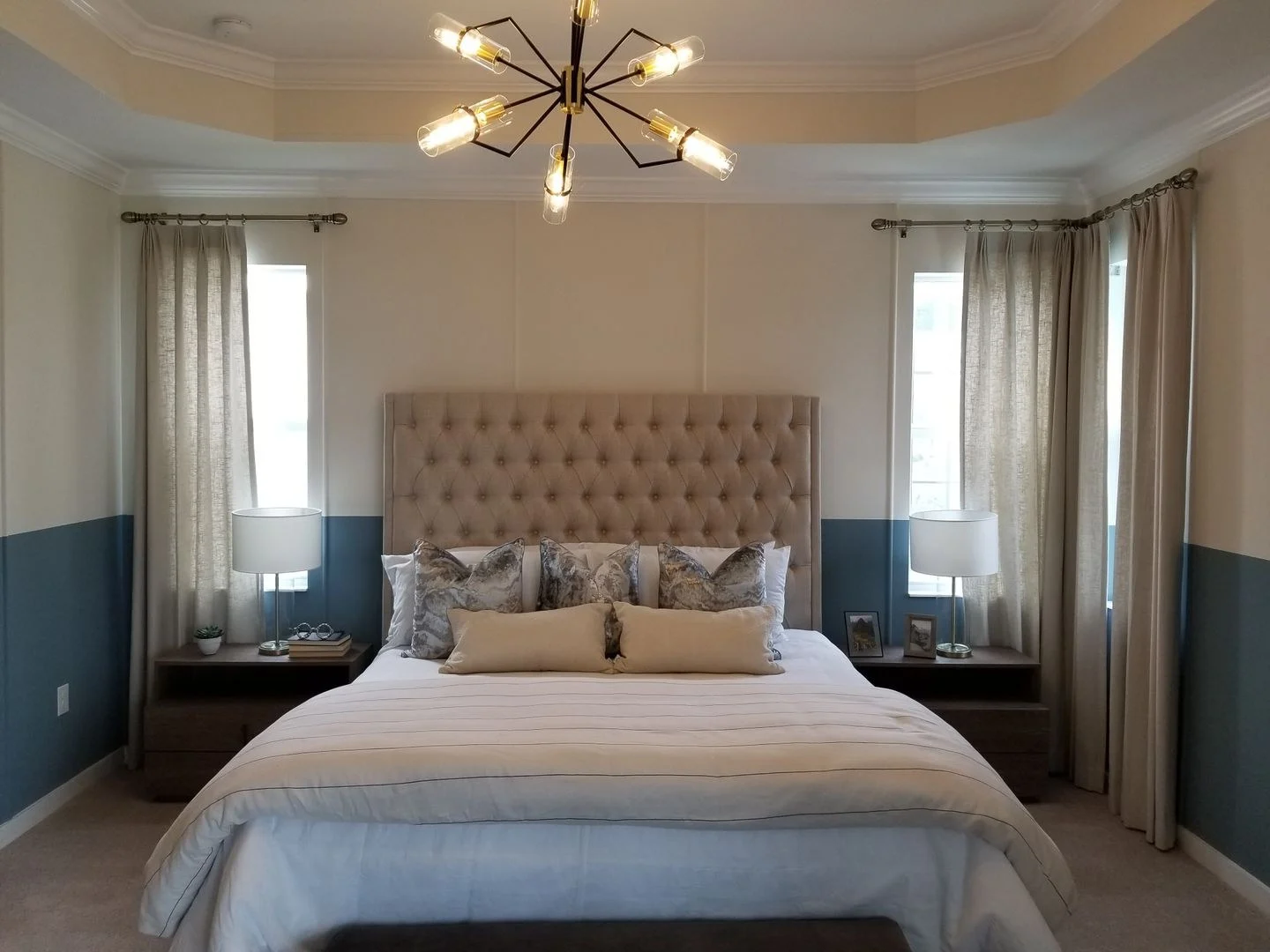
A headboard changes how large a bed feels even when the mattress stays the same. Its width, height, upholstery, and outline can make the bed read as a quiet platform or the room's dominant feature.
Measure above the mattress
The visible headboard height depends on the mattress and bedding. A design that looks tall in a showroom may nearly disappear behind your pillows and thick mattress. Measure the finished sleeping surface and compare it with the headboard's dimensions, including any adjustable positions.
If you read upright in bed, test the surface and angle rather than choosing only for appearance. A decorative wood panel may not provide the same comfort as upholstery. Pillows can help, but they also change how much of the headboard remains visible.
Let width respond to the room
A headboard that extends beyond the bed can create a broad architectural line, especially with small bedside tables. In a narrow room, however, it may consume the wall space those tables need. Include switches, outlets, window trim, and closet doors in the measurement.
A winged design adds depth as well as width. Its sides can prevent a nightstand from moving close to the mattress or interfere with a lamp. Look at the plan view, not just the front photograph.
Compare visual weight
Dark upholstery, thick padding, and a solid rectangular shape make a stronger presence than slim wood slats or an open frame. That can be welcome in a large room where the bed needs definition. In a small room, a lighter-looking headboard may leave more visual space, though it will not change the physical footprint.
The wall behind it should participate in the choice. A patterned wall covering may need a simpler headboard outline, while a plain wall can support a more distinctive shape. You do not need additional art above every headboard.
Confirm attachment compatibility with the bed frame or the requirements for wall mounting. Follow the manufacturer's instructions and use appropriate installation help when needed. A freestanding panel should not be improvised into a headboard without secure support.
Before purchasing, create a paper outline on the wall at the intended height. Add the approximate lamps and bedside tables to the view. This lets you judge the whole bed wall, rather than choosing a headboard in isolation and discovering that everything beside it now feels undersized.