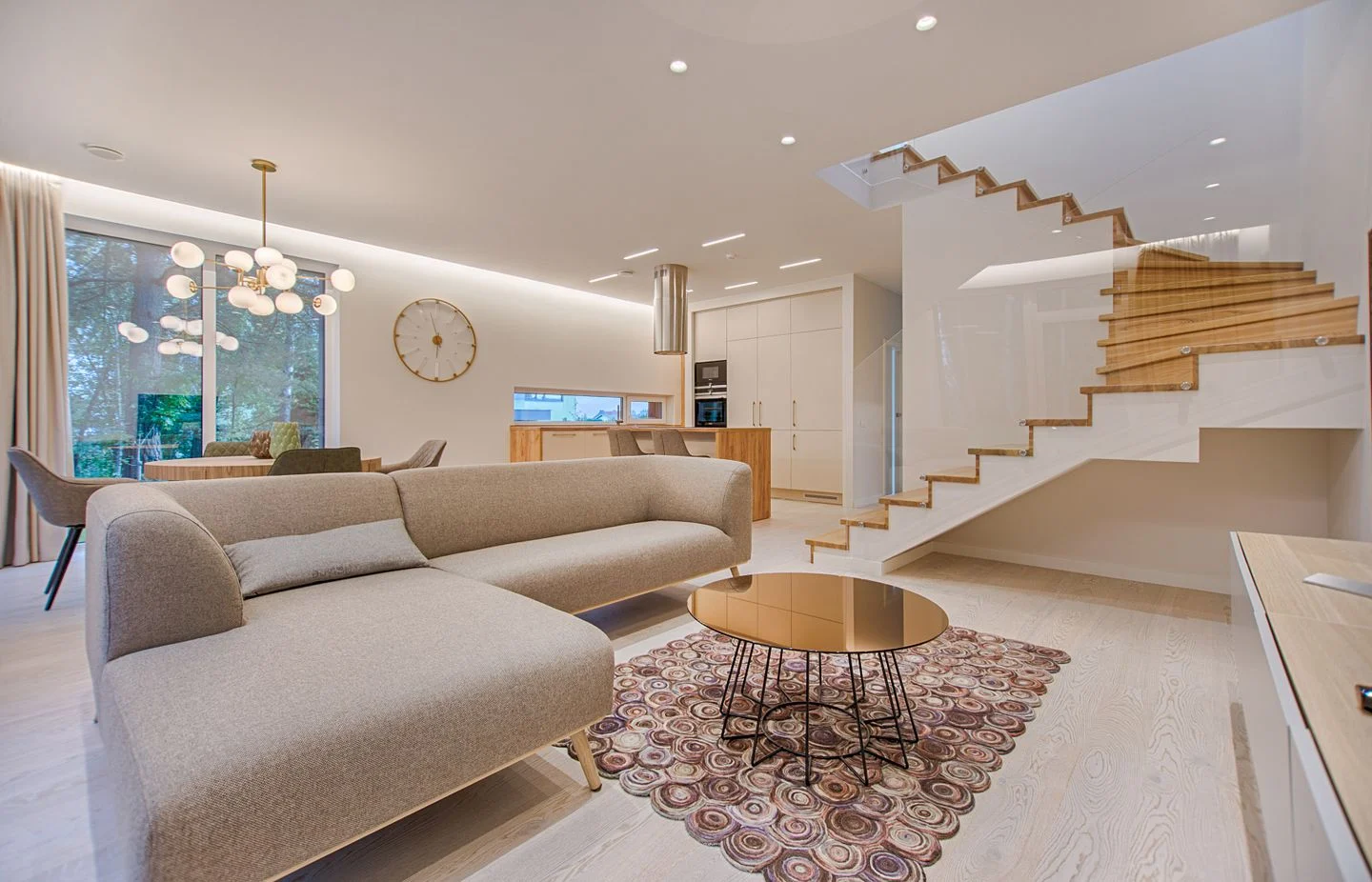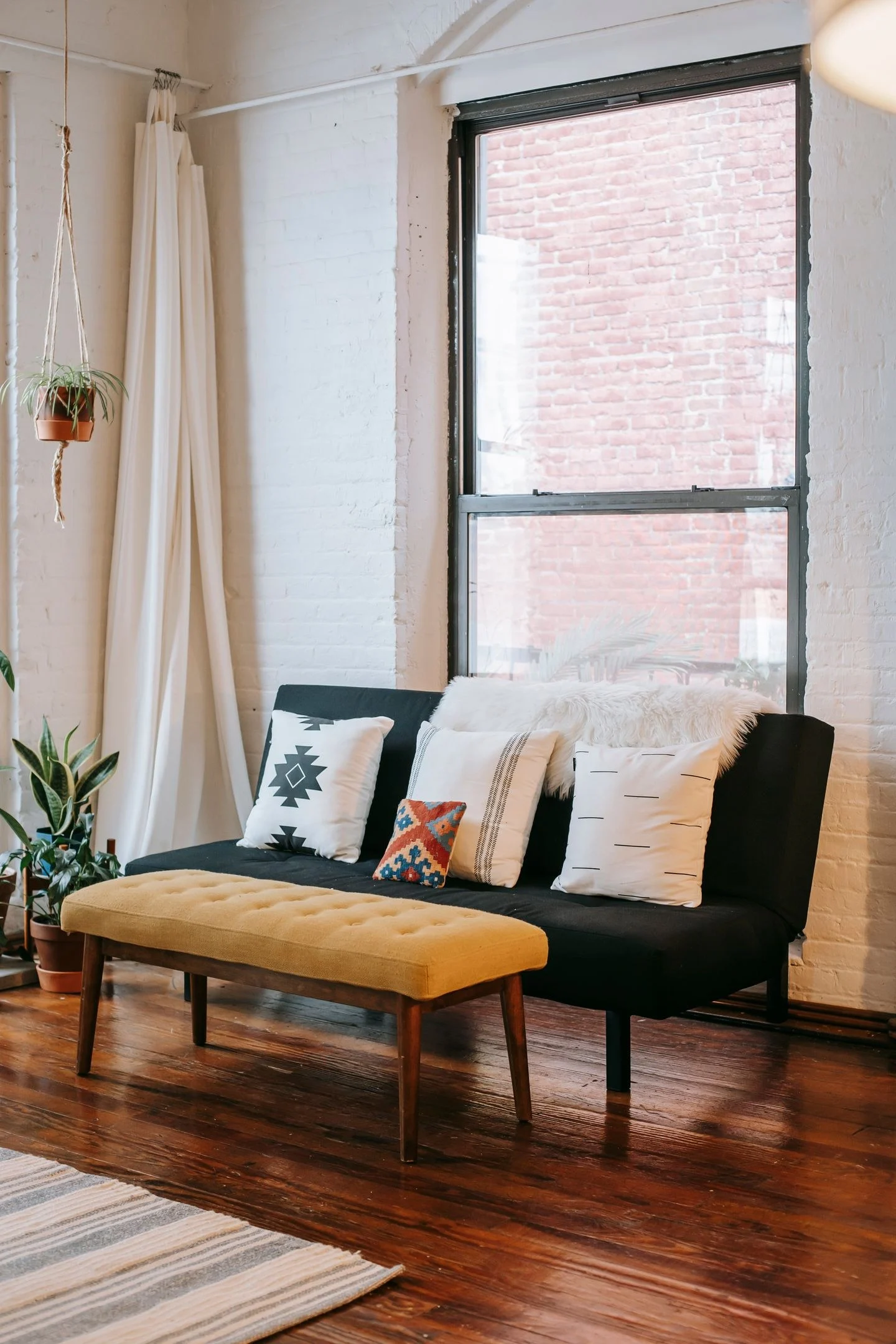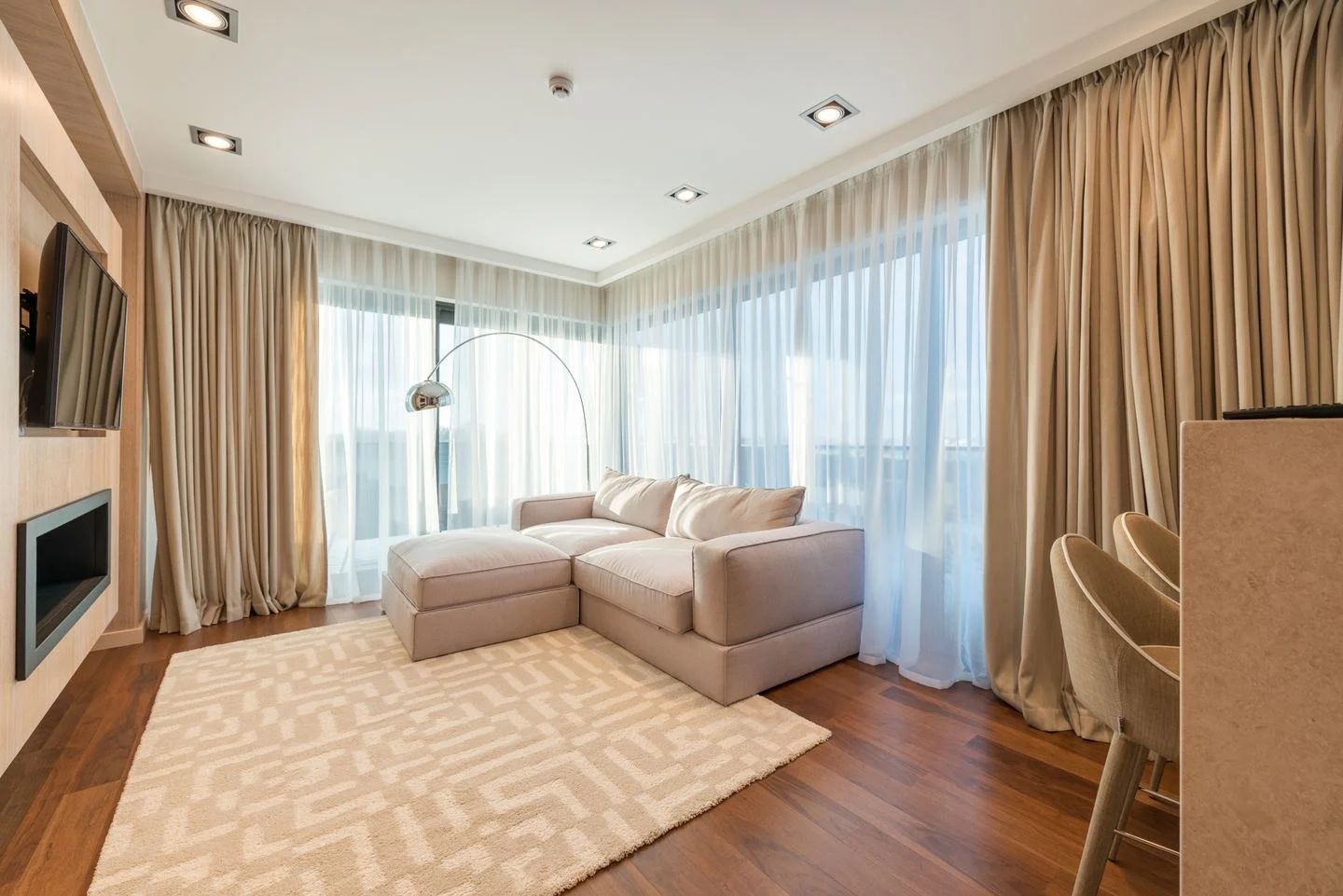
A sliding patio door brings both light and traffic into a living room. It is easy to plan around the full glass opening and forget that one panel is the actual doorway. Identify that active panel before placing a sofa, chair, or rug.
Watch the route people take from the kitchen or hall to the door. Protect that route while the seating is occupied. The space beside an empty chair is not the same as the space beside someone sitting with a footstool extended.
Keep the approach direct
Avoid placing a coffee table between the main room and the door simply because it centers neatly on the sofa. A shorter table, a different sofa orientation, or one fewer chair may produce a much clearer approach. Leave the door handle and locking mechanism readily accessible.
A low piece in front of a fixed glass panel may be possible, but check the door manufacturer's requirements and any applicable emergency-access needs. Do not assume the fixed-looking panel will never need service or removal. Keep furniture clear of tracks and operating parts.
Plan for what comes through the door
Outdoor shoes, a tray of food, a dog, or a watering can can change how the area is used. Give daily items a sensible place nearby without turning the threshold into storage. A shallow basket for approved, dry items may work; a large shoe cabinet projecting into the approach may not.
Use a rug or mat only where it lies flat and does not interfere with the door or create a trip edge. Check its suitability for the flooring and expected moisture. The main living-room rug does not have to extend all the way to the glass.
Let the coverings move too
Curtains need space to gather when open and pass furniture when closed. A chair arm that traps the fabric can make the door awkward to use. If choosing new coverings, consider everyday operation, privacy after dark, and child safety together. Cordless options avoid accessible operating cords, as recommended by CPSC for homes where children live or visit.
Place lamps so their cords stay outside the patio route. The brightest daytime corner may still need light in the evening, but an outlet on the opposite wall is not a reason to run a cable across the threshold. Check the final plan with the door fully open, the curtains moved aside, and someone carrying a tray. That is the arrangement the room must support.