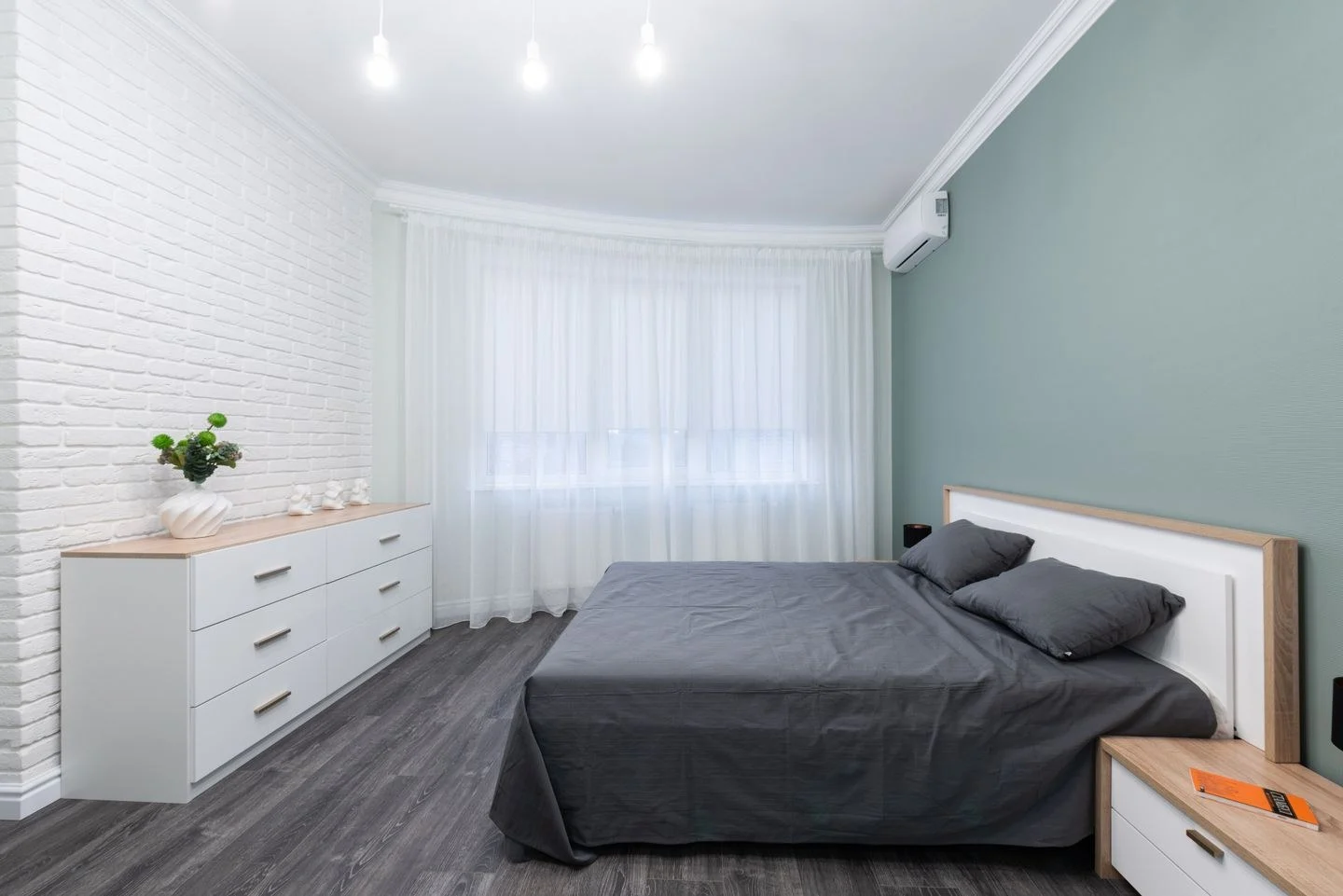
A dresser's depth on a product page does not include the space needed to stand in front of an open drawer. In a narrow bedroom, that working space often determines whether the piece belongs there at all.
Measure the proposed location with the bed in place. Mark the dresser's full depth, including handles, then add the drawer extension shown by the manufacturer or measured in person. Stand where you would sort clothing. If the arrangement requires leaning sideways between the drawer and bed, a shallower or differently placed piece may be preferable.
Compare capacity, not just footprint
A tall chest uses less wall width, but its upper drawers may be harder to reach and the piece needs appropriate anchoring. A wide low dresser provides a larger top but can consume the entire side passage. Neither is automatically more efficient: compare the interior drawer dimensions with the clothes you intend to store.
Fold a few typical items and measure their stacks. Deep drawers can be useful for sweaters but wasteful for small accessories without dividers. A dresser with fewer, better-sized compartments may serve you better than one advertising a higher drawer count.
Try a different wall
The foot of the bed may offer more usable depth than its side, provided circulation remains clear. A short wall near the closet can also work if doors and drawers do not collide. Do not block required window access or place furniture within heating-equipment clearances.
A mirror above the dresser can make the area useful for dressing, but allow standing distance to use it. Keep mounting appropriate to the mirror and wall. A leaning mirror or heavy object on the dresser should not be treated as secure without its required restraints.
Move some storage out of the dresser
Closet shelves, hanging organizers designed for the system, or suitable under-bed storage can carry particular categories. Keep daily clothing accessible and put occasional items farther away. Avoid moving everything into baskets that must be unpacked to find one garment.
CPSC's tip-over guidance recommends anchoring furniture. Follow the dresser's instructions and use the correct hardware for the wall; do not rely on weight or a low center of gravity as a substitute. Open drawers one at a time as directed by the product instructions.
Once the dresser is positioned, test an ordinary morning with the closet and bedroom door in use. A slightly smaller storage piece can be the better choice if it allows you to dress without repeatedly closing doors, moving a chair, or stepping around an open drawer.