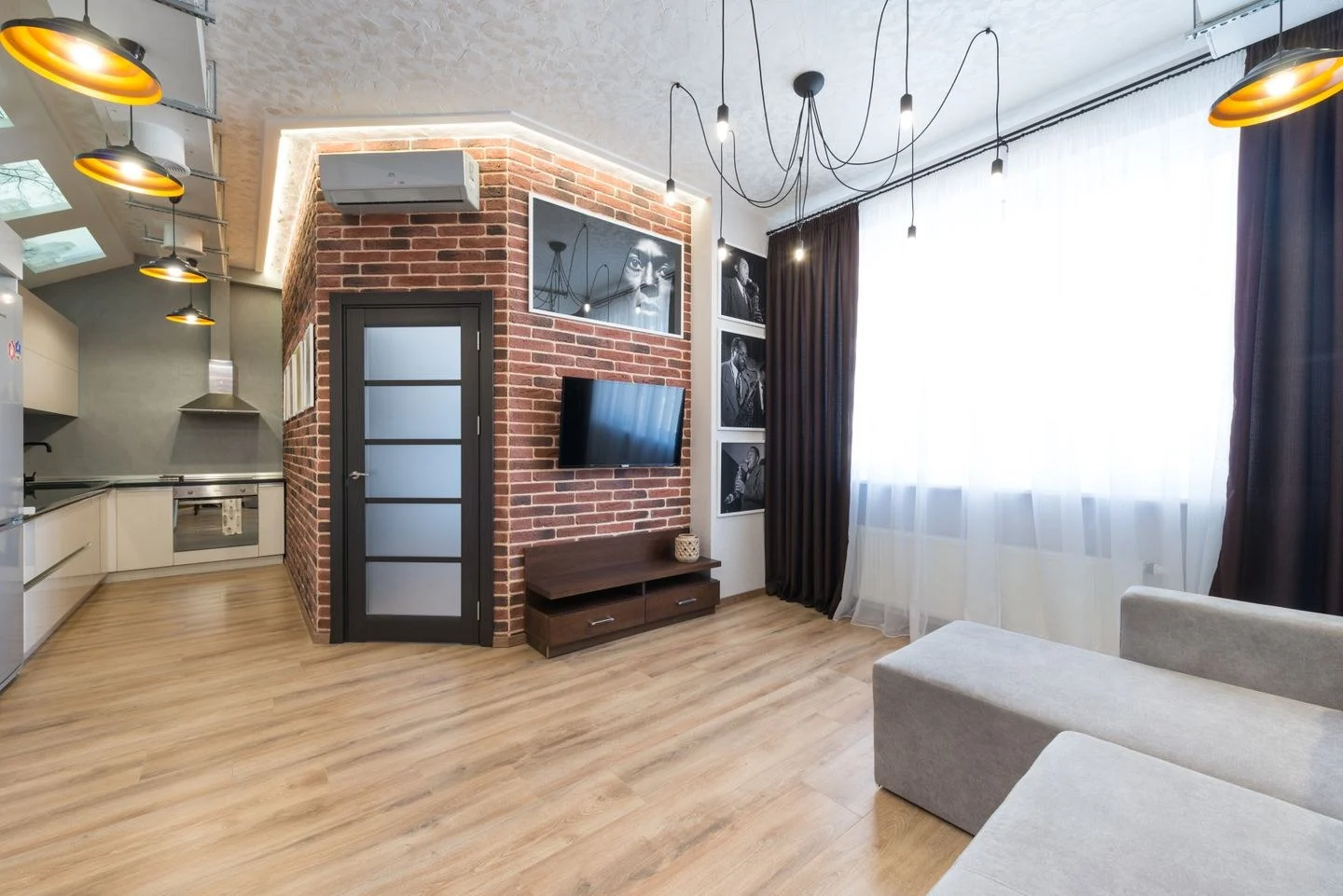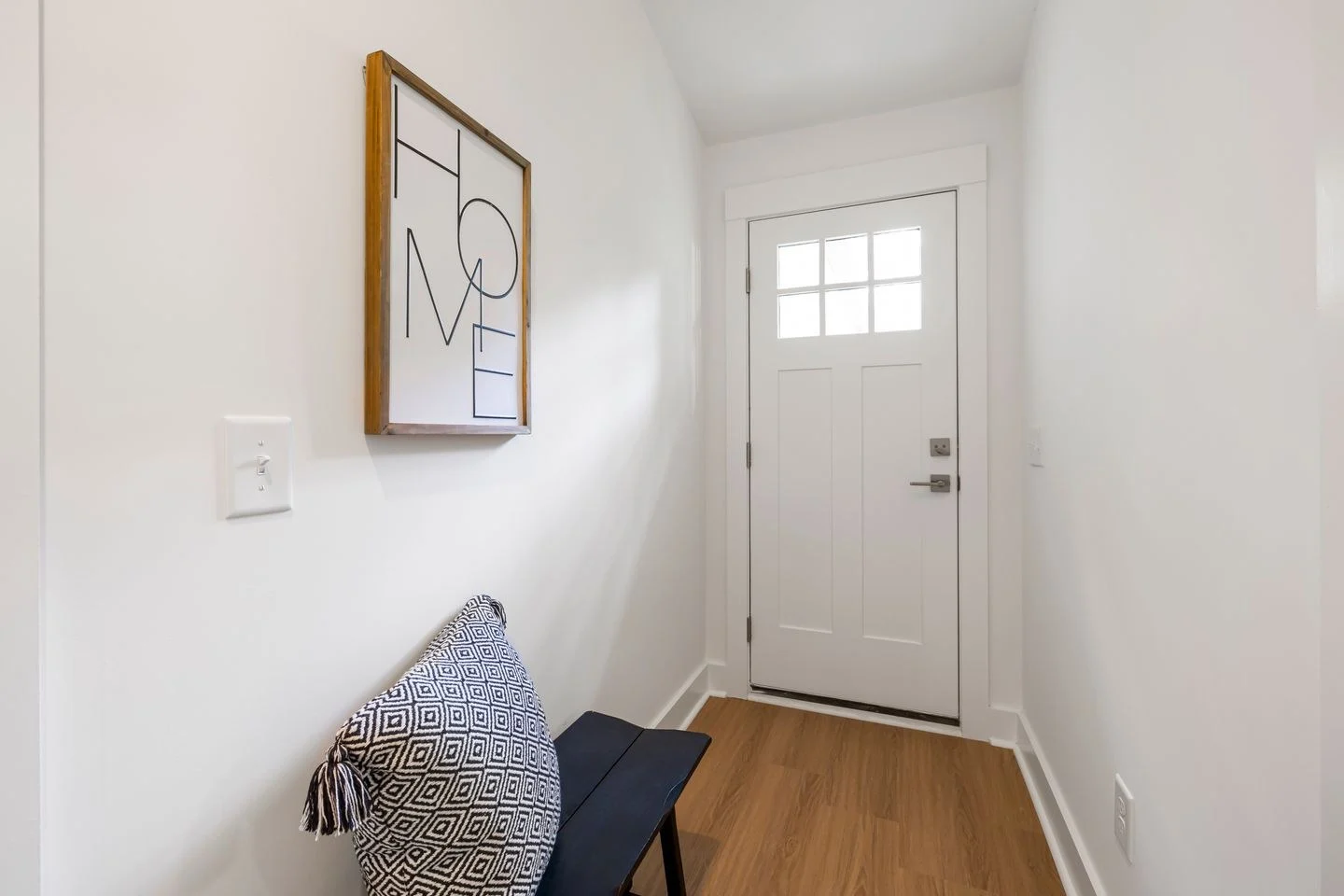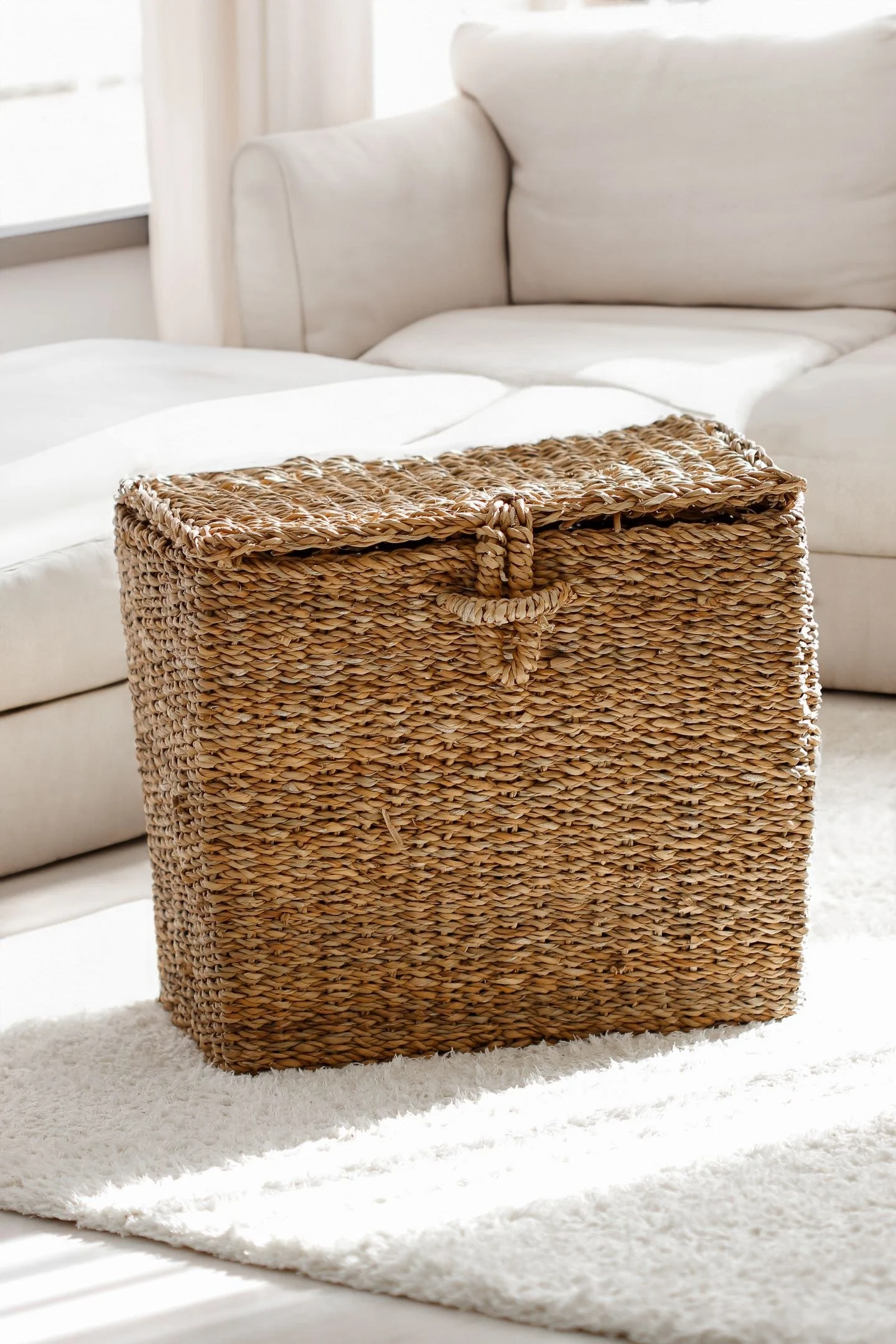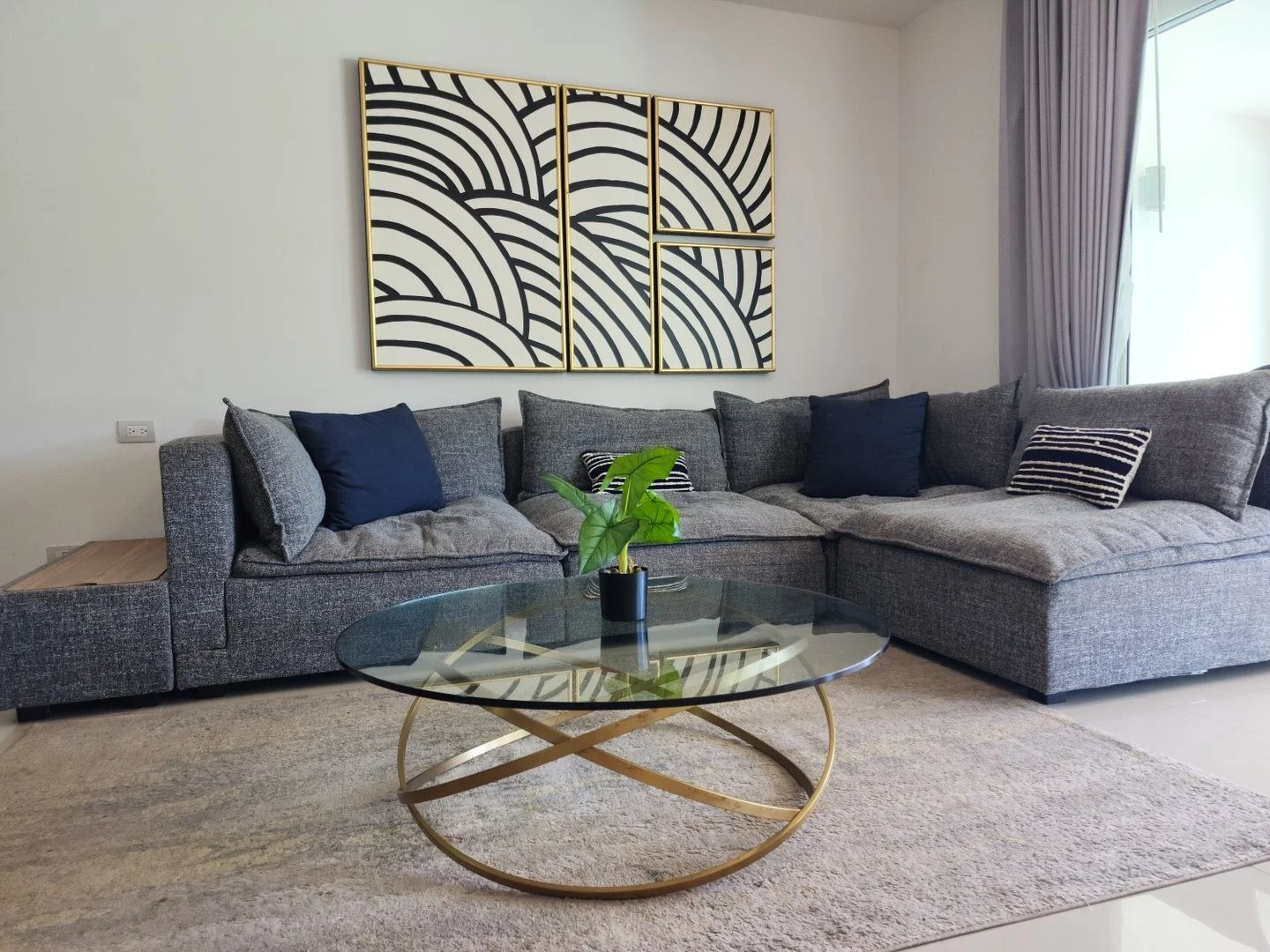
One large piece can give a small room a clear center. A generous sofa, substantial artwork, or broad cabinet may create more order than several small alternatives. The effect depends on fit and restraint around it, not on the idea that bigger furniture magically enlarges a room.
Choose the function that deserves the space. If the room is mainly for conversation, a comfortable sofa may be the priority. If storage is the main problem, a broad cabinet may earn its footprint. Do not select a large object solely to make a design statement while the useful functions remain unresolved.
Measure the real outline
Include projecting arms, handles, bases, and the space needed to use the piece. A cabinet needs door or drawer access; a sofa needs a route around it. Check delivery access as carefully as the final position.
Mark the footprint with removable tape suitable for the floor. Use boxes or another temporary marker to suggest height where helpful. A low large piece can feel very different from a tall one, even when their floor areas are similar.
Simplify its neighbors
Let smaller pieces support the main furnishing. A large sofa may need only one useful side table and a clear lamp position rather than a cluster of occasional tables. A substantial artwork may benefit from a quieter wall below it instead of several competing objects.
Keep some empty space visible. If the large piece fills one wall, leaving another area less furnished can restore balance. Filling every remaining gap usually undermines the organizing effect.
Color and surface matter too. A piece close to the wall color can feel less visually separate, while a dark contrasting object becomes a stronger anchor. Neither is inherently preferable; choose the emphasis the room needs.
Compare the proposal with a layout using several smaller pieces. The large option is successful when it serves the main activity, reduces visual fragmentation, and leaves the room easy to move through. If it only fits by making every other action awkward, a different proportion is needed. Scale is a relationship between the furniture, the room, and the people using both.