Dark bedroom walls can feel enveloping, but they also change how furniture edges and colors read. The room needs enough variation to remain useful, especially around the bed and storage, without turning every detail into a high-contrast accent.
Choose the level of contrast you enjoy
White bedding against deep walls creates a crisp focal point. Cream, muted pink, or a middle-toned textile makes a gentler transition. Neither is a requirement. Put a large piece of the proposed fabric near the wall and judge it under the lights you use at night.
Wood can add warmth and visible grain without a sharp color break. A dark wood bed may blend into the wall, which can look calm if its outline remains clear. If it disappears more than you want, a lighter textile or a modest change in wall tone may be enough to distinguish it.
Give light a specific role
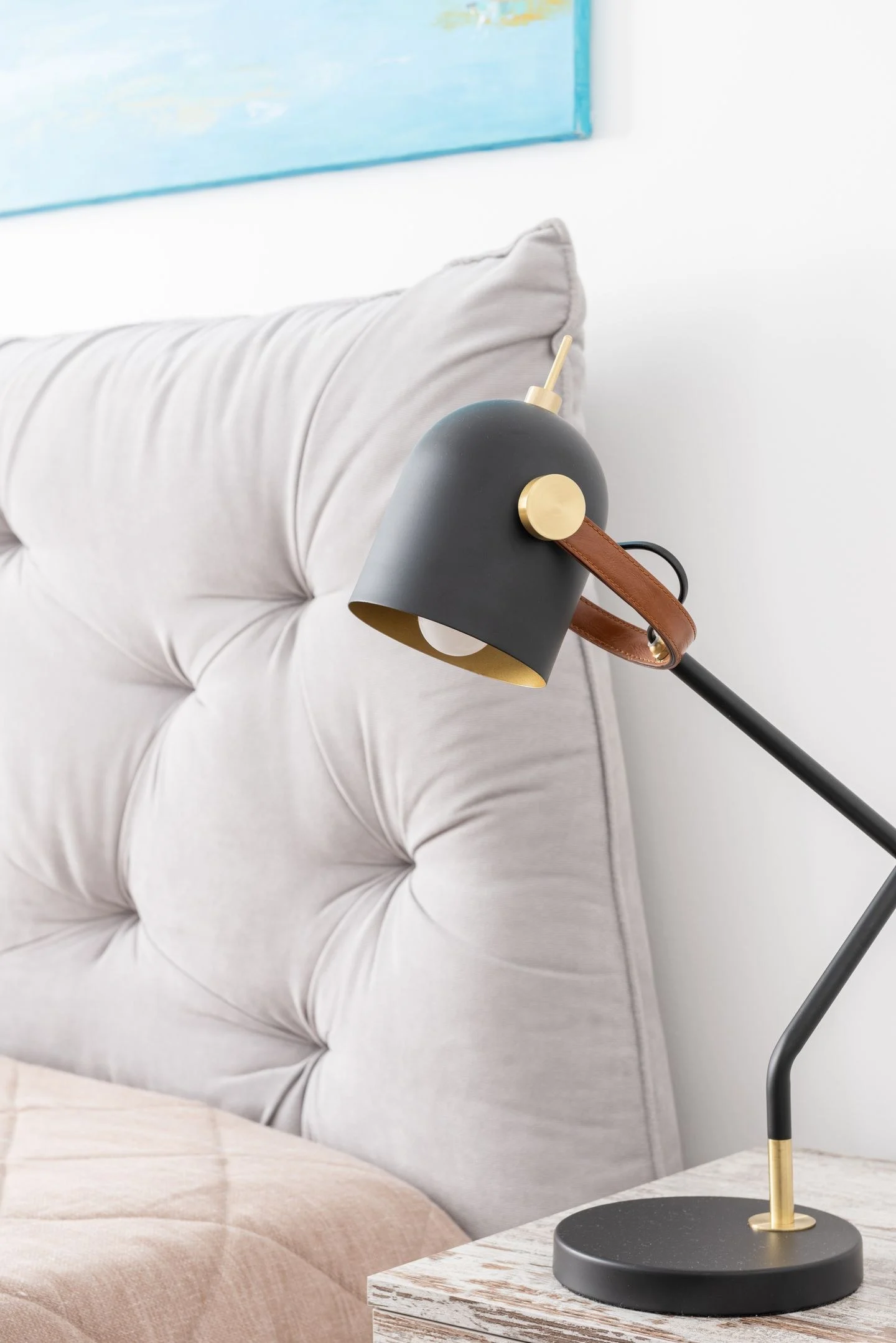
A ceiling fixture alone can leave the bedside and dresser difficult to use. Add task lighting where you read or dress, using fixtures suitable for the location. Check switches from the bed and avoid light shining directly into the other occupant's eyes.
Reflective accessories can catch light, but do not rely on a mirror to compensate for an inadequately lit task. Position mirrors where they are useful and securely installed. A bright reflection of a bare bulb can create glare rather than a pleasant glow.
Test the paint with the trim and ceiling
Dark colors can show different undertones beside existing white trim or woodwork. Sample the color in the room before committing, following the paint manufacturer's preparation and sample instructions. Benjamin Moore recommends evaluating samples in different locations and lighting conditions.
A lighter ceiling can define the room's upper edge; a related darker ceiling can create a more continuous effect. Consider the room's proportions and your preference rather than assuming one treatment always makes the space larger. Paint finish also affects appearance and care, so select a product suitable for the surface.
Keep surfaces edited enough for objects to remain readable. Several small dark accessories on a dark dresser can become visual clutter without adding much character. One larger light-toned bowl or a textured lamp may contribute more. The room can remain deeply colored while its everyday functions—reading, dressing, walking, and finding belongings—stay clear.