A bathroom with little daylight does not have to imitate a sunlit room. Its colors will be seen mainly under the lights installed there, and its atmosphere can be designed around that fact. Begin by observing the room at the times you actually use it.
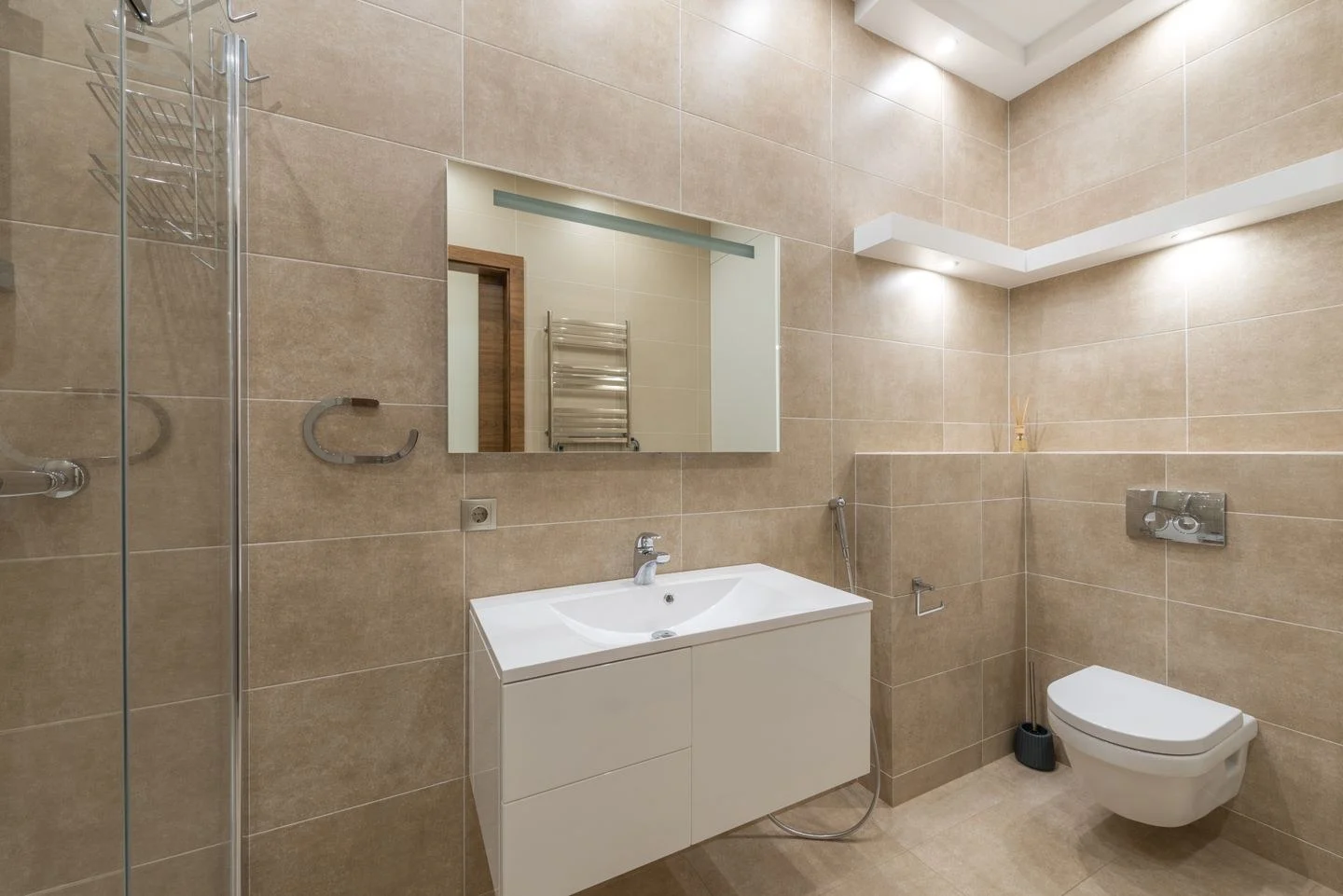
Turn on the normal lighting and check the view at the sink, inside the shower area, and near storage. If a task is poorly lit, decor will not solve it. Suitable electrical changes need to be planned with a qualified professional, using fittings appropriate to the location. Once the lighting is workable, color and materials can support it.
Test color under the light that stays
Very pale paint can look dull in a room with weak or uneven illumination. A richer color may feel more deliberate, but it will also change how much contrast appears between walls, fixtures, and towels. Compare samples on several surfaces rather than assuming either white or dark paint is the automatic answer.
Include the actual white of the basin and bathtub in the comparison. A warm paint can make a cool white fixture look more distinct; a cool wall may bring out cream in an older fixture. The relationship matters more than the color's name on the sample.
Benjamin Moore's sample guidance supports evaluating paint in the room before committing. In a low-daylight bathroom, make the artificial-light view the main test. If different bulbs are producing noticeably different colors across the room, resolve that inconsistency before judging subtle paint undertones.
Use reflection selectively
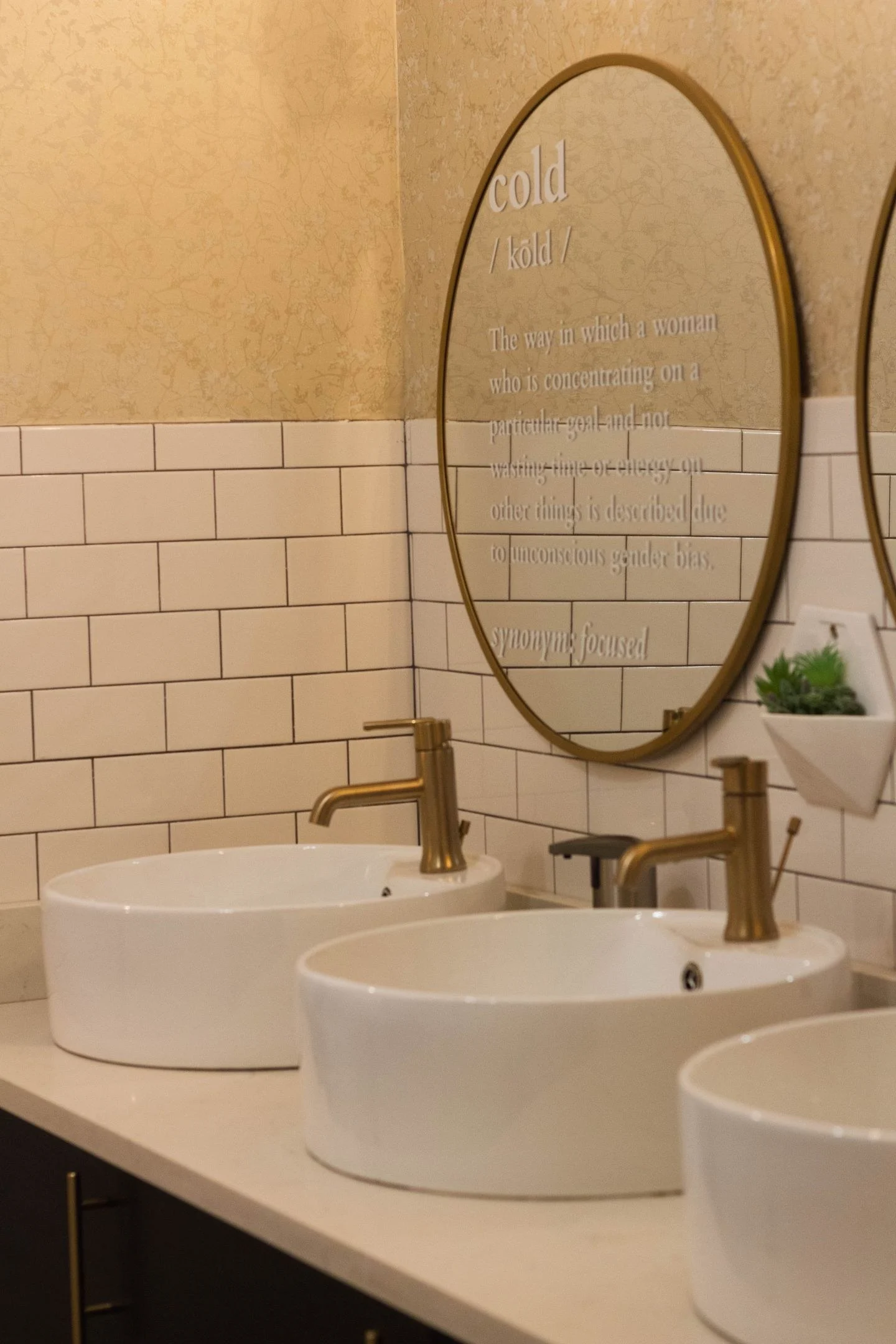
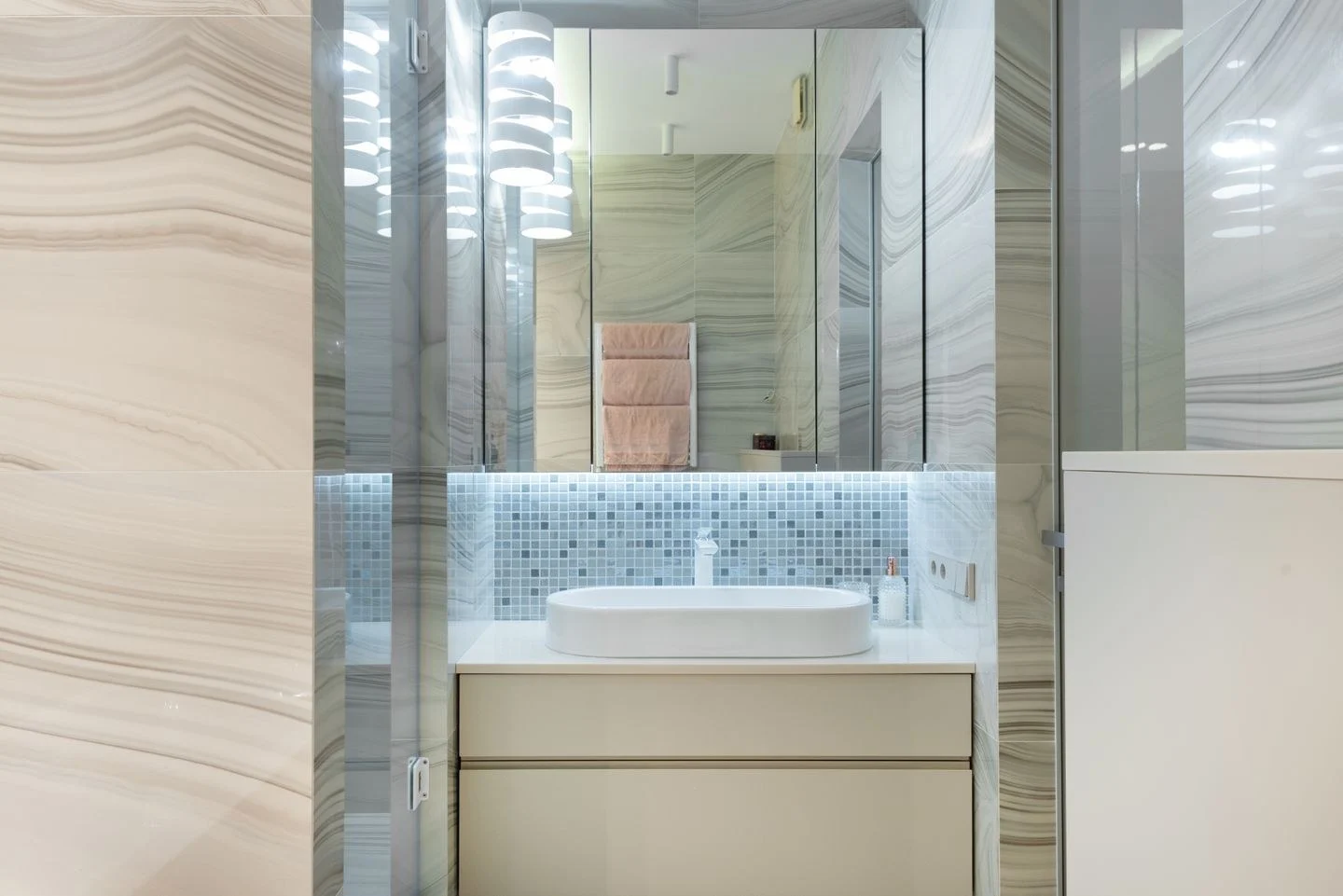
A mirror can redirect the view of a lit surface, but it cannot create light that is not there. Think about what it reflects. A clean wall or an attractive tile area may help the room feel composed; a directly reflected bright bulb can be uncomfortable. Test the proposed position from normal eye level.
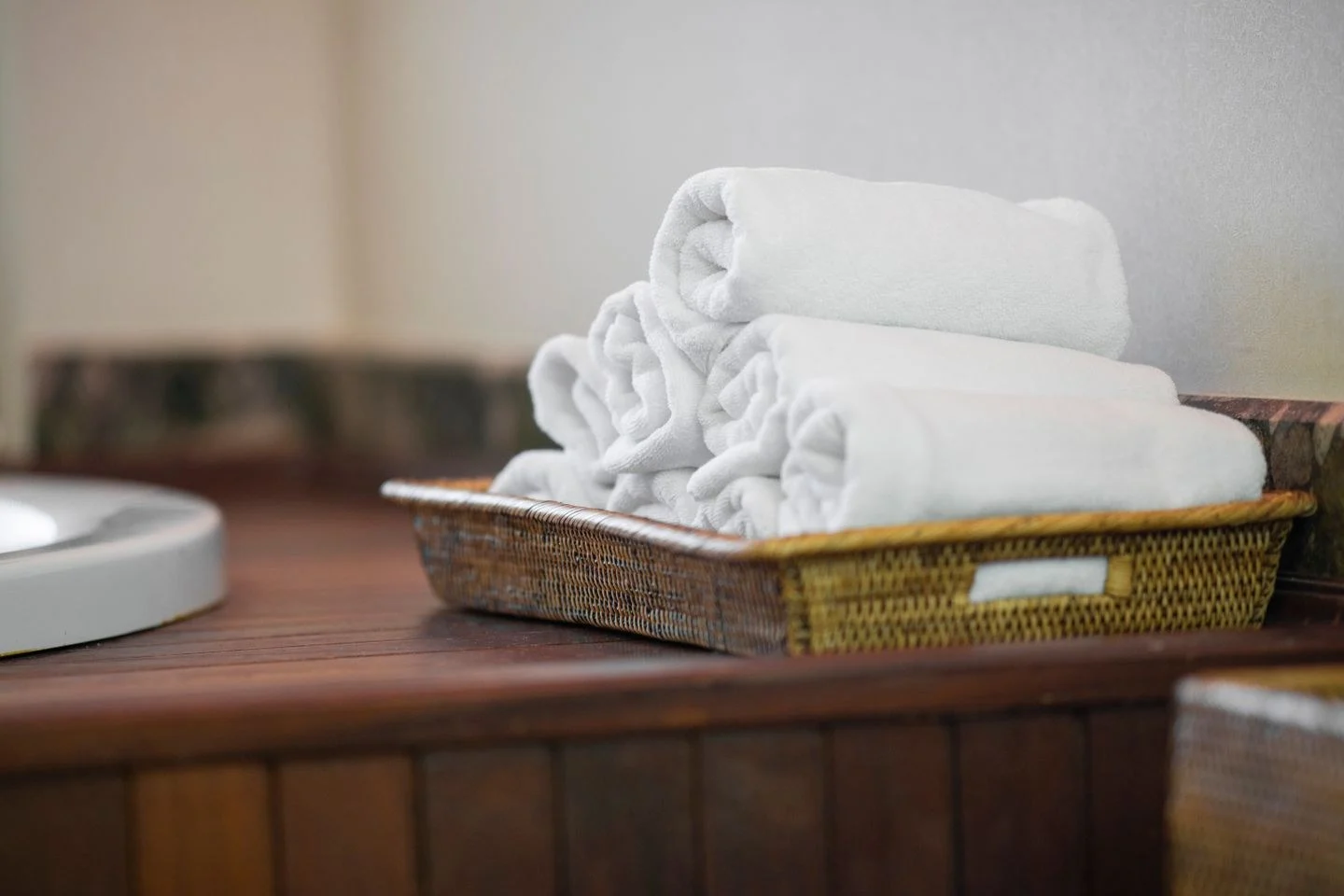
Glossy surfaces introduce highlights, while textured towels, woven details, or a matte cabinet provide quieter areas. A small amount of contrast can make the room readable without adding several competing patterns. For example, a dark frame around a pale mirror wall may provide enough definition without dark accessories on every surface.
Choose decorative objects that work without natural light. A vase, ceramic container, or artwork suited to bathroom conditions may be easier to maintain than a plant selected solely for a photograph. If you want a living plant, check the actual species' light requirements rather than treating the phrase low light as meaning no light.
Keep the overall arrangement simple enough to read in the room's normal conditions. A few clearly placed objects and one considered color relationship often have more presence than many subtle details that disappear after dark.