Choosing bedroom window coverings starts with the light you want to change. Early sunrise, a bright streetlight, afternoon glare, and daytime privacy are different problems. One fabric may address some of them without solving all of them.
Separate fabric performance from installation
Blackout describes a product intended to block light through its material. The room can still receive light around the sides, above the heading, or between panels. IKEA distinguishes blackout curtains from room-darkening options, including within similar-looking product ranges, so read the exact description rather than choosing by color or collection name alone.
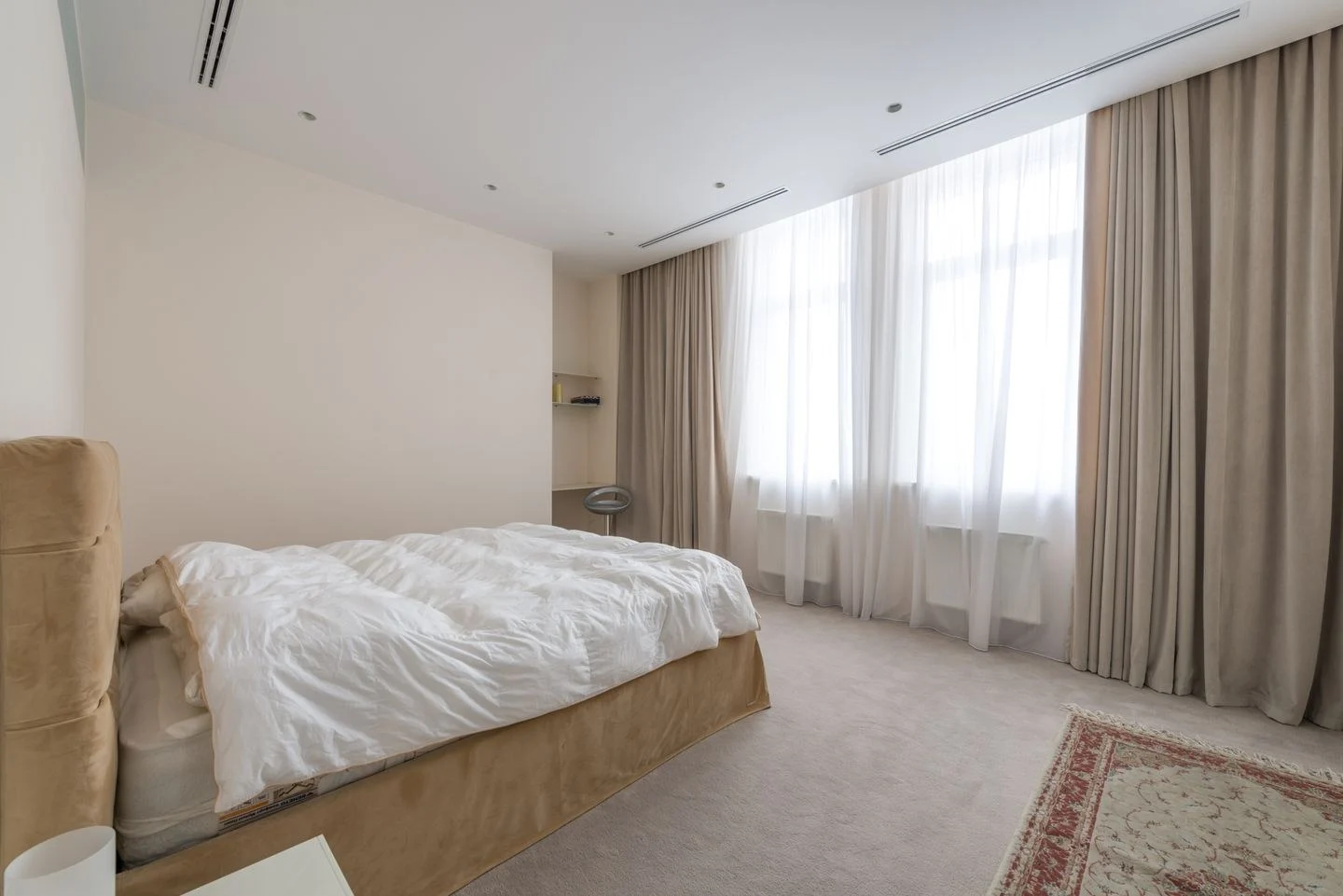
For a strong darkening effect, look at how the covering meets the window. A shade mounted inside the recess may leave side gaps. Curtains can overlap the opening more broadly, but their fullness and heading affect coverage. Ask the supplier how the specific product is measured and installed; do not use the window-glass dimensions as the entire order specification.
Privacy deserves a separate test. A light-filtering fabric may obscure the view during daylight but behave differently when the bedroom lights are on and it is dark outside. Check the product's privacy information and, where possible, a sample under comparable conditions.
Decide how you will operate it
Curtains work well when there is space for the panels to gather beside the window. If a dresser, radiator, or bedside table occupies that space, the fabric may become awkward. Maintain the heating equipment's required clearances and keep window controls accessible.
A shade can use less visible wall area, but its controls must be easy to reach from the normal standing position. Choose cordless window coverings where children live or visit, following CPSC guidance. Keep furniture away from accessible cords; tying up a cord is not equivalent to eliminating the hazard.
Layering a shade with curtains can separate jobs: one controls light and privacy, while the other adds softness and broader coverage. It also adds hardware, cleaning, and cost. Use both only when they offer distinct benefits. Decorative curtain panels that never close should not be counted as the room's light-control solution.
Check the room beyond the window
The bed's position affects which gaps matter. A narrow stripe of light may fall directly on a pillow even when the rest of the room seems dark. Look from the sleeping position, not just from the door. Also check whether furniture prevents the curtains from hanging or moving freely.
If a window is part of a required escape route, the covering must not obstruct its use. For unusual windows, sloped ceilings, or complex hardware, obtain advice from the supplier or an installer before ordering. A decorative sketch does not establish safe installation.
Consider the rest of the palette after the functional choice. A curtain close to the wall color can feel quiet, while a contrasting textile makes the window more prominent. Thick fabric can look substantial even in a pale color, so request a sample large enough to judge its texture and drape.
Make the care routine feasible
Read washing, drying, and ironing instructions for the exact fabric and lining. A long, heavy panel may not fit your washer, and some coatings require particular treatment. Count removal and rehanging as part of maintenance, especially when the hardware is high.
Before finalizing the order, write down the opening measurements, proposed mounting position, panel or shade dimensions, control type, and care requirements. This small record prevents a beautiful fabric choice from overshadowing the details that make the covering useful every morning and evening.