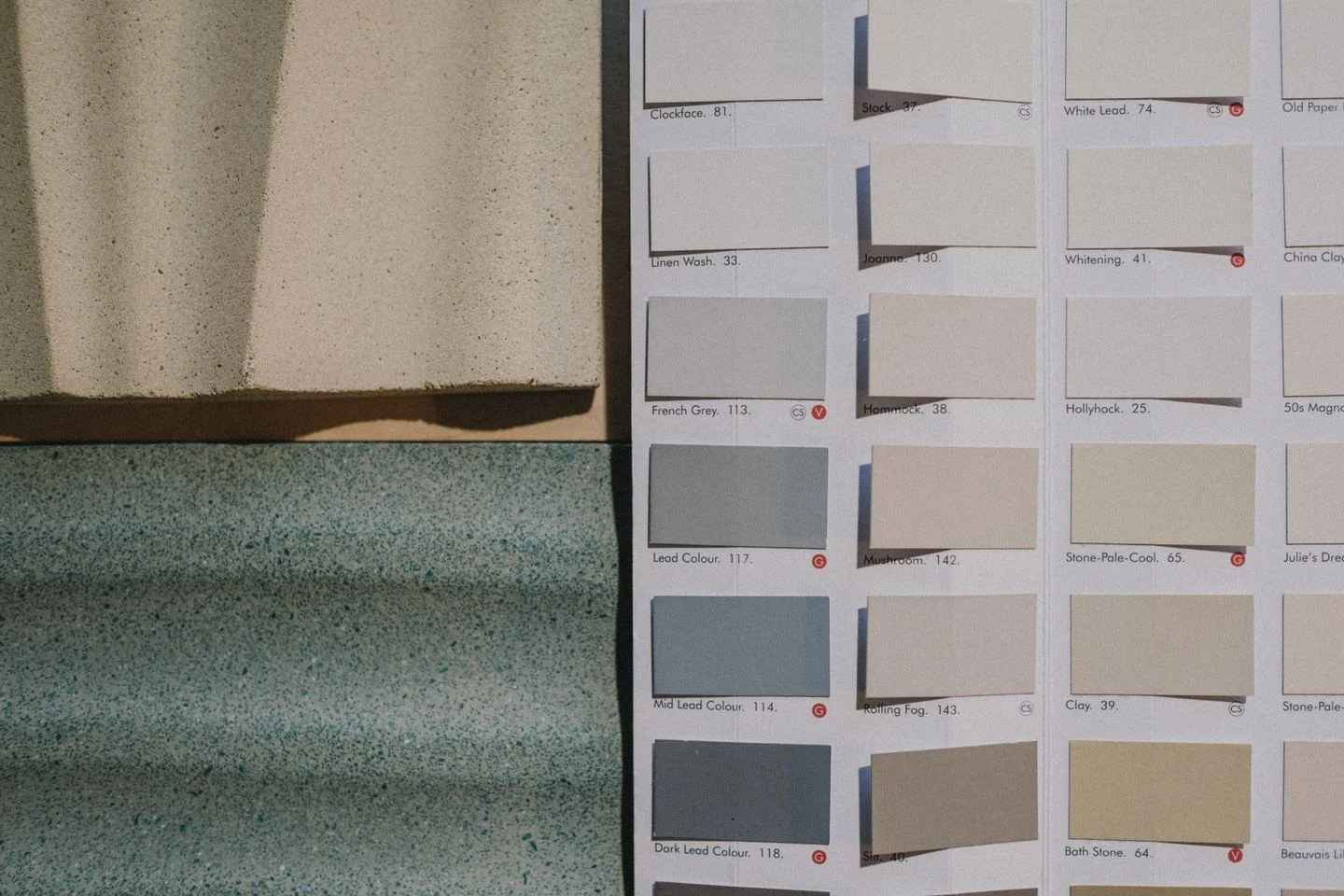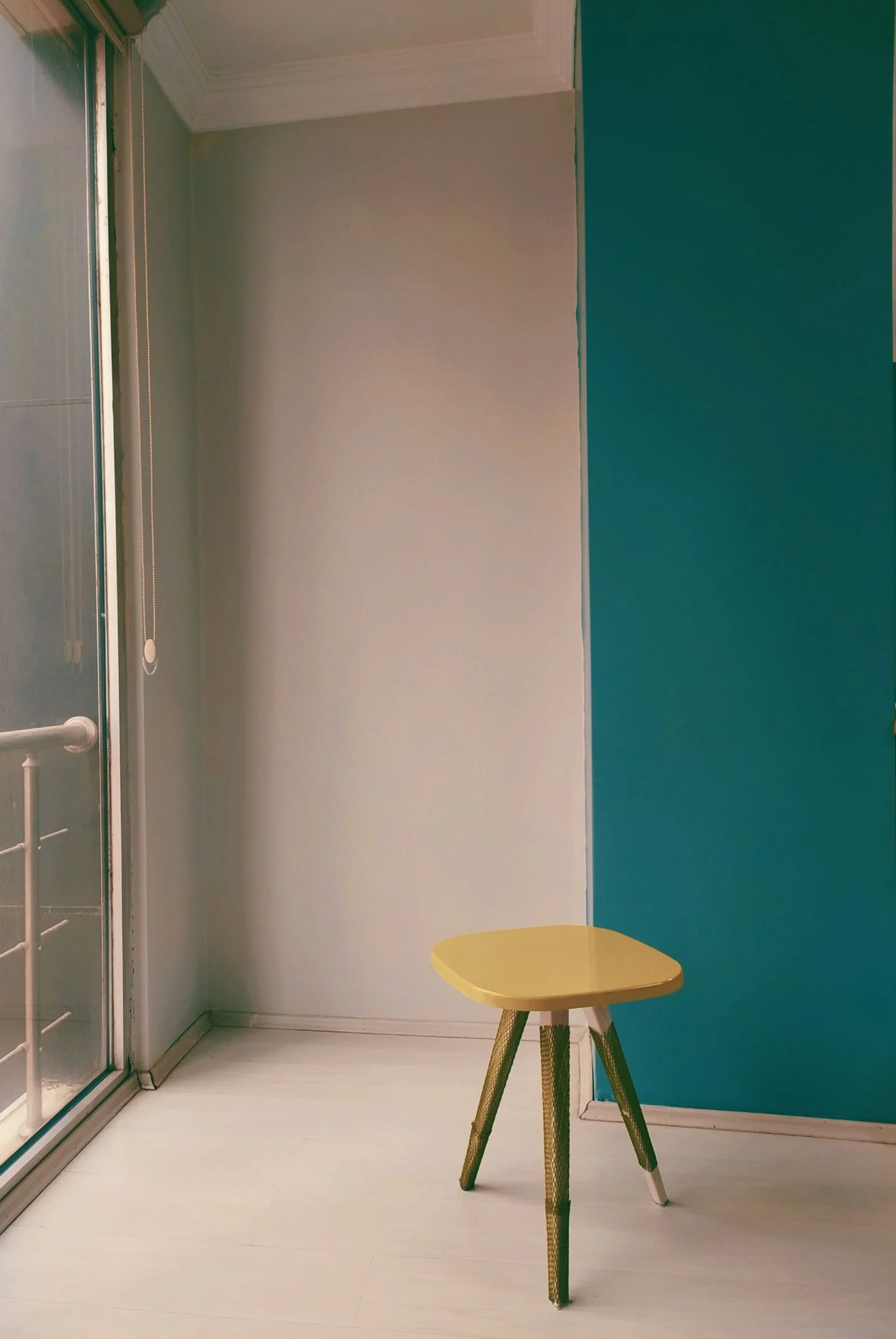
Trim can outline a colorful room, blend into it, or form a quieter variation of the same hue. The right choice depends on the architecture you want to notice. Elaborate molding, simple modern casing, and a room with many doors do not all benefit from the same treatment.
Begin by observing the number of edges. Strong contrast around every opening can make a room with several doors feel busy. A closer trim color may let those interruptions recede. In a room with handsome paneling or a single well-proportioned doorway, contrast may emphasize a feature worth seeing.
Compare three relationships
First, try a light trim sample against the chosen wall color. Note whether it feels crisp or overly stark. Then try a trim color nearer the wall in depth. Finally, compare a sample in the same color family. These tests reveal the role of contrast more clearly than comparing several nearly identical whites.
Matching color does not mean matching sheen. A more reflective trim finish can define the molding through light rather than a different hue. Check the appropriate product and finish for the surface with the manufacturer; the visual decision should still suit the material and its use.
A related lighter trim can be useful when pure white feels disconnected from a warm palette. For example, a pale cream beside an earthy red wall may create a softer edge. That same cream might look yellow beside a cool blue, so approve each junction in person.
Include the doors and ceiling
Decide whether the door leaf follows the trim, the wall, or its existing finish. Otherwise a carefully chosen casing can surround a large rectangle that was never part of the plan. Include baseboards and any crown molding in the same sketch.
Also examine the transition into neighboring rooms. Shared casing may be visible from both sides, and a hallway can reveal several different trim decisions at once. Continuity can come from one repeated finish even when wall colors change.
Paint samples should be viewed vertically at the actual edge, in daylight and lamplight. A small chip in the center of a wall will not show how a line of contrast travels around the room. Choose the treatment that makes the architecture read as intended, whether that means highlighting its detail or letting the furnishings take the lead.