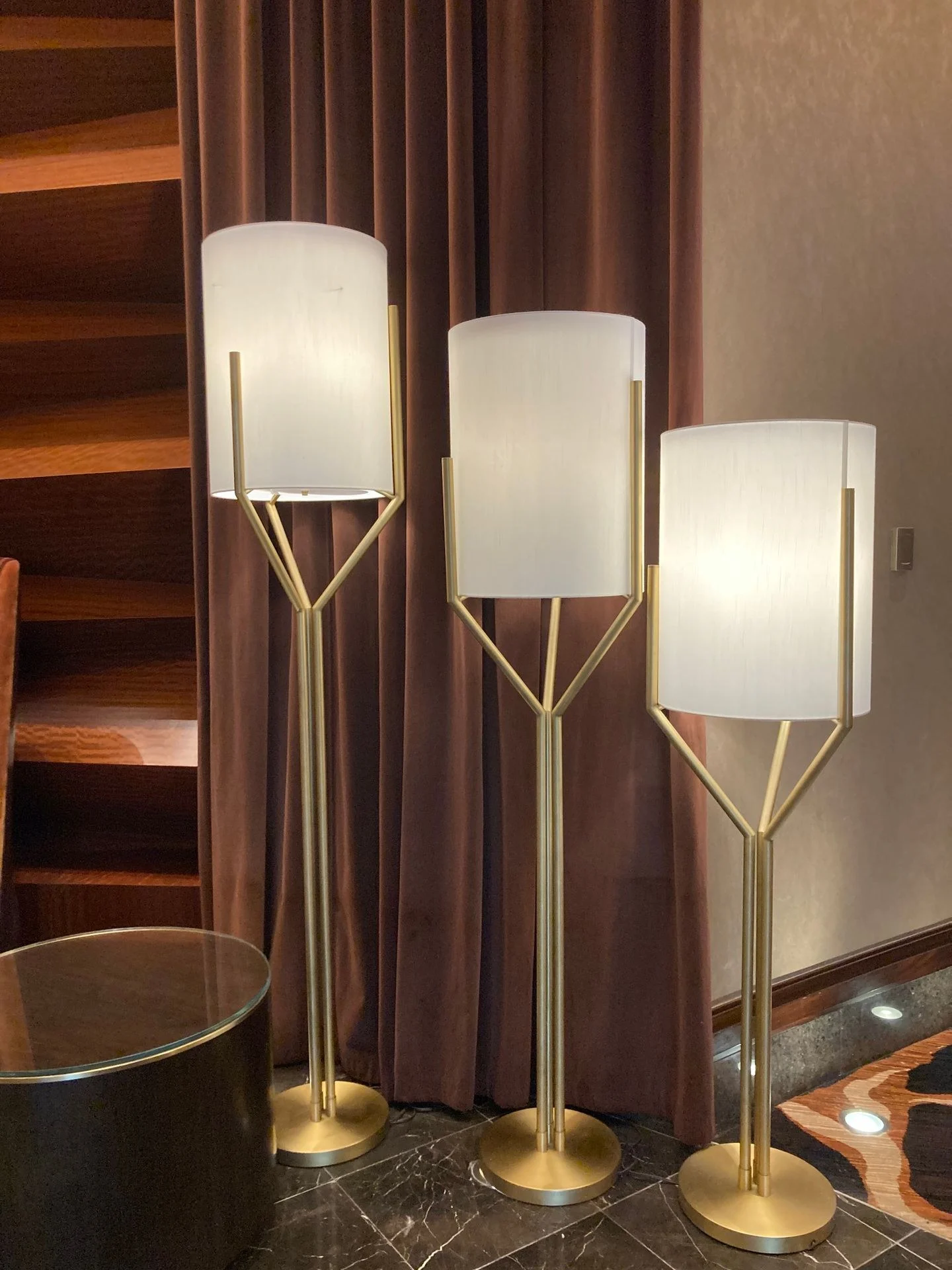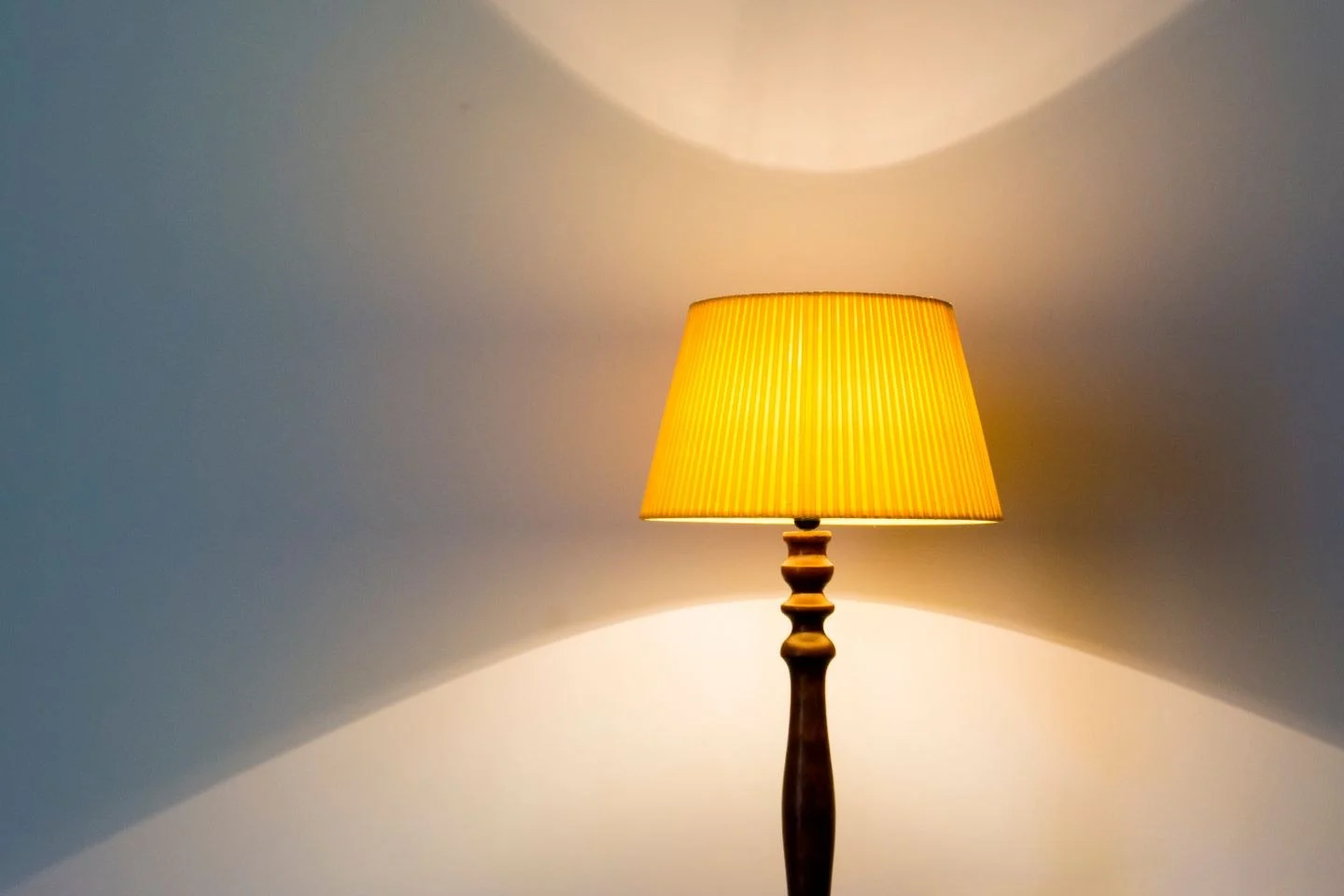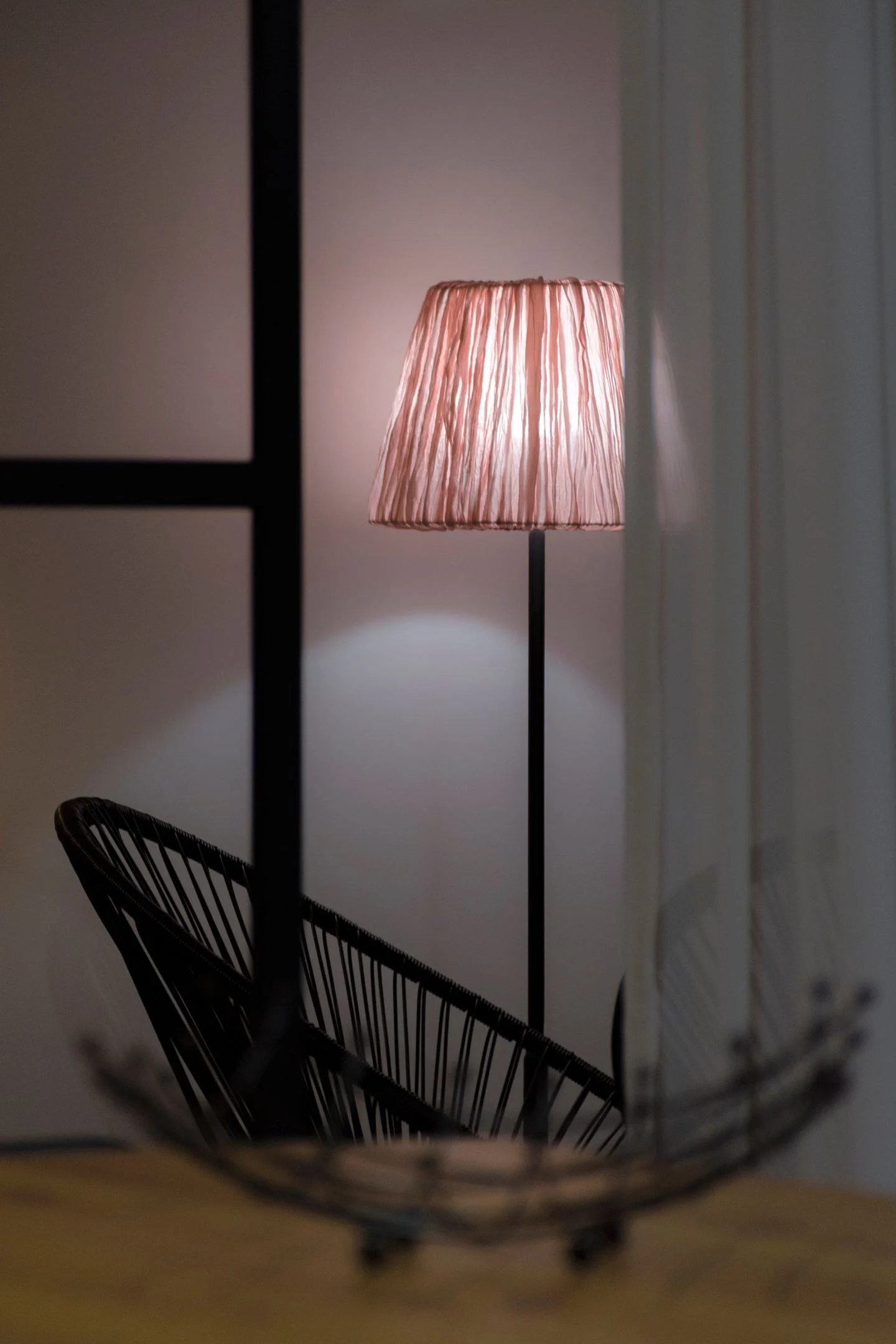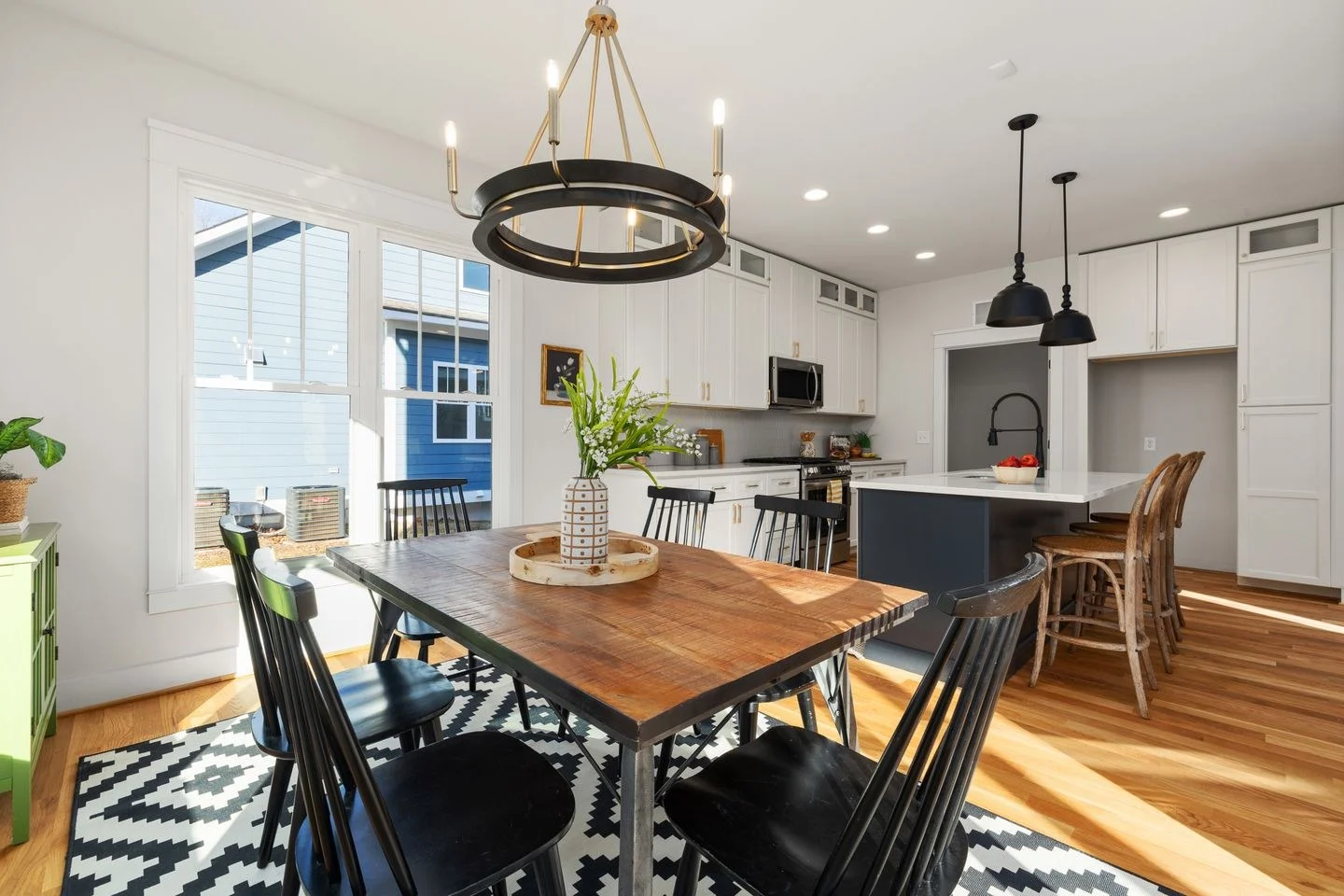
A dining pendant belongs to the table arrangement as well as to the room. Its scale should make sense over the table you use, in the position where that table will remain. Choosing a fixture for the empty room can lead to a light centered over a walkway after the furniture arrives.
Settle the table position
Mark the table and occupied chair footprints first. Check the route around them and the relationship to nearby cabinetry. If the table extends, decide whether the pendant should relate to its everyday size, its expanded size, or a balanced position that works for both.
Lumens' dining-lighting guidance treats the table's size and shape as the starting point. A round fixture can echo a round table, while a linear light may follow a long rectangular one. These are useful relationships, not rules that prevent a different shape from working.
Compare volume as well as width
A broad open-frame pendant can feel lighter than a smaller solid shade. A cluster of several lights creates a different visual density from one simple object. Consider how much of the view the fixture occupies when seen from the entrance and from neighboring rooms.
Make a lightweight paper or cardboard outline of the proposed width if useful, held safely at an approximate position without interfering with existing fixtures. This is a scale test only. It can reveal whether the pendant overwhelms the table or looks unexpectedly slight.
Check the seated sightline across the table. People should be able to see one another comfortably, and the bright source should not sit in an uncomfortable line of sight. Fixture design, ceiling height, and installation requirements determine the final hanging position; use the maker's guidance and a qualified installer rather than relying on a single universal number.
Ask where the light goes
A downward shade may light the tabletop while leaving the room's edges dark. A more diffuse fixture can contribute ambient light but may not focus as strongly on the table. Decide what other lighting will remain available, such as lamps on a sideboard or existing ceiling lights.
If you want dimming, confirm compatibility among the fixture, bulbs or integrated light source, and control. A dimmable label on one component does not establish compatibility for the whole system. Have the electrical arrangement specified and installed appropriately.
Consider the shade's view from above and below. A reflective table may show the fixture in its surface, and clear glass may leave the bulb highly visible. Look for an illuminated display or detailed product imagery that shows those conditions.
Finish with the room's materials
The pendant can repeat a metal finish or introduce a contrasting shape. It does not need to match every cabinet handle. If the room already contains strong wood grain and patterned upholstery, a simpler fixture may provide balance; if the furnishings are quiet, the pendant can carry more visual interest.
Approve the fixture as part of the complete dining arrangement: table, chairs, sightlines, and other light sources. The strongest choice will look proportionate in daylight and provide useful, comfortable illumination when the room is actually occupied at night.