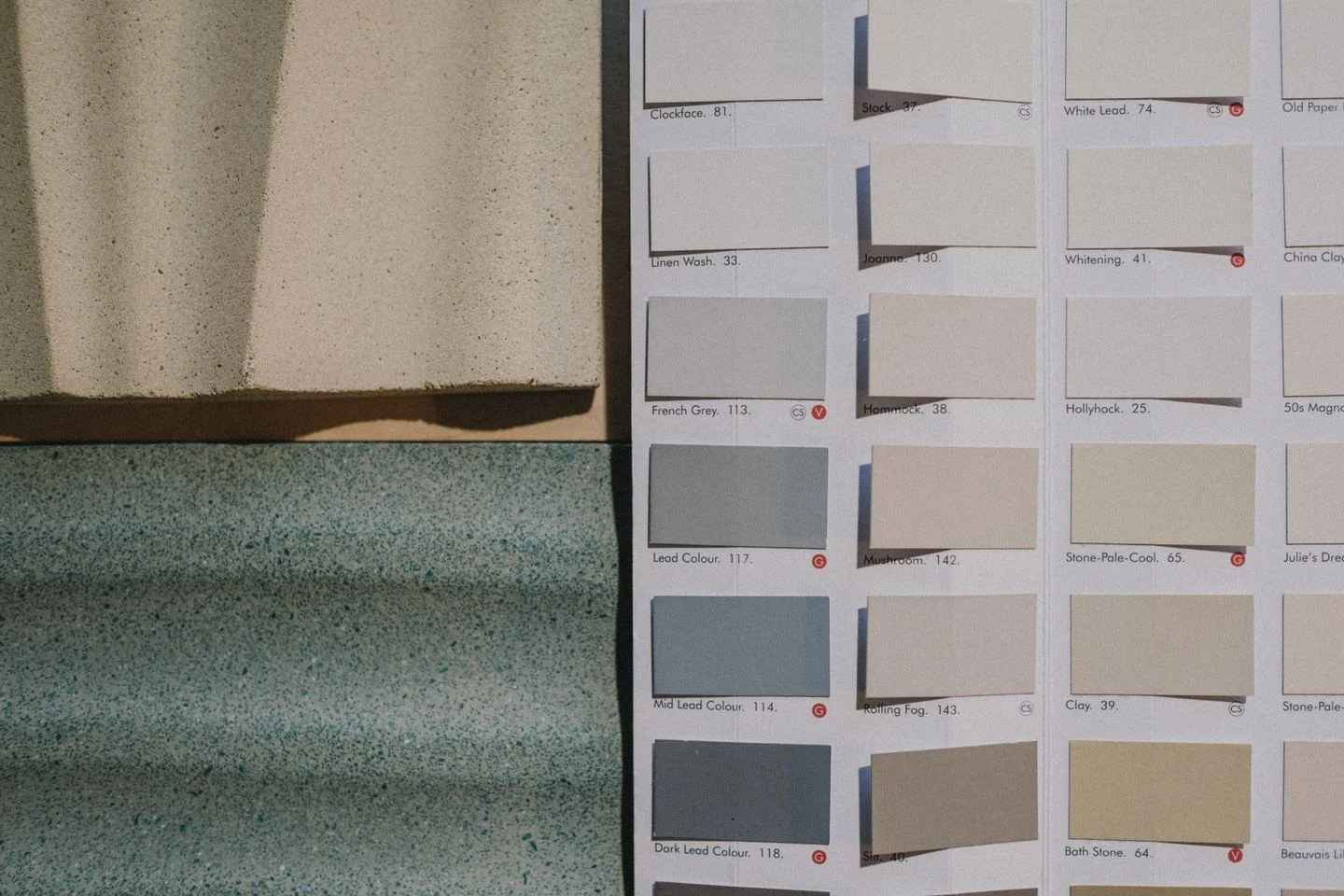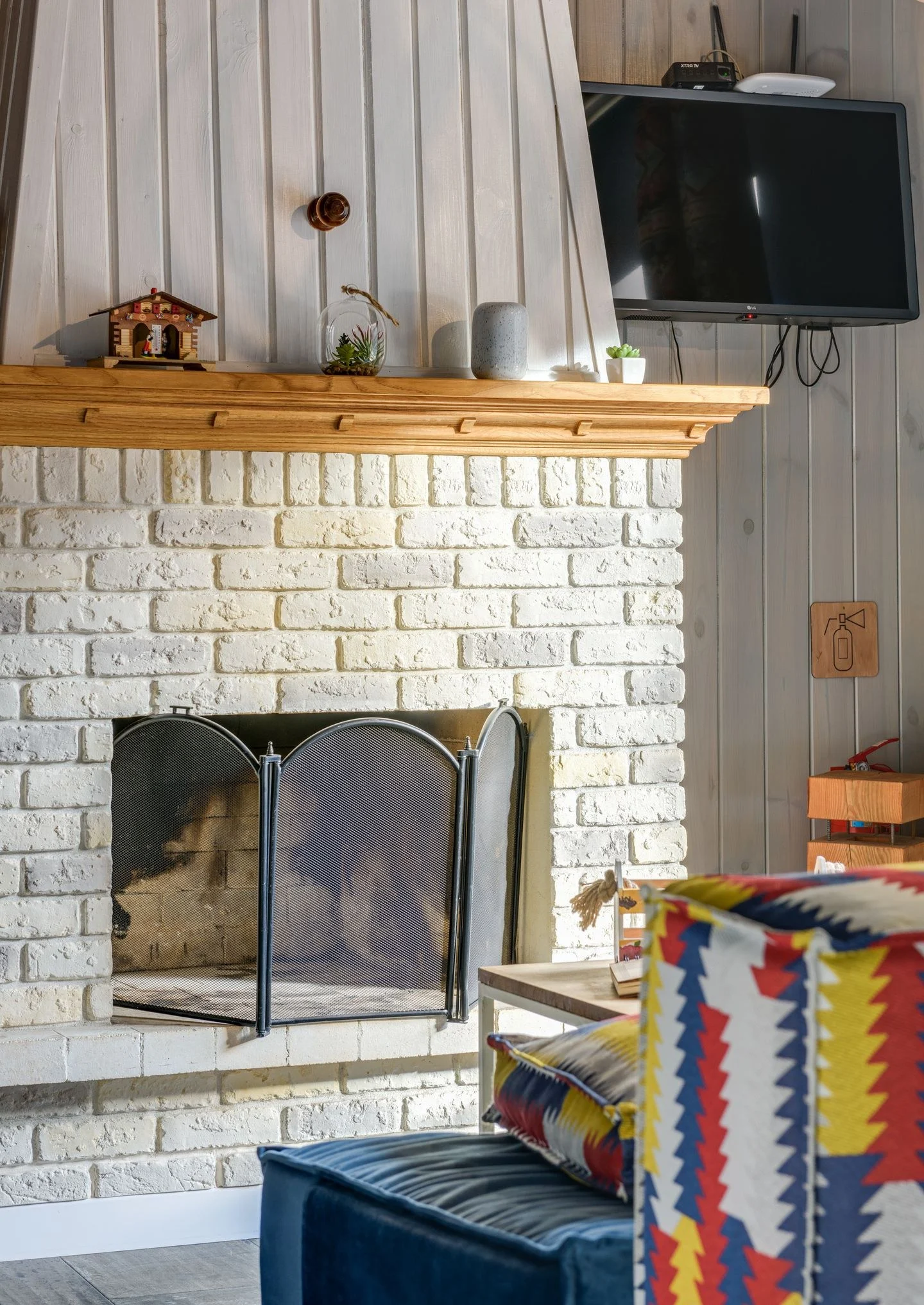
Stone is rarely one color. A fireplace surround may contain cream, gray, rust, charcoal, and several intermediate tones. Trying to match its most dramatic vein with wall paint can make that vein much more dominant than it was before. Begin with the stone's overall impression from across the room.
Look at the fireplace in daylight and with the room's lamps on. Identify the broad background color, then note the smaller details. A wall color usually has a calmer relationship when it responds to that background or to a quiet secondary tone rather than the brightest mark.
Put samples beside the surround
Hold paint samples vertically at the edge where wall and stone meet. A color viewed elsewhere in the room may seem compatible until it touches the stone. Compare a lighter option, a medium option, and a more definite contrast so you can see which direction supports the fireplace.
Avoid choosing from a photograph alone. Stone can have reflective particles and subtle variation that a screen does not reproduce well. A sample board also lets you move the same color from the bright side of the fireplace to the more shaded side.
If the stone contains strong warm notes, a very cool white may exaggerate them. That might be desirable if you want the fireplace to stand out, but less useful if you hoped to quiet it. A related off-white or muted color can make the transition gentler.
Include the mantel and opening
A wood mantel adds another large color relationship. The dark firebox opening also supplies contrast, even when the fireplace is not in use. Assess the complete composition rather than selecting paint for a single stone tile.
If the room includes several other patterns, a quieter wall may give the stone enough space. If the furniture is simple, a deeper wall can frame the fireplace more strongly. Neither approach requires repainting or altering the stone itself.
Treat this as a color-planning exercise; any work on the fireplace or its heat-exposed surfaces should follow the appliance and material requirements. For the surrounding room, approve the paint only after checking its relationship to the stone, trim, wood, and main upholstery together. The most successful choice will make those existing materials feel connected without forcing them to become identical.