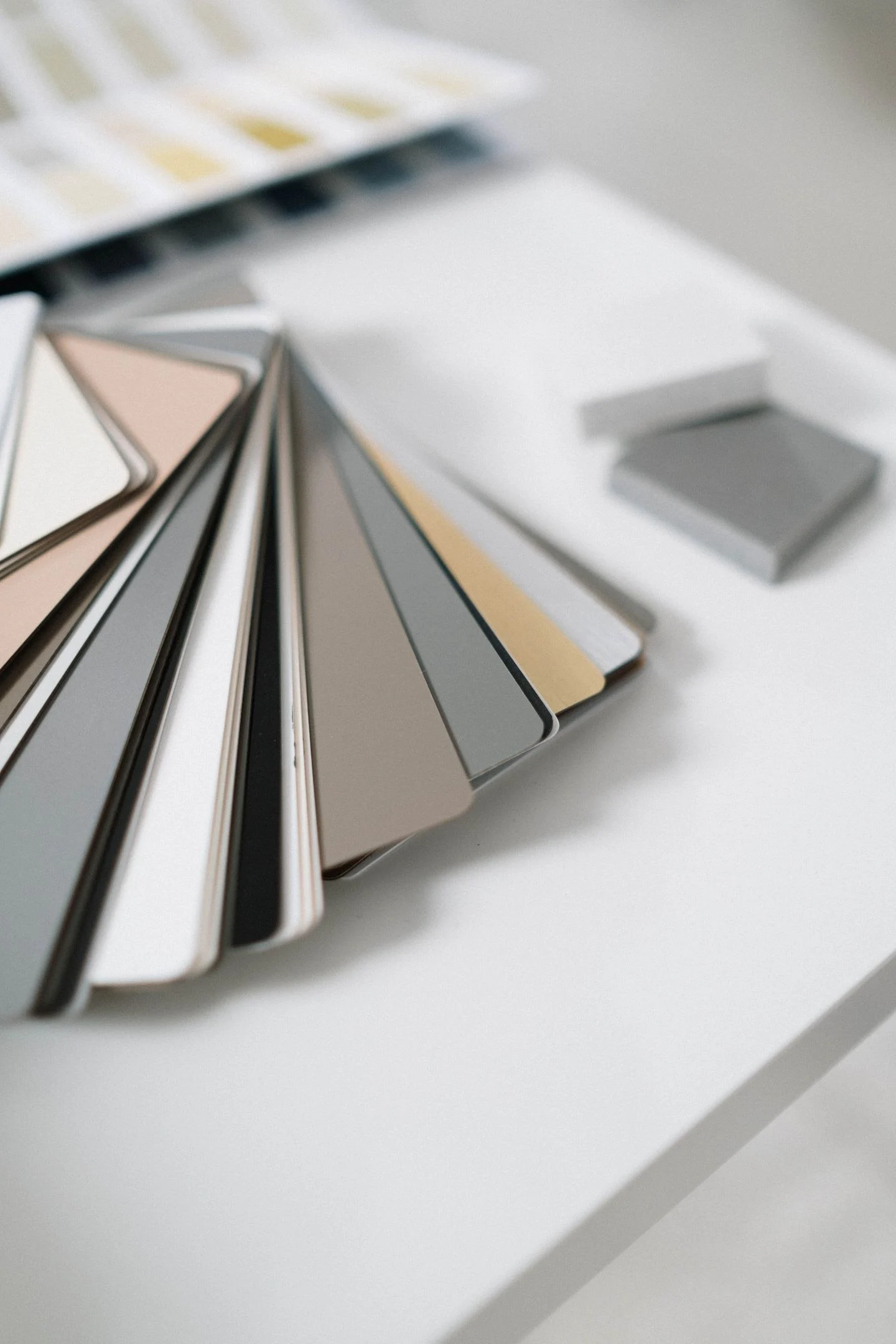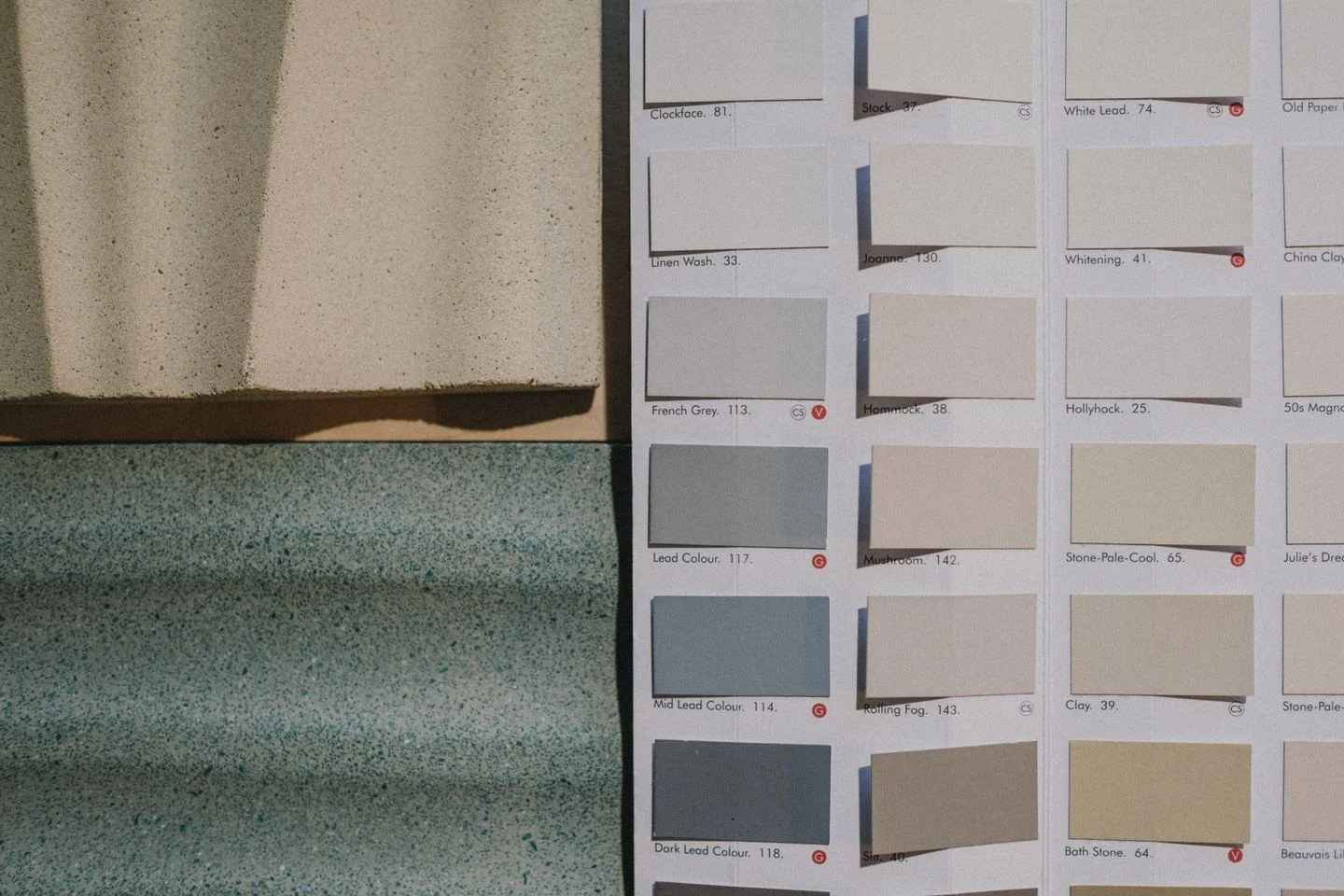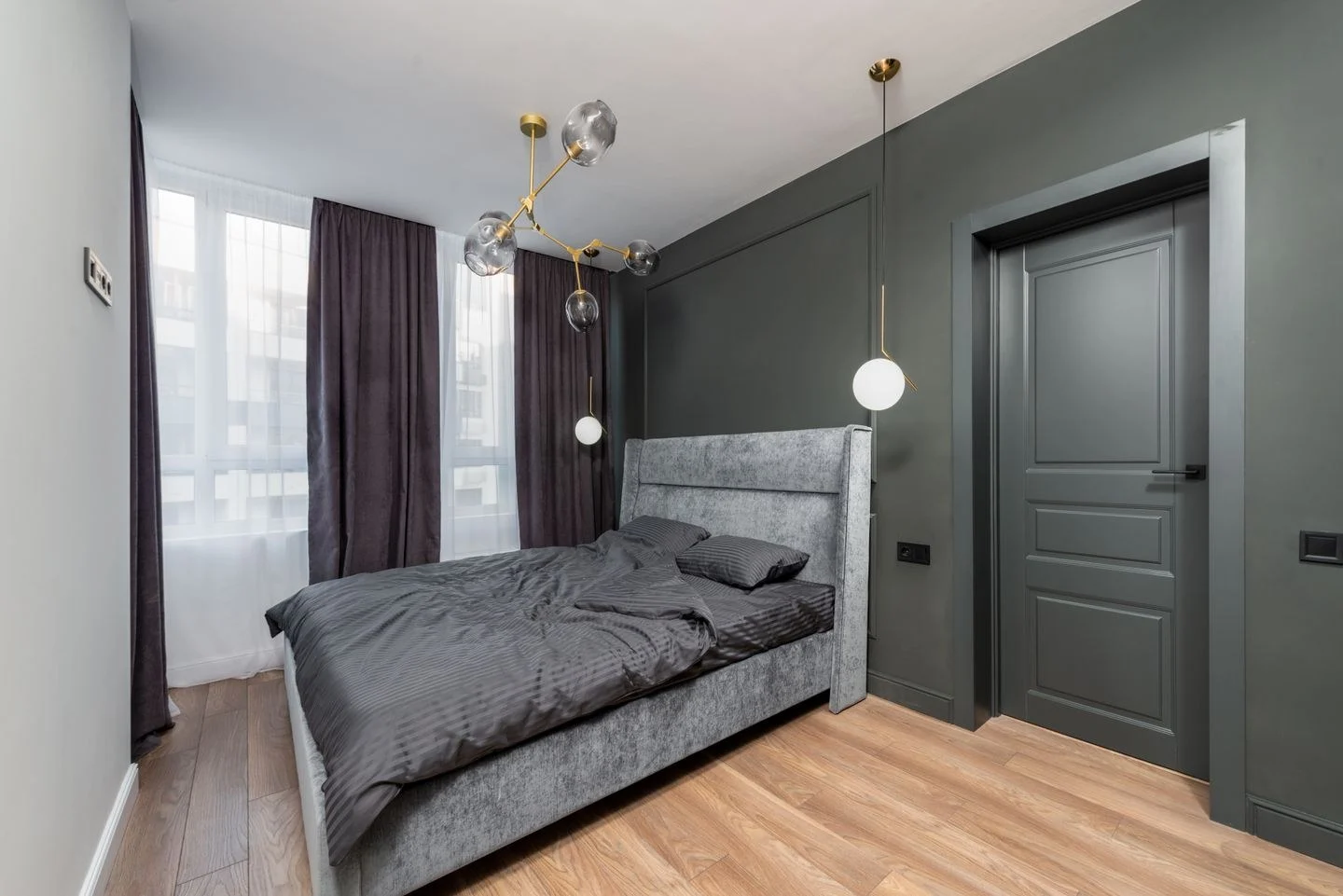
With a strong wall color already in place, curtains are a second large vertical surface. They can extend the color, introduce a quieter interval, or create another focal point. Choose that role before browsing individual fabrics; otherwise every attractive sample creates a different room in your head.
For a quieter window, look for a curtain near the wall's depth of color. A muted blue curtain against a blue wall does not have to match precisely. A slight difference in texture or shade can keep the window legible while reducing the contrast around it. This is useful when the view or a nearby artwork already provides interest.
When a lighter curtain makes sense
A pale curtain can break up a dark wall and repeat a light sofa or rug. Compare the fabric with those existing surfaces rather than choosing a generic white. Cream upholstery beside a brilliant white curtain may make the upholstery appear more yellow than expected.
Hold the sample in front of the window as well as against the wall. Light passing through unlined cloth can change its appearance substantially. A fabric that looks opaque and muted on a table may appear brighter and warmer when hanging. Lining and fullness also affect how much color the curtain contributes.
If the window needs privacy or light control, establish that requirement first. A sheer fabric chosen only for color may not provide the privacy you expect after dark. Layering can solve different needs, but it also introduces more hardware and fabric, so plan the total depth and stack space.
Add pattern only where it has room
Bold walls do not prohibit patterned curtains. They do make the pattern's contrast more consequential. A small tonal motif can add texture without creating a second dominant feature. A large multicolor print may become the main event, especially when the panels cover a broad window.
Lay the curtain sample beside the room's other patterns. If the rug, upholstery, and art are already busy, a solid curtain may be the useful pause. If those surfaces are simple, the window can carry more detail. Pottery Barn's curtain guidance treats material, length, color, and style as related choices; a color decision alone is only part of the specification.
Finish by checking the curtain both open and closed. The open panels may read as two narrow accents, while the closed pair becomes a large color field. Approve both versions before ordering, particularly in a room used mainly at night.