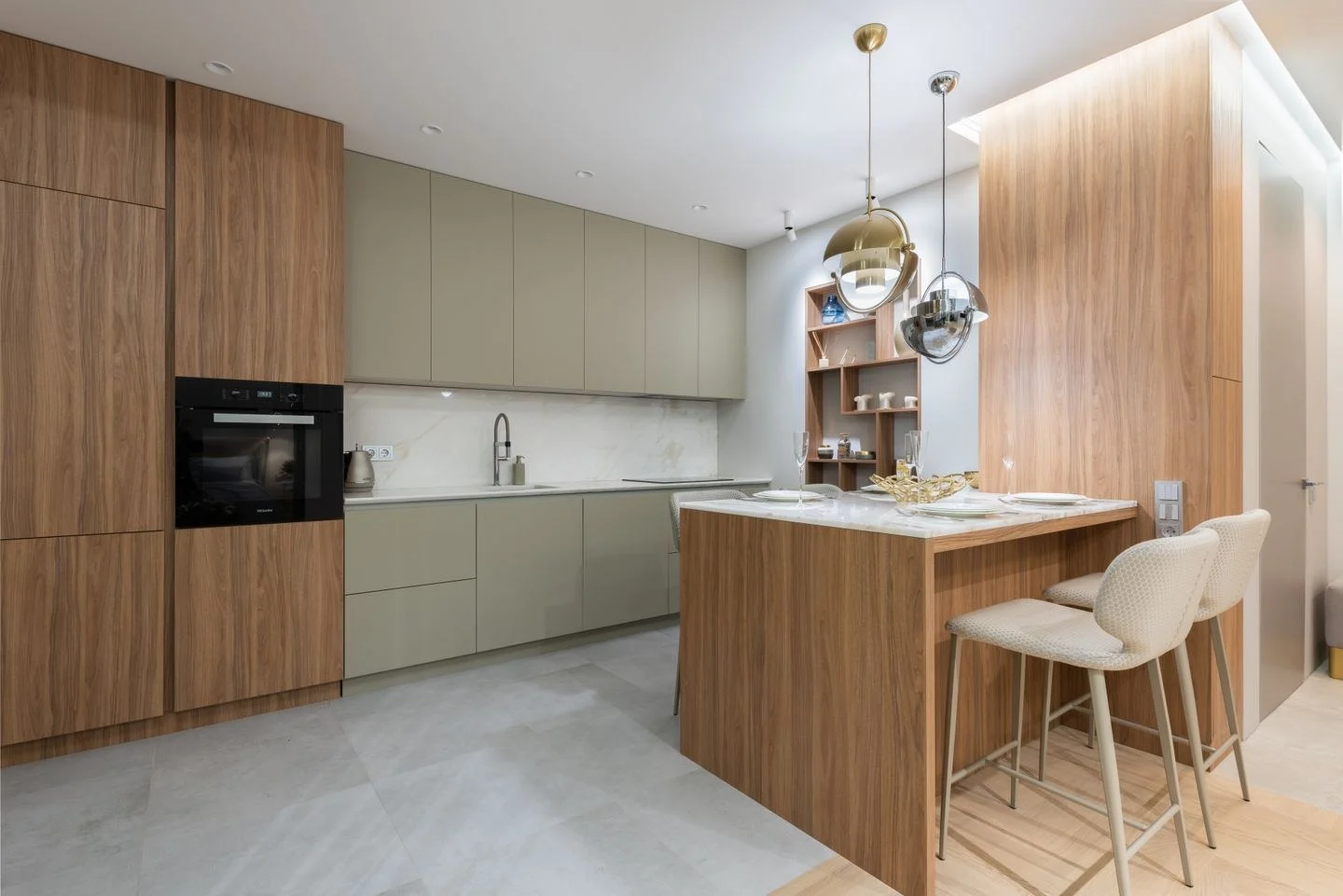
The words counter stool and bar stool describe general product categories, not a guaranteed fit for your kitchen. Measure the actual seating surface and the underside of the counter before choosing a height. A thick countertop, supporting bracket, or shallow overhang can change the usable space.
Start with floor-to-counter height and floor-to-lowest-obstruction height. Then note the overhang available for knees and the clear width between supports. A stool may be the right seat height yet leave someone sitting too far from the eating surface because their knees meet the cabinet.
Sit before counting seats
Try a stool at a surface with comparable dimensions if possible. Check whether your feet reach the footrest comfortably and whether the seat supports the position you use for eating. A high perch that works for a quick conversation may be less comfortable for breakfast or a long work session.
Backless stools can tuck away more easily, but they offer a different sitting experience from chairs with backs. A low back may provide some support while remaining visually quiet; a tall back becomes a stronger line across the kitchen. Choose based on the household's use rather than treating one silhouette as universally better.
Seat width is only part of the space each person occupies. Include arms, flared legs, and room to turn or get on and off. Divide the clear counter length into realistic occupied positions, then check how the positions relate to supports beneath the surface. A manufacturer's suggested stool count for an island cannot account for every stool design.
Test movement behind and beneath
A swivel can make turning easier, but its rotating outline may strike neighboring stools or the counter. Check the full movement with the back and arms included. An adjustable stool also needs a stable, appropriate setting for the intended use; follow its instructions and rated limits.
Pull the stool out into its normal occupied position and walk behind it. The route may serve the refrigerator, dining area, or another room. A clear aisle with stools tucked in can become crowded as soon as people sit down. Plan for the occupied kitchen, not only its empty appearance.
Look at the footrest's location and surface. It should be usable without forcing an awkward posture, and its finish needs to suit repeated contact. Check care instructions for upholstery and frames, especially where food, moisture, or frequent wiping are expected.
If you are keeping existing stools, measure and test them before assuming the new counter can accommodate them. It may be simpler to choose suitable seating than to force an uncomfortable relationship. The final decision should connect counter height, knee space, circulation, and the way the household actually sits.