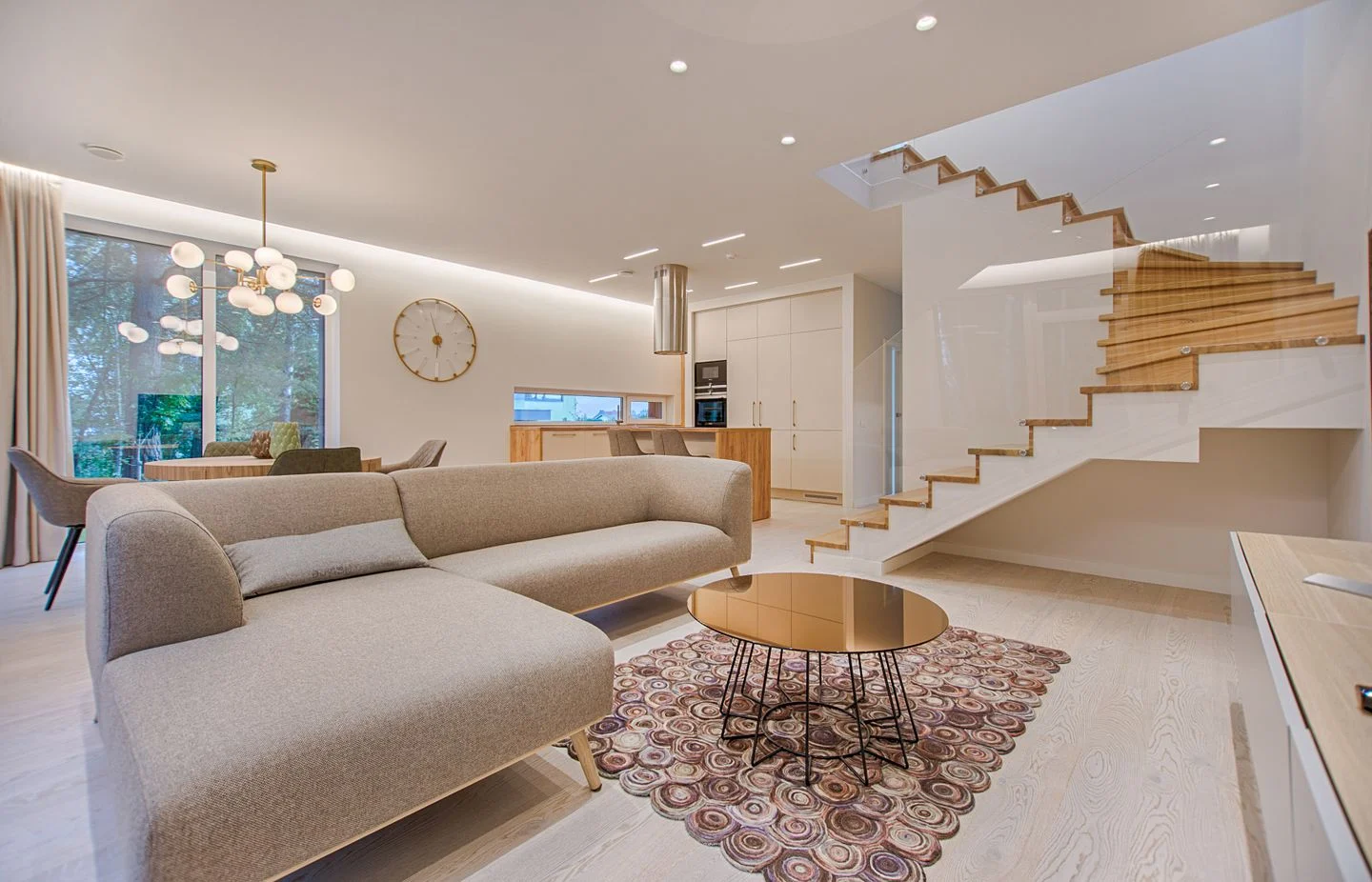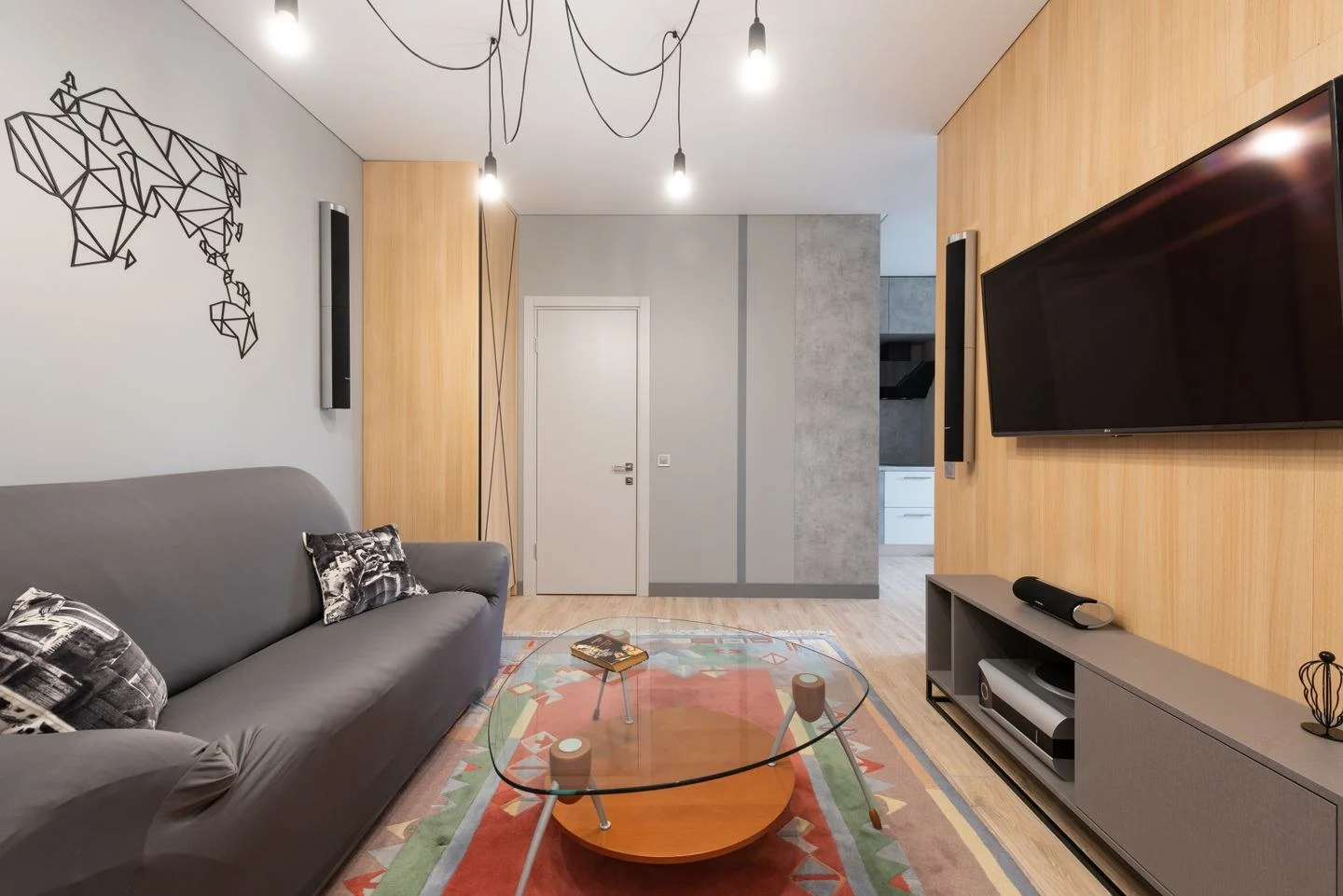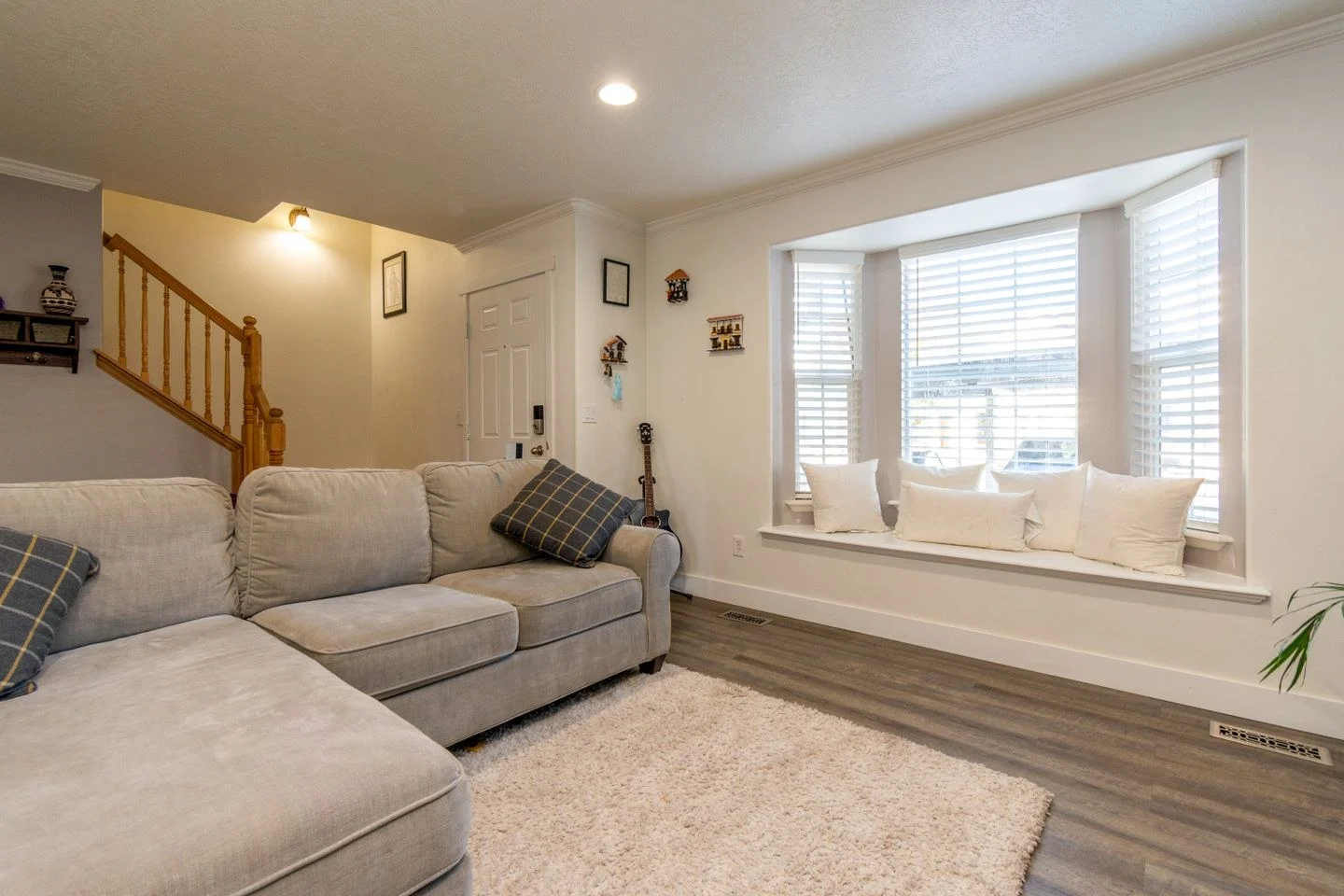
The chaise makes a sectional different from a straight sofa, and the rug needs to acknowledge it. A rug centered on the coffee table can look plausible while leaving the long end of the sectional visually stranded. Measure the complete seating group before choosing a standard rug size.
Outline the L, not just the long side
Record the sectional's maximum width and depth, including arms and the chaise. Add any nearby chairs to the sketch. Then draw two or three possible rug rectangles around that group. A larger option might take every leg; a smaller one might support the front portions of the seating. Compare both on the actual floor rather than choosing solely from the sofa's listed length.
Room & Board's rug guide shows arrangements that use front legs on the rug and larger arrangements with all legs supported. These are useful starting points, not a demand that every room use the same size. What matters visually is whether the sectional and related seats feel gathered together.
With a chaise, check where the rug edge crosses the long cushion area. An edge that stops midway beneath the chaise may look accidental from the entry. Moving the rug several inches can make more sense than centering it on the room itself. The seating group, rather than the room's perimeter, is usually the relevant reference.
Keep the coffee table relationship readable
Place the coffee table inside the open part of the sectional and assess the rug around it. If nearly all visible rug is hidden beneath the table, you may be paying for a pattern that never appears. Conversely, a tiny table in a broad opening can make even a correctly sized rug feel empty.
Consider where feet land when people get up from the chaise or the corner seat. Avoid an edge that catches at a natural turning point. Choose a pad suitable for the rug and flooring, and follow the manufacturers' guidance on compatibility. A thick pad also changes the height of the edge.
Check the parts the photograph leaves out
Open the door nearest the rug. Pull a reclining section through its full movement if the sofa has one. Test access to any storage ottoman and make sure the rug does not obstruct a vent. These checks should happen before finalizing the rug position.
A plain rug can be a useful choice when the sectional has a strong shape or patterned upholstery. A patterned rug may carry more of the room's color if the sofa is quiet. Either way, judge a sample beside the upholstery in daylight and lamplight; a gray rug can look unexpectedly blue against a warm fabric.
If the larger standard size crowds the room, try changing the seating arrangement before accepting an awkward fit. A chair may be too far away or the sofa unnecessarily centered on a wall. The best rug size is the one that supports the layout you use, with edges and floor space that make sense around it.