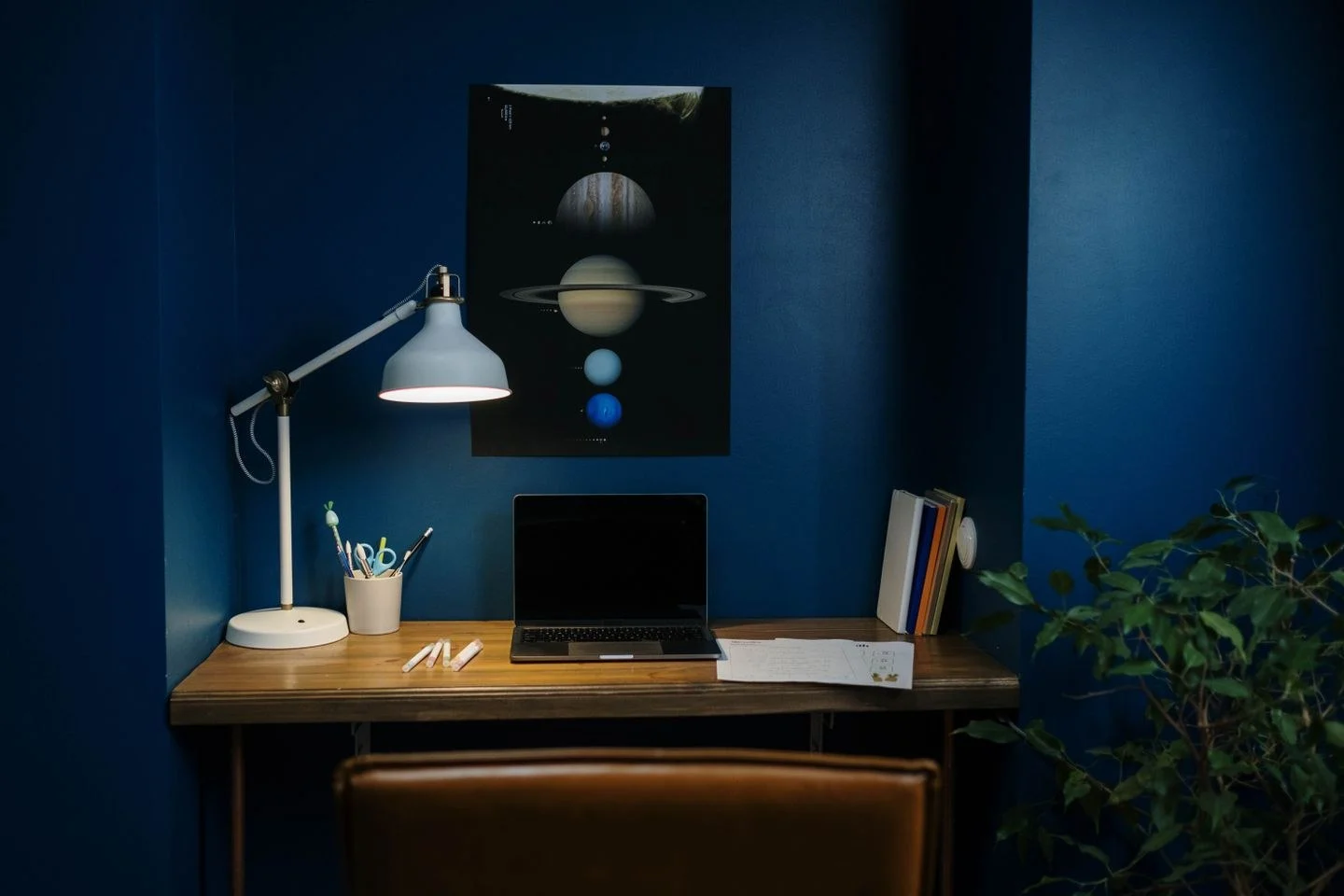
An accent wall is most convincing when it explains something about the room. It can define the sleeping area, frame a dining zone, or emphasize a substantial architectural surface. Painting the only empty wall a stronger color may simply draw attention to the absence of furniture.
Walk into the room and note where the eye naturally goes. Then consider whether that is the view you want to strengthen. The wall behind a bed often has a clear role. A wall interrupted by several unrelated doors may be less satisfying unless the openings themselves are part of the design.
Follow a complete surface
Look for natural boundaries: inside corners, a chimney breast, or an alcove. A color that stops at an arbitrary point can feel detached from the architecture. If the room opens into another space, examine the accent from there as well. What looks like a complete wall from the sofa may look like a narrow stripe from the hallway.
The color does not need to be dramatically darker than the other walls. A muted shift can distinguish a zone without creating a hard visual break. Equally, a deep color can work when the furniture and lighting give it enough context. Test the contrast with the adjacent wall, not only with a white paint card.
Consider the objects on the wall
Art, shelving, a television, and a headboard all change the amount of paint visible. A dark wall may let a black television recede, but it may also reduce the contrast around dark artwork. A pale wood headboard may stand out clearly against green, while a dark upholstered one could become less defined.
Make a paper or digital elevation of the wall with its major objects. This is particularly useful when shelves will cover much of the surface. The visible color around them may read as a border rather than a broad field.
If no wall has a persuasive reason to be different, consider another way to introduce color. Curtains, a substantial rug, or a cabinet can provide a focal area without altering the architecture. An accent wall is one tool, not a required stage of finishing a room.
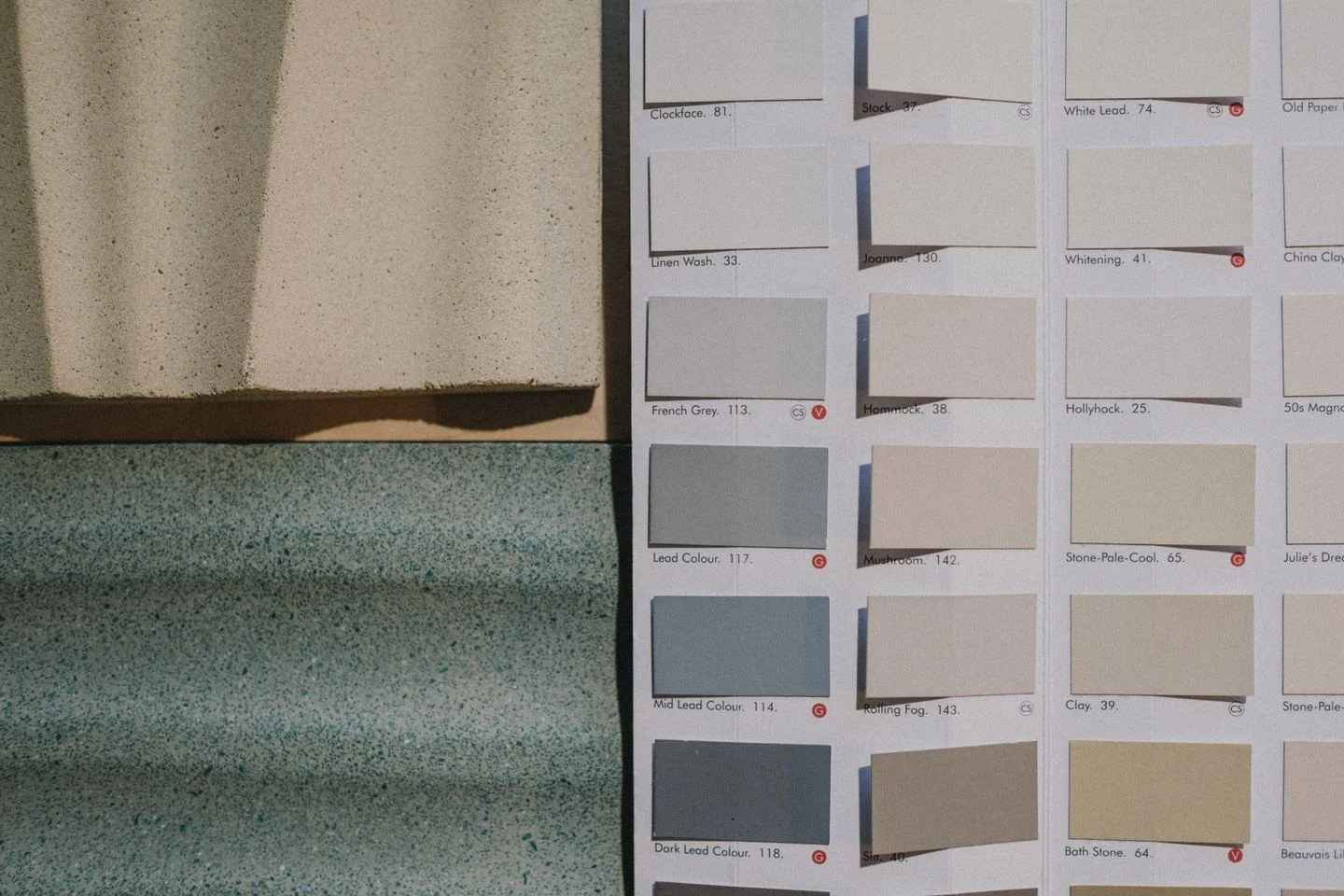
Before painting, view the sample at the wall's edges and under evening light. Approve the whole relationship: accent, neighboring walls, trim, and furniture. The result should make the room easier to read, with a clear reason for the color to begin and end where it does.