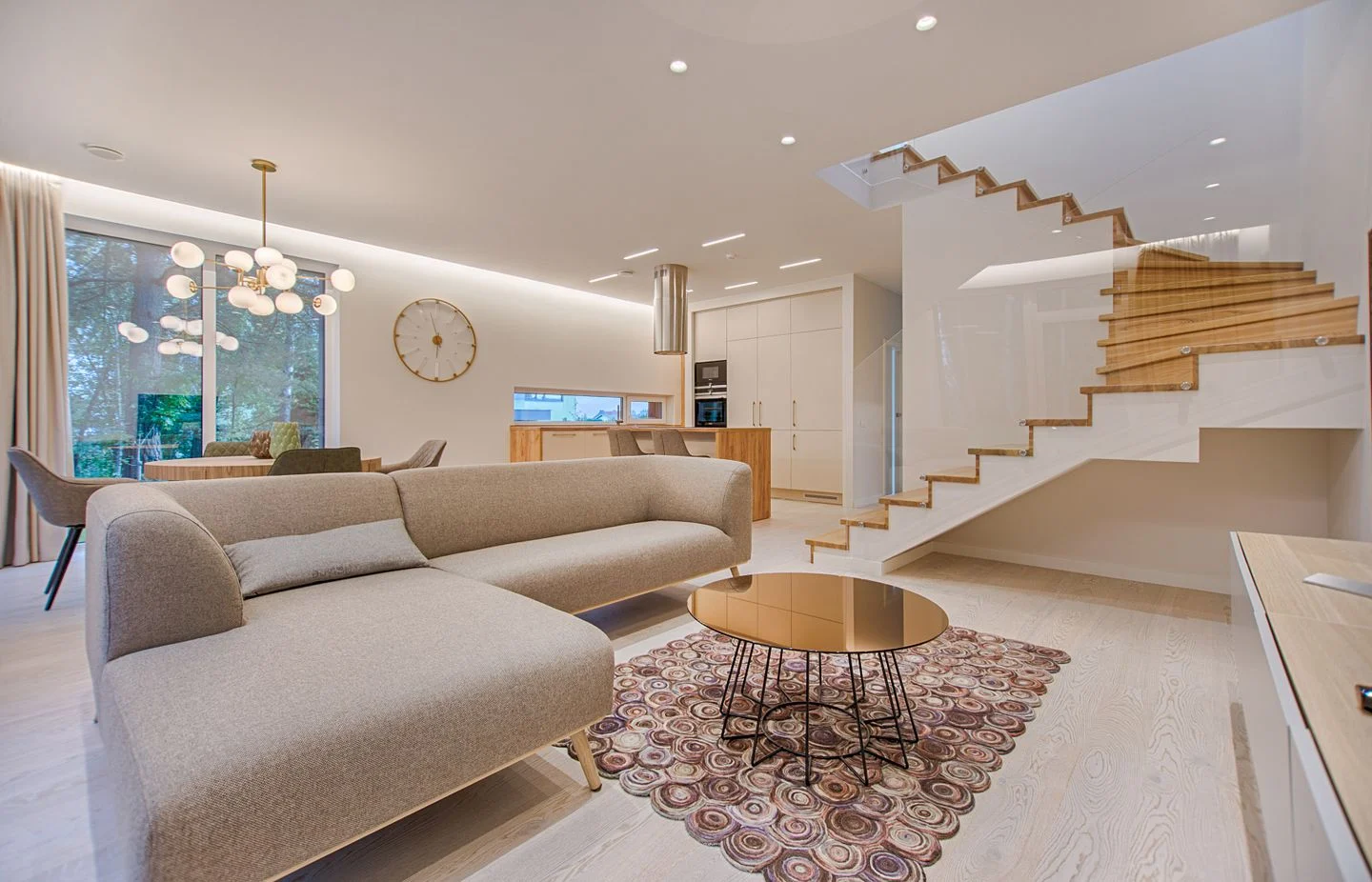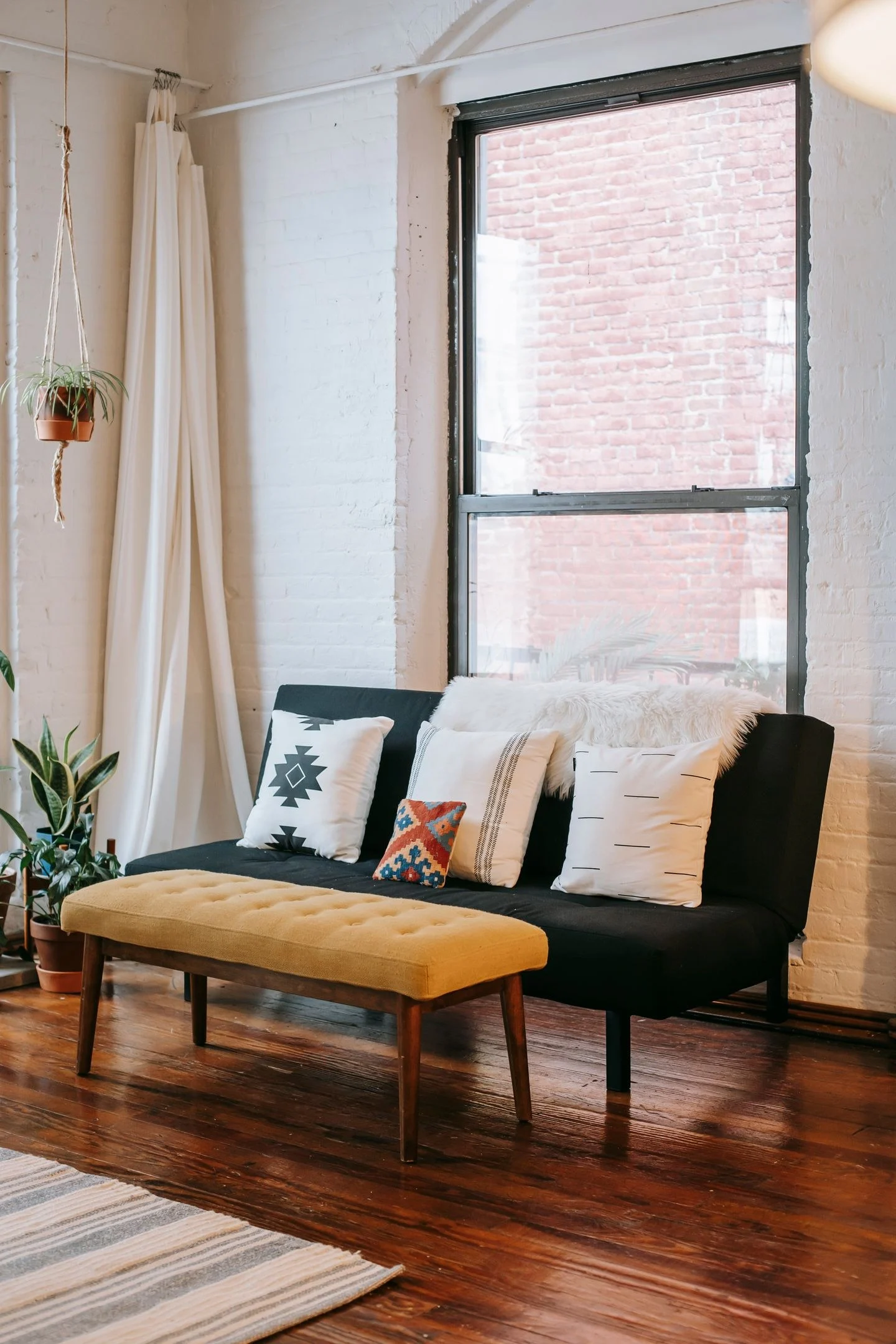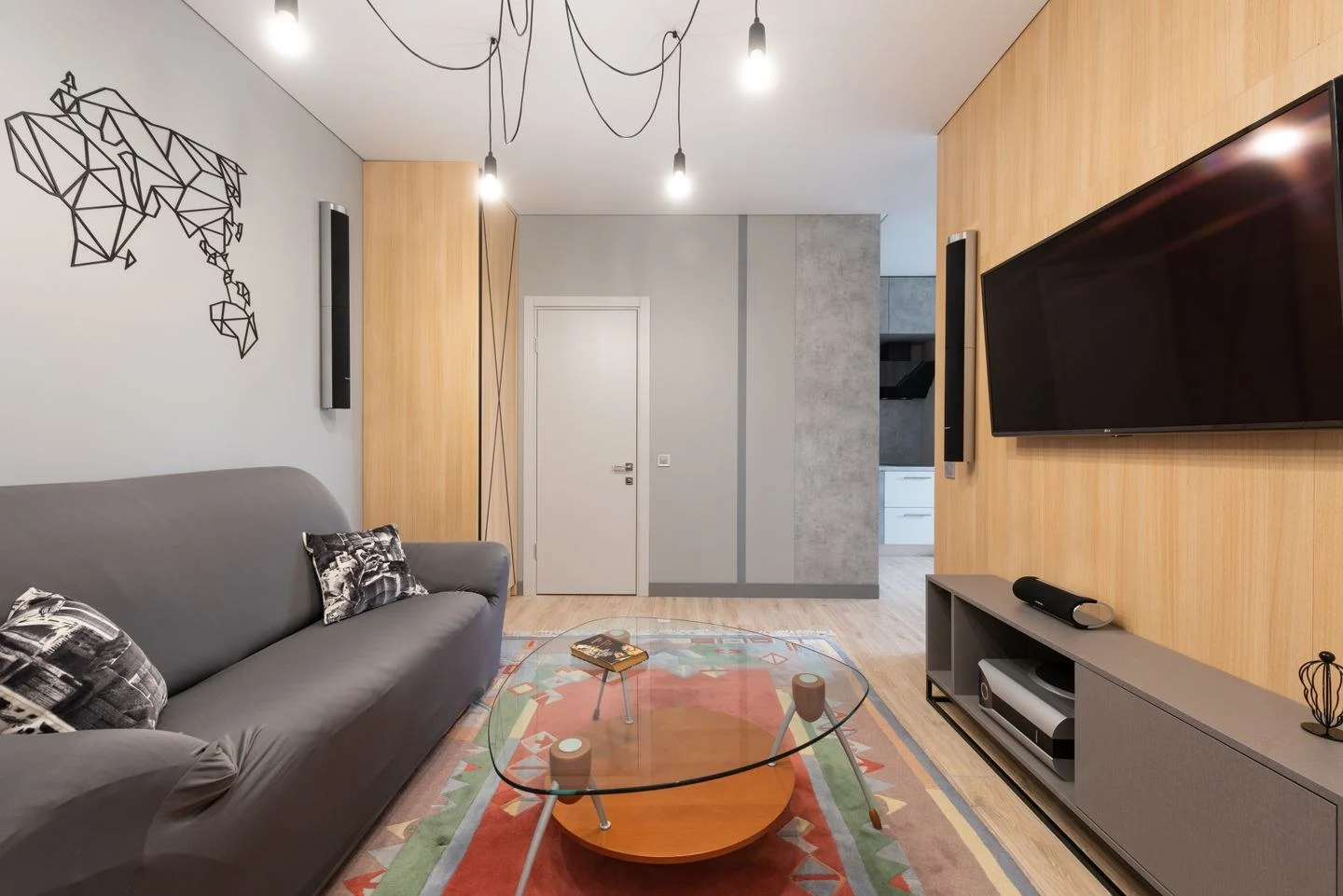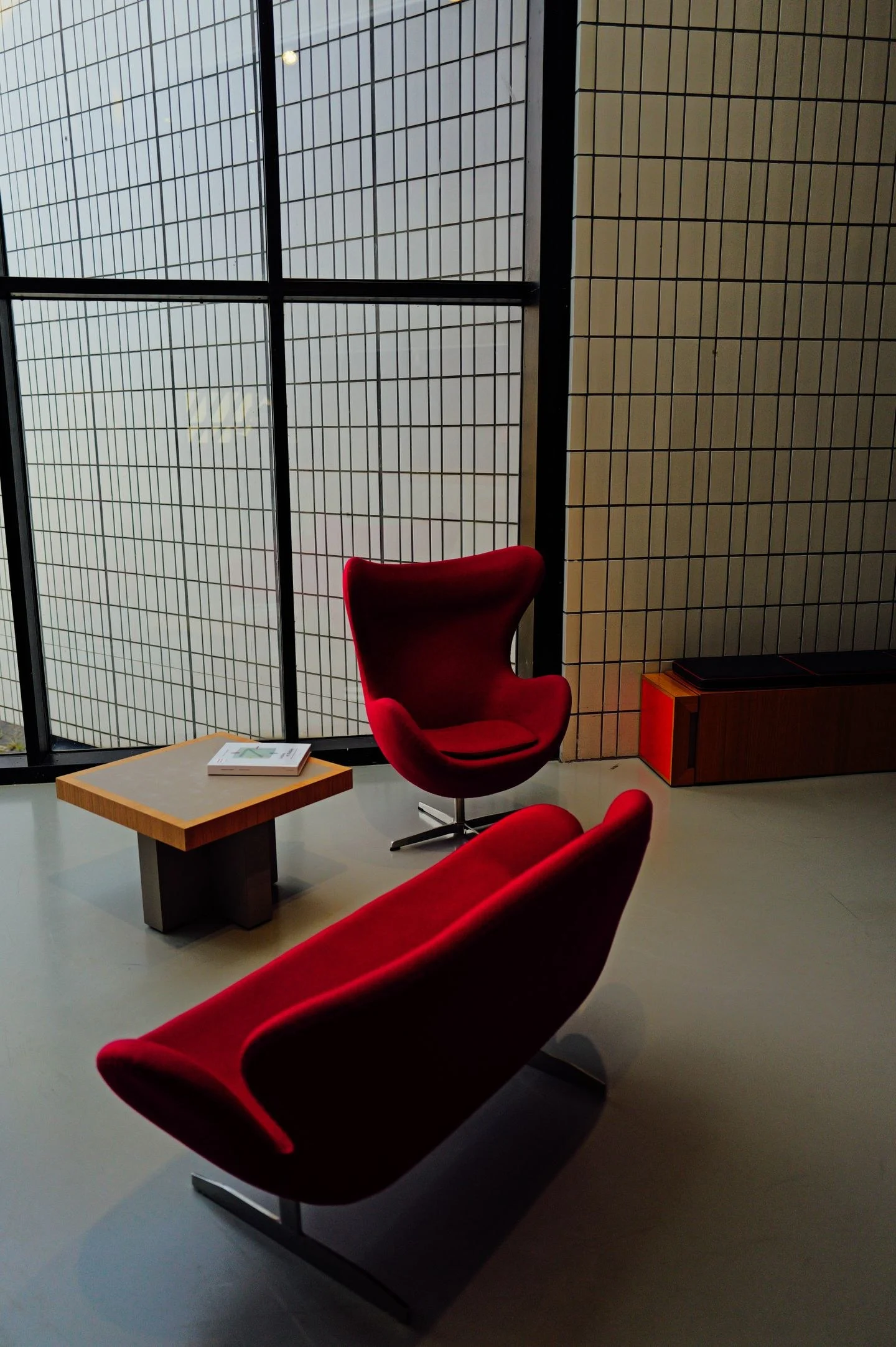
Two different accent chairs can make a living room feel less like a furniture set. They also let you offer different kinds of comfort. The challenge is to make them feel related without forcing their shapes to match.
Start with the seats occupied. A low lounge chair and a tall upright chair may look interesting together but put their occupants at noticeably different levels. That can be fine in separate corners and less comfortable in a close conversation group. Try both with the sofa before deciding where they belong.
Find a shared detail that is visible
A similar wood tone, upholstery color, or metal finish can connect two silhouettes. The detail should be substantial enough to register from across the room. A hidden brass screw is not much of a visual bridge between otherwise unrelated pieces.
You can also connect through contrast: a rounded upholstered chair beside a straight wood-framed chair may form a deliberate pair when both have comparable presence. Avoid adding a third strongly different style immediately. Let the first two establish the room's direction.
Give unequal chairs unequal jobs
One chair might be the main reading seat, with a lamp and footstool. The other may be lighter and easier to turn toward guests. Their surroundings can explain why they differ. They do not need identical tables, lamps, and cushions to count as a balanced arrangement.
Measure the full footprint of each chair, including angled backs and arms. A compact-looking swivel chair may need more operating space than a broad stationary one. Room & Board's chair comfort guide separates seat depth and height from cushion feel; compare those features to the intended job rather than choosing by overall width alone.
Watch the room's total number of shapes
If the sofa, rug, and tables already have strong curves or patterns, quieter chairs may give the room a useful pause. If the main furniture is simple, two distinctive chairs can carry more of the character.
Use cushions sparingly when they would hide the chair's defining back or arms. A shared textile can connect the pieces, but it should not make them uncomfortable or cover the reason you chose them. Stand at the entry, then sit in each chair. A pairing that works from both perspectives has more value than one designed only for a photograph.