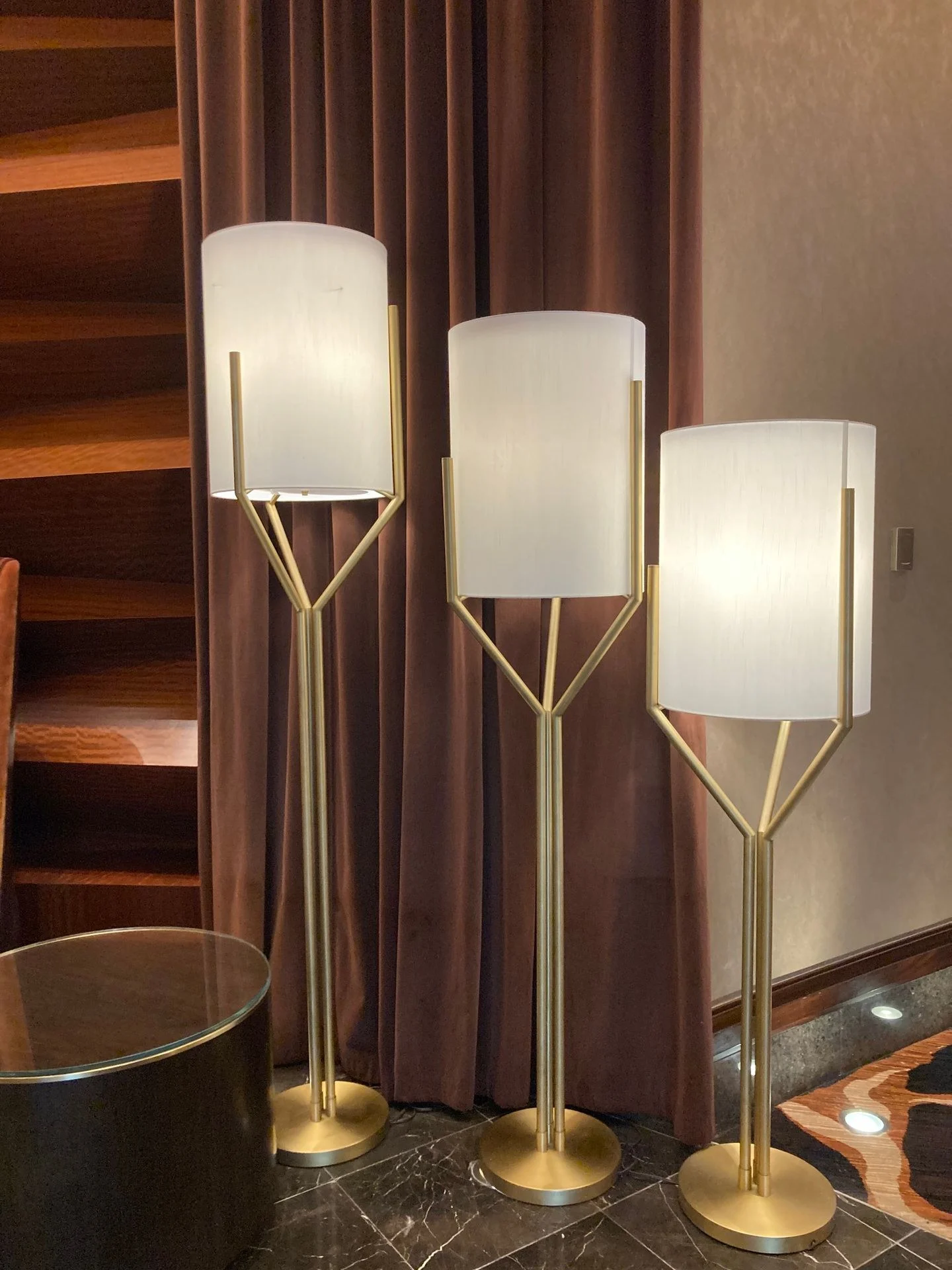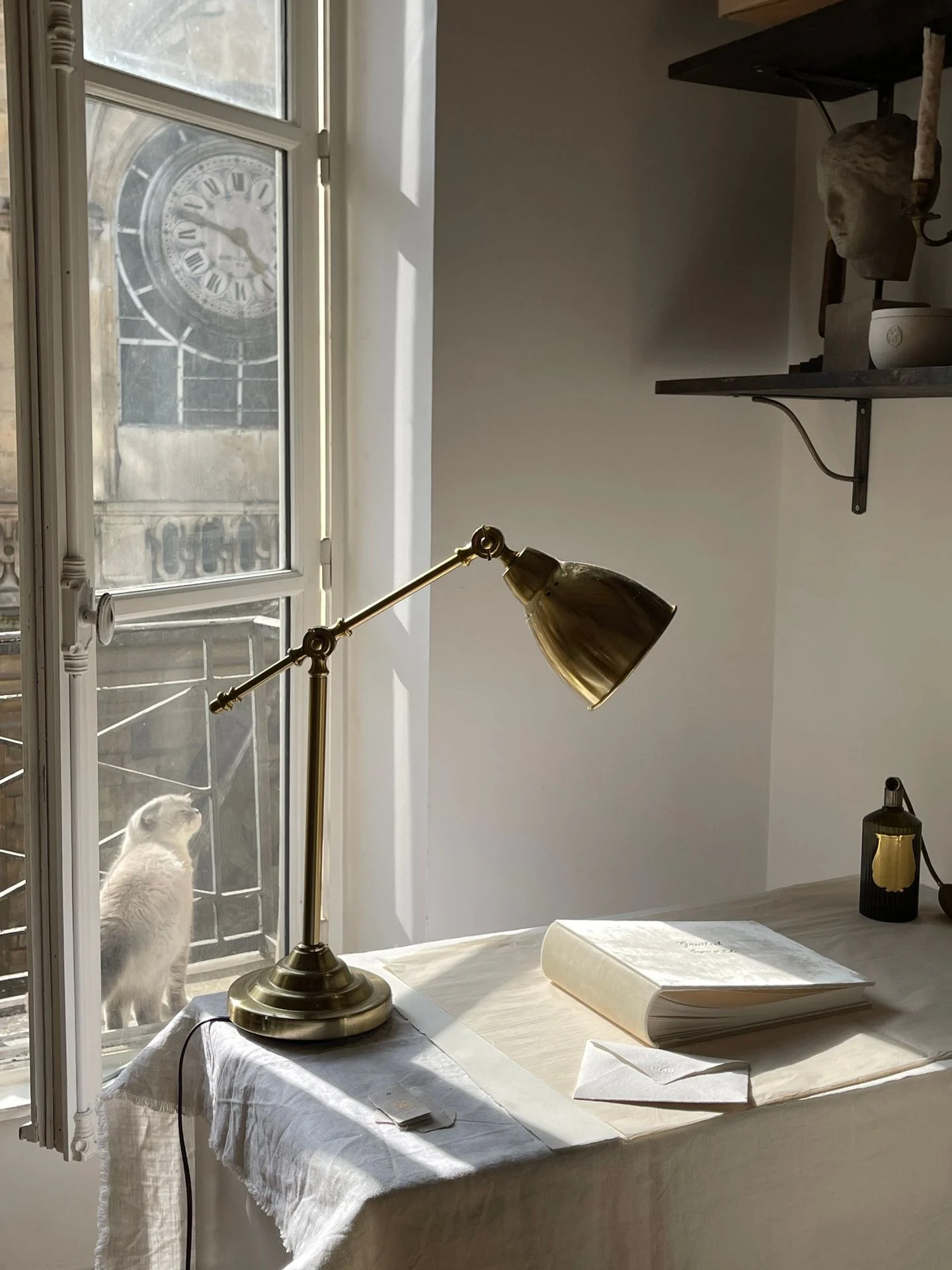
A compact desk lamp is useful only if it directs light where the work happens. A very small lamp can leave the writing area in shadow, while an articulated lamp may reach across the desk from a modest base. Start with the task area rather than the lamp's overall height.
Place your keyboard, notebook, and any regular tools in their normal positions. Identify where more light is needed. Screen work and handwriting may require different arrangements, so check both if the desk supports both. A lamp does not need to illuminate every corner equally to be effective.
Test the beam and the adjustment
Position the lamp so your hand does not create an inconvenient shadow over the page. This may favor a different side depending on how you write and how the desk is arranged. Check the result directly rather than following a fixed rule that ignores windows or other light sources.
Move the arm through the positions you would use. It should remain stable and keep the light source out of an uncomfortable direct view. An adjustable joint that cannot hold its position is not a useful feature. Check the product's intended adjustment range and handling instructions.
Look for reflections in the screen, especially when the display shows dark content. A bright source or a reflected highlight can remain distracting even when the desk surface is well lit. Herman Miller's discussion of visual comfort emphasizes the importance of considering the whole visual environment; the desk lamp is only one part of it.
Account for the space around the base
Measure the base and any part of the arm that projects behind the desk. A clamp can recover surface space, but it requires a compatible edge, adequate clearance, and installation according to the product instructions. A thick apron or a fragile desktop may rule out a particular clamp.
Controls should be reachable without leaning across a drink or disturbing the monitor. Route the cord so it does not cross the working surface or become pinched by adjustable furniture. Keep electrical products in their intended conditions and use the specified power supply.
Finally, switch between the tasks you perform most often. Can the lamp move from a notebook to a craft project without colliding with a shelf? Can it remain unobtrusive during a video call? A small workspace benefits from a lamp whose useful range is larger than the area it permanently occupies.